Uncategorized

Why Self-Service Portals are EdTech’s Next Big Thing

College IT departments look to self-service, enterprise management software to keep students connected

Today’s college students show up connected. The average college student brings 5 devices to campus. With 21 million total college students in the U.S., that’s 105 million devices that need internet access on our college campuses alone.

While the added layer of connection is beneficial to everything from communicating with friends to completing tough assignments on time, it takes its toll on technical support services offered by colleges. Information Technology, or IT, departments feel that weight, especially when it comes to campus-provided devices.

The proliferation of devices, and lack of manpower to handle all the maintenance and technical issues that arise, has led to some innovation in the way of self-service portals. The knowledge-based centers connect students, staff and administration when it comes to fixing technical problems, often without the need for IT interaction. When implemented correctly, these self-service portals save a lot of time and frustration for internet users with quick answers and feedback options.

It’s a money saver for colleges too. The average cost of a level 1 tech support call to the paying entity (in this case, we’re talking about colleges) is $22. Self-service portals reduce that cost to just $2 per interaction. (Check out this EdTech infographic for more stats)

Not all questions or requests can be handled without a professional, though. TeamDynamix — a software-as-a-service (SaaS) work management platform created solely for higher education platforms — essentially offers Enterprise Service Management which means it is used by IT, facilities, HR, marketing, residential life, media services and more. The portal connects students with actual people through a workflow — a service that recently tripled the number of departments using it in a year’s time.

At the core, a self-service portal is a knowledge-base with articles supplied by both IT and the user community. By using a crowdsourced approach, iterative feedback and suggestions can easily be shared. A user may rate the article, leave feedback or even contribute content. All of this is reviewed by the IT department and then published. You’ve probably visited an online forum before to find the answer to a fix-it question — whether you are repairing your dryer or smartphone. You might visit 4 or 5 forums until you find a problem similar to yours, though, and it may take even longer to find solutions.

Colleges are looking to companies like TeamDynamix to build self-service platforms that integrate all departments and services that are specific to the college. So the same portal is used for residential life that is used by media services and more. This greatly expands the knowledge base — allowing different departments to connect with each other and help answer each other’s questions.

In addition, if a service request is entered, the workflow can initiate across multiple departments.  For instance, a request for access to the broadcasting studio may be routed to security then to facilities then back to the requester.  By having one portal the school can easily manage requests from a centralized location.

The TeamDynamix portal has about 4 million higher education students serviced by its platform. Across 12 months, the TeamDynamix service portal doubled in terms of traffic, indicating that students are receptive to this type of self-service module. TeamDynamix reports that a key part of the growth is the trend towards knowledge centered support where contributions to the knowledge base are iterative and encompass feedback.

Moving Up in Tech Maturity

As technological advancements continue to snowball, it’s important that college campuses stay ahead of the curve. Technological maturity is not just something flashy to show potential students — it’s a necessity to prepare the next generation of college students for the workforce. Self-service portals are just one way colleges can support the need for tech help and encourage the people who use it to advance their own knowledge of their devices and their capabilities. More specifically, self-service tech portals increase tech maturity on campuses by offering:

  • Remote access for better accessibility to users
  • Knowledge-centered service, which offers feedback and engagement between users. By offering a portal that includes a knowledge base, schools can provide the student body with the opportunity to contribute content and leave feedback.  This “collective wisdom” bolsters the relevance and effectiveness of the information provided thereby driving increased self-service adoption.
  • One location for management of tech issues. When a tech issue goes beyond self-service resolutions, colleges should use a centralized tech support platform that tracks project management and resolution.

College students don’t want to wait for tech answers, and they definitely don’t want to be unable to use their devices. Self-service portals offer a way for them to stay connected while saving colleges and universities manpower and money.

Pass or Fail: Does our Education System Set Kids Up to Fail?

In this multi-part series, I provide a dissection of the phenomenon of retention and social promotion. Also, I describe the many different methods that would improve student instruction in classrooms and eliminate the need for retention and social promotion if combined effectively.

While reading this series, periodically ask yourself this question: Why are educators, parents and the American public complicit in a practice that does demonstrable harm to children and the competitive future of the country?

What if I told you that all retention issues in American K-12 schools are a failure of the system, not the individual children?

A week before the end of eighth grade, Ted Hamm’s mother was informed that her son was going to be held back. She didn’t have any inkling that this was a possibility; according to her, Ted had always performed well in the classroom. “I mean he was always an A and B student,” she commented. “I knew his reading level was low, but not what [the teacher] claimed it was.” However, low standardized testing scores and low grades in the key areas of reading and math combined, keep Ted from advancing. According to Ms. Hamm, the effect on Ted was immediate.

“Before being retained, he socialized with his friends like normal,” she said. “After Ted was retained, he didn’t want to go to school. He was very withdrawn.”

The problems grew more serious. Ted became depressed and isolated. He stopped hanging out with other students at school and stopped inviting friends to his house. Eventually, Ms. Hamm had him transferred to another school. “I was hurt,” she said. “I felt like he would feel that he failed. Failed, you know, like he was not smart enough and like he would be laughed at.”

Ms. Hamm’s intervention and active involvement in her son’s education were eventually successful. Ted Hamm thrived in the new school and managed to get on the honor roll.

Ted Hamm was lucky. His mother was involved and willing to intervene to try to bolster his chances of success. Many other students are not so fortunate. In fact, in United States urban school settings, the retention rate is estimated to be almost 50 percent. The costs of retention are astronomical: around $20 billion each year, and the rewards are dubious.

Public educators, students, and parents alike find retention and social promotion policies bewildering. Educators often have a difficult time understanding when and how to employ the policies, and like Ted Hamm and his mother, students and parents are often confounded by the strategies. The prospect of retention sends many students into a panic or depression, and their parents are often at a loss as to how to respond.

As a public service, America’s education system sets high standards for itself. However, the nature of those standards and where retention and social promotion fit in are contentious subjects, and the issues remain unresolved.

The public education system in America has received attention from many reformers throughout history. Many have worked hard to improve the effectiveness of the system, but we’ve still not achieved much that’s conclusively better. In fact, there’s been moderate success at best, and the research we have is full of holes. Reformers have found, developing an effective public education system is not without pitfalls. The biggest challenges center on vague statements of purpose, insubstantial models for classroom management and teaching, faulty assessment objectives and methods, and difficulties identifying procedures that offer optimal support to all students.

Although retention and social promotion are often implemented at the expense of the students involved, they’ve been a consistent trend in public education practice for quite some time. At the present juncture, most stakeholders have accepted the need to end these particular policies. They are keen to see these strategies replaced with well-thought-out, thoroughly researched strategies that will reduce the chaos and stress. The question now becomes how do we replace our current system? Do you think altering the current pass/fail structure in public schools is even remotely possible?

The existing education system almost always emerges as the biggest single obstacle to educational reform, which is both ironic and frustrating. Yet, it did not become a barrier by happenstance: the current American educational system has been designed from the ground up to support retention and social promotion policies. What most educators come back to is the question of whether a one-size-fits-all graded approach can ever be suitable for all students. The issue is complicated and has support on both sides of the coin, but recent research has exposed the problems of this uniform method.

At various points in the history of American public education, we’ve seen different facets of the “graded” system accentuated. Some would argue that the focus of the public education system has always been more on social issues and goals than on the students. Others claim that students from disadvantaged backgrounds tend to not receive adequate support in school and thus get caught up in the retention versus social promotion problem more easily than students who come from privileged backgrounds.

In fact, social parameters like family income, ethnic background, and even family structure appear to have a sizable impact on the risk or likelihood of retention or social promotion in schools. It’s fairly easy to demonstrate that students from low-income households and students with other disadvantaged backgrounds tend to be the ones most dramatically impacted by grade retention or social promotion. Not surprisingly, they also tend to be the students for whom the question “to retain or not retain?” is particularly relevant.

At the same time, the social issues and goals of the public education system have always tried to target opportunities to those children who come from affluent families. The wealthier the school district, the better the resources available to educate students. The better the resources available, the more likely it is that affluent families will support the neighborhood and make a home there, contributing their wealth and committing long-term.

Certain critics have suggested that the American education system was founded in an age when education was still considered to be relatively restricted, with only academically talented individuals having the chance to move much beyond the basic levels. Are the original goals of the American public education system still relevant to modern times?

Many educators and other stakeholders wonder what the goal of public education ought to be in today’s world. What type of education do our children need in this day and age? More importantly, how should the public education system go about achieving said goals?

Pass or Fail: Retention and its Roots in Early American Public Education

In this multi-part series, I provide a dissection of the phenomenon of retention and social promotion. Also, I describe the many different methods that would improve student instruction in classrooms and eliminate the need for retention and social promotion if combined effectively.

While reading this series, periodically ask yourself this question: Why are educators, parents and the American public complicit in a practice that does demonstrable harm to children and the competitive future of the country?

Today’s practice of retaining students is a far cry from what took place in America’s earliest public school classrooms. 

Before assessing the American education system, it is necessary to understand where our roots lie. We must consider how public education became enshrined in the United States, what the objectives of public education were, how the public education system in the United States was developed, and what efforts have been made to reform the system since its inception.

The United States should be viewed from an educational standpoint as an essentially European-derived enterprise. In particular, because of the religious make-up of the first European settlers, we have a strong Protestant lineage. The goal of America’s public education system has been relatively consistent: to produce satisfying outcomes in eight broad categories:

  1. Basic academic knowledge and skills, including reading, writing, math skills, and knowledge of science and history.
  2. Critical thinking and problem-solving abilities, including the ability to analyze information and apply knowledge to new situations.
  3. Appreciation of the arts and literature, including participation in and appreciation of musical, visual, and performing arts as well as cultivation of a love of literature.
  4. Preparation for skilled employment, including appropriate workplace qualifications.
  5. Social skills and a strong work ethic, including communication skills, a feeling of personal responsibility, and the ability to work with and interact with others from varied backgrounds.
  6. Citizenship and community responsibility, including public ethics and knowledge of how government works.
  7. Physical health, including lifelong exercise and healthy eating habits.
  8. Emotional health, including self-confidence and respect for self and others.

In 1749 Benjamin Franklin pioneered American thinking on education by proposing that Pennsylvania establish a public academy of education for adolescents. Franklin suggested that such an institution should also emphasize physical fitness, as well as academics. A man of many ideas and insights, Franklin also spoke up on the importance of studying history, because it taught students temperance, order, frugality, and perseverance. Franklin thought schools should require competence in reading, arithmetic, and science, and that they should be accountable for teaching these skills. However, Franklin and his contemporaries did not envision assessments of the quality of educational institutions based on how well students acquired the skills and knowledge.

The Federalists, led by Alexander Hamilton, held yet a slightly different view on education, suggesting that universal education would assist in socializing citizens, helping them to accept the values of their rulers, but also preparing young people for a “law-abiding” adulthood.

Falling somewhere between the aforementioned two perspectives was George Washington, who contended in his first State of the Union address that Congress should promote schools that taught citizens how “to value their own rights.” Washington recognized that public opinion makes policy in a democracy and, as a result, “it is essential that public opinion should be enlightened.” In none of these instances, though, does it appear that rigid standards for reading, writing, and arithmetic are the foundation for accountability. Schools were expected to go well beyond such basic provisions and, in effect, become responsible for the creation of productive, well-informed, and engaged citizens.

More than 70 years after Franklin’s comments on the components of an optimal public education, Jefferson clarified and elaborated. Jefferson believed a proper education should give all citizens the information they needed to undertake transactions at their businesses. He thought it should enable citizens to calculate for themselves, express their ideas, contracts, and accounts in writing; to improve their morals and faculties via reading, and to understand their duties to their neighbors and country.

The 1780 Massachusetts Constitution, drafted by John Adams, another of the founding fathers, laid out the first legal requirement for public education. This state constitution noted that the duty of the legislative and executive branches would be to maintain public schools. “Wisdom and knowledge,” the document declared, “as well as virtue, diffused generally among the body of the people, [is] necessary for the preservation of their rights and liberties. In addition to teaching academic subjects, public schools should also be required to include lessons on the principles of humanity and general benevolence, public and private charity, industry and frugality, honesty and punctuality, sincerity, good humor, and all social affections, and generous sentiments.”

There is clear evidence that the government took to heart much of what the founding fathers had to say on this topic. The 1787 Northwest Ordinance provided funds to new states that allowed them to establish public education systems, declaring that “religion, morality, and knowledge, being necessary for good government and the happiness of mankind, schools and the means of education shall forever be encouraged.”

Even in the earliest days of America, the notion that public education was a necessity was accepted. Of course, at that time the nation lacked the infrastructure to provide effective access to public education, so such support was mostly theoretical. Still, there were many who came forward in support of a public education system that embraced most, if not all, of the ideas and principles that the founding fathers had set forth.

This basic support was founded on the fact that people believed in access to education as a right — a belief that would be dissected over time to bring us to the retention-social promotion context of today.


Pass or Fail: Horace Mann – An American Public School Pioneer

In this multi-part series, I provide a dissection of the phenomenon of retention and social promotion. Also, I describe the many different methods that would improve student instruction in classrooms and eliminate the need for retention and social promotion if combined effectively.

While reading this series, periodically ask yourself this question: Why are educators, parents and the American public complicit in a practice that does demonstrable harm to children and the competitive future of the country?

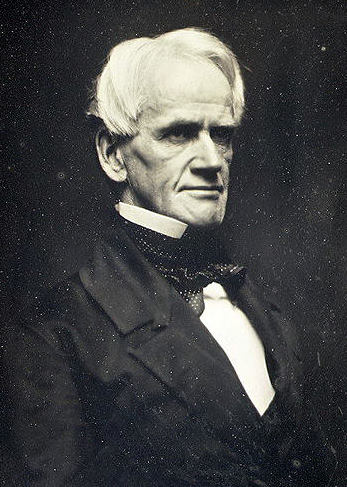
Horace Mann brought the ideal of public education for ALL children, regardless of income or ability, to the forefront in the 19th century and ushered in new philosophy on what public school should entail. 

Horace Mann

There were many early supporters of equal education for all, but there was still considerable controversy about access to education. Questions arose about whether poor children were being restricted to instruction in basic skills while the middle classes received broad education meant to maintain and improve their quality of life. It was in this period of transition from theoretical public education to an implemented system that worked for all citizens, that Horace Mann emerged as one of the principal champions of education.

Horace Mann, who many education experts and historians consider to be the father of the common school concept. With his craggy features and passionate speeches, he embodied the spirit of educational idealism during the first half of the 1800s.

Mann was born into an impoverished Massachusetts family and was largely self-taught. He managed to secure a place at Brown University, where his oratorical prowess first became evident. He was to use this rhetorical ability to further his careers in law and politics. As secretary of the first board of education in the United States, he gave lectures and started the influential Common School Journal.

Picking up on many of the ideas of the founding fathers, Mann went on to envisage how a system of universal education would best serve the social, economic, and political needs of society. He centered his lofty hopes for the nation on the solo successes of children because he believed that a common experience in school could mold them into successful individuals.

Mann developed six educational principles that would come to define his involvement, and would influence the American education system for decades:

(1) Citizens cannot maintain both ignorance and freedom;

(2) This education should be paid for, controlled, and maintained by the public;

(3) This education should be provided in schools that embrace children from varying backgrounds;

(4) This education must be nonsectarian;

(5) This education must be taught using tenets of a free society; and

(6) This education must be provided by well-trained, professional teachers.

Ever expansive in his ideas, Mann also believed that common schooling would reduce hostilities among citizens. As children grew into adults sharing a common educational experience, Mann posited that different socioeconomic, religious, and ethnic backgrounds would become less significant. Mann’s vision for schools included a common moral and political foundation, as well as the provision of opportunities for children from disadvantaged backgrounds to achieve self-sufficiency and use education to lift themselves from poverty.

By 1837, Horace Mann was busy working to mobilize support for public schools and argued that they were the training ground for youth and for individuals to be able to participate effectively as citizens of a democratic nation. Mann clearly valued a balanced and broad curriculum and supported the development of one in public schools.

Indeed, Mann’s ideal school system brought children from all backgrounds to learn together in an ungraded school. Mann advocated for the education of heterogeneous groups of students to achieve unifying goals and believed specifically in the connection between freedom, self-government, and universal education. He believed in the value of a common learning environment and the development of self-discipline. These, he maintained, could be transferred into the types of skills and behaviors needed for a free society where citizens were not only educated, but had the ability to make intelligent decisions needed for moral judgment and government participation. For Mann, the purpose of education went beyond intellectual and utilitarian goals.

Accepting that children differ regarding ability, interests, and temperament, Mann laid the groundwork for lessons to be adapted to meet the individual needs of children. The one-room school, now a nostalgic icon of American history, embodied Mann’s idyllic vision of the common school. There was little consistency in the curriculums used by one-room schools, though, and teachers had difficulty grouping children for instructional purposes.

Students studied in groups based on what they knew and what they needed to know. Students of multiple ages received instruction at the same level. Given the number of children and the different ages of children in the classroom, children principally learned via memorization. Teachers had little time to target individual needs in the classroom. Even with these drawbacks, however, the non-graded one-room school was an invaluable institution for providing free and public education for children during the 18th and 19th centuries.

Many children excelled in learning reading, writing, and arithmetic, even when the time at school was disrupted by the need to work on the family farm. The ungraded structure of the one-room school allowed for the return to school after an extended absence. It also allowed children to take a break and then return to learning, based on the knowledge they had retained.

Though the standardized assessments that are part of the educational system today did not exist, children did have oral exams at the end of the school year. These were formal quizzes on what they had learned over the course of the year. The purpose of these exams was to provide teachers with information about where to start children at the beginning of the next school year.

Passing and failing were not descriptors used to classify children’s learning behaviors in the one-room school, as progress was allowed to occur at different rates. Only when students took the exams needed to enter high schools outside of their rural communities would they experience their first taste of scholastic success or failure.

Was the one-room school on to something?

Pass or Fail: The Evolution of American Public Schools in the 20th Century

In this multi-part series, I provide a dissection of the phenomenon of retention and social promotion. Also, I describe the many different methods that would improve student instruction in classrooms and eliminate the need for retention and social promotion if combined effectively.

While reading this series, periodically ask yourself this question: Why are educators, parents and the American public complicit in a practice that does demonstrable harm to children and the competitive future of the country?

How did we go from one-room schoolhouses to hyper-segmented classrooms?

In the 19th century, one-room schools were the norm. Some evidence does support the view of one-room schools as effectively collaborative and cooperative, with children learning both moral and academic lessons. However, there were also immense issues. One of the biggest, of course, was that racially segregated schools existed in many states.

Horace Mann was an education pioneer who tested his methods in his home state of Massachusetts, where intermediate schools emerged as early as 1838. These intermediate schools offered segregated instruction and a differentiated curriculum to children who education authorities or teachers deemed unsuitable for the regular classroom. Student characteristics such as age, cultural or linguistic background, and socioeconomic status served to separate children from the common, or regular, learning environment. Intellectual and behavioral abnormality would later be used as a basis for segregation as well.

A serious dichotomy would also emerge in education in the 20th century in secondary schools with the sometimes-conflicting goals to instill classical academic skills as well as offer a broader range of practical life skills.

Pressing for a broad but rigorous curriculum, including comprehensive coverage of fundamental academic skills, but also the study of Latin, Greek, English, modern languages, mathematics, physics, chemistry, astronomy, biology, and social studies. In contrast to this, it was also proposed that there should be a dilution of academic learning to provide more of a focus on life-skills, such as how to achieve wholesome relations between men and women, as well as forms of vocational training. Both approaches to public education are still apparent in contemporary classrooms as the debate between intellectual and practical learning is ongoing.

The problem of the age-graded classroom was another challenge the American education system faced in the 20th century. Despite Mann’s enthusiasm for the heterogeneous one-room school, the potential to classify children by any number of characteristics made the shift to eight age-grade classrooms in elementary schools much more plausible and practical. Quincy School, the first school with graded classrooms, opened in Boston in 1848. Although the class size was still relatively large by today’s standards (classrooms could hold up to fifty-six students), students were classified by age and each group was headed by a separate teacher.

A uniform course of study followed, and just as children from rural one-room schools had to pass an exam to enter high school, children’s promotion to the next grade, at all levels of the elementary school, now depended on their examination performance.

Uniform course of study meant that children in each age-grade learned specific items in each subject area. It was part of a move to standardization: organizing what the children learned, when they learned, and how they learned. Written achievement tests served to determine whether the children had learned enough to be promoted to the next grade, and proved integral to this new vision for schools.

The eight-grade school structure emerged in urban settings and decentralized one-room school units were eventually consolidated. The graded classroom system contrasted with the ungraded in some key respects, however, and the transition was not always smooth. For example, children who missed days in the graded classrooms now experienced a distinct disadvantage regarding learning the required material. Absences were also judged to be disruptive to the learning of all children in the classroom, with teachers having to interrupt the pace of learning for the rest of the class to help a child catch up on learning material he or she had missed.

More often than not, teachers moved forward, while the truant child struggled to learn material for which he or she lacked the foundational knowledge. As most parents will appreciate, though, absences during the year are inevitable. Schools have always served as breeding grounds for illness, which can set a child back for several days at a time. Even a couple of days’ absence during the year can become problematic. And what about those students who are ahead of the game with their learning? With their advancements, they can be just as disruptive to the operations of such a standardized classroom.

Just as parents and teachers were grappling with disruptive absences, they were forced to face the challenges of testing as well. Teachers adhered closely to the textbook material, and that material would appear at the end of year promotion exams. Teachers also came to perceive student test performances as a reflection of their effectiveness. In some instances, teachers would attempt to isolate or remove children (by encouraging them to drop out or having them suspended) if they believed they would not do well on exams.

Suddenly, test results began to take center stage, above the importance of a child’s academic success. This is where the retention and social promotion discussion takes a dark turn for many students — one we’ll explore more in forthcoming posts from this series.

Literacy is the Doorway to Everything

A principal shares how special book events have ignited her students’ love of reading and connected them with their families.

By Shannon McParland

Before joining the Burnsville-Eagan-Savage Public School District, which is a diverse suburban school system, I worked with Saint Paul and Minneapolis public urban school systems. Now at Sioux Trail Elementary, I am principal of a school with a population with 48% students who are ethnically or racially diverse. We are a title one school with about 50% of students who qualify for free or reduced lunch support.

At Sioux Trail we always examine our family events and the impact they have on our students and families. Our data was showing us that we were not always accommodating a wide range of family needs and situations. From my experience in urban education as a general-education and special education teacher, I’ve always believed that literacy is the doorway to everything. If you can’t read, it will limit the opportunities to make your dreams a reality. So, we began looking at our family reading events and decided to make some changes.

In my four years as principal at Sioux Trail Elementary in Burnsville, MN we have promoted family literacy events and looked for ways that teachers, students and families may come together around literacy. Unfortunately, we had low or declining attendance at these evening events. After thinking and analyzing these trends, we were sure of a couple things. We knew our family outreach activities needed an overhaul and that the school to home connection was a critical one for success of the entire educational community.

Our school’s core vision and goals are centered around student learning and growth. We started there and began thinking outside of what had traditionally been done with literacy nights at Sioux Trail. In addition, we were lucky to be our district’s pilot site for myON, a digital literacy tool, and began to think about how this program could support us broadening our families’ access to literacy and books. Access to myON allows kids and families to access books wherever they are! That was a start to reaching out to families in new ways around literacy. As a pilot site, we promoted myON to families, taught students how to access it, and shared access information with parents at conferences.

We talked to our families and understood that evening events were difficult to attend due to competing extracurriculars, childcare, work schedules and other factors. We decided to shift our night literacy events to beginning of day events. We experienced immediate success. In the past we had held events such as “Breakfast and a Book” where parents and families could join their child and read a book while eating a breakfast from school or home in the cafeteria. We expanded on this concept.

On these days, when students are dropped off at school, their parents can come inside and eat a school provided breakfast with their child. When they finish their breakfast, parents and child select a book and read together in our Media Center. There are also other options for families to to enjoy and learn together. Because students use myON during their daily reading instruction, they show their families myON. Students show them how they log onto myON, select books at their level in the digital library, and have books read to them. MyON offers more than 10,000 digital texts that our students can access on computers, laptops, tablets, their smartphones, and other mobile devices. Saying, “I don’t have anything to read,” is no longer an option. They now have full access to any genre and level of text they may be interested in reading.

Now our family events are about our students showing their family members about their own learning. Our students have the opportunity to become the teacher by explaining how we use the devices and share which stories they’re reading. This has increased our students’ confidence and excitement by providing a positive reading experience. Since making these changes, we’ve seen an increase in our attendance at family events from about 25% to almost 90% parent attendance. We’ve really created a community of learners with all our families. We are also experiencing a surge in our parent volunteer numbers at our school due to families reading with their kids, helping out in the classroom, and through attendance at other classroom or school wide events. We not only made reading more enjoyable, we also created a welcoming environment that freely encourages parents to partner with the school and our programs.

This year, we built on our reading event called, “Sioux Trail Reads: One School, One Book.” We selected the novel, Blizzard: A Tale of Snow Blind Survival, that every student at Sioux Trail was invited to read while on winter break. Students were asked to read this book on myON. MyOn also supported us by donating 10 copies of the book to give to families who did not have access to technology over winter break. We partnered with Dairy Queen, who provided Blizzard gift cards as rewards, for reading the selection on myON,

It was a great success! Last year, a 2nd grade boy went to Puerto Rico with his family over winter break, bringing his technology device with him so he could participate in the event. Upon returning to school after winter break he lit up with excitement as he shared about all the stories he read while in Puerto Rico on myON. It’s the equity and the access which myON provides, leveling the playing field for a lot of our students. And that’s made all the difference.

Like many adults, I’m a book reader, not a Kindle reader. So, I got really excited about myON when I realized, that our students have a different frame of reference for the use of technology with everything including reading. MyON doesn’t replace anything; it enriches it. It creates opportunities to develop really great programs that can be extended to include the families. To the other districts and schools out there looking to improve their student’s love of reading, let me say this: If you have a vision for it, just jump in and create it. Find a program that works for you and build your goals around your literacy vision. So, whatever you choose, keep in mind that student involvement increases engagement and improves students’ academic growth. If you empower your students to take the lead of their reading and really become involved, you’ll have an amazing program.

Shannon McParland is the Principal at Sioux Trail Elementary in Burnsville, MN.

The Edvocate’s List of 68 Must-Read K-12 Teaching & Learning Blogs

*The Edvocate is pleased to produce its “Best of the Best” resource lists. These lists provide our readers with rankings for education-related blogs, twitter accounts, influencers, products, etc. These lists are meant to be fluid, and for that reason, they are regularly updated to provide up to the moment information.*

If you’re a teacher, or teaching assistant there are plenty of great blogs out there to help you with everything from coming up with teaching plans, to implementing technology in the classroom. Where to start though? The internet is crowded with blogs. We decided to go through some of them for you, so that you can find the blog(s) covering the topics you’re looking for and be sure it’s quality content.

Generally, there are four key qualities of a good teaching & learning blog:

  1. Activity (25%). Information should be updated regularly
  2. Originality (25%). It should add value with content that’s different from all the other blogs out there
  3. Helpfulness (25%). A good teaching & Learning blog should teach you a new skill, direct you to a useful resource, or at least get you to think in a new way about something
  4. Authority (25%). The author/authors have the authority and credentials to blog about the topic of teaching & learning

Each category was assigned an equal weight in our evaluation. They were averaged together to determine the final score in order to come up with our list of the top 68.

  1. Edutopia

In their own words: “You’ll find practical classroom strategies and tips from real educators, as well as lesson ideas, personal stories, and innovative approaches to improving your teaching practice.” And those words are accurate indeed – if you’re looking for interesting articles raging from helping students improve their mindset to high school book recommendations, this is an excellent blog to visit. What’s more, it’s well designed.

Score: Activity 25, Originality 25, Helpfulness 25, Authority 25

Total Score: 100

Email: [email protected]

Twitter: @edutopia

  1. Discovery Education

As the name implies this blog covers various topics about educational development, including practices to implement in the classroom and digital content. As with so many other blogs there’s a strong focus on edtech and STEM. A big plus is that they have free teacher resources – from lesson plans to brain boosters.

Score: Activity 25, Originality 24.5, Helpfulness 25, Authority 25

Total Score: 99.5

Twitter: @DiscoveryEd

  1. MindShift

This is an extremely exciting blog as it explores anything and everything that is proven to help learning, be it technology, games, or new teaching methods. For teachers looking to incorporate helpful tools and techniques in the classroom, this is blog is a must read.

Score: Activity 25, Originality 25, Helpfulness 25, Authority 24

Total Score: 99

Twitter: @MindShiftKQED

Email: [email protected]

  1. Daily Edventures

Anthony Salcito is the Vice President of Education for Microsoft Corporation’s Worldwide Public Sector and he’s the man behind Daily Edventures – a 365-day look at global heroes in education. You will find thoughts about education and technology from teachers all over the world on this blog, which is a unique and interesting concept. Possibly a bit biased in favor of Microsoft, but an all round amazing blog.

Score: Activity 25, Originality 25, Helpfulness 23.5, Authority 25

Total Score: 98.5

Twitter: @MicrosoftEDU

  1. Edudemic

This blog contains topics both for teachers and students and is an awesome resource when it comes for anything related to technology and teaching. There are also certain other topics discussed on the blog from time to time. There are several “teacher guides” also available, such as The Teacher’s Guide to Twitter, the Teacher’s Guide to Flipped Classrooms, etc.

Score: Activity 23.5, Originality 24.5, Helpfulness 25, Authority 25

Total Score: 98

Email: [email protected]

Twitter: @Edudemic

  1. NEA Today

neaToday provides News and features from the National Education Association. If you like to keep up to date on what’s going on in the field of education, including research and some theories and ideas to implement in the classroom, then this is an excellent blog.

Score: Activity 24, Originality 25, Helpfulness 23.5, Authority 25

Total Score: 97.5

Twitter: @NEAToday

  1. Cool Cat Teacher

11 years ago Vicki Davis, a full-time classroom teacher and IT Director at a small school in Georgia, decided to learn like a turtle – she’d spend 15 minutes three times a week to learn new tools to implement in the classroom. Today she shares new learnings, often in the form of podcast interviews with educational experts.

Score: Activity 25, Originality 22, Helpfulness 25, Authority 25

Total Score: 97

Twitter: @coolcatteacher

  1. Brilliant or Insane

Their tag line is “education on the edge” which is a good sum up as to what’s posted on this blog. The blog mainly offers tips and tricks to implement in the classroom (from classroom cleaning hacks to how to implement PBL), as well as a few articles surrounding research in the educational field. They also publish up to date teaching hacks books.

Score: Activity 22.5, Originality 24, Helpfulness 25, Authority 25

Total Score: 96.5

Email: [email protected]

Twitter: @markbarnes19

  1. Free Technology for Teachers

As the name aptly suggests it’s a blog about free technology resources for teachers.

Score: Activity 25, Originality 23, Helpfulness 23, Authority 25

Total Score: 96

Twitter: @rmbyrne

  1. TeachThought

This blog focuses on using innovative teaching methods to change the face of education. Blog posts have topics such as teaching empathy in the classroom, how to use inquiry based learning, four things project based learning teachers should do, etc. They also cover a range of edtech topics; one of their contributors is Victoria Olson an Apple Distinguished Educator, Google Certified Innovator, and Google Education Trainer.

Score: Activity 25, Originality 22, Helpfulness 23.5, Authority 25

Total Score: 95.5

Twitter: @TeachThoughtPD

  1. EdSurge

This is yet another blog focusing on edtech. The articles focus on the latest developments and there are also resources, like guides and lists of edtech tools.

Score: Activity 25, Originality 23, Helpfulness 22, Authority 25

Total Score: 95

Email: [email protected] 

Twitter: @EdSurge

  1. Tchers’ Voice

The slogan for this blog, posted on the Teaching Channel, reads: “Our blog is filled with great ideas from passionate educators just like you. Let’s get better together!” and that pretty much sums it up. Here a squad of teachers share techniques to implement in the classroom as well as thoughts worth pondering around education.

Score: Activity 25, Originality 24, Helpfulness 23, Authority 23

Total Score: 95

Twitter: @TeachingChannel

  1. Teacher Tech

A certified Google trainer, Alice Keeler will help you keep up with Google’s constant expansions. She’s exceptionally skilled in the use of Google Classroom.

Score: Activity 24, Originality 23, Helpfulness 23.5, Authority 24

Total Score: 94.5

Twitter: @alicekeeler

  1. eSchool News

Their slogan reads “daily tech news and innovation” and that pretty much sums it up, though not all articles are related to tech and innovation, but simply education in general. Definitively a great news feed for interesting articles/blog posts about education and various tools to implement in the classroom.

Score: Activity 25, Originality 23, Helpfulness 23, Authority 23

Total Score: 94

Twitter: @eschoolnews

  1. Erin Klein

Whilst the blog isn’t terribly prolific, it’s terribly well known and there’s a live streaming every first Tuesday of the month. The focus of the blog is the power of student voice, how technology can positively influence teaching and how classroom design impacts teaching.

Score: Activity 20, Originality 24, Helpfulness 24, Authority 25

Total Score: 93

Email: [email protected]

Twitter: @KleinErin

  1. Q&A with Larry Ferlazzo

Larry Ferlazzo is an award-winning English and Social Studies teacher at Luther Burbank High School in Sacramento, Calif.. He’s also an author of several books related to teaching and is big on using goal setting to motivate students. His blog often offers Q&As with other writers on topics surrounding education. It’s a blog that definitively provides a fresh look at teaching and education as a whole. As Larry also answers readers questions regarding teaching, you’re welcome to contact him.

Score: Activity 24, Originality 23, Helpfulness 21, Authority 25

Total Score: 93

Email: [email protected]

Twitter: @Larryferlazzo

  1. Larry Ferlazzo’s Websites of the Day

Larry Ferlazzo has another blog and this one, too, is helpful for teachers. Especially if you want to stay up to date with the latest news regarding teaching practices and studies on what’s effective in the classroom as Ferlazzo scours the net on an almost daily basis for news to share and also expresses his own opinions. The focus is ESL, ELL and EFL.

Score: Activity 25, Originality 21, Helpfulness 21, Authority 25

Total Score: 92

Twitter: @larryferlazzo

  1. Tech & Learning

As the name suggests this blog focuses on EdTech. It covers news related to edtech as well as more practical guides for implementation. The site is a bit overwhelming given all the content. However, they do offer a K-12 Blueprint which will give you tools for implementing technology and innovative learning techniques in the classroom. These tools and techniques come with research to back them up, which is very helpful.

Score: Activity 25, Originality 21.5, Helpfulness 21.5, Authority 24

Total Score: 91.5

Twitter: @techlearning/@k12blueprint

  1. Getting Smart

This is an interesting blog covering a range of ways to incorporate innovative ideas in the classroom, as well as various topics related to education that will spur your mind into action.

Score: Activity 24, Originality 24, Helpfulness 21, Authority 22

Total Score: 91

Email: [email protected]

Twitter: @Getting_Smart

  1. Teacher Tube

This is a blog sharing instructional videos covering just about any and every subject. A great resource for any teacher looking to incorporate videos in the classroom. Some videos offer higher quality than others, so it’s a matter of finding the ones that work for you.

Score: Activity 21, Originality 24, Helpfulness 24, Authority 21.5

Total Score: 90.5

Twitter: @teachertube

  1. Te@cher Toolkit

It’s been called the most influential blog on education in the UK and given it manages to top some of the lists in the US too, that might just be true. It is written by Ross Morrison McGill who has been teaching since he was 18 and the topics covered vary from talking about teachers’ fear of looking foolish to using comedy to improve literacy. Whilst topics concerning educational policy in the UK might not be of interest to you, the majority of posts are as relevant in the US as they are in the UK.

Score: Activity 24, Originality 21, Helpfulness 21, Authority 24

Total Score: 90

Twitter: @TeacherToolkit

  1. Moving at the Speed of Creativity

If you’re very into edtech, then this is a blog by Wesley Fryer is for you. Engaging posts about advancement in edtech and how to use various tools, as well as book reviews.

Score: Activity 20, Originality 24, Helpfulness 20, Authority 25

Total Score: 89

Email: [email protected]

Twitter: @wfryer

  1. The Learning Spy

David Didau likes exploring psychology and learning which he talks about on his blog, setting out with the idea that possibly everything you ever knew about education might be wrong. He is based in the UK, but his thoughts are as relevant for teachers in the US. If you want to find out what techniques you’re using in the classroom that have actually been examined to work and which are just presumed to work, then this blog is for you.

Score: Activity 22, Originality 23, Helpfulness 21, Authority 23

Total Score: 89

Email: [email protected]

Twitter: @DavidDidau

  1. Blogging Through the Fourth Dimension

This blog, by Pernille Ripp, offers a lot of ideas as to how to tackle different things within the classroom and offers teachers a plethora of resources, from ideas for bookclubs, to lesson plans. Pernille is an educational influencer, and the’s creator of the Global Read Aloud Project, a global literacy initiative that has connected more than 500,000 students and Co-founder of EdCamp MadWI.

Score: Activity 24, Originality 21.5, Helpfulness 21, Authority 22

Total Score: 88.5

Twitter: @pernilleripp

  1. Class Tech Tips

Dr. Monica  Burns is an elementary school teacher turned Curriculum and EdTech Consultant and Apple Distinguished Educator. Her blog is brimming with ideas for how to bring tech to your classroom and teach using iPads. If you are looking for tech tools to add to your classroom, this blog will be very useful for you!

Score: Activity 23, Originality 21.5, Helpfulness 21, Authority 23

Total Score: 88.5

Email: [email protected]

Twitter: @classtechtips

  1. The Innovative Educator

Lisa Nielsen got angry because she found education boring so she decided to do something about it. On her blog she shares innovative tips for educators.

Score: Activity 23, Originality 22, Helpfulness 20, Authority 23

Total Score: 88

Twitter: @InnovativeEdu

  1. Educational Technology and Mobile Learning

This blog covers everything and some when it comes to teaching using technology. It doesn’t follow some sort of set how to guide focusing on one thing, but rather anything covering educational technology and how to incorporate it in the classroom.

Score: Activity 25, Originality 23, Helpfulness 21, Authority 18

Total Score: 87

Email: [email protected]

Twitter: @medkh8

  1. SmartBrief Education

They connect education professionals with industry news, insights, resources and trends, which they do. It’s all curated.

Score: Activity 22, Originality 20, Helpfulness 23.5, Authority 21

Total Score: 86.5

Twitter: @smartbrief

  1. Shake Up Learning

This blog is a lot about creating a Google classroom, which the author, Kasey Bell, has written an entire book about. This isn’t so surprising given she’s a certified Google educator, innovator and trainer. The posts are regular and contain useful information for anyone who wants to run a digital classroom.

Score: Activity 22.5, Originality 20, Helpfulness 20, Authority 24

Total Score: 86.5

Twitter: @ShakeUpLearning

  1. Ditch That Textbook

Ditch That Textbook is Google certified innovator and teacher Matt Miller’s take on how to implement tech in the classroom. The focus seems to lie on high school and up.

Score: Activity 22, Originality 20, Helpfulness 20, Authority 24

Total Score: 86

Twitter: @mattmiller

  1. Pearson Teaching & Learning Blog

Pearson provides products and services in the educational field and their Teaching & Learning PreK-12 Education blog is very informative, with useful tips and thoughts to ponder.

Score: Activity 23, Originality 20, Helpfulness 20, Authority 22.5

Total Score: 85.5

Twitter: @PearsonNorthAm

  1. Teacher Cast

Here you will find tutorials, news and tips related to teaching. Recent topics include learning to create auto grading quizzes using Google Forms and the top 10 classroom management tips for teachers. It’s nice to see it’s not just about the tech space.

Score: Activity 22, Originality 20.5, Helpfulness 21, Authority 22

Total Score: 85.5

Twitter: @TeacherCast

  1. User Generated Education

If you are looking for extraordinary activities for elementary school kids, then this blog by Jackie Gerstein Ed.D is for you! Here you will find activities that far surpass the normal range and help both teachers and kids think outside the box.

Score: Activity 19, Originality 24, Helpfulness 22, Authority 20

Total Score: 85

Twitter: @jackiegerstein

  1. Cult of Pedagogy

An excellent blog with up to date information about teaching and easy to implement tips for the classroom. The topics covered are very varied – from dealing with youth running away from home from a teacher’s perspective to edtech tools you need to try. The blog was developed due to the author, Jennifer Gonzales, thinking it takes too much time for the average teacher to stay up to date with everything happening in the educational field, so she wanted to pull together the information on one site.

Score: Activity 20, Originality 21, Helpfulness 23, Authority 21

Total Score: 85

Twitter: @cultofpedagogy

  1. Caitlin Tucker

This California based blogger is bestselling author on the topic of blended learning and offers plenty of useful posts on how to integrate technology in the classroom and fun, engaging and useful activities to do with your students.

Score: Activity 23, Originality 20.5, Helpfulness 18, Authority 23

Total Score: 84.5

Email: [email protected]

Twitter: @Catlin_Tucker

  1. The PE Geek

It sounds somewhat contradictory to introduce edtech to PE, but it’s not. And here you’ll learn why. From time to time there are also other topics related to edtech and teaching covered, so even if you don’t teach PE, you might want to stop by.

Score: Activity 22, Originality 23, Helpfulness 19.5, Authority 20

Total Score: 84.5

Twitter: @mrrobbo

  1. The Jose Vilson

A math teacher turned teaching activist promoting social justice in education, Jose Vilson shares his thoughts on the latest happenings in education, offers support to minorities in teaching and talks about teaching students of low income households.

Score: Activity 19, Originality 24, Helpfulness 18, Authority 23

Total Score: 84

Twitter: @thejlv

  1. Teach Like a Champion

According to themselves Teach Like a Champion provides educators with a set of techniques, a shared vocabulary, and a framework for practice that equip teachers to achieve dramatic results with their students. The blog, on the other hand, contain blogs that are both personal and revealing, showing how the educators come to the conclusions they do. A worthwhile blog to read if you want to be part of revolutionizing education.

Score: Activity 21, Originality 21, Helpfulness 21, Authority 21

Total Score: 84

Email: [email protected]

Twitter: @Doug_Lemov

  1. A.J. Julian

A.J. Juliani is the Director of Technology & Innovation for Centennial School District and blogs about anything and everything related to innovation. Not unlike other blogs on this list a lot of the posts focus on project based learning, edtech, implementing design thinking in the K-12 classroom and designing the future of education. However, there are also plenty of other topics covered and the blog offers interesting thoughts to ponder and ideas to implement.

Score: Activity 21, Originality 21, Helpfulness 19, Authority 22.5

Total Score: 83.5

Email: [email protected]

Twitter: @ajjuliani

  1. iLearn Technology

Kelly Tenkely started out as a teacher and turned into a technology integration specialist who started her own school, implementing all the inspirational new educational techniques available. The blog focuses mainly on implementing technology in the classroom using various tools, but also ideas around education. As with any blog you will use whatever material and ideas you see fit to implement in your classroom.

Score: Activity 21, Originality 21, Helpfulness 21.5, Authority 21

Total Score: 83.5

Twitter: @ktenkeley

  1. Christensen Institute

The Christensen Institute is a think tank on the topics of education, healthcare and economy. They post several interesting blogs about development in education and how it applies to teachers.

Score: Activity 21, Originality 21, Helpfulness 16, Authority 25

Total Score: 83

Email: [email protected]

Twitter: @ChristensenInst

  1. The Cornerstone for Teachers

This blog by Angela Watson is interesting because it focuses on teachers and managing yourself, as well as your classroom. There are also plenty of resources, courses, etc. available from Angela on the page.

Score: Activity 20, Originality 21, Helpfulness 21, Authority 20

Total Score: 82

Twitter: @Angela_Watson

  1. Magical Maths

What started out as a blog about maths has become a blog for teachers to post various opinion pieces, as well as practical ideas and exercises to implement in the classroom.

Score: Activity 18, Originality 18, Helpfulness 20, Authority 25

Total Score: 81

Twitter: @magicalmaths

  1. Ed Tech Review

The EdTechReview, not surprisingly, reviews anything to do with edtech. They also offer reports, studies, insights, webinars, etc. It’s one of the best resources for all things edtech and how to incorporate it in your classroom. However, not all content is for K-12 as they also cater to higher ed.

Score: Activity 20, Originality 20, Helpfulness 20, Authority 21

Total Score: 81%

Email: [email protected]

Twitter: @etr_in

  1. Teaching NOW

Teaching NOW is crafted by Education Week Teacher Assistant Editor Madeline Will. The apt description on the blog reads: “Coverage runs the gamut from the inspirational to the infuriating, from practical classroom tips to raging policy debates.” The blog does cover various very interesting topics.

Score: Activity 20, Originality 19, Helpfulness 21, Authority 20.5

Total Score: 80.5

Twitter: @EdWeekTeacher

  1. Top Performers

If you are interested in the policies and practices of countries that have the best educational systems, this is a blog that will give you insight. It will make you question what’s good and what’s bad in the American system and possibly leave you with ideas for how to make your personal teaching better.

Score: Activity 21, Originality 21, Helpfulness 15, Authority 23

Total Score: 80

Email: [email protected]

Twitter: @educationweek

  1. The Learning Network

This is the New York Times Learning Network, which is a great network to tap into if you’re looking for lesson plans centered around news stories. There are also news quizzes, a film and picture club and various contests that your students can get involved in.

Score: Activity 24, Originality 20, Helpfulness 17, Authority 19

Total Score: 80

Twitter: @nytimes

  1. Think Inclusive

This blog is for anyone teaching in an inclusive classroom. Here you will find tips from other educators that you can implement.

Score: Activity 17, Originality 20.5, Helpfulness 20, Authority 22

Total Score: 79.5

Twitter: @think_inclusive

  1. EmergingEdTech

Kelly Walsh, a CIO & Adjunct Instructor, blogs about how to incorporate technology in the classroom. It’s mainly a blog for tech geeks who are really into the edtech world.

Score: Activity 20, Originality 19, Helpfulness 16, Authority 24

Total Score: 79

Twitter: @EmergingEdTech

  1. MiddleWeb

MiddleWeb provides resources for the middle grades. They focus on five streams of content: Resource Roundups, Themed Blogs, Articles, Interviews and Book Reviews. Co-teaching, how to help students crush math anxiety, and opening your classroom doors to family audiences are all recent topics that have been covered on their very active blog.

Score: Activity 19, Originality 19, Helpfulness 20, Authority 20

Total Score: 78

Email: [email protected]

Twitter: @middleweb

  1. Teach

From online teaching tips, to the latest research on the effectiveness of homework assignments, this blog is an incredible resource for any teacher. The topics are varied and relevant. Teach is actually a blog owned and operated by 2U Inc, which enables leading colleges and universities to deliver their high-quality degree programs online. However, the blogs are often geared towards teachers teaching K-12.

Score: Activity 20, Originality 18, Helpfulness 18, Authority 21

Total Score: 77

Twitter: NA

Email: [email protected]

  1. Ms. Cassidy’s Classroom Blog

Ms. Cassidy has a love of teaching that comes across in her blog posts, which describe activities she’s done with her class. It will provide you with doses of inspiration and ideas for activities you can use in the classroom.

Score: Activity 20, Originality 18, Helpfulness 18, Authority 20

Total Score: 76

Twitter: @mscassidysclass

  1. The Teaching Palette

They may not post often, but their posts related to teaching art are incredibly helpful if you are indeed teaching art!

Score: Activity 19, Originality 18, Helpfulness 18, Authority 20

Total Score: 75

Twitter: @TchingPalette

  1. HomeRoom

This is the official blog of the U.S. department of education. Whilst the blog isn’t always geared to K-12, nor always providing insightful information for things to implement in the classroom it’s the one blog you need to follow for the sake of knowing what’s going on related to government initiatives, rules and regulations. And from time to time there are blogs that contain information you can implement in the classroom, or advice that will help you in your career as a K-12 teacher. Also, there is a button to the right, under “archives” that lets you search all topics related to K-12.

Score: Activity 19, Originality 17, Helpfulness 18, Authority 20

Total Score: 74

  1. Curriculum Matters

As the blog suggests the focus is on how curriculum changes are affecting classrooms. Two classroom teachers turn educational journalists, Liana Heitin and Jaclyn Zubrzycki, run this blog on Education Week and also include topics coving social media and STEM. It will certainly provide you with food for thought about what should and shouldn’t be included in your curriculum.

Score: Activity 19, Originality 17.5, Helpfulness 18, Authority 19

Total Score: 73.5

Email: [email protected] and [email protected]

Twitter: @LianaHeitin

  1. Teaching for the Whole Story

This is a relatively new blog on Education Week by Ariel Sacks who is a is a middle school language arts teacher and instructional-support coach. She blogs about various elements of teaching, mainly related to reading in the classroom. Covering interesting and useful topics, it’s a blog well worth reading.

Score: 19, Originality 17, Helpfulness 18, Authority 19

Total Score: 73

Email: [email protected]

Twitter: @arielsacks

  1. Inspired Instruction: Videos from the Teaching Channel

This excellent blog shares useful videos from the teaching channel, offering ideas for what to incorporate into your classroom. One of the best blogs for easy implementation of tools shared thanks to the videos that make it easy to see exactly how to implement it.

Score: Activity 18, Originality 18, Helpfulness 18, Authority 18

Total Score: 72

  1. Busy Teacher

This site offers articles, lesson plans, creative writing prompts and worksheets centered around teaching English. The content is varied age wise – some is suitable for the little ones, some for high school students and beyond. There are also helpful articles about classroom management, which applies to any teacher. It’s definitively a blog worth visiting due to all the different resources available.

Score: Activity 17.5, Originality 18, Helpfulness 18, Authority 18

Total Score: 71.5

Email: [email protected]

  1. Competency Works

This blog, as the name suggests, is about competency education and how to transform your teaching to take this into account. They post almost daily and the blogs, if nothing else, will make you contemplate how education is constantly being transformed and how you can participate in the transformation.

Score: Activity 17, Originality 18, Helpfulness 18, Authority 18

Total Score: 71

Twitter: @CompetencyWorks

  1. Teaching Blog Addict

If you like getting freebies (every Friday); lesson plans, printouts and the likes, then Teaching Blog Addict can help. What’s more, it links up an astounding amount of bloggers that blog about teaching, so whether you’re looking for kindergarten or first grade inspiration for teaching you will find it here. However, the blog is somewhat confusing with links going off in all directions.

Score: Activity 17.9, Originality 17, Helpfulness 18, Authority 18

Total Score: 70.9

  1. The Curriculum Corner

In this blog, founded by two teachers, you will find lesson plans, activities to do in the classroom, etc. targeted toward busy teachers who want to access information fast. Unlike so many other blogs these days the focus here is old fashioned games and activities. The activities are aimed to meet national state standards.

Score: Activity 17.6, Originality 17, Helpfulness 18, Authority 18

Total Score: 70.6

Email: [email protected]

Twitter: @curriculumcornr

  1. The Organized Classroom

This blog by Charity Preston mixes hands on classroom DIY with technology tips, classroom management tips, etc. There are plenty of video workshops too.

Score: Activity 17, Originality 17, Helpfulness 18, Authority 18.3

Total Score: 70.3

Twitter: @theOCblog

  1. Ask a Tech Teacher

If you’re looking to add edtech to your classroom and need great information about where to start, this blog could be the one for you. It’s updated regularly and explains various tips for how to get started. They offer free lesson plans and various K-12 resources as well.

Score: Activity 16, Originality 17, Helpfulness 18, Authority 18.9

Total Score: 69.9

Twitter: @AskATechTeacher

  1. Science Cheerleader

This blog scores top points for originality – it’s a blog by cheerleaders who work in science. The blog features interviews with different cheerleaders, which serves to inspire more girls to join the field of science. It’s not exactly the kind of blog you’d use to implement new classroom strategies, but you might want to share it with students to show that women who work in science have diverse interests. Most people don’t think Harvard grads and women working on the forefront of science do cheerleading.

Score: Activity 16, Originality 17, Helpfulness 18, Authority 18.6

Total Score: 69.6

Email: [email protected]

Twitter: @TheSciCheers

  1. Smart Classroom Management

Smart Classroom Management is Michael Linsin’s take on classroom management and offers weekly blogs on the topic. The blog has over 100,000 subscribers which says something about the usefulness of the topics covered and Michael has taught every grade level from K-12. It’s, of course, his biased take on classroom management, but it’s a take well worth considering.

Score: Activity 16, Originality 17, Helpfulness 18, Authority 18.3

Total Score: 69.3

Email: [email protected]

  1. EdTech for Beginners

This blog by Neil Jarrett, a Google certified teacher who teaches at an international school in Thailand, does what it says on the label: teaches edtech for beginners. It also offers tools and updates for teachers already well versed in edtech however and is worth a visit if you’re looking for new edtech tools for your classroom.

Score: Activity 16, Originality 17, Helpfulness 18, Authority 18

Total Score: 69

Email: [email protected]

Twitter: @edtechneil

  1. The Educator

This is another UK site, but it’s worth mentioning as it covers some fresh topics, such as finding out what refugee camp teachers go through, teachers’ work life balance, and what you can learn from a classroom in Singapore.

Score: Activity 17, Originality 17, Helpfulness 17, Authority 17

Total Score: 68

Twitter: @TheEducator_UK

  1. Dr. Doug Green

After over 30 years in education Dr. Doug Green left his job as an elementary principal to care for his ailing wife. After her death he decided to do something to help parents and educators and started scouring the net and reading books, which he then summarized in bite sized nuggets.

Score: Activity 16, Originality 17, Helpfulness 17, Authority 17

Total Score: 67

Twitter: @DrDougGreen

Conclusion

As you can see, there is no shortage of great K-12 teaching & learning blogs to choose from! Subscribe to those that meet your needs best, and watch your knowledge of teaching & learning expand in no time.



A Reflection on the Success of Public Schools

By Brian E. Cleary

As we move into a new era of public educational administration, we will all be asked to look at ways to change how public schools are run. That request will come with long lists of all the thing we are doing wrong and all the students we have failed. The lists of our success, however, are far less prevalent. That imbalance suggests a completely broken system rather than one that needs to be improved. The failing aspect of any structure always make the news, there is always more interest and debate over what is failing than over what is working.  No one cares about the coaches that keep their jobs, the celebrities that don’t go into rehab, or the schools that send their students on to success.

It is worth our time to look carefully at the success and failures of our past. Change is ignited by failure, but it is fueled by ideas that have worked in the past. While our educational system has had more than enough failure to light the blazing rationale for change, that same system has also had more than enough success to know where success can be found.

According to the National Center for Educational Statistics

  • The literacy rate in the US is 99% for those over the age of 15.
  • Our dropout rate has dropped consistently for the last 40 years.

  • More students than ever before (22 million, or 69%) will go on to some kind of secondary degree this year.
  • Public School graduates annually make up between 55 and 70% of the matriculating freshmen as Harvard, Yale, Princeton, MIT, Stanford, Brown, and Cornell.

Those are not shabby data point for a system that this year will educate 50 million students (33% more than any other PISA tested country.) The shine of those points is brighter still if you remember that more than two-thirds of those students live below the poverty line.

As a teacher, I have learned that my classroom is filled not with a data point, but with individuals, and the list of success there is worth noting as well.

  • 9 of the last 13 Presidents have gone through the Public School system.
  • More than a third of 338 Nobel Prizes won by US citizens have been brought home by public school graduates, more than any other educational system.


  • Every Chair of the Federal Reserve for the last 50 years started out as a public school student,
  • Six of our Supreme Court Justice are the products of public education.


For all the work and progress we desperately need in public education, we should not forget that our work has changed every aspect of our culture from our entry into the digital age to our perceptions of art.

Steve Jobs, Larry Page, Sergey Brin, and Mark Zuckerberg all attended Public schools, before they digitally changed our world, and each of those minds has advocated for improvements that should be considered.


As a collective system our public schools have always struggled to support the arts, yet with that limited and sporadic support, we have still managed to foster the growth of many graduates from the public school system before going on to refine their various mediums.

Wynton Marsalis, Carlos Santana, Maya Angelou, Andy Warhol, Steven Spielberg, Alvin Ailey, Robin Williams, Meryl Streep, Denzel Washington, and Annie Leibovitz.


Make no mistake.  The public education system is in need of reform. We need to jettison the tools and tests we recognized as outdated back in a different century and adopt methods and modalities that prepare our students for this one. We have failed on many fronts and need to learn from those mistakes. We have also succeeded.  Whether or not those wins, or the millions of others that have not made the news, they are as important to an honest appraisal of how to improve a system that is fundament to the making and keeping our country great.

Brian Cleary is an Instructional Coach in the Evergreen School District in Vancouver, Washington.


National Center for Educational Statistics

https://nces.ed.gov/fastfacts/display.asp?id=805

PISA score by population:

https://edexcellence.net/commentary/education-gadfly-daily/flypaper/how-population-size-affects-pisa-results

Chair of the Federal Reserve:

Janet Yellen

http://www.biography.com/people/janet-yellen-21362135

Ben Bernanke

http://www.forbes.com/sites/investopedia/2013/10/22/the-legacy-of-ben-bernanke/ – 4d7ce985605b

Alen Greenspan

http://www.biography.com/people/alan-greenspan-9319769

Paul Vilcker

http://www.famouseconomists.net/paul-volcker

Supreme Court:

Anthony Kennedy

http://www.biography.com/people/anthony-kennedy-9362868

Ruth Bader Gingsburg

http://www.biography.com/people/ruth-bader-ginsburg-9312041

Stephen Beyer

http://www.biography.com/people/stephen-breyer-40553#synopsis

Samuel A. Alito

www.oyez.org/justices/samuel_a_alito_jr

Sonia Sotomayor

https://www.oyez.org/justices/sonia_sotomayor

Clarence Thomas

http://www.biography.com/people/clarence-thomas-9505658

Matriculation:

Dartmouth, Yale, Princeton, Cornell

http://blog.centerforpubliceducation.org/2014/04/04/public-high-schools-are-prominent-in-ivy-league-rosters/

Harvard,

https://thechoice.blogs.nytimes.com/2009/09/16/harvarddean-part5/?_r=0

Stanford;

http://news.stanford.edu/news/2014/september/class-new-students-091514.html

MIT;

http://mitadmissions.org/apply/process/profile

Individual bio stats:

http://www.biography.com/people/sergey-brin-12103333#synopsis

https://www.britannica.com/biography/Sergey-Brin

Grit, Chutzpah, Sisu and other Things my Nana Knew About


There is a cluster of books, all soundly based on scientific research that seems to support those pearls of wisdom our grandparents knew long before social science research had been invented.  “You can’t beat someone who never gives up.”

Grit, by Angela Duckworth, Mindset, by Carol Dweck, and How Children Succeed, by Paul Tough all feel, at least in part, directly targeted at those of us in education, and speak specifically to the development of tenacity.

As a teacher, it seems impossible to read very far into these texts without offering up a silent “well, duh…”. Or “I’ve been saying that for years, the harder you work the luckier you get.” But stopping at that point is not only presumptuous it is also, well, less than gritty. These titles all have something to offer teachers.

The latest thinking shared by those that study these ambiguous traits is that while natural talent and great teaching are common characteristics of “the best of the best” in any given field, the most prominent trait, and therefore the strongest indicator of success is what the Finnish people call sisu, what my latin colleague calls chispa or what John Wayne called Grit. It is a learned skill or at least a trait that can be fostered.

All of this tenacious research builds on those ancient bits of grandparently wisdom and explains them; why developing grit is important, what can happen to those that fail to acquire a stubborn streak, and perhaps most importantly how can this powerful life skill be developed.  This is handy knowledge for those of us that needed a bit more from Grandma than: “Success is just getting up more often than you fall down.” I can only imagine the impact it would have had on me if my Nana and said “People who view failure as temporary, rather than a value judgment are more likely score well on a grit scale, which is an indicator of both professional achievement and personal happiness, so stop pouting and try again.”

Students that participate in extracurricular activities develop a more dogged mindset and are 3 times more likely to go to and succeed in college.

In the elementary school extra-curricular, has a different look than it does for our secondary peers.  They are, however, no less important.  Along with nurturing that chutzpah in our young charges, extra-curricular activities of every kind also increase a sense of belonging, connection between student and school, which is also a contributor to student success.

As a byproduct of our own success, it is now quite possible to skate through life with little or no failure. Decent grades and a willingness to take on debt, will get you into college and set you on the path to a middle America only slightly less impressive, but every bit as comfortable, as what our parents found. It turns out that this is a less than ideal plan for personal growth and meaningful learning. My literacy teachers’ are right a story without a problem is not a story at all.


There is also a very clear link between passion and learned persistence.

My grandmother didn’t get the memo on this one. Grit is not blind obsessive determination. It is rather the relentless and thoughtful pursuit of a personal goal.  If what I am teaching is not important to my learners than it’s not a pathway to grit. (sorry Nana.)

As an educator, these studies and the statistics they generate serve to both justify and propel action in my lessons. I want my students to be as gritty and resilient as a Rocky Balboa- Indiana Jones love child because, in ways that are both selfish and noble, their success is a measure of mine.

I am reluctant to add another item to the litany of things a teacher is responsible for developing in our youth. As a result, my work with classroom teachers will explore ways to; seed our lessons with moxie and temerity, help our students explore and find their passions, and encourage them to try so hard that they stumble.


Alma Takes Personalized Learning to the Next Level with Student Choice

The idea that no two students learn in exactly the same way or have the same interests is nothing new. Even back in the 1800s, educators were advocating for an educational system that took the personalized needs of the student into account when offering curricular options, which they believed would help children learn independence, both academically and in life. This idea was formulated with the thought that all students learn at a different pace and should be allowed to take the time they need to work on their studies and explore the areas that interest them the most. Before the rapid advancements in technology of the past two decades, these ideas were just that: lofty and unrealistic in a typical K-12 classroom.

Enter technology from companies like Alma Technologies, Inc. In order to provide school districts with the ability to make much-needed reforms, they recently unveiled their Personalized Learning Scheduling Tool, which is a new feature in its intuitive, fully integrated student information system (SIS) and learning management system (LMS). Before Alma, the traditional school schedule posed barriers for school districts looking to create personalized learning opportunities for their students. This makes Alma a trailblazer, as they are the first SIS to offer a customized scheduling option for K-12 schools and districts.

Because of Alma, student choice is no longer an obscure theory that applies to a small group of students who can afford to attend the schools that offer it; technology makes it a mainstream possibility and one that has the ability to positively impact all types of learners in this generation of K-12 students. Unlike other scheduling software, Alma gives school districts the ability to allow their students to choose what they want to learn every day, and also includes performance tracking and maintains attendance. Schools can earmark a particular portion of the school day for student choice, and allow students to choose the classes or programs that they would like to attend. This provides school and district leaders with the opportunity to offer a greater variety of learning opportunities, which are based on student interests and curricular needs.

In order to make their tool even more powerful, Alma added new scheduling and tracking capabilities for school events and programs outside of the traditional bell schedule. This allows school staff to track attendance for every possible event, such as detention, tutoring, after-school programs, extracurricular activities and athletic programs. These additions give administrators the ability to monitor where their students are at all times. This provides them with the opportunity to respond to emergency situations and programming choices with the information that they need to make informed decisions and judgments.

As you can tell, technology is making student choice easier. Educators now have more resources available than ever before when it comes to accommodating students on their own academic paths and making sure they are successful. Students are embracing this push toward greater empowerment in their own learning journeys. Giving students a voice, and a choice, when it comes to what they learn is the first step toward empowering them in their own learning and career paths.

Making Student Choice a Reality

While personalized learning scheduling tools are still in their infancy, advancing the technology could drastically alter the landscape of how students learn and matriculate through the curriculum. In the long run, will it end up improving K-12 education or simply complicate things?

Now, considering pros and cons of this concept, we must note that customized or personalized, learning, in general, is often met with hostility, especially as schools must relinquish some curricular control for this trend to really work. On the flip side, though, student choice has the potential to incorporate a variety of resources, such as virtual learning, to aid in the learning process while allowing schools to offer learning experiences in practical and economical ways. I think that the idea of handing control to students is frightening to some educators and administrators but once attempted, even on a small scale, it is easy to see the benefits of student choice.

With the right resources and data, administrators can make any school a place of real student choice. Technology makes it possible for students to truly approach academics from a place of strength and to never feel overwhelmed or uncomfortable because of a narrow selection of curricular choices, or face the fear of falling behind. As student choice scheduling options like those developed by Alma are integrated into school models, students will benefit – and so will their administrators and teachers.

What is an outstanding feature of Alma that would help your school?