Uncategorized

Pass or Fail: Retention and its Roots in Early American Public Education

In this multi-part series, I provide a dissection of the phenomenon of retention and social promotion. Also, I describe the many different methods that would improve student instruction in classrooms and eliminate the need for retention and social promotion if combined effectively.

While reading this series, periodically ask yourself this question: Why are educators, parents and the American public complicit in a practice that does demonstrable harm to children and the competitive future of the country?

Today’s practice of retaining students is a far cry from what took place in America’s earliest public school classrooms. 

Before assessing the American education system, it is necessary to understand where our roots lie. We must consider how public education became enshrined in the United States, what the objectives of public education were, how the public education system in the United States was developed, and what efforts have been made to reform the system since its inception.

The United States should be viewed from an educational standpoint as an essentially European-derived enterprise. In particular, because of the religious make-up of the first European settlers, we have a strong Protestant lineage. The goal of America’s public education system has been relatively consistent: to produce satisfying outcomes in eight broad categories:

  1. Basic academic knowledge and skills, including reading, writing, math skills, and knowledge of science and history.
  2. Critical thinking and problem-solving abilities, including the ability to analyze information and apply knowledge to new situations.
  3. Appreciation of the arts and literature, including participation in and appreciation of musical, visual, and performing arts as well as cultivation of a love of literature.
  4. Preparation for skilled employment, including appropriate workplace qualifications.
  5. Social skills and a strong work ethic, including communication skills, a feeling of personal responsibility, and the ability to work with and interact with others from varied backgrounds.
  6. Citizenship and community responsibility, including public ethics and knowledge of how government works.
  7. Physical health, including lifelong exercise and healthy eating habits.
  8. Emotional health, including self-confidence and respect for self and others.

In 1749 Benjamin Franklin pioneered American thinking on education by proposing that Pennsylvania establish a public academy of education for adolescents. Franklin suggested that such an institution should also emphasize physical fitness, as well as academics. A man of many ideas and insights, Franklin also spoke up on the importance of studying history, because it taught students temperance, order, frugality, and perseverance. Franklin thought schools should require competence in reading, arithmetic, and science, and that they should be accountable for teaching these skills. However, Franklin and his contemporaries did not envision assessments of the quality of educational institutions based on how well students acquired the skills and knowledge.

The Federalists, led by Alexander Hamilton, held yet a slightly different view on education, suggesting that universal education would assist in socializing citizens, helping them to accept the values of their rulers, but also preparing young people for a “law-abiding” adulthood.

Falling somewhere between the aforementioned two perspectives was George Washington, who contended in his first State of the Union address that Congress should promote schools that taught citizens how “to value their own rights.” Washington recognized that public opinion makes policy in a democracy and, as a result, “it is essential that public opinion should be enlightened.” In none of these instances, though, does it appear that rigid standards for reading, writing, and arithmetic are the foundation for accountability. Schools were expected to go well beyond such basic provisions and, in effect, become responsible for the creation of productive, well-informed, and engaged citizens.

More than 70 years after Franklin’s comments on the components of an optimal public education, Jefferson clarified and elaborated. Jefferson believed a proper education should give all citizens the information they needed to undertake transactions at their businesses. He thought it should enable citizens to calculate for themselves, express their ideas, contracts, and accounts in writing; to improve their morals and faculties via reading, and to understand their duties to their neighbors and country.

The 1780 Massachusetts Constitution, drafted by John Adams, another of the founding fathers, laid out the first legal requirement for public education. This state constitution noted that the duty of the legislative and executive branches would be to maintain public schools. “Wisdom and knowledge,” the document declared, “as well as virtue, diffused generally among the body of the people, [is] necessary for the preservation of their rights and liberties. In addition to teaching academic subjects, public schools should also be required to include lessons on the principles of humanity and general benevolence, public and private charity, industry and frugality, honesty and punctuality, sincerity, good humor, and all social affections, and generous sentiments.”

There is clear evidence that the government took to heart much of what the founding fathers had to say on this topic. The 1787 Northwest Ordinance provided funds to new states that allowed them to establish public education systems, declaring that “religion, morality, and knowledge, being necessary for good government and the happiness of mankind, schools and the means of education shall forever be encouraged.”

Even in the earliest days of America, the notion that public education was a necessity was accepted. Of course, at that time the nation lacked the infrastructure to provide effective access to public education, so such support was mostly theoretical. Still, there were many who came forward in support of a public education system that embraced most, if not all, of the ideas and principles that the founding fathers had set forth.

This basic support was founded on the fact that people believed in access to education as a right — a belief that would be dissected over time to bring us to the retention-social promotion context of today.

 

Pass or Fail: Horace Mann – An American Public School Pioneer

In this multi-part series, I provide a dissection of the phenomenon of retention and social promotion. Also, I describe the many different methods that would improve student instruction in classrooms and eliminate the need for retention and social promotion if combined effectively.

While reading this series, periodically ask yourself this question: Why are educators, parents and the American public complicit in a practice that does demonstrable harm to children and the competitive future of the country?

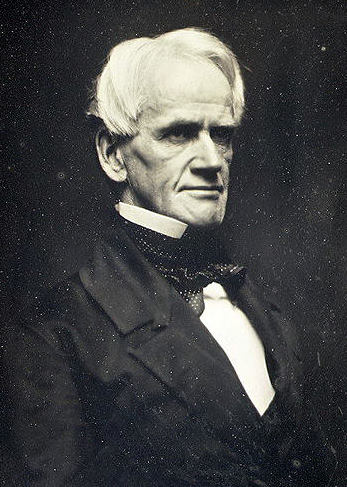
Horace Mann brought the ideal of public education for ALL children, regardless of income or ability, to the forefront in the 19th century and ushered in new philosophy on what public school should entail. 

Horace Mann

There were many early supporters of equal education for all, but there was still considerable controversy about access to education. Questions arose about whether poor children were being restricted to instruction in basic skills while the middle classes received broad education meant to maintain and improve their quality of life. It was in this period of transition from theoretical public education to an implemented system that worked for all citizens, that Horace Mann emerged as one of the principal champions of education.

Horace Mann, who many education experts and historians consider to be the father of the common school concept. With his craggy features and passionate speeches, he embodied the spirit of educational idealism during the first half of the 1800s.

Mann was born into an impoverished Massachusetts family and was largely self-taught. He managed to secure a place at Brown University, where his oratorical prowess first became evident. He was to use this rhetorical ability to further his careers in law and politics. As secretary of the first board of education in the United States, he gave lectures and started the influential Common School Journal.

Picking up on many of the ideas of the founding fathers, Mann went on to envisage how a system of universal education would best serve the social, economic, and political needs of society. He centered his lofty hopes for the nation on the solo successes of children because he believed that a common experience in school could mold them into successful individuals.

Mann developed six educational principles that would come to define his involvement, and would influence the American education system for decades:

(1) Citizens cannot maintain both ignorance and freedom;

(2) This education should be paid for, controlled, and maintained by the public;

(3) This education should be provided in schools that embrace children from varying backgrounds;

(4) This education must be nonsectarian;

(5) This education must be taught using tenets of a free society; and

(6) This education must be provided by well-trained, professional teachers.

Ever expansive in his ideas, Mann also believed that common schooling would reduce hostilities among citizens. As children grew into adults sharing a common educational experience, Mann posited that different socioeconomic, religious, and ethnic backgrounds would become less significant. Mann’s vision for schools included a common moral and political foundation, as well as the provision of opportunities for children from disadvantaged backgrounds to achieve self-sufficiency and use education to lift themselves from poverty.

By 1837, Horace Mann was busy working to mobilize support for public schools and argued that they were the training ground for youth and for individuals to be able to participate effectively as citizens of a democratic nation. Mann clearly valued a balanced and broad curriculum and supported the development of one in public schools.

Indeed, Mann’s ideal school system brought children from all backgrounds to learn together in an ungraded school. Mann advocated for the education of heterogeneous groups of students to achieve unifying goals and believed specifically in the connection between freedom, self-government, and universal education. He believed in the value of a common learning environment and the development of self-discipline. These, he maintained, could be transferred into the types of skills and behaviors needed for a free society where citizens were not only educated, but had the ability to make intelligent decisions needed for moral judgment and government participation. For Mann, the purpose of education went beyond intellectual and utilitarian goals.

Accepting that children differ regarding ability, interests, and temperament, Mann laid the groundwork for lessons to be adapted to meet the individual needs of children. The one-room school, now a nostalgic icon of American history, embodied Mann’s idyllic vision of the common school. There was little consistency in the curriculums used by one-room schools, though, and teachers had difficulty grouping children for instructional purposes.

Students studied in groups based on what they knew and what they needed to know. Students of multiple ages received instruction at the same level. Given the number of children and the different ages of children in the classroom, children principally learned via memorization. Teachers had little time to target individual needs in the classroom. Even with these drawbacks, however, the non-graded one-room school was an invaluable institution for providing free and public education for children during the 18th and 19th centuries.

Many children excelled in learning reading, writing, and arithmetic, even when the time at school was disrupted by the need to work on the family farm. The ungraded structure of the one-room school allowed for the return to school after an extended absence. It also allowed children to take a break and then return to learning, based on the knowledge they had retained.

Though the standardized assessments that are part of the educational system today did not exist, children did have oral exams at the end of the school year. These were formal quizzes on what they had learned over the course of the year. The purpose of these exams was to provide teachers with information about where to start children at the beginning of the next school year.

Passing and failing were not descriptors used to classify children’s learning behaviors in the one-room school, as progress was allowed to occur at different rates. Only when students took the exams needed to enter high schools outside of their rural communities would they experience their first taste of scholastic success or failure.

Was the one-room school on to something?

Pass or Fail: The Evolution of American Public Schools in the 20th Century

In this multi-part series, I provide a dissection of the phenomenon of retention and social promotion. Also, I describe the many different methods that would improve student instruction in classrooms and eliminate the need for retention and social promotion if combined effectively.

While reading this series, periodically ask yourself this question: Why are educators, parents and the American public complicit in a practice that does demonstrable harm to children and the competitive future of the country?

How did we go from one-room schoolhouses to hyper-segmented classrooms?

In the 19th century, one-room schools were the norm. Some evidence does support the view of one-room schools as effectively collaborative and cooperative, with children learning both moral and academic lessons. However, there were also immense issues. One of the biggest, of course, was that racially segregated schools existed in many states.

Horace Mann was an education pioneer who tested his methods in his home state of Massachusetts, where intermediate schools emerged as early as 1838. These intermediate schools offered segregated instruction and a differentiated curriculum to children who education authorities or teachers deemed unsuitable for the regular classroom. Student characteristics such as age, cultural or linguistic background, and socioeconomic status served to separate children from the common, or regular, learning environment. Intellectual and behavioral abnormality would later be used as a basis for segregation as well.

A serious dichotomy would also emerge in education in the 20th century in secondary schools with the sometimes-conflicting goals to instill classical academic skills as well as offer a broader range of practical life skills.

Pressing for a broad but rigorous curriculum, including comprehensive coverage of fundamental academic skills, but also the study of Latin, Greek, English, modern languages, mathematics, physics, chemistry, astronomy, biology, and social studies. In contrast to this, it was also proposed that there should be a dilution of academic learning to provide more of a focus on life-skills, such as how to achieve wholesome relations between men and women, as well as forms of vocational training. Both approaches to public education are still apparent in contemporary classrooms as the debate between intellectual and practical learning is ongoing.

The problem of the age-graded classroom was another challenge the American education system faced in the 20th century. Despite Mann’s enthusiasm for the heterogeneous one-room school, the potential to classify children by any number of characteristics made the shift to eight age-grade classrooms in elementary schools much more plausible and practical. Quincy School, the first school with graded classrooms, opened in Boston in 1848. Although the class size was still relatively large by today’s standards (classrooms could hold up to fifty-six students), students were classified by age and each group was headed by a separate teacher.

A uniform course of study followed, and just as children from rural one-room schools had to pass an exam to enter high school, children’s promotion to the next grade, at all levels of the elementary school, now depended on their examination performance.

Uniform course of study meant that children in each age-grade learned specific items in each subject area. It was part of a move to standardization: organizing what the children learned, when they learned, and how they learned. Written achievement tests served to determine whether the children had learned enough to be promoted to the next grade, and proved integral to this new vision for schools.

The eight-grade school structure emerged in urban settings and decentralized one-room school units were eventually consolidated. The graded classroom system contrasted with the ungraded in some key respects, however, and the transition was not always smooth. For example, children who missed days in the graded classrooms now experienced a distinct disadvantage regarding learning the required material. Absences were also judged to be disruptive to the learning of all children in the classroom, with teachers having to interrupt the pace of learning for the rest of the class to help a child catch up on learning material he or she had missed.

More often than not, teachers moved forward, while the truant child struggled to learn material for which he or she lacked the foundational knowledge. As most parents will appreciate, though, absences during the year are inevitable. Schools have always served as breeding grounds for illness, which can set a child back for several days at a time. Even a couple of days’ absence during the year can become problematic. And what about those students who are ahead of the game with their learning? With their advancements, they can be just as disruptive to the operations of such a standardized classroom.

Just as parents and teachers were grappling with disruptive absences, they were forced to face the challenges of testing as well. Teachers adhered closely to the textbook material, and that material would appear at the end of year promotion exams. Teachers also came to perceive student test performances as a reflection of their effectiveness. In some instances, teachers would attempt to isolate or remove children (by encouraging them to drop out or having them suspended) if they believed they would not do well on exams.

Suddenly, test results began to take center stage, above the importance of a child’s academic success. This is where the retention and social promotion discussion takes a dark turn for many students — one we’ll explore more in forthcoming posts from this series.

Pass or Fail: The History of Social Promotion in the American Education System

In this multi-part series, I provide a dissection of the phenomenon of retention and social promotion. Also, I describe the many different methods that would improve student instruction in classrooms and eliminate the need for retention and social promotion if combined effectively.

While reading this series, periodically ask yourself this question: Why are educators, parents and the American public complicit in a practice that does demonstrable harm to children and the competitive future of the country?

Where did social promotion start? Why did the practice begin and should it even be applicable to education today?

Social promotion has been attributed to Progressives who were interested in the social and emotional development of children. Others have proposed that there were multiple reasons for the concept of social promotion at its inception in the late 19th century and its continued consideration into the 20th and 21st centuries. Failing children from certain families, based on status and position, was not popular.

Parents with influence and those who were angry, or who in other ways could make life difficult for educators, demonstrated the potential to pressure school personnel into passing their children in the latter part of the 1800s. Other reasons for promoting children who had not passed the required exams were more practical. School leaders often needed the space, particularly in the lower grades, for the increased numbers of students entering school. Having children repeat grades was also costly. By 1922, some Progressives were becoming concerned about the use of tests to sort students into categories and as a means to address the retention problem.

John Dewey entered the education scene in the midst of conflicting ideas. A brilliant student, Dewey entered the University of Vermont at age fifteen, graduating near the top of his class. At University, he was drawn to philosophy and went on to earn his doctorate in the field. Over time, he became a leading voice of progressive educational reform.

Dewey and other Progressives of the same era reacted to possible solutions for the outrageously high failure rate devised by school leaders and reformers who were invested in the science of education. Many districts adopted ability groups and semiannual promotion schedules as a remedy for the elevated retention rates, although the success of these initiatives was not particularly effective.

Ability groups allowed for the separation of children into high, average, and low achieving classes. In the case of the latter, standards were lowered so that rather than being retained, low achieving students could be passed on to the next graded level with a lower demand placed upon them. Their knowledge and skill levels for the next grade level were often dubious at best, but certainly not parallel to that of the average and high achieving students who experienced the same promotion.

School leaders engaged in the systematic use of intelligence tests to determine the placement of children into high, medium, or low ability groups. The children then went into classrooms, based on ability. School leaders were convinced that this was a democratic way to proceed with schooling, and each child would be able to work up to his or her capability level. The curriculum and instruction would be adapted, too: customized to fit the child’s ability level and allow for flexible promotion. The use of tests to determine innate ability would also aid educators with vocational guidance, provide an avenue for identifying unusually capable, and help diagnose learning problems.

The classrooms came under attack, with critics particularly decrying the folly of relying on a single test to track a child’s time while in school. There was also concern about using one test to set the trajectory for a vocation beyond school. Those who believed in the science of education would not relent on these points, but reliance on tests for classroom placement continued anyway.

Eventually, promotion led to the separation of children by social class, with many children living in poverty receiving placements in the low classrooms. Studies began to emerge that labeled children from various racial and ethnic groups as innately deficient, based on their performance on intelligence tests.

School leaders believed they had found a solution to issues that threatened to disrupt the age-grade schooling process. The ability to promote children unable to pass exams geared toward “normal” children, would alleviate the horrendous failure rate and the costly and disruptive crowding of students at the lower grades. No one considered the long-term implications of this strategy, however, and educators simply grouped the “abnormal” students together in an informal way. They were allowed to move through the school system with a consistently substandard education offered to them, without an active effort to teach materials in such a way as might engage these students. We now recognize that many of those students were atypical learners who had behavioral or cognitive needs.

This is how social promotion first came to fruition. It is more of a solution to logistical issues, and less about doing what was necessarily in the best interest of the child.

Do you think social promotion is a helpful or harmful practice in modern education?

Pass or Fail: Social Promotion in Schools – How We Got Here

In this multi-part series, I provide a dissection of the phenomenon of retention and social promotion. Also, I describe the many different methods that would improve student instruction in classrooms and eliminate the need for retention and social promotion if combined effectively.

While reading this series, periodically ask yourself this question: Why are educators, parents and the American public complicit in a practice that does demonstrable harm to children and the competitive future of the country?

Does social promotion really help students, or is it an easy way out for educators?

Social promotion is the practice of promoting a child to the next grade level, regardless of skill mastery, in the belief that it will promote self-esteem by allowing the student to “keep up” with their peers. Despite criticisms and problems with social promotion policies, the practice remains common, even today.

Previously marginalized groups, including African Americans, Native Americans, Hispanics, women, and students with disabilities began to demand that schools stop labeling children as “defective,” advocating for the better adaption of schools and the education system as a whole, to meet the learning needs of children. By the 1980s, in fact, the practice of homogeneous grouping and the associated practice of tracking were also under fire, with the criticism that not only did ability grouping reflect class- and race-based inequalities, but that such practices perpetuated them.

While there was heavy criticism of the justification schools used to support social promotions as an alternative for certain categories of children, criticism from other sectors were levied against the practice of social promotion across the nation. In 1983, A Nation at Risk – a report on the status of education in the United States written by the National Commission on Excellence in Education – stated that the nation was in peril due to the mediocrity of its public schools. The nation, the report suggested, was at a disadvantage when competing economically with Japan and West Germany, largely due to the poor state of education. A Nation at Risk called for reforms that would increase academic standards, improve teacher quality, and reform the curriculum. Education based on standards of what all children should know and be able to do would, critics argued, reduce the practice of social promotion that contributed to the poor quality of education in the nation.

A Nation at Risk caught the attention of the American public, and by the mid-1980s most Americans believed that promotion should be based on students’ mastery of grade-appropriate content and knowledge. By 1998, the Clinton Administration was overtly calling for the end to social promotion. In the era of No Child Left Behind that followed, many states passed legislation that explicitly prohibited promotion of children who did not reach specific levels of performance on state-mandated assessments.

The practices of retention and social promotion evolved over time, as a substantial number of children did not fit easily into the rigidly organized age-grade system of schooling. Reformers have focused on structuring an efficient system of public education without really considering the relationship between efficiency and quality. Their decisions and actions have often resulted in a focus on ways to sort and separate students to enhance a regimented efficiency for schooling in a largely test-focused way.

The idea of common education persists today, however, in the form of standards that all children should know and be able to do throughout the various stages of their education. The goal of this effort would minimize social promotion, although social promotion and retention continue to exist.

Education reformers and stakeholders will continue to explore contemporary iterations of retention and promotion practices and their impact on students. The ultimate goal being that children continue to learn and progress efficiently, over the span of their public education career.

Does social promotion have a place in contemporary public schools?

The Cautionary Tale of Story


Teachers have been telling stories for as long as teachers have taught others. Students are still learning from the stories of our greatest teachers thousands of years later like Plato, Confucius, and Jesus, as examples. But that makes story sound like a classic “old school” pedagogical method, and that is not the characterization I think we should promote.

Narrative is our primary tool for understanding the world around us, and it is a fundamental tool in our ability to processes information.

Yet despite our cultural belief in the importance of story as a teaching tool we really don’t use it much anymore. We all have our students read stories, and most of us still carve out time to read aloud to our students, but few of us use stories as a tool to explain or highlight concepts outside of those to platforms.

I spend a great deal of my research time looking for ways to integrate lessons. I do this because I believe – one, that the real world is integrated and education should follow suit, and two, that it is the only way to meet the growing list of demands on teaching time.

I have come to believe that one of the strongest threads tying all our curricula together is story.

Our focus on data, the science of pedagogy and the hard Common Core push into nonfiction, have left us with sharp, versatile tools, and little desire to use them. Those things do make a difference but they are not the difference.  The difference is our ability to add to our student’s story. I think we have forgotten the importance of story.

Wait, DON’T STOP READING…. NOT yet, give me at least one maybe even two more paragraphs before you drop this as a rambling rant.

An example: A couple of years ago a fifth grade science class I was working with was struggling with the concept of mass.

We expected some of them to get stuck on this as mass is tricky. Weight is easy enough, but the difference between mass and weight is still shaky in most of student’s heads. To be honest most teachers gloss over it because it’s shaky for them as well. So I shared the story of Archimedes and the King’s crown.

Archimedes, brings the concept of mass alive with a “Eureka” moment and a naked street dance that no 5th grader will easily forget.

Another example: Using my new idea to teach with a story I prepared and then set a trap in math class.  And when the complaints and questions about the practicality of our lesson came up, I shared the story of Abraham Wald, who saved hundreds of American pilots in WW2 and explained math is about interrogating the questions asked and the information available to get answers.

Just one more: Oxygen and the elements in general are not truly abstract, but for most if not all of our students they can be. Asking, or even expecting them to jump into STEM classes without seeding their curiosity with story can be a tough sell.

But having them listen to how and why Joseph Priestly discovered oxygen offers insight, understanding and examples of how difficult and how important understanding the unseen can be.

Great teaching has always been centered on giving the student a reason to be curious and teaching them how to explore. I’m convinced stories are where the best seeds of curiosity come from.

Share:


Fostering a Love of Reading in English Language Learners

An ELL educator shares her best practices for helping her students develop a passion for reading.

By Korah Deanne Winn

I have taught English to non-native speakers since graduating from college in 2006. I took my first teaching position at Lincoln School in Guadalajara, Mexico. I learned something then that has stuck with me and guided my approach to language arts instruction ever since: the best way to help students learn to read, regardless of the language, is to begin with an interest in reading itself. Achieving this with elementary students who come from a variety of different cultural backgrounds and linguistic influences requires a shared approach to learning through visual engagement and phonics.

At my current school, Rock Island Academy, nearly a quarter of our K-6 students do not speak English as their first language. I have the pleasure of working with English language learners (ELLs). Many of my students come to me speaking an assortment of languages before learning English. With the younger ones, it is easier when they can start from the beginning and learn to read English as part of their normal language arts development. For some of my older kids who have already learned to read and write in an entirely different language, however, asking them to then master a second language can be tricky. I have found that no matter the age, success with reading starts by inspiring students to learn and then by providing them with the tools they need to do so. I try to teach them how to decode the language of the text — vocabulary and comprehension often come in fully later.

I was learning Spanish while I was teaching English at my first school in Mexico. In fact, I am still learning new languages today as I work with some of my students who speak Swahili and Arabic. This has really helped me approach teaching from a learner’s perspective. With that mindset, I began researching structured curricula that included the tools my students need to become successful readers and writers. When I landed on Reading Horizons, something clicked. An essential element was the online program they offer for teacher instruction. I recommend it to my practicum students and volunteers who, by taking the short preliminary workshop beforehand, can then have a stronger base themselves to help teach students to read. The program has been a wonderful way to cover all aspects of reading instruction.

Reading Horizons has organized everything very systematically so that my classes and I can easily follow the skills progression required for older students who are learning to read. With my 3rd-6th grade ELLs, I have found that phonics is one of the best ways to help my students get a foundation with the English language. This program uses instruction and practice that includes repetition so that students can really maintain what they have learned. Within the lessons, there are interactive and instructive audio options, along with vocabulary and a library of 285 reading passages. My students can highlight any section of text and have it read to them, in English or in Spanish, which helps to form essential visual and vocal associations with the letters and words on the screen.

The method covers every important skill for learning the English language, so once the structure of that system was in place, my paraprofessional and I had the time to provide more small group and one-on-one intervention. Having the proper tools in place opens the door for teachers to move beyond basic literacy and focus more on instilling a love of reading. That is especially the case with older students who may approach reading and writing in English as a chore. Finding a way to make it enjoyable and fun is essential.

I have found that when it comes to encouraging students to read, you have to make it visual. With Reading Horizons, my students make markings on difficult words they come to as they read. They get the opportunity to apply the skills they have learned to “prove” the words. In this way, the program has been like a life preserver because the very process of marking words is so helpful for them. Using the online software allows them to type, mark, and identify the English words on the screen and then to transfer those skills to reading and writing on their own. If they can decode a language as complex as English, they will be in a much better place on their journey to understanding it.

I try to inspire my students’ passion to read in any way I can. When you see the light in their eyes as they are starting to succeed at reading, it is so rewarding. I get to help kids transition to this new culture and language. When I see the sense of achievement my older students feel when they learn how to read and write English—and how it makes them want to read more—I know that encouraging our students to want to read is the first and most important thing.

Korah Deanne Winn is an English Language Learner teacher at Rock Island Academy in the Rock Island Milan School District 41, located in Rock Island, Illinois. She can be reached at [email protected]

Students Searching for Universal Data

I love looking at the cellular data network coverage maps showing where your phone will be able to connect to the Internet. Every carrier has their own version, spangled in the company colors so you know who to thank. But in a way, these maps aren’t just advertorial: they show the edge of modern civilization.

After all, mobile data is quickly becoming the new standard for Internet access; smart devices are the preferred platform for everyone from doctors and nurses to college students and presidents. It is like a systemic paraphrasing of The Lion King: “Everything the data map covers is our kingdom.”

The kingdom, in the 21st century, means relevance, engagement, access to knowledge and news, having a voice. For students and schools outside the kingdom, opportunity can seem out of reach.

Needs, Dreams, and Rights

While access to the Internet is by no means a guarantee of outcomes, achievements, or even learning, the absence of this access is effectively punitive for students, teachers, and school.

By Obama’s reckoning, “The Internet is not a luxury, but a necessity,” and key to realizing the modern American Dream. In Canada, a similar spirit informed plans to get every citizen connected to high speed internet, officially designating the service as an essential telecommunications service, thereby affording it greater protections and subjecting it to different regulations. The United Nations went even further with its finding that Internet access constitutes a new human right.

But they weren’t all talking about the same Internet.

Mobile data–the stuff of cellular plans as well as ambitious projects out of Silicon Valley to make coverage maps irrelevant–doesn’t provide the exact same connectivity as dedicated high-speed cable or fiber optic lines. Indeed, the very brands working to make global connectivity a reality would also be gatekeepers choosing which sites, services, and data their users accessed. One may safely assume that free global internet provided by Facebook would send users by default to Facebook as a homepage.

But mobile data is easier and cheaper to push out across greater areas, and to upgrade as the technology improves. This is especially true for poor, rural, or extremely remote regions–those few spots on the map devoid of color and coverage. With branded Internet filling the gaps, the range and type of content users see could well become something akin to a class-based feature.

So even as access itself is championed as the sine qua non of modern living (and schooling), different types of access–to different versions and degrees of the Internet–is further complicating the question of how much data is enough.

What Do We Mean by “Internet” ?

Schools don’t necessarily need access to the full unfiltered Internet anyway.

Nearly one quarter of all mobile searches is for porn, and some 90 percent of teenagers today will encounter some form of porn online before they reach adulthood. That is hardly part of the academic mission schools pursue by securing Internet access. But “porn” itself, not unlike “literally,” has undergone a change of definition in the Internet era away from its original, specific meaning to a term of emphasis or hyperbole.

Social media has popularized various hobbies and interest groups as pornography–just search Instagram for “food porn” and take an the epicurean journey around the world; or, to satisfy your wanderlust, find any of the hundreds of “travel porn” blogs to witness entirely lust-free accounts of vacations, road trips, and cruises. And just as each subgroup has its own, personalized version of “porn,” the world has been steadily realigning itself online into isolated pockets of alternative facts.

Long before Kellyanne Conway used the term, politicos and casual browsers alike self-sorted into ideological bubble communities, where challenging ideas and interpretations of science itself were cut off from one another. To go online today is to choose a camp and stay there, insulated from contradiction or contest.

Porn isn’t porn, facts aren’t facts, the Internet isn’t the Internet, and literally is now figurative–so is data really access?

The next shift in what the Internet itself really is may hold answers.

Data, Things, and People

Were Yakov Smirnoff to apply his classic Russian Reversal joke to today’s online culture, he might say, “In Soviet Russia, the Internet uses you!” Except he wouldn’t be wrong–and this role reversal isn’t limited to one place.

The Internet of Things is already making itself known around the world. Rather than users navigating the Internet through user-friendly browsers and screen-based interfaces, smart devices are taking responsibility for creating, exchanging, and accessing information. Wearables ranging from step-tracking fitness bracelets to implantable heart monitors are gaining in both popularity and functionality. In the classroom, silent monitoring systems gauge engagement, performance, and comprehension to automatically alert teachers to individual student needs and opportunities–or simply adjust tests and assignments responsively on their behalf.

In short, people don’t just use passive technology–the technology is active, autonomous, and capable of “making” its own Internet, sharing data among a network of devices, rather than between human users. In the Internet of Things, the devices do in fact use us.

Before universal Internet access even became a reality, the nature of the Internet, and data, and access have all been thrown into confusion. More critical thinking than ever is needed to navigate the world’s online troves of knowledge, in order to distinguish fact from opinion, reliable from unreliable sources, even real people from chat bots.

For all the importance we’ve come to place on getting schools and students connected, the most important skills of all remain social, interpersonal, and based in the real, rather than digital, world. Internet access remains a worthy goal, but equally important is ensuring that future generations of students and their instructors are equipped to navigate the web, given the opportunity.


Virtual Science Labs: Get More with Fewer Resources

Scientific laboratory courses in most schools suffer from a lack of space and funding needed to provide materials for each student. Even in college level classes, most students experience labs as a viewing only experience, which is crowded and does not allow for student engagement. Various high schools and colleges are turning to virtual labs to help replace and improve this typical lab experience.

Standard lab courses can have a follow the directions feel, that leaves even the most scientifically inquisitive student bored and under-engaged. Both students and teachers suffer from a lack of time to properly prepare and execute the lab, therefore leaving out a lot of the procedures that many argue are necessary for real scientific learning. Also, there is no real scientific discovery, as there is the pre-defined expected answer at the end of the lab. Students do not have the time or resources to make a hypothesis, follow it to the end, and then alter and repeat the experiment for different results. This essential part of the scientific method that is missing in the current pedagogy, but there is evidence that a huge change is on the horizon.

Virtual or computer simulated labs, designed specifically to supplement scientific learning are becoming a powerful tool in the education arena. Labs for all types of STEM topics have been created and are available for use online. These labs allow students to utilize technology to increase their interaction with science further. Such places as Howard Hughes Medical Institute offer free use of online virtual labs that significantly support both scientific learning and critical thinking skills.  Research has shown that online virtual labs provide lower cost more contemporary content for students.

Two particular labs have proven to be especially useful as online versus traditional labs. The first is a lab allowing students to breed flies to get a particular genotype and phenotype. To do this in real life, much time and expense would be needed for the students to test and analyze many different generations of flies. With the use of the computer program, students can experiment with genetic inheritance in a much quicker time frame, think hours instead of weeks, allowing for a more in-depth study of the subject matter at hand.

The second set of labs research has shown to be beneficial are chemistry labs, where often, it is hard for students to visualize how they are getting a result due to a chemical reaction. With the use of a virtual lab to study the varying levels of the chemical process, students were better able to understand the solution by trying different options within the program. Compared to an actual lab, the virtual lab was as effective, but with a much lower cost per student ratio.

Virtual labs are the way of the future, as more and more technology is brought into the classroom. They can be incredibly supportive of the current teaching methodology if combined with proper preparation and structure.

What Will EdTech Look Like in 100 Years?

Let’s take a look at the future and see how technology will improve education in the next 100 years. What will be the new innovations in EdTech? What will future classrooms look like?  Will the need to study medicine, law, and science disappear when robots start working in these professions? What about art? Sure, no robot can be better than David Bowie, Leonardo Da Vinci, or Shakespeare (not yet), but with the number of innovations we see every day, we can’t be sure it won’t happen. While these innovations could have some detrimental side effects (such as job loss, impacts to the economy, etc.), they also have their advantages. It is up to us to use these innovations with caution and maximize their benefits.

Tracking every student’s move will become a reality.

Student tracking is already a reality in some schools. In the future, it’s entirely plausible that all schools will track students and teachers using Radio Frequency Identification (RFID). There is currently one obstacle: costs. Once there is a cheaper way to replace lost or stolen RFIDs, it will become more common to track when students attend school and their trips around the open classroom. This way, by knowing where and when students are, more time can be spent giving instructions and explanations.

Many parents would argue that it is not fair to track their child’s every move all the time. On the other hand, this can greatly improve safety in schools. In modern schools with more than 1,000 students in a classroom, it could be very hard to locate missing child without tracking.

Interactive surfaces while working in groups will become a reality.

The trend in education is to have collaborative group learning. We are currently at the point where every child has his or her own electronic device. As the group learning model improves, it will be harder for children to follow courses separately on their personal devices. What would happen if the desk they sat at was itself a computer? That way, the group can use a multi-touch interface and collaborate better, with less time comparing what is on each device.

Interactive surfaces are already a reality, but the costs are still big. Just a few decades ago, computers were expensive and considered a luxury item, so it’s safe to predict that these interactive surfaces will become more affordable as time passes and will be used in schools for everyday basics.

Learning will involve the interconnections of all things.

Schools already use social media, blogging, learning management systems, Google apps, Google for Education, Skype, and a number of other web-based tools. As Wi-Fi becomes available in every classroom, it will become a reality for schools to use popular online tools in favor of traditional education. In next 100 years, more will surely be developed.

Students will become teachers.

Teachers will become facilitators and children will teach each other based on their own interests. While this concept seems strange now, it has a significant probability of becoming a reality one day. Even younger children are capable of finding their own path, and by allowing them to follow their individual interests while they are growing up, we will have more satisfied people in the future.

There will be many new tools.

Educational tools are evolving, and it will be interesting to see what happens in the future. We can predict that instead of using pens and pencils to write on paper or keyboards to write on computers and tablets, one day, children will use Google glasses (or its successor) to transfer their thoughts and notes on a computer. Other futuristic thoughts include new tools to protect devices from viruses, Cloud Learning (which would eliminate paper), increased use of e-communities, hologram lessons, and international collaboration.

While these are only predictions, some of the technologies mentioned here are either in their research phase or are being used in a beginning phase. What is certain is that education will change greatly in the next century. There will be numerous innovations, and we should put them to use carefully while trying to eliminate and minimize any side effects that occur along the way.