
Uncategorized

How should we teach about social justice in a post-(Michael) Brown world?

**The Edvocate is pleased to publish guest posts as way to fuel important conversations surrounding P-20 education in America. The opinions contained within guest posts are those of the authors and do not necessarily reflect the official opinion of The Edvocate or Dr. Matthew Lynch.**

A guest post by Beth Ellor

Picture a 5th Grade classroom in Chinatown on New York’s Lower East Side. Twenty-seven mostly Asian children – when I use the classic ‘clap, clap, clap-clap-clap’ signal, they fall silent immediately, eyes on me. Thorough plans from their teacher, including Social Studies – based on a Scholastic News magazine article about Selma and Civil Rights.

How do we introduce this to first generation immigrants (based on their accented English and preference for conversing in Chinese) who clearly have no context for that time? We read the article round-robin (a rarity these days), but the follow-up questions are met with blank stares. To enliven the short article, I’ve found some archival photos online to project on the Smartboard, and invite some discussion of how people might have felt then, seeing the shocking images on TV for the first time ever. Then I continue to a video from the recent 50 year anniversary celebration, specifically the speech made by John Lewis before he introduced President Obama. Immediately I regret this, for so many reasons.

The computer is set to the wrong screen resolution, stretching the images too wide. The sound quality is poor, and Rep. Lewis, with his strong Southern accent and also choked with emotion, induces snickers and imitations. My heart freezes. The mikes, positioned for the tall president, virtually obscure the much shorter Georgia Representative Lewis, so he appears to be bobbing in and out of sight. Suddenly, a Civil Rights icon and personal hero of mine is being subjected to derisive whispers and mirth. I find myself reminding them sharply that this man was willing to give his life for his beliefs throughout the Civil Rights struggle, and on that day, he almost did. The youngsters straighten their faces and attempt to pay attention, but there is no resonance for them. Someone else’s fight in some distant time, and definitely not about them. Epic Fail.

During lunch, I examine the bulletin boards around the room, which are based on their study of the Civil War era. Contemporary illustrations have been pinned up, surrounded by hand-written responses by the children. Around an engraving of enslaved people hoeing land and planting, an overseer on horseback holding a whip, and a white man lounging against a fence, watching, the children have noted: “The people want to get all the work done.” “He needs to make sure the work gets done.” (The overseer) And “He is watching to make sure the work will be finished in time.” (The white man) No-one remarks on the whip, the ethnicity of the characters, or the leisurely stance of the slave-owner.

I fall back on my own stereotypes of China under Chairman Mao, with the devotion of workers to collectivism, common goals of productivity, and self-effacing obedience. 60 plus years have passed since the Cultural Revolution, but how do Civil Rights images look to an Asian immigrant compared to a child born in the South Bronx, in Newark, NJ, or in Selma, Alabama? How does a teacher bring up the subject effectively in a 5th Grade classroom in Chinatown? And does it matter?

So it was with perfect synchronicity that I attended a meeting on May 12th called Digging Deeper: Teaching Rights and Social Justice in a Post-(Michael) Brown Era, offered by the Institute for Public Knowledge at NYU, in partnership with:

International Perspectives on Human Rights Ed, International Ed Program, Dept. of Humanities and Social Services, Steinhardt School.

NYU Partnership Schools Program

Metropolitan Center for Research on Equity and the Transformation of Schools, NYU.

The event was spearheaded by Carol Anne Spreen, Ph.D., Associate Professor, Steinhardt, NYU, and Chrissie Monaghan, Ph.D. Coordinator, NYC-RTE.

http://steinhardt.nyu.edu/faculty/Carol_Anne_Spreen Faculty biography.

http://curry.virginia.edu/articles/right-to-education, including links to other published works.

Her immediate boss, Jonathan Zimmerman, was also there to give an outline of his own contributions to the subject.

http://steinhardt.nyu.edu/faculty/Jonathan_Zimmerman Faculty Biography

Also on hand was David E. Kirkland, who spoke from both a professional and personal perspective about the systemic factors influencing people and communities of color in recent times.

https://www.youtube.com/watch?v=EgOoLi1iE7k – for a video with Assistant Professor of English Education David Kirkland discussing how we can understand the complex literate lives of urban youth in and outside of the classroom and the experiences that develop their identity and engagement with the larger world.

http://steinhardt.nyu.edu/faculty/David_Kirkland Faculty biography.

Following these presentations, short introductions were given by representatives of organizations which provide various forms of support and expertise to schools and public forums. I was already familiar with several of these, such as

Teaching Tolerance, http://www.tolerance.org/classroom-resources

Which is the education arm of the

Southern Poverty Law Center, http://www.splcenter.org/what-we-do/teaching-tolerance Also

Howard Zinn’s education site https://zinnedproject.org/ -in conjunction with:-

Teaching for Change, http://www.teachingforchange.org/ and

Rethinking Schools, http://www.rethinkingschools.org/index.shtml

But there are so many dedicated organizations also offering social justice education programs!

Oxfam; http://www.oxfam.org.uk/education

Facing History, Facing Ourselves; https://www.facinghistory.org/for-educators/educator-resources#bottom

Equitas; https://equitas.org/en (look under educational resources)

Amnesty International: http://www.amnestyusa.org/resources/educators

Asia Society:  http://asiasociety.org/education

Human Rights Watch: http://www.hrw.org/about

Global Nomads Group:  http://gng.org/program-pathways

Speak Truth to Power:  http://rfkcenter.org/speak-truth-to-power and http://curriculum.rfkcenter.org/

Street Law Inc.  http://www.streetlaw.org/en/home

Brooklyn 826 (Valencia 826) http://826nyc.org/

Educational Video Center:  http://www.evc.org/tools

Voice of Witness:  http://voiceofwitness.org/education-about/

While each of these offer distinctive resources and focus, every educator who cares about increasing the depth of exposure and understanding of their students will find a wealth of support here. As with all resources, find the one(s) which meet your needs, match your voice and purpose, and stick with it.

To return briefly to my 5th graders – the educators I spoke to had two important messages.

  • it is best to start with personal stories and experiences before launching into the topic, so that you can create common ground between your students and the theme you plan to launch.
  • (this especially from Facing History, Facing Ourselvespresenter Daniel Braunfeld), create the plans around the age and experience of the students themselves. What works for one group may be entirely inaccessible for another of the same age/grade, so Facing History curriculum is always developed together with teachers on site, not scripted in a pre-digested format.

An article in Scholastic in 5th Grade will be too early and a mismatch for the children’s historical perspective, compared to mine after decades of living through it myself! I hope they will eventually get to discover for themselves, using one of these wonderful programs which are free and available to teachers and schools everywhere!

This post originally appeared on Beth Ellor’s examiner.com page, and was republished with permission.

_________________________________

Beth Ellor has explored the New York City schools as a parent, as an early childhood teacher, and as a retiree currently providing professional development to inner city schools (as an independent contractor for a celebrated i3 provider). Also a substitute teacher in a wide range of schools, she is a close observer of the reality behind the rhetoric of school success, struggle and reform.


How can parental involvement in schools improve?

**The Edvocate is pleased to publish guest posts as way to fuel important conversations surrounding P-20 education in America. The opinions contained within guest posts are those of the authors and do not necessarily reflect the official opinion of The Edvocate or Dr. Matthew Lynch.**

A guest post by Michael J. Ryan

During this season of public school awards and recognition ceremonies, I am reminded of a middle school principal who at one awards ceremony finger-wagged at families. She first thanked everyone for attending. Then, with obvious disappointment, she highlighted that she had not seen most of the adults at all during the school year.

The conversation involving charter schools often includes debatable issues regarding the quality and/or treatment of the teachers, the dedication to sustainable continuity of teaching staff and whether or not charter schools live by the same rules as traditional public schools. However, one aspect that is never debated is many charter schools, which are public schools, demand parents sign a “contract” to volunteer.

Some doubt that these contracts or covenants are fully enforced and others point to imaginative methods to allow “volunteer” hours for parents who live some distance away. However, the act of signing a contract obviously means something.

As a former PTA president, I understand the significant challenges in getting families to successfully cross the threshold of a school. We know, however, once families volunteer or engage, they quickly learn that family engagement in the school environment generates positive benefits for their own children and for the school environment at large.

You don’t have to be an accomplished educator or a Nobel-prize winning economist to understand the benefits of familial engagement in education. Imagine the dollars saved if more families volunteered for projects involving our schools, the benefits of having more people to read, tutor and mentor and the positive long-term economic boost from smarter, more successful students which, in turn, would strengthen public education.

However, sadly, familial engagement in our public schools is not always what it should or could be. When did it become acceptable for parents and guardians to never engage in their child’s school?

Fully-funded, free and equal public education is a constitutional right that must be protected and can never be denied. Schools recognize some households are struggling, working multiple jobs with challenging hours or raising children alone. Others may have difficulty volunteering often or feel they have little to offer. Language differences can work to undermine confidence in the benefits of engaging in a school.

We know, as a result, we cannot generate a mandatory volunteer policy in public education that is fully enforceable against those who refuse to engage. At the same time, we can’t rely on more community meetings to solve this familial engagement crisis.

For municipalities who do not control education, the lack of familial engagement is not something to ignore. We know that strong schools support vibrant neighborhoods, which translates into safer and more economically stable communities. While implementing municipal-based solutions when schools are governed by a separately elected board of education is challenging, the impact of failing to try directly and negatively impacts municipal governments.

So what to do?

We must begin by altering the expectations for a parent or guardian and families in a quality public education system. Public education is a collective commitment intended to build future success for our children and our society involving the entire community, including, not excluding, families.

Schools need to develop a true, sustained and supported customer service model, like we see in businesses who must compete, to overcome fears and preconceived notions, as well as blunt negative past experiences. Schools must embrace the notion that some families may be intimidated or may have had experiences in the past where the school was not as welcoming as it could have been. Directly communicating a customer-friendly atmosphere can be a challenge since not every “customer” comes to the school, but it is not impossible. It starts, perhaps, in the car loop and the front desk, and progresses outward to those who do not come to the school.

Next, schools must understand that not all families will have someone who will be able volunteer inside the school or as part of the curriculum. So, developing a menu of opportunities to engage must include at home projects and potential in-kind efforts.

Additionally, if engagement is the goal, let’s re-think what engagement in education means. Since we recognize that not all families can volunteer or will have the confidence that they have something to offer, changing the definition of engagement offers opportunities to achieve compliance with overall educational goals. Maybe re-define engagement to include meeting with the teacher or administrator to learn about how the student is doing in school, reading to the student at night, going over the homework assignments or attending a school wide event or meeting.

Start with that level of engagement, track it, praise it and encourage different types of engagement. Set a baseline expectation of 1 hour per week, which is roughly 40 hours per school year. Then, watch the hours grow through a visible tracking system communicated to the community.

While we recognize benefits to the students should be enough incentive, developing other incentives for parents or rewards to students for engagement can help as well. Of course, we must be mindful the system of incentives does not operate to punish students who cannot find a family member to engage.

Municipalities which do not control education have an important role to play in addressing the crisis of familial engagement. Prioritizing engagement in schools as a theme in meetings with community, inter-faith, and business leaders sets the tone. Establishing the benefits to the community at large helps to generate a gravitational pull towards the school if for no other reason than self-interest in an economically stable community.

In the end, it is time to have all families sign a covenant, or contract, to engage in their respective schools. The act of signing a “contract” or covenant means something. Even the lack of enforcement options generates only marginal incremental increases in engagement, in whatever form defined, we can no longer ignore the current familial engagement crisis. We owe it to ourselves and our young minds to try something.

_____________________

Michael J. Ryan is a partner with the Fort Lauderdale law firm Krupnick Campbell Malone Buser Slama Hancock & Liberman, a former president of the Parent-Teacher Association at Sawgrass Elementary School and former chair of the City of Sunrise Education Advisory Board. Mr. Ryan also currently serves as Mayor of the City of Sunrise, Fla.

Justice in action: How we can address the school-to-prison pipeline

**The Edvocate is pleased to publish guest posts as way to fuel important conversations surrounding P-20 education in America. The opinions contained within guest posts are those of the authors and do not necessarily reflect the official opinion of The Edvocate or Dr. Matthew Lynch.**

A guest post by Julian Vasquez Heilig

Why are we sending droves of young Black and Brown students into the school-to-prison pipeline via our harsh discipline policies when there are better alternatives?

In this newly published chapter in the Handbook of Urban Educational Leadership, we examine a unique peer run youth court at an urban middle school to contextualize social justice in action. The youth court was developed through a collaborative partnership with the local university’s law school and the administrators and teachers of a high poverty, high minority inner city middle school in Texas. Social justice leaders from both institutions identified a troubling trend: students from the middle school were being increasingly tracked into the juvenile justice system. Relying on the theoretical principles of social justice leadership, we explore the principal and school leaders’ implementation of the youth court and their decisions and challenges over three years of the program’s operation. In addition, we delved into the design of the program’s core curriculum based on a restorative justice model that is built upon the foundations of social justice: inclusion and respect. With the backdrop of punitive disciplinary policies, we highlight the courage and commitment of school leaders to go against the grain and fashion an alternative disciplinary program that is significantly changing the trajectories of at-risk youth.

What is a Youth Court?      

The youth court model in many ways mirrors traditional adult courts. Teachers, school officials or police can offer juveniles the option of youth court following their arrest, or after referrals. To qualify for the youth court, juveniles must admit guilt. The youth court is responsible for determining the consequences of the action, taking into account any material put before it by the juvenile or other parties. The entire court, including judge, attorneys, jurors, bailiff and clerk are student peers. If a juvenile declines to go to youth court, he or she may be subject to a referral to juvenile court, a criminal record and the penalties that may be imposed including fines and possible confinement to a juvenile detention center (Poch, 2000).

According to the research, the main goal of youth court and what distinguishes it from traditional courts is its attempt to prevent the criminalization of students by directing them away from the formal intake of the juvenile justice system. With youth court, they will not have a criminal record nor be subjected to the more constraining conditions imposed by a real court of justice. Youth courts create a different pathway for addressing student misconduct. In a sense, they reject traditionally held views about the management of student behavior and more importantly, the superiority of the teacher and administrator to determine appropriate consequences for students.

The youth court model is based on a restorative justice underpinning (Godwin, 2001). Restorative justice in turn, is supported by core restoration values. These values reflect the underlying beliefs that: 1) children are rich resources that can benefit communities; 2) young people are educators’ social equals; 3) children can develop problem-solving skills, pro-social character traits, and healthy self-concepts; 4) children’s physical, educational, social, spiritual, and emotional needs must be met; 5) families are the best environments for healthy development of children, but everyone can help; and 6) every child succeeds; no child fails (Brendtro, Ness, & Mitchell, 2001, pp. 156-158).
The supporters of the peer run youth court believe that a discipline model run by youth will be more effective in addressing problem behavior and deterring future misconduct. The architects of youth courts strongly design their programs in an effort to decrease referrals to the juvenile courts and ultimately decrease problem behavior as students take responsibility not only for their own actions, but also for those of their fellow students through their participation in a student run system (Ashworth et al., 2008). As youth courts continue to take shape around the country, the assumptions of its advocates seem to be true. They are indeed, an alternative to the proverbial school to prison pipeline (Authors, 2011).

A youth court was firmly established at Wilson Middle School (pseudonym) as an alternative to the school to prison pipeline. Most of the literature on this phenomenon has been largely descriptive, documenting the problems with the system but offering little by way of solutions. For the leaders of the Wilson youth court, action was the only solution. They developed youth court specifically as a tool to combat the school to prison pipeline and every leader interviewed articulated a clear connection between the program and the school to prison pipeline.

A number of the school administrators indicated how important youth court was as an alternative to traditional punitive options that are commonplace in the Lone Star State and elsewhere. The Wilson youth court truly is a solution for those struggling to find positive ways of dealing with problematic student behavior. As one vice principal honestly proffered, “I don’t know what we would do without youth court. It gives us an option.” The leaders that rely on youth court rely on it as a real mechanism for change. It is not just another program or silver bullet flying by— it is a restorative justice solution for so many students whose traditional options are far less than ideal.

Conclusion      

When social justice is placed at the core of how school leaders operate and function, a paradigm shift must occur. The cultural and organizational aspects of schools and communities must also fundamentally change. This requires a strong sense of will and purpose. Paradigm shifts, such as limiting punitive disciplinary approaches, are not easy in the current “no excuses” educational policy environment. To facilitate notion of restorative justice in disciplinary policy, school leaders need to identify not just their goals but the foundations of those goals. A surface understanding will not suffice. Change in school disciplinary policy requires a fully informed consciousness, a true equity consciousness. School leaders must serve as change agents, helping others to recognize, access and buttress the abilities of each student and providing each one with the opportunity to succeed via school disciplinary policy.

Instigating a paradigm shift from punitive to restorative school disciplinary policy can be a slow and painful process but important improvements can and do take place (Author, 2011). At the Wilson youth court, change is happening as the program evolves and expands. The positive school response from the teachers and students taking part in the program is paving the way for the court to be scaled up and operationalized at another school. This will provide important comparative data for the program and help substantiate what is already observed by school leaders at Wilson Middle School— students are staying in class and learning not being excluded from instruction and set on the path to dropping out, or worse, sitting in a county jail cell. Students are also learning about what it means to build relationships and how to foster trust and respect in the classroom— in their school and beyond.

The vision of Wilson principal is having a ripple effect. Seeing the strengths of his students, rather than their deficits, he was determined to provide them with the tools they needed to succeed, to stay in school and to never head down the destructive path to prison. Thus, the youth court is not just an alternative discipline program— it is something much greater— a reflection, an inspiration to greater ideals of social justice in majority minority urban middle schools. The youth court is school reform in action and exemplifies how the tireless dedication school and community leaders working together can lead to social justice in action and stem the school-to-prison pipeline.

This post originally appeared on Cloaking Inequality, and was republished with permission. Follow Julian Vasquez Heilig on Twitter: @professorjvh. 

____________________________

Julian Vasquez Heilig is an award-winning researcher and teacher. He is currently a Professor of Educational Leadership and Policy Studies and the Director of the Doctorate in Educational Leadership at California State Sacramento.

Minnesota governor wants universal pre-K, but does it work?

To think that a state with a budget surplus of nearly $2 billion is on the brink of a government shutdown is ludicrous. That seems to be the case in Minnesota as Governor Mark Dayton has vetoed a number of bills that may preclude to a partial shutdown of the state’s government.

Just a few days ago, Dayton vetoed the education bill because it didn’t include a plan for universal pre-K.

Speaking to reporters, Dayton slammed lawmakers, saying that some of the Republican politicians “hate the public schools.”

Due to his veto, legislators will be called back for a special session to work out a new education budget that will likely have to include more education spending or Dayton’s plan for universal pre-K.

Dayton believes that providing pre-K to young students will contribute to a child’s overall success. But the research is mixed on what pre-K actually affords for students.

Brookings provides information on two studies that produce varied results. One shows that pre-K in New Jersey works extremely well while another conducted in by the National Head Start Impact Study “found no differences in elementary school outcomes between children who had vs. had not attended Head Start as four-year olds.”

Dayton’s plan seems to be fully paid for since the state has a pretty healthy budget surplus. But even if the results vary by state, offering free education to four-year olds before they head to kindergarten doesn’t seem like a bad idea.

It will at least give some of them the needed attention and skills prior to heading to elementary school.

How to use the Delta Model in higher education

**The Edvocate is pleased to publish guest posts as way to fuel important conversations surrounding P-20 education in America. The opinions contained within guest posts are those of the authors and do not necessarily reflect the official opinion of The Edvocate or Dr. Matthew Lynch.**

A guest post by Enrique Suarez

If Educational Institutions are to achieve success in the marketplace, they must begin to think about their business strategy in new ways. Traditional competitive approaches that rely on product differentiation do not produce optimal results, nor do they take advantage of new sources of profitability that the connectivity of a networked economy offers. Too often, they focus the attention in the wrong place.

To survive and prosper today, Educational Institutions must shift their attention from products to customers and create a business plan based on:

  • The innovative restructuring of your customer relationships
  • Segmenting your customers more creatively
  • Delivering a value proposition that places the customer at the center of your strategy

The research at the MIT Sloan School of Management, has given rise to a powerful business model that reflects the many new ways to compete in the current economy. Called the Delta Model, it was designed to offer senior managers a fresh and pragmatic approach to critical strategic business thinking. This new, integrative, strategic framework presented by Enrique Suarez, allows educational managers to identify new sources of profitability, develop new strategic approaches, establish new directions for their educational institutions, and implement an enhanced strategic agenda.

This strategic framework will also allow Educational Institutions to gain pragmatic insights on how to:

  • Begin to change from a product-driven orientation to a customer-driven orientation
  • Utilize “complementors” to extend your enterprise network
  • “Decommoditize” the way you do business by strengthening your customer relationships

The First Task: Positioning The Foundations of Management Strategy

In the conventional, best product positioning approach to business strategy, the way to attract, satisfy, and retain the customer is through the inherent characteristics of the product itself. Managers are guided by product economics and measure their success in terms of product share. In contrast, MIT has developed a different model of business strategy based on customer economics. Called the Delta Model it was designed to identify better ways to compete in a networked economy and advocates an innovative, customer-centric approach to business strategy. I’ll examine the current state of critical business thinking at institutions of higher education and the Delta Model’s triangle of strategic options that make it possible for educational managers to craft more creative and effective business plans. These three options include:

System Lock-In – a broad-scope strategy that relies on a full network of meaningful contributors to create both customer lock-in and competitor lock-out and achieve the highest level of customer bonding. Those who are successful in reaching this position gain a de facto dominance of the market.

Total Customer Solutions – which emphasizes customer bonding through a portfolio of customized products and services that represent a unique and comprehensive value proposition to individualized customers. It is a 180 degree departure from Best Product positioning (see below) and requires a very different mindset.

Best Product – a more narrow option built on classic forms of competition and centered on the intrinsic superiority of a product or service, being first to market, or the differentiation of a so-called dominant design. Most companies are positioned here, with limited opportunities for customer bonding. System Lock-in, Total Customer Solutions, and Best Product are alternative options for achieving customer bonding and can be pursued simultaneously.

You can download the entire presentation in the following link:

https://www.academia.edu/8227956/How_to_use_the_Delta_Model_in_Higher_Educ

_____

Enrique Suarez has a Master’s of Education & International Development from Harvard University. Read more at http://www.com/suarezenrique/delta and contact him at [email protected].

Beyond the shine : Finding the technology in the standard

**The Edvocate is pleased to publish guest posts as way to fuel important conversations surrounding P-20 education in America. The opinions contained within guest posts are those of the authors and do not necessarily reflect the official opinion of The Edvocate or Dr. Matthew Lynch.**

A guest post by Mike Gorman

I remember when I first started using digital  technology in the classroom. I was in awe of the amazing Apple Classic and programs such as Claris Works and Hyper Card. In fact, I tried to find anyway I could to make this new technology fit the curriculum. Students were so engaged with programs such as Oregon Trail and Lemonade Stand that teachers found ways to make them fit, regardless of the standards. It was 1980 something and computers had finally entered the classroom. Many times it was one computer and thirty-five students, and everyone was being mesmerized by the shine of new technology. I may have forgotten a standard or two, possible even over taught the technology at the expense of some content. It may have even been science class, but somehow we were all on the Oregon Trail… after all there must have been some wildflowers along the way!  The lure and brightness of the Apple Classic  Computer was just to captivating. I was caught in the shine of an amazing new device.

Fast forward to 2015 and one will find many schools replacing their analog tools of the past with a new digital device. Many times this takes on the focus of a “one to one” program. Visions are acquired and missions are written describing how this amazing new device will change the classroom. There is always a great deal of focus on the programs and applications that will change learning. An image is created of students learning and engaging with this new technology throughout the school day. The excitement grows and the shine becomes brighter until it is soon discovered that this amazing new tool is really only… a device. What comes next? Perhaps the most exciting stage, exploring the real possibilities that technology can bring to learning. Let’s call it the pedagogy, or process that allows classrooms to go beyond the shine.

In this post I would like to investigate how examining the curricular standards helps teachers investigate ways to integrate technology in order to facilitate student understanding of curricular content. It all really begins with something that has been around for quite awhile. You probably know them as the curriculum standards.

A portion or foundation of a curriculum is the standards. Standards make up the general knowledge of what educators want students to know. Standards are a great starting point and through careful examination, exact content and skills can be aligned with technology integration. Simply stated, examining or unpacking a standard allows a teacher to see what a child will know and be able to do. It can also help educators determine what digital resources may work best to help support learning. Now, the phrase “unpacking the standards’ may not bring out the smile you want from teachers. For this reason I will refer to it as finding the technology in the standard. Let’s take a look!

Finding the Technology in the Standard

I have actually broken it down into five tasks or steps. You may even wish to practice by applying each step below  using a standard from your curriculum.  As you go through the process it is important to keep focused on the task of “finding the technology and examining” … there will be ample opportunity later to think about specific lessons, activities, and resources.

Five Tasks (steps)… 

  1. Identify the standard (sometimes referred to as a Power Standard which would be broken down to specific grade level)
  2. Reflect on the standard… if possible collaborate with others (What does the standards mean, why are we teaching this, what should students know, what should students be able to do, how does it apply to students at my grade level, where might it stand on a Depth of Knowledge Chart or Bloom’s Taxonomy)
  3. Determine the content by reviewing the standard and circling the appropriate nouns.(This will help you determine content and allow you to determine what is appropriate for your level of students. Later we will examine digital resources that will align with these nouns or content.)
  4. Investigate the skills by reviewing the standard and circling the appropriate verbs. (This will allow you to determine the appropriate skills  to be practiced by students. This can be aligned to Depth of Knowledge, Blooms, and/or 21st century 4 C’s. Later we will be able to explore interactive technology that will help students learn and also demonstrate knowledge as seen in these verbs.)
  5. Create Learning Targets demonstrating what students will be able to do. (This is done through reflection and listing of verbs and nouns. The nouns allow us to state what students will know, and the verbs allow us to see what students will be able to perform or do. Digital applications and resources will blend together wonderful classroom opportunities that use these nouns and verbs to reveal the standards.)

Let me provide an example below…. note the standards

  • Students will be able to research and record key facts involving the planets of the solar system.
  • Students will explain orbit, gravity, and gravitational pull.
  • Students will be able to collaborate on a presentation that provides what they have learned in their own words

Relevant Nouns –  research,  planets, solar system. orbit, gravity, and gravitational pull

Relevant Verbs – explain , collaborate , presentation

Learning Targets for students:

  • I can research and explain my findings on planets and their relationship to the solar system
  • I can collaborate with others to create a presentation
  • I can present with others to demonstrate our our learning and understanding

At this stage it is important to look at the nouns, verbs, and learning targets in order to determine where the technology aligns. The nouns could point to numerous OER (Open Educational Resource) sites available on the internet. The verbs may point to numerous Web 2.0 tools and apps. Looking at the standards and applying this “find the tech” filter allows technology to integrate with the expected learning, rather than possibly just shine right through the learning. In the upcoming articles in this series I will focus on wonderful internet content resource sites that you should to get to know as you identify and apply the nouns. I will also  point out collections of apps and Web 2.0 tools that help support the verbs. You will also discover great lesson plans collections that can be used to accomplish some of those learning targets. I do hope this provides you a reason to return and be part of the 21centuryedtech Learning Community.  Please remember that the best way to avoid the technology shine is to focus on standards while you put students, not devices, at the center of learning. As you emphasize standards and students you will find there are so many amazing opportunities for learning….  beyond the Oregon Trail!

This post originally appeared on 21st Century Educational Technology and Learning and was republished with permission.

Read all of our posts about EdTech and Innovation by clicking here. 

____

This is one of a series of posts that are dedicated to going beyond the shine of technology by examining ways to use digital tools to engage students in real learning. You can read the rest on Mike’s website, https://21centuryedtech.wordpress.com. You can also follow him on Twitter: @mjgormans. Please give this post a retweet and pass it on. Have a great week – Michael Gorman (21centuryedtech)


The power of the iPad in Kindergarten

**The Edvocate is pleased to publish guest posts as way to fuel important conversations surrounding P-20 education in America. The opinions contained within guest posts are those of the authors and do not necessarily reflect the official opinion of The Edvocate or Dr. Matthew Lynch.**

By Kristi Meeuwse, ADE

Technology won’t replace teachers, but teachers who don’t teach with technology will be replaced. -unknown

Last week, our school iPads were replaced.  We were very excited to exchange our iPad 2’s for the new iPad Air.  Our old iPads served us well but were suffering from frequent app crashes. The replacement took about a week…no small feat when you are talking about over 800 iPads. The excitement over the idea of new iPads was suddenly replaced with the knowledge that we would be without iPads for a few days. My kids quickly realized this and asked, “Um, how will we do our work with no iPads?”  I responded, “I’m not sure…maybe we will do some worksheets.” Puzzled, the kids responded with, “What are worksheets?” You see, they had never completed one before.

It was definitely like going back in time and I’m certain I don’t ever want to teach again without having those devices. My students were used to having choices about their day and about demonstrating their learning. I was used to personalizing their learning and serving as a facilitator while they directed themselves. Student-centered and student-directed learning is one of the keys to educational change.

So, now we have our beautiful new devices and the kids immediately went to work. Their work. We have been working on number stories in their math journals. Even though I’m providing the number stories, there is still choice. For example, Sam had 7 buttons.  Some were blue and some were yellow.  How many of each were there?

Here are a couple of samples from my kids:

IMG_0003

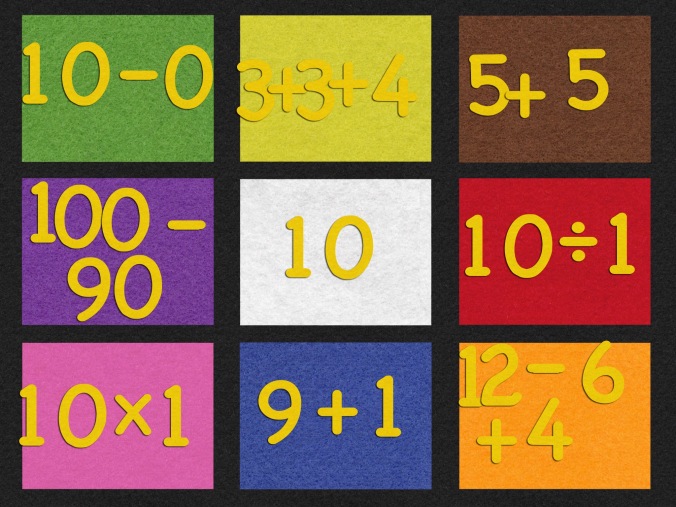
IMG_0004One was being a wise-guy, but still got the right number of buttons. By making these number stories open-ended, students have the ability to use multiple pathways to get to the answer. Another student and a partner, worked together to create what we call an “incredible equation”. One of the students was stronger in math (clearly, as he is able to multiply and divide at age 5) and the other was working on grade level. Together they made this:

 

IMG_0005

By letting my students work where they are, and not where a worksheet forces them to be, the sky is the limit. The iPads give my students the freedom to move on, to move up, and to be in charge of their learning.

So, yes, I am thrilled to have our iPads back. We saw first hand the power of the iPad in our classroom. Even though we have only 22 school days remaining, we are going strong to the end!

Today we will do exciting new things. Let’s get to it!

Read all of our posts about EdTech and Innovation by clicking here. 


Kristi Meeuwse teaches kindergarten in Charleston, South Carolina. In January, 2011, her kindergarten class started a 1:1 iPad pilot for the school district and the results so far have been very successful. You can read more about it on her blog iteachwithipads.net.

Former Florida district Superintendent named New York education commissioner

One state’s loss is another’s gain. Former Hillsborough County Florida Superintendent, MaryEllen Elia, has been named education commissioner for the state of New York.

Elia led Hillsborough County schools for 10 years but was ousted earlier this year.

Heading to New York, Elia will oversee a much smaller administration according to Tampabay.com. Hillsborough County Public Schools represent the ninth largest school district in the nation. But because she now controls the education policy for an entire state, her area of responsibility is obviously much larger.

She will serve as president of the University of the State of New York, not to be confused with New York University, and will oversee “700 school districts, public colleges, libraries, museums and broadcasting stations, and provides licenses for 52 professions.”

While New York is thrilled to have Elia, some in Hillsborough weren’t sad to see her go. By way of the Washington Post, Elia was accused of being too partisan at times and entered into a partnership with the Bill and Melinda Gates Foundation regarding teacher evaluation.

But even with the light jabs, Elia’s tenure went six years beyond the average time that most superintendents spendon the job. She was rewarded with salary increases and, again, remained on the job for 10 years until a new school board decided to vote her out.

Elia’s time in New York will likely be judged by how well she works with teachers’ unions and how she navigates an ever increasing anti-testing climate.

Her experience as an educator and as head of one of the nation’s largest school districts in the country will certainly come in handy when she takes her new post beginning July 6th.

Using the free classes on iTunes U

**The Edvocate is pleased to publish guest posts as way to fuel important conversations surrounding P-20 education in America. The opinions contained within guest posts are those of the authors and do not necessarily reflect the official opinion of The Edvocate or Dr. Matthew Lynch.**

A guest post by Kristi Meeuwse, ADE

The function of education is to teach one to think intensively and to think critically. Intelligence plus character – that is the goal of true education. -Martin Luther King

Thinking critically and intensively is not reserved for older students. We work diligently to create learning experiences in kindergarten that allow our young students to think deeply about various topics. Having iPads allows us to enrich learning experiences in a way that wasn’t possible before. One of the iPad tools that is often overlooked is iTunes U. Why iTunes U?

  • It is a free repository of classes and educational content
  • Students have access to content anytime and anywhere
  • Content is easily updated and changed
  • Discussion feature allows rich conversation between students

While there are a large number of free classes available on iTunes U, perhaps you should consider creating your own. With the end of the school year only a few weeks away, it seems odd to be thinking of adding new things to your teaching bag of tricks, but this is the perfect time to do so. You can use some of your summer to create your own courses. It is easy to do. Simply log into the iTunes U course manager using your Apple ID and add your content. What are the benefits to creating your own course?

  • Content is more meaningful to students
  • Content can be customized
  • Easy to create, easy to update
  • All resources are in one place: books, documents, videos, images, web links and apps

Here is the link to a Spiders course I created for my kindergarten students as well as one for teachers on Personalized Learning and another course created by a 4th grade colleague about my school and how we innovate instruction using iPads.

iTunes U allows you to customize the learning experience for your students, even the youngest ones. It is also a great way to create a learning portfolio for students. Up to 5 people can collaborate on a course so you and your colleagues can work together and share the wealth. If you aren’t comfortable creating a full course initially, create a chapter and keep adding. It is easy to update any time.

If you aren’t already using iTunes U, consider giving it a try. It will open a whole new world to your students for learning and engaging in content.

Today we will do exciting new things. Let’s get to it.

This post originally appeared on iteachwithipads.net and has been republished with permission. 

Read all of our posts about EdTech and Innovation by clicking here. 

__________________

Kristi Meeuwse teaches kindergarten in Charleston, South Carolina. In January, 2011, her kindergarten class started a 1:1 iPad pilot for the school district and the results so far have been very successful. You can read more about it on her blog iteachwithipads.net.

10 ways to use Skype in the classroom

**The Edvocate is pleased to publish guest posts as way to fuel important conversations surrounding P-20 education in America. The opinions contained within guest posts are those of the authors and do not necessarily reflect the official opinion of The Edvocate or Dr. Matthew Lynch.**

A guest post by Bevin Reinen

Skype is an instructional tool that provides boundlessopportunities for authentic teaching and learning.  It allows us to explore beyond the four walls of our classrooms.  As elementary teachers, we sometimes battle to hold our students’ short attention spans. Integrating Skype lessons brings the curriculum to life in ways never before possible.  You know that special moment when you announce a class activity, and it’s greeted with claps, screams, and cheers?  That’s Skype.  It brings pure joy, wonder, and intrigue to your students.

Here’s a list of ten ways to utilize it in the elementary setting, followed by some logistical tips for success.

1)  Take a Virtual Field Trip:  Is there some place you’d like your class to visit, but can’t swing the funds or it’s just not geographically possible?  Find a guide to ‘take’ you there by visiting a historical landmark, museum, zoo, etc.

2)  Invite an Author:  Set up a Skype session with an author you’ve been studying to discuss a book.  Or, set one up with any author so that your students can learn about the steps of the writing process.  No, real authors do NOT write one and done!  Here’s an awesome list of Authors Who Skype With Classes and Book Clubs for Free.

3)  Share a Project:  Have your students been working on some kind of a special project? Give them the chance to show/share it with a distant class.  This provides motivation and will help them develop confidence in the value of their work.

4)  Put on a Performance:  Is there a poem, song, skit, or reader’s theater script your students need to present?  Give them the opportunity to perform to a unique audience via Skype!

5)  Interview an Expert:  Invite an expert to speak with your class on a current topic of study.  Conduct a Q and A session.  This is definitely a step up from the basic Google search!

6) Cultural Exchange:  Learn about various cultures by connecting with a class from abroad. Check out the site ePals, which allows educators interested in Skyping or using other web-based tools to connect globally.

7) Meet Pen Pals:  To encourage meaningful writing opportunities, write back and forth with pen pals throughout the year.  Set up a culminating Skype chat so that students can finally meet their pen pals ‘face to face’.

8) Mystery Skype:  If you register for Skype in the Classroom (instead of regular Skype), you can play Mystery Skype.  Mystery Skype is an educational game that allows two classes to guess each other’s locations via questioning.

9) Including Students with Medical Issues:  If a student has to miss school for an extended amount of time, Skype is the perfect way for the class to connect with their classmate.  While not all class activities are workable on Skype, including the student in some key lessons will help prevent him/her from falling behind.

10) Share Travel Experiences:  If you have a special trip to attend during the school year, have your substitute connect with you on Skype to touch base, allow you to do a mini-lesson, or show/share about your location.

Tips:

1)  Install Skype on your computer.

2)  You’ll need a webcam, speakers, and microphone also.

3)  Be sure you and your person both add each other as Skype contacts.

4)  Run a test call to ensure everything is working properly.

5)  Outline a plan and discuss logistics with your Skype contact.

6)  Walk through expectations/procedures with your students beforehand.

*Remember, time is of the essence when working with little ones.  Make sure all kinks are worked out prior to the chat to maximize engagement.

Here are a few photos of my class chatting with our pen pals/digital learning buddies from a nearby school.  To launch our science unit on animals, we had each student bring in a stuffed animal and fact to show/share. Afterwards, I assigned her class to research and observe penguins on Monterey Bay Aquarium’s Live Web Cams, while she assigned my class to do the same for giraffes using Houston Zoo’s Live Web Cams.  This generated excitement and motivated students for the next fact/opinion pen pal writing to come!

This post originally appeared on teachtrainlove.com and has been republished with permission. 

Read all of our posts about EdTech and Innovation by clicking here. 

______________________

Bevin is Nationally Board Certified as an Early Childhood Generalist.  She considers herself a teacher by day, writer by night.  Some of her work has appeared in national publications including Chicken Soup for the Soul; Married Life, Hallmark’s Thank You, Mom book, and Boys’ Quest magazine for kids.