
Uncategorized

What Giving up on a Student Says About You

Not every student can be well-behaved or have perfect grades. Sometimes, kids can be frustrating and difficult to handle, which can cause adults to give up on them and stop giving them the support they need. However, as tempting as it is to give up on a student, this is something that you should never do. Giving up on a student shows that you lack the determination and hard work needed to make them successful in school. 

Why You Should Never Give Up on a Student

Some students need more guidance than others, so it is essential that you do what you can to make sure they don’t go down the wrong path. By helping even the most troublesome kids, you could help them to change their attitude about school entirely. If you don’t continue to help and encourage all students, then you could be setting them up for future failures. If their teachers and trusted adults don’t believe in them anymore, then they won’t see a reason to believe in themselves either. Therefore, you should never give up on a student because you are just letting them know that it’s okay for them to act out and not try since you aren’t doing anything to stop them or help them.

How to Stop Yourself From Giving Up

No matter how much you want to give up on a student, you need to keep trying and allow yourself to get to the root of the problem. Try to be more personal with the students and get to know them better to allow you to better understand what’s going on. If they’re just not understanding something or not wanting to participate, there could be a deeper reason to it, so having you give up on them could only make the situation worse. Treat them like a human being instead of just a misbehaving child. The best way to get to the root of the problem and help a student is to spend one-on-one time with them and try to figure out how to properly help them and connect with them.

Also, you should take away any distractions that could be preventing students from being successful. At school, if a child always sits near others that are distracting and off task, then you should make assigned seats and spend extra time with the student to ensure that they stay on task. At home, if a student is refusing to do homework or go to school, parents can take away electronics or other objects that could be providing distractions from school as well. At first, kids may throw a fit if their distractions are removed, but as upset as they may be, it will help them to focus much better.

Conclusion

Giving up on a student not only shows them that you don’t care enough to help them improve, but it also says that you are not willing to do whatever it takes. Not every student will be easy to teach, but for teachers, parents, and other faculty members, it is essential that kids get the help and support that they need no matter how difficult they are.

What Research is Being Done on Autism Spectrum Disorder?

Even though so much has been discovered about autism spectrum disorder over the years, there is still a lot of information that we don’t know. Therefore, continuous studies and research projects are being done to allow people to better understand all there is to know about this condition.

How Much Do We Really Know About Autism Spectrum Disorder?

Every year, more and more people are diagnosed with autism due to new discoveries and information. Over time, this research has taught professionals to better diagnose the conditions and more easily understand the different types of autism. It is understood what autism is and that it has been increasing over the years, but education-wise, there is still a lot that needs to be confirmed about it. Professionals agree that children with autism may not learn at the same pace as other kids their age, but there needs to be more expectations of how these students should be taught in schools. So, even though the basics of autism is commonly known, there is a lot that still needs to be determined, especially when it comes to education.

What Research is Being Done?

When it comes to autism spectrum disorder, there is a lot of current research being done. Even though a lot is known, there must be constant investigations going on to ensure that information is as accurate as possible. Here are a few of the categories that are still being continuously researched today:

  • Determining how many people have autism.
  • Understanding the causes and risks of autism.
  • Proving that vaccines and autism are not related.
  • Any other necessary research.

Each of these categories has its own studies and methods to improve research even further. These studies can include surveys, reports, tracking systems, and even different projects. New approaches are always being taken about these new topics to help improve what the world knows about autism spectrum disorder along with how to make it easier for individuals that have this condition.

Every year, new autism studies are completed. In 2018 alone, they were able to find ways to improve verbal communication of children with autism, reduce the stress of parents of children with autism, and find more information about the development of autism symptoms, along with many other major breakthroughs and discoveries. This pattern of successful research will likely continue as the years go on.

How Can Research Help?

The more that is known about autism, the easier it will be to accommodate the needs of students with an autism spectrum disorder. There will always be more to learn about this condition, which can help these individuals have a better life. It is important that professionals research as much as possible when it comes to this topic because it is significant both for those that have autism and those around them.

Conclusion

We don’t know everything there is to know about autism spectrum disorder, but thanks to a large amount of research that is being done, more is being explored each year. Research may not be able to uncover everything, but the more that takes place, the better off the world will be. People with autism spectrum disorder should feel more accepted and the world needs to become more educated about this condition as time goes on.

Why Teacher’s Aides Deserve Our Appreciation Every Single Day

A teacher’s aide is an essential part of the classroom that many people take for granted. In fact, many individuals don’t even know what these individuals do and how they benefit the class. Therefore, it is important for everyone to be aware of the teacher’s aides and what they do for the school and community.

What is a Teacher’s Aide?

A teacher’s aide, which is also commonly referred to as a teacher’s assistant or educational assistant, is an educational professional that assists full-time teachers. They are expected to at least have an associate’s degree to be considered for the job, but each school district has different requirements for this position. They are there to support the students and help out whenever it’s needed. They are just like a teacher, but a lot of what they do often goes unnoticed since they are an assistant and not an official teacher. However, with extra training and education, a teacher’s aide can become a teacher in the future.

What is Their Role?

Teacher’s aides have a lot of responsibilities that include helping teachers out with specific lessons and activities along with providing help to any students that need additional support. They can answer any questions that students may have and they can help grade tests and assignments. They can also supervise students when they are outside of the classroom, such as during lunch or recess. Essentially, anything that they can help out with at school is something that they can do in their position. They want to make sure that all students are benefitting from lessons as much as possible, so in their role, they need to be friendly and personal to every student they interact with.

Why They Deserve Our Appreciation

Even though many people may not be familiar with the role of a teacher’s aide, they do so much for schools. They go above and beyond to ensure that every student is accounted for. Plus, they are flexible with their role, which allows them to move between grade levels easily while still maintaining a relationship with the students. However, what they do often goes unnoticed by the general public. With all the hard work they do, they make even less income than a teacher does. The average salary of a teacher’s aide is only about $22,609, even though they often have to work just as hard as teachers, if not more. Therefore, just because this is a lesser-known occupation than a teacher, it is one that should be greatly admired.

Conclusion

If you personally know a teacher’s aide, then take the time to thank them for what they do. They do a lot of work for a small amount of money, yet they keep doing what they do to help out the students. Students should feel comfortable at school and be provided with educational professionals that can encourage them to be their best. Therefore, teacher’s aides are essential for the classroom for these reasons, meaning that they should be appreciated every single day.

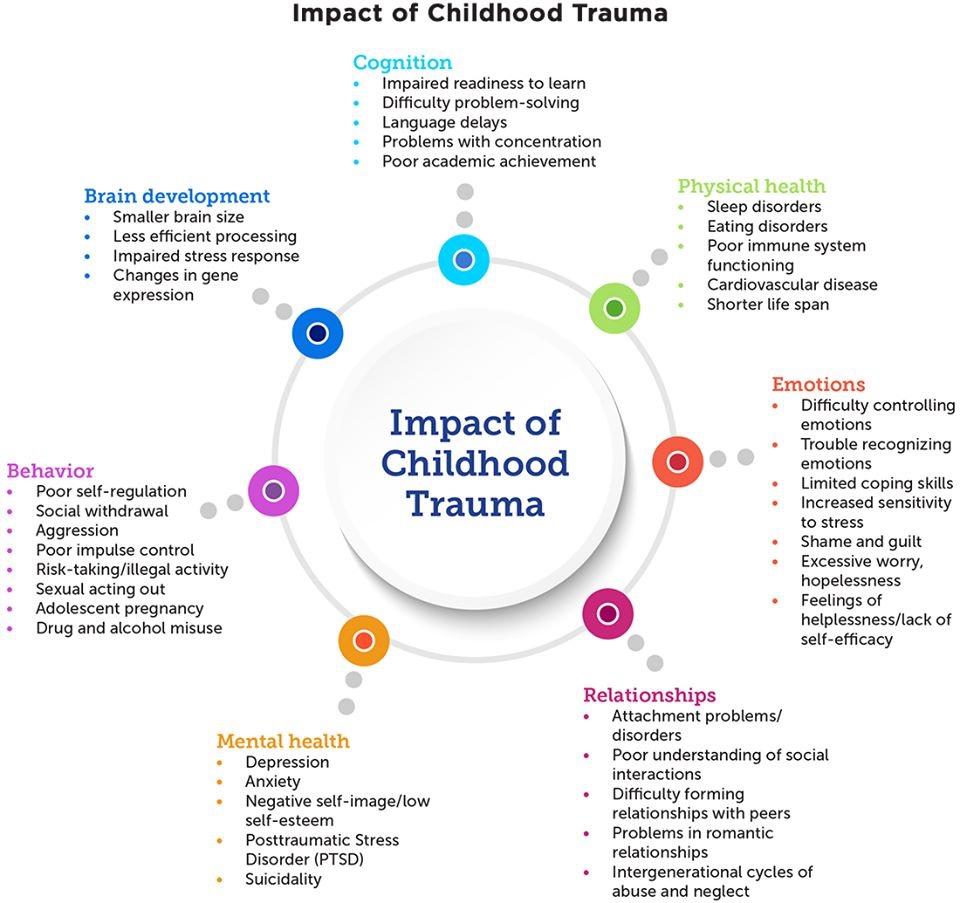
The Impact of Childhood Trauma

Childhood trauma can have debilitating effects on the development of a child. Knowing this can help educators and parents help students transcend the impact of trauma and go on to be well-adjusted adults. Below you will find a chart that illustrates the impact that childhood trauma can have on the seven domains of child development.


Managing Behavior In Classrooms: An Age-Old Challenge

Education has evolved a long way past the traditional format of a teacher speaking in front of a blackboard to a passive, listening cohort. Classrooms are now interactive settings that are tailored to students’ individual learning needs. Yet one thing remains the same: classroom management continues to be a pain point for teachers.

A 1979 study by Frederick Jones found that nearly 50 percent of teaching time was wasted due to children’s misbehavior. And it’s believed that today in Europe, teachers spend 15 percent of classroom time dealing with misbehavior.

While classrooms look vastly different in the twenty-first century, the challenge of classroom management remains. So, how should modern teachers approach it?

The modern approach to classroom management

Classroom management techniques have evolved significantly over the past century. Modern teachers are less likely to be conducting static lessons in front of blackboards and more likely to be creating interactive, customized experiences for students.

A focus on building relationships with students is a key tool used by modern teachers, grounded on the idea that if students trust their teachers, they’ll be more likely to follow classroom rules and respect others. Teachers do this by spending one-on-one time with students and learning facts about their students’ lives beyond the classroom.

Teachers are also going the extra mile to tailor learning experiences for students’ different learning styles. This may mean assigning reading to part of the cohort while encouraging more visual learners to watch videos. By creating customized learning experiences, teachers can help students stay engaged in the task at hand and avoid getting distracted.

While there’s no one tried and true method to address student behavior in today’s classroom, educators are encouraged to explore continuous learning opportunities to stay up to date with modern management techniques. It also helps to have a strong grasp of the key classroom management theories that have helped to shape the way teachers run classes today.

The evolution of classroom management

Today’s students are experiencing very different education programs compared to past generations, and classrooms have adapted drastically to suit, even in the past decade. The rapid adoption of learning technologies has greatly shifted how lessons are conducted, and an increasing focus on student mental health has caused teachers to rethink management strategies.

This shift has led many to rethink the way classes are run, such as implementing varied seating options in the classroom and conducting interactive lessons. Innovations that we see in today’s classrooms are driven by past research and management techniques, such as the ABC model and the respectful classroom.

Antecedent, Behaviours, Consequence (ABC) model

In 1953, B.F. Skinner developed a model of operant conditioning that would come to replace the classical conditioning method of responding to adverse student behavior through direct punishment. This model stipulates that behavior, such as a student talking in class and distracting others, would be introduced to the antecedent, the teacher teaching their lessons, and a consequence would need to occur as a result. In this case, a teacher would reprimand the student and warn them to stop talking.

While this makes sense in theory, modern educators are aware that students may misbehave for a range of reasons, not necessarily for ‘rational’ reasons. For example, students may misbehave as a result of mental health issues or experience with abuse or neglect, which may not be helped by introducing negative consequences.

The respectful classroom

In the late 1960s, Rudolph Dreikurs introduced a key new concept to the classroom: that all students feel a need to belong, and when that need isn’t met, they may turn to mistaken goals. His approach was to develop a ‘respectful’ democratic classroom, involving students in all classroom activities, giving adequate attention to all, and showing respect to students. He pushed for open discussions when it comes to misbehavior, using a positive manner to find a solution rather than a consequence or punishment.

This theory places mutual respect between teachers and students, aiming to help students understand why they misbehave.

How teachers can better manage the classroom

There are a variety of ways that modern educators can actively improve their classroom management strategies.

Access online and public resources

Continuous learning is a part of any educator’s career. There is plenty of self-directed learning you can take part in, such as exploring online courses or modules.

Research classroom management

Skinner and Dreikers’ models are only two of many schools of thought that concern modern classroom management. You can work to better understand the sector by researching other techniques and tools that educators use to manage the classroom in today’s environment effectively.

Study a Master of Education

Educators can also work to understand their students better and manage the classroom by re-entering the classroom themselves. Further study in the field of education can empower you to continue providing quality education for your valued students.

Studying a Master of Education can give you the confidence and knowledge you need to manage your classroom now and into the ever-evolving future.

What Are the Five Types of Practice?

The practice stage is one of the most vital steps in the teaching and learning process. It allows learners to test their ability to apply the skills that they learned to new and novel situations. With enough practice, mastery is always possible. What are the different types of practice, and how are they used in the classroom? I am glad you asked. To find out the answer, keep reading.

  1. What is Guided Practice? – An activity in which students apply recently acquired information at a stage when the teacher remains available to assist. Teachers may give a great deal of assistance at the beginning of guided practice and slowly decrease their involvement as the student becomes more proficient.
  2. What is Independent Practice? – An activity in which students apply what they have learned without teacher assistance. This further informs the teacher about the accuracy of his or her perception about and actual effectiveness of the lesson. If most of their students perform well, then the lesson was fairly successful. If they don’t, then the teacher knows that they need to reteach the lesson and change their instructional approach. If most of the students performed well, the teacher must reteach the lesson to those who underperformed. This will involve differentiating instruction for each student.
  3. What is Structured Practice? – A method in which students practice what the teacher has demonstrated while the teacher remains involved. Like guided practice, except the teacher remains involved for the duration of instruction.
  4. What is Massed Practice? – A learning technique which involves the repetition of specific facts or skills over a concentrated period. With massed practice, educators don’t teach a skill once and move on when students master it. They practice the skill continuously, during a concentrated period, to ensure that student’s ability to demonstrate it becomes second nature.
  5. What is Distributed Practice? – A learning technique which involves the repetition of specific items at intervals over a designated period. With distributed practice, educators don’t teach a skill once and move on when students master it. They revisit and practice the skill, on a fixed schedule, to ensure that student’s abilities stay sharp.

What did we miss?

Why Language Matters in Mathematics Education

Math language is the term used to describe the various jargon and academic language required to understand mathematical concepts. Math language is crucial to learning any math concept and is the surprising reason that many students struggle with mathematics both inside and outside the classroom.

A student may understand a math concept but lack the knowledge of math language. For instance, this student may conceptually understand what it means to add something, but if he doesn’t understand the word add itself, he will not be able to demonstrate what it means physically. In other words, this student will not be able to show you during playtime that two blocks plus one block adds together to make three blocks.

Why math language matters

Many children struggle with math because they fail to grasp the math language first. Learning the academic language associated with any subject is part of every learning experience. Math is full of language. Add, subtract, odd, even, fraction, decimal, greater than, equal, and multiply are just a few examples of the mathematical terms used by students in elementary school.

Because STEM (Science, Technology, Engineering, and Mathematics) subjects are not traditionally associated with language, these fields of study can be especially difficult for students when the teacher does not emphasize the associated academic language.

Some researchers argue that mathematics not only contains mathematical language but that the subject of mathematics is a language itself. A language is defined as a system of communication with vocabulary, grammar, and syntax. To some, mathematics meets this definition of a language.

English Language Learners and math language

Learning mathematical jargon is difficult for many students but can prove especially difficult for English Language Learners (ELL’s). Students who are trying to learn academic content while simultaneously learning English are at the greatest disadvantage when it comes to acquiring content-related language. ELL’s generally learn social English (Basic Interpersonal Communication Skills) within six months to a year of moving to an English-speaking country because acquiring social English can prove necessary to function in American society.

However, ELL’s can take much longer to learn academic language (Cognitive Academic Language Proficiency), sometimes never reaching academic language fluency even after five to seven years of exposure. When teaching your students math language, it is especially important to target English Language Learners with specific interventions to help them acquire academic language along with the rest of their peers.

How to implement math language awareness in your classroom

All students in your classroom must be frequently exposed to math language. But, before any child can learn abstract terms such as divide or sum, he must learn foundational content language. Even beginning in preschool, students can be taught terms such as flew away, which implies subtraction, and came over, which implies addition. These early math language concepts can help solidify content and language concepts in young children.

During each lesson, spend as much time on the math language as you do teaching math concepts. The academic language is critical to the concepts, and vice versa. By emphasizing math language in your classroom, you could be preventing mathematical deficiencies in your students for years to come.

Why Parent Number Talk is Critical to Early Learning

Number talk is the term used to describe the type of language and questioning used by adults to help young children acquire early math concepts. These short, daily exercises help children develop number sense, which is an intuitive understanding of numbers and mathematics.

Number talk is normally used in grade-level classrooms to help children understand number magnitude, the relationships between numbers, and how numbers can be modified by various operations. However, number talk is incredibly important for parents to utilize even before their children start school.

Number talk is critical to early learning

Most preschools don’t have children participating in number talk, and they especially don’t emphasize number talk. Reading is emphasized much more in the younger years. However, developing number sense is just as important as developing early reading skills. In preschool, most children learn how to count to ten. But this doesn’t involve number sense, just memorization. So it is often up to parents to initiate number talk with their children.

Researchers have identified nine types of number talk that parents can use with their children:

  1.       Counting
  2.       Cardinality (knowing the number of objects without directly counting)
  3.       Equivalence (understanding what makes things equal)
  4.       Nonequivalence (understanding what makes things unequal)
  5.       Number symbols (recognizing a number in written form)
  6.       Conventional nomatives (using numbers as titles, dates, labels, etc.)
  7.       Ordering
  8.       Calculation
  9.       Placeholding (place values such as ones, tens, hundreds, etc.)

Number sense can be developed through number talk in preschool years during regular play activities. When children are exposed to geometrical shapes during play with blocks and Legos, their number sense is being developed.

To use counting number talk, you may ask your child to count the number of Legos he has in his hand. To use nonequivalence number talk, you can ask your child if the three blocks you have and the five blocks he has are equal in amount.

Opportunities for number talk are also present where opportunities for counting are not. To use conventional nomatives in your number talk, you may ask your child, “What was your favorite part of Three Blind Mice?” If you want to use ordering number talk, you can ask him to order family members from shortest to tallest. Truly, there are opportunities for number talk at every corner.

Age-appropriate number talk

Number talk with your child won’t do much good if the number talk is not age appropriate. Number talk that is too simple or too complex for your child’s age will not help him develop foundational math skills.

Even infants can benefit from age appropriate number talk. A dad that plays One-two-three… peek-a-boo with his infant is actually utilizing counting number talk. However, an infant would not benefit from number talk that is too complex for his abilities, such as ordering number talk that would require him to order objects. Similarly, a six-year-old child will not benefit from simply counting the five objects in front of her.

You want your child to develop number sense and foundational math skills to help her succeed later in life. This can be done by using consistent, age appropriate, engaging number talk that can be interwoven in the activities of everyday life. Number talk isn’t simply a math lesson for your three-year-old. Instead, number talk is a playful, relationship-building technique that teaches your child to have an awareness of the math around her and a passion to learn more.

Why Students Struggle with Reading Comprehension

Reading comprehension is the ability to mentally process written words and deduce what they mean, integrating this new knowledge with past knowledge. It’s not just the ability to accurately read words on a page- rather, understanding the meaning of the text is the key part of reading comprehension.

Many students struggle with reading comprehension, and this can put a serious strain on a child throughout all classroom subjects. Because learning all academic content requires reading in some form, students who struggle with reading comprehension often fall far behind their classmates academically in multiple areas. Fortunately, there are ways to help struggling students.

Why some students struggle with reading comprehension

There are many reasons a child may struggle to comprehend what they read:

  •         Learning disability

A learning disability such as dyslexia or difficulty with vision, hearing, or speech may cause difficulties in reading comprehension.

  •         ADHD

Attention-Deficit/Hyperactivity Disorder can make it difficult for a child to focus. Thus, he may be less motivated to comprehend what he is reading.

  •         Phonological awareness

Difficulty sounding out the words on a page can lead to reading comprehension difficulties. A child who takes twice as long to read the words on a page will spend less processing time trying to deduce their meaning, which leads to decreased comprehension of the text.

  •         Lack of vocabulary

Similarly, a lack of grade-level vocabulary can delay comprehension if the child does not know the meaning of most of the words he is reading.

  •         Lack of interest

Sometimes the problem can be as simple as a lack of interest. If a child is not interested in the content she is reading, she will not be motivated to understand it.

Having difficulty with reading comprehension can cause stress or anxiety about schoolwork, which in turn leads to greater difficulty with reading comprehension.

Signs that your child is struggling with reading comprehension:

Sometimes the reasons for difficulties in reading comprehension can be unknown to parents. The underlying cause may be an undiagnosed learning disorder or a child’s stress that the parent is not aware of. Here are some tell-tale signs that your child may need reading comprehension intervention:

  •         Your child can’t provide a summary of the reading and may focus on only a small aspect of the entire story
  •         Your child can’t explain what a character’s thoughts or feelings might have been
  •         Your child doesn’t connect the events in a story to events that have happened in real life
  •         Your child may be able to tell you what happened in the story but cannot say why those things happened.

How to help students who struggle with reading comprehension

To help build your child’s reading comprehension skills, you should consistently ask her about what she is reading. Ask probing questions such as:

“How do you think that character felt? Why do you think that?”

“What lesson can we learn from this story?”

“This story is about riding the bus. Can you tell me about a time you rode on a bus in real life?”

When asking probing questions, always ask your child to refer to the text for their answers and point out their evidence. Teach your child to continually ask herself what she is reading, and to take brain breaks if she needs time to process part of the story before moving on. It’s also important to go over any vocabulary words with your child that she may be unfamiliar with.

You can help your child strengthen her reading comprehension ability with these simple practices. The important thing is to remain consistent with these practices and to maintain a positive attitude to show your child that learning is something fun to work towards.

What Teachers Need to Know to Support Students with Chronic Health Conditions

Chronic health conditions are illnesses whose symptoms can wax and wane over a period of months or over the period of a lifetime. Chronic illnesses vary widely and are not equally symptomatic, even within the same person. Therefore, students with chronic illnesses require ongoing flexible accommodations. The education of a student suffering from a chronic illness can oftentimes be severely impacted. Teachers must be equipped with the knowledge of how best to assist these students.

How chronic illnesses can affect education:

Illness, or medication for illness, may reduce work ethic and endurance

Chronic pain or certain conditions that impair the brain’s function may cause a lack of work ethic or endurance for lengthy, cognitively demanding tasks. Additionally, various medications a student may take to treat his illness can cause these same side effects. This can lead to students taking longer to complete work.

Students frequently miss school

Frequent doctor appointments, hospitalizations, or days home sick in bed can cause frequent student absences. Students who are frequently absent are much less likely to meet grade-level standards than peers who are seldom absent. Additionally, students suffering from chronic illness may find it difficult to maintain strong relationships with their peers due to chronic absenteeism. This resulting loneliness can lead to many additional problems.

Prejudice and stigmatization

Students with chronic illnesses may face prejudice and stigmatization by their peers. In the eyes of others, a student with a chronic illness may be viewed as lazy, incompetent, or weak. Some peers may feel that the student is exaggerating or faking his symptoms in order to receive special treatment.

Difficulty moving around the school environment

Some students suffering from chronic illness may be mobility-impaired and have difficulty moving around the school environment. Consequently, they require more time to walk from class to class and will therefore consistently miss additional instructional time.

Difficulty participating in some school activities

Students that are mobility-impaired may also have difficulty participating in activities such as P.E. and playground time. This can also be the case with students who have difficulty breathing properly or who require a constant attachment to medical equipment.

Mental health conditions may result from the effects of the chronic physical illness

Stigmatization, loneliness, lack of meaningful peer relationships, chronic pain, and other factors may lead to mental health conditions such as depression and anxiety. These mental illnesses can have severe effects on a child’s education.

How can teachers accommodate students suffering from chronic illness?

It’s clear that students suffering from chronic illness are going through a lot, mentally and physically. It’s incredibly important for teachers to be aware of the backgrounds of their students so that they can provide appropriate support and accommodations. Following are some examples of ways that teachers can accommodate and support their students suffering from chronic illness:

If a student has difficulty focusing on work due to fatigue or lack of concentration, allow him to use a computer, voice recorder, or other technology to complete his assignments more efficiently.

For students who are chronically absent, provide after school tutoring and allow extra time to complete assignments and tests.

Allow students to take frequent restroom breaks or visits to the nurse if their condition requires it.

Accommodating students suffering from chronic illness is as important as accommodating any student with special needs, Limited English Proficiency, or other aspect that needs specific interventions. Be sure to ask your school’s administration for extra support if you need help with these accommodations. While it may not seem that your effort to accommodate one student is being recognized, you can be certain your extra effort means the world to that one student.
