Uncategorized

Inclusive Education: Definition, Examples, and Classroom Strategies

In 1990, the United States Congress revamped the All Handicapped Children Act (EHA) into what is now known as the Individuals with Disabilities Education Act (IDEA). This has helped guarantee the rights that individuals with disabilities have to the education that they deserve. 

This legislation has been bolstered in 1997 and more importantly in 2004 with the No Child Left Behind Act of 2001 to give greater access to general education classrooms to those with disabilities. The goal is to include these individuals as much as possible into the general education environment to help give opportunities to them. This is regarded as Inclusive Education. 

Implementation

How this typically works in schools is that individuals with disabilities will be in general education classrooms periodically throughout the day with usually one to two support classes to ensure their success. According to the National Center for Education Statistics in their 2015 study on individuals ages 6-12 under IDEA 95% were placed in regular schools and of that 95 %, 62.% spent at least 80% of the time inside general classes.  

It is vital for teachers to take a closer look at their instructional methods and ensure that they’re not only meeting the Individualized Education Plan (IEP) of these students but making sure a creative and inclusive environment is made. One of the biggest fears with creating an inclusive classroom with individuals who have disabilities is that it will negatively affect the general education students is one that, on the surface, might seem realistic at first glance but the research shows the exact opposite. 

Results

Gail McGregor of the Allegheny University of the Health Sciences in her study Inclusive Schooling Practices: Pedagogical and Research Foundations. A Synthesis of the Literature that Informs Best Practices about Inclusive Schooling. She summarizes some of the additional research done in this area with the following:

“Results indicated no difference in engagement rates between classrooms, suggesting no negative impact on instructional opportunities. Similar findings are reported by McDonnell et al. (1997) in another direct comparison of classrooms with and without students with severe disabilities. […]. In each case, the general education students and students with disabilities that were part of small cooperative groups demonstrated academic gains.”

In McGregor’s abstract she states “although many teachers are initially reluctant about inclusion, they become confident in their abilities with support and experience” which shows the other major fear, this time on the side of the teachers, is also alleviated. Once teachers realize that many of the best classroom strategies and practices to create an inclusive learning environment are nearly identical to regular best classroom strategies then this daunting idea becomes less so. Some of these practices are:

  • Peer Tutoring and Cooperative Learning
  • Focus on Small Group Activities
  • Independent Practice (allows for individualized attention)
  • Tiered Lessons
  •  Universal Design for Learning (UDL) 
  • Differentiated Instruction

Inclusive classrooms are becoming more common as schools try to integrate special education into regular classes. Thankfully due to the mounting research showcasing the benefits of doing so not only for individuals with disabilities but for regular students as well, there is less resistance to such integration. Teachers just have to continue utilizing their educational best practices and they’ll continue to be just as successful when their classes weren’t as integrated.


Improving Teaching and Learning Through Student Feedback

One of the hallmarks of a great educator is one who utilizes feedback to the betterment of their teaching. The difficult part is getting the correct type of feedback that allows the teacher to grow. The Federation University of Australia provides a breakdown of the four primary constructive feedback types:

  • Negative feedback – corrective comments about past behavior. Focuses on behavior that wasn’t successful and shouldn’t be repeated.
  • Positive feedback – affirming comments about past behavior. It focuses on behavior that was successful and should be continued.
  • Negative feed-forward – corrective comments about future performance. It focuses on behavior that should be avoided in the future.
  • Positive feed-forward – affirming comments about future behavior. Focused on behavior that will improve performance in the future.

Ryan Balch of Vanderbilt University in his paper The Validation of a Student Survey on Teacher Practice outlined the significance of student surveys in the K-12 environment and their increasing commonality as part of teacher evaluations. Many parts of teacher evaluations rely on research-based teaching practices but as student feedback, and success becomes more vital to a teacher’s evaluation it is important to be able to see how the focal points of these types of evaluations are mirrored in student survey questions as seen on page 25 of the above-mentioned paper.

Using the Feedback Types

Tailoring the four types of feedback into corresponding student surveys is a vital strategy for teachers to utilize and allows them to gauge the effectiveness of their teaching directly by those who it is directed towards. The ASCD (Association for Supervision and Curriculum Development) defines feedback as “all the kinds of comments made after the fact, including advice, praise, and evaluation. Feedback is information about how we are doing in our efforts to reach a goal.” They go on to outline the seven key features of effective feedback:

  • Goal-Referenced
  • Tangible and Transparent
  • Actionable
  • User-Friendly
  • Timely
  • Ongoing
  • Consistent

Benefits of Student Feedback

Keeping these features in mind when creating student surveys will create a two-fold benefit to educators; keep ahead of the increasing relevance of student feedback in terms of official evaluations and get insight on how those you are teaching are receiving your instruction. Blach further shows this connection with a sample that shows the correlations between [student] survey total and academic engagement and self‐efficacy (Table 19) and explains his results.

“…we see very high correlations between a student’s total score for a teacher and their level of reported academic engagement and self-efficacy. The correlations are slightly 46 higher for engagement than academic self-efficacy […] students with teachers who adopt the practices asked about by the survey have students that are more engaged in the class and report a greater level of confidence in the subject.”

Increased academic engagement and self-efficacy directly lead to increased learning and academic success. As students become more a part of the learning process and see that their feedback is valued, respected, and useful it is no surprise that this type of growth is seen and is important to improving teaching and learning.

Teacher Burnout or Demoralization? What’s the Difference and Why it Matters

A study led by Dr. Ingersoll of the University of Pennsylvania showed the staggering reality of the American education system; 15% of teachers leave the profession every year and 45% of new teachers leave within the first five years. The burning question behind these results is why?

When talking with educators, a common discussion topic is the soul-crushing, depressive, and futile nature of the profession. Now, many teachers are lucky enough to be in school districts where they are supported, listened to, valued, and not scapegoated by the administration, parents, and students for items that are not under their control but it seems this is becoming few and far between. In Ingersoll’s study, he focused one portion on first-year teachers who left their current school and polled them on the reasons why. The results, as seen in Figure 15 of the study linked above, are as follows:

  • 32% → School Staffing Action
  • 39.7% → Family or Personal
  • 31.7% → To Pursue Other Jobs
  • 44.4% → Dissatisfaction

Ingersoll and Perda state “On the other hand, high levels of employee departures are worrisome not only because they can be a symptom of underlying problems in how well organizations function, but also because departures can entail costs and other negative consequences for organizations and for the larger system (Ingersoll & Perda, forthcoming).”

Understanding the Difference

The important distinction to make is that these statistics are focusing more on teacher burnout than teacher demoralization. At first glance, these words may seem to be two ways to say the same thing but there is an important distinction to be made. When a teacher is burnt out it more than likely means that they are done. Gassed. Finished. Nothing left. Whether this burnout happened within those first five years of entering the profession or is the culmination of decades of their willpower, desire, and love of teaching being ground down the result is the same; leaving the profession. Ingersoll’s study focuses primarily on this issue.

What is not often discussed, is teacher demoralization which is really what goes on before teacher burn out happened. Teacher demoralization results in teacher burnout. This distinction is vital in addressing the problem within the profession because it allows intervention to be focused on the problem, teacher demoralization, instead of the symptom of the problem which is teacher burnout. 

Doris A. Santoro, an associate professor of education and chair of the education department at Bowdoin College, in her publication Is It Burnout? Or Demoralization? addresses this sentiment by saying “we know that teachers are experiencing dissatisfaction (Keigher, 2010), but, like doctors, we must be careful to look for the true source of the problem in order to properly treat it. […] similarly, school leaders need to get to the root of teacher dissatisfaction so it can be diagnosed and treated properly.”

Finding the Cause

The underlying problems that Ingersoll and Perda refer to are precisely the issues that result in teacher demoralization whether it is unruly parents with no administrative support, absurd class sizes with no mandated support, low pay, general lack of administrative support, forced to follow a rigid curriculum, overarching desire for better test scores at all costs, lack of autonomy, etc. The list is nearly endless and is what results in teachers having self-reported stress amounts equal to nurses and physicians according to Gallup’s 2013 State of America’s Schools Report. 

Once the difference between teacher burnout and teacher demoralization is made more clear, it can be more easily addressed. It will not be a quick change nor one without growing pains as the profession continues to suffer from these systemic problems but as the reality of these problems become more apparent and felt more by those outside of education, the policies and legislation hamstringing many of these ailments felt by teachers can be changed. 

Teachers are Nation-Builders: Developing Countries Must Invest in Them Properly

Malala Yousafzai in her book I Am Malala: The Story of the Girl Who Stood Up for Education and Was Shot by the Taliban powerfully writes:

“His sisters — my aunts — did not go to school at all, just like millions of girls in my country. Education had been a great gift for him. He believed that lack of education was the root of all of Pakistan’s problems. Ignorance allowed politicians to fool people and bad administrators to be re-elected. He believed schooling should be available for all, rich and poor, boys and girls.”

Malala’s story is as heartbreaking as it is empowering. The overarching message that education should be a basic human right to everyone, regardless of gender, speaks loudly. Her quote above about her father sheds light on an important fact; poor education systems hurt a country on nearly every scale. An uneducated populace stagnates growth and innovation and affects a country from its economics to its human rights. 

Setting the Stage

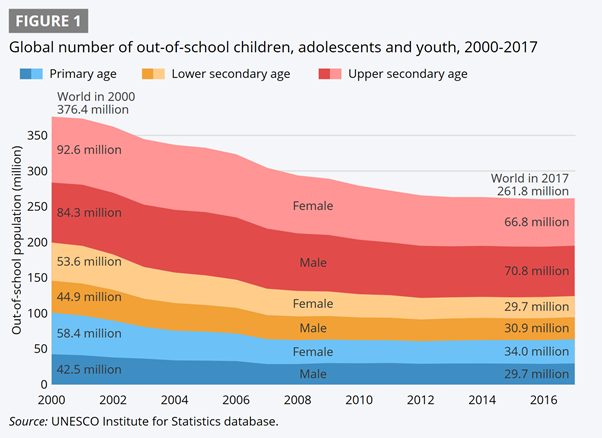
The Global Partnership for Education compiled a tremendous amount of data from across the world utilizing UNICEF, the World Bank, and numerous other organizations to take a look at the impact education has on countries. All of this helps builds the case that Malala’s story is a part of that teachers are an invaluable resource to developing countries but are woefully swept the side. Consider some of the following facts:

  • According to UNESCO Institute for Statistics in their 2017 study on out-of-school children, there are 262 million (1 out of every 5) children between the ages of 6 and 17 out of school
  • 420 million people would be lifted out of poverty with a secondary education which will reduce the number of poor worldwide by more than half.
  • TheEducation Commission’s report The Learning Generation found that for every $1 invested in education creates an increase of $10 in low-income countries
  • UNESCO’s International Literacy Day paper found “a person without basic literacy lacks real opportunities to effectively engage with democratic institutions, to make choices, exercise his/her citizenship rights and act for a perceived common good. […] only then can a nation be brought closer to peace. However if literacy is to become an enabler of democracy it cannot be confined to basic skills, and thus to functional literacy.”

The Role of Teachers

While it is obvious how vital education is to radically change a country not only as a whole but on the individual level, it cannot be forgotten that to educate the students you need qualified and supported teachers. Sadly the reality of teachers, and teacher training, in developing countries leaves much to be desired. 

The EFA Global Monitoring Report found that in one-third less than 75% of teachers were professionally trained. The countries referred to are the undeveloped/developing countries that lack not only the resources to adequately train their teachers but also the infrastructure and even sometimes general desire to do so. 

In these types of countries, the teaching profession is not always viewed positively in addition to suffering from extremely low salaries (which in turn means that teachers need to attain a second job) among numerous other issues. For example, The World Development Report 2018 found astonishing levels of teacher absenteeism in sub-Saharan Africa not only within their classroom but the school itself which gives a closeup view on some of the issues going on in these types of countries and why quality education continues to be a large hurdle to overcome. 

Teachers are the nation-builders but for a country to grow and thrive from an educated and literate population, they need to be invested in, supported, and celebrated. There is no silver bullet solution for such a change to happen. It will take many years of concerted efforts on a social, political, and legislative front to make such a shift but the benefits are indescribable. 

The Benefits of Learning Science in Early Childhood

For many when the subject of science is brought up images of the cell, frog dissections, and planets come to mind. While these are important topics for students to learn and become familiar with there is underlying importance to the subject in terms of critical thinking, [scientific] inquiry, raising questions, making observations, and coming to conclusions. The Center for Childhood Creativity compiled research in their report The Roots of STEM Success: Changing Early Learning Experiences to Build Lifelong Thinking Skills and found 6 key facts about early STEM (science, technology, engineering, and mathematics) education and its importance:

  1. STEM thinking naturally begins in infancy
  2. To become strong STEM thinkers, children need more play
  3. STEM amplifies language development; language enables STEM thinking
  4. Active, self-directed learning builds STEM skills and interest 
  5. Mindset matters to STEM success
  6. Children’s abstract thinking potential can be unlocked through both adult support and executive function skill development

Building the Case for Academic Success

These types of findings help bolster the building research in terms of academic success exposure to learning science has on young students. The most basic foundations of science and the scientific method (ask a question, observation, hypothesis, experiment, test results, come to a conclusion) are not only accessible to young kids but something that they naturally already do. 

Deann Kuhn and Susan Pearsall of Columbia University focused on tracking the developmental origins of scientific thinking and found that children as young as 2 or 3 are strongly showing these behaviors. Harnessing that natural curiosity into an educational foundation that leads to future success is a pivotal period of time that should be taken advantage of. 

Integration in the Classroom

This has led to the push for standards, such as Next Generation Science Standards(NGSS), to be developed and used as a basis for early childhood science education due to the severe lack of specialized focus on the subject itself. This gives science-based standards to teachers and helps them build this important foundational knowledge for their students. 

Challenging students to interact with the world around them in a tangible way, ask inquisitive questions, and encourage independent thought and experimentation can be integrated with cross-curricular content and benefits the students unilaterally. National Geographic Learning’s Best Practices in Science Education research led by Dr. Kathy Cabe Trundle found that students are able to transfer these skills to other academic domains easily.

In a world with STEM becoming more important for future job prospects the more vital to raise our students to be scientifically inclined. According to the National Assessment of Educational Progress (NAEP) student achievement in science has been at a near standstill for the last 15 years. During this time, more countries eclipse the United States in scientific achievement. This is a huge issue as between 2017 and 2027 STEM-related jobs will grow faster than non-STEM jobs which is a pattern that has been consistent since around the early 2000s. 

Unless we place a larger focus on scientific-based thinking the United States will continue to be outpaced by other countries but more importantly, we place our students in a disadvantageous position that can affect the course of their entire lives.

Stop Letting Disruptive Students Steal Everyone Else’s Education

If you’ve ever been in a classroom setting, whether as a student, teacher, parent, or administrator, you have probably witnessed an all too common phenomena: one or two students who have no desire to learn behave disruptively, ignore and disobey the rules and the instructor, and ultimately negatively impact the learning and even the safety of the environment for everyone else in the room. 

Teachers already wear so many hats – they create lesson plans, enforce discipline, tutor, come up with new ways to share information when lessons aren’t working, interact with parents, and much, much more. On top of all this, now teachers in many schools face violence, threats, shouting, and other forms of abuse from their students – and there is nothing they can do about it. This article will discuss what constitutes a disruptive student, why it is so detrimental to everyone in the classroom, and what has to change. 

What is a disruptive student?

Unless you have been an educator or student in a classroom with truly disruptive students, it can be difficult to understand the deep effect they have on learning for the entire class. A disruptive student is not just one who chats or passes notes during class, although this does constitute rule-breaking and misbehavior. The disruptive students this article refers to are the ones who threaten teachers or other students, shout and scream at the teacher or other students in the class, or are so loud and aggressive that it makes classroom learning impossible and even unsafe. Stories from educators like this one are all too common. Yes, this is really what many teachers deal with on a daily basis, at all grade levels. 

What makes disruptive students so harmful to learning?

When one student requires the full and immediate attention of the teacher, it becomes impossible to continue the lesson. This becomes a greater drain on classroom time when there or more disruptive students or more frequent interruptions. It is simply impossible to continue teaching over a screaming or violent student and stopping the lesson to implement disciplinary actions (such as instructing the student to switch seats, taking them into the hallway for a one-on-one discussion, or calling for an administrator). 

Not only does it make it impossible for other students to learn, but it can also make them feel unsafe coming to class or school. School is supposed to be a safe environment for children, but teachers simply are not given the support they need to ensure this safety, nor should they have to be the only ones responsible for correcting this behavior. According to this article, many qualified teachers transfer schools or leave their jobs due to unacceptable, outrageous behavior from students. 

What has to change?

Teachers cannot be the only ones responsible for defending not only the education but also the safety of themselves and other students from overly disruptive students. Parents, administrators, social workers, and others need to support teachers so they are able to do their jobs. According to this article, the lack of support is the main reasons teachers quit or change schools. Students have all the rights in the classroom, not the teachers, and disruptive students know this and take advantage of it. The education system is failing teachers and students by keeping these students in a typical classroom setting. 

Stress in Early Childhood Could Make The Brain’s DNA Remap Itself

It’s true that DNA is first formed in the womb, but did you know that DNA can change even after a person is born? And did you know that DNA changes can be caused by chronic stress and trauma, especially in early childhood? This article will explore the effects of stress on the brain, especially when the stress is experienced in early childhood.

Childhood experiences change DNA

Although it is widely accepted that humans cannot remember much from our first few years of life, our brains still know what happens to us when we are very young. Our first few years of life can be crucial to how our brains are wired, and our experiences in childhood can even change our DNA.

As explained in this article, a study conducted in 2018 revealed that when baby mice were neglected by their mother it altered the genes in their brain cells. It is likely that humans undergo similar processes and this could be at least partially responsible for some neurological disorders. 

Stress alters the brain 

Chronic stress and cortisol can alter and permanently damage the brain, according to this study conducted by neuroscientists at the University of California, Berkeley. Because of this, scientists believe that when a baby, child, or young adult is exposed to a great deal of stress or trauma they are likely to developmental and emotional issues like depression, anxiety, mood disorders, and learning disabilities later in life. 

Part of the issue is that cortisol, the hormone associated with stress, can over time cause the brain to be in a continual state of “fight or flight” mode. If you have ever been in a minor car accident, think about the adrenaline rush you experienced when your car has hit something. If that happens over and over again, your brain can get stuck in this fight or flight mode of high adrenaline. 

Chronic stress can make stem cells morph into a type of cell that blocks connections to the part of the brain associated with memory and learning, the prefrontal cortex of the brain, while at the same time assisting the development of anxiety, PTSD, and depression. Studies also show that the type of stress is important in terms of the effects on the brain. “Good” stress, such as the stress of studying for a test or training for an athletic competition, can actually help the brain develop resiliency. “Bad” stress, which is chronic stress or stress caused by trauma or other negative events, is the kind of stress that is damaging to the brain. 

The damage is reversible 

The good news is that there is evidence to suggest that since the brain can change in a negative way that causes mental, emotional, and learning problems, it can also change for the better, even in adulthood. The brain is more vulnerable and able to change in youth, but adults can still retrain their brains to create new neural pathways to fight anxiety and depression. 

Some of the popular, easy, and freeways to lower cortisol levels are regular exercise, yoga, and meditation. A healthy diet, certain supplements, and proper sleep habits can also help the brain heal and retrain. For some, these methods alone work to retrain the brain. Many others need medication, talk therapy, or even technological developments like TMS (Transcranial Magnetic Stimulation) to help create new neural pathways and reduce stress. 

The takeaway

Scientists agree that the brain and its DNA can change throughout life, and are especially susceptible to change in early childhood. Stress and trauma can alter the brain’s DNA and neural pathways so much that they can lead to serious mental and emotional problems. Although we cannot control what happens to us in childhood, as adults we can work to retrain our brains and our response to stress. 

Stereotypes Are at the Heart of Parent-Teacher Communication Dysfunction

Everyone has prejudices, whether they are aware of them or not. It is a fact of life that your own background and experiences shape the way you judge others when you see them, even if this judgment is subconscious. Stereotypes and prejudices affect everyone, including people in education. Studies show that stereotypes cause a breakdown in communication between parents and teachers, ultimately having a damaging effect on children’s education. 

Teachers hold prejudices 

Part of a teacher’s duty is to enforce school rules, notice areas where students are struggling, and occasionally reach out to parents when necessary to help correct and monitor certain behaviors. In theory, teachers should consider reaching out to the parents of students equally, regardless of their race, ethnicity, or background. Unfortunately, studies would suggest that this is not the case and that prejudices held by teachers, whether they are conscious or subconscious, affect communication between parents and teachers. 

Previous studies conclude that white parents communicate with teachers more than non-white parents, but the focus of those studies was on the parents reaching out to the teachers. When looking at which parents teachers reach out to, the reverse is true.  

Behavioral issues

This study shows that teachers base their communication with the parents of students not only on the academic performance and behavior of students but also on their race and immigration backgrounds. The study also reveals that teachers are more likely to reach out to the parents of black and Latinx students with reported behavioral problems than any other students. It is important to note that this study was based on all students with reported behavioral problems, so this does not mean that only black and Latinx children displayed problematic behavior. 

The class subject matters

Another important note from this study is that math teachers were more likely to reach out to parents than English teachers, which is thought to be a product of the stereotype that some races or students are better at math than others. Even when white or Asian students, part of the group who received fewer phone calls home, were struggling academically, their parents did not receive as many communications from teachers as other students. 

Celebrating student achievements

Teachers reach out to parents not only to share concerns over behavior and academic challenges but also to celebrate achievements. The study showed that teachers were less likely to reach out to black and immigrant parents to share successes, not because those students were not achieving, but because of the perception that those parents would be less interested in the news or that communication would be too difficult.

Communication between parents and teachers is a crucial component of a child’s education. Studies have proven breakdowns in these communications, and both parents and teachers are responsible. Educators have the responsibility to look deep within themselves and assess whether or not stereotypes and prejudices affect their communication with the parents of their students. They must make a conscious effort to look at all students and their parents the same, regardless of race, ethnicity, or background, and communicate with them accordingly. 

Teachers’ Pay Must Be at the Heart of Global Education Reform

While most in the education field believe they are underpaid for the work they do, there are many people who argue that teachers’ pay is fair. Some of the arguments that teachers are fairly compensated for their work is the paid time off teachers enjoy during breaks, they receive health insurance and other benefits that supplement their salaries, and that teaching has lower education requirements. This article will counter these arguments and discuss what needs to change regarding teachers’ pay in order to effectively reform education. 

  1. Teachers’ current pay is fair because of the amount of paid time off built into their work schedules

This argument is an inaccurate and unfair assessment of a teachers’ work year and is detrimental to both teachers and students. This article shows that because teachers are so underpaid most are forced to get second or even third jobs just to get by. And because teachers work full-time during the school year, this either means they are stressed out and exhausted from working too many hours during the school year, or they are competing with their students for low-paying part-time jobs in the summer. Also, many teachers have to teach summer school to make ends meet, so their breaks really aren’t what many people outside the education field imagine them to be. 

  1. Teachers’ current pay is fair because they receive health insurance and other benefits to supplement their salaries

Many salaried positions also offer health insurance and other benefits, and this is not a valid argument for lower pay in any role. And teachers’ health insurance and other benefits are not as great as some may think. This article describes how many teachers in Texas are outraged by their high health insurance premiums, with many avoiding visits to doctors or having to take second jobs just to pay for their so-called “benefits.” Again, this is time and energy that should be put into teaching, not making ends meet on the side because teachers are paid so poorly.

  1. Teachers’ current pay is fair because their jobs have low education requirements

This is a more complicated argument against raising teachers’ pay that addresses other issues at the heart of education reform. It’s true that currently, most teaching positions (for high school grade and below) require a bachelor’s degree. Higher paid positions, for example in the medical field, have justified high salaries to help pay off the many years of school those types of jobs require. According to this article, education majors are the lowest performers among all college students. This isn’t to suggest that teachers aren’t smart, dedicated, and hard-working people. But teacher pay needs to be higher, and so do the educational requirements to become a teacher. This will attract stronger candidates for teaching positions, which will benefit students. 

In order to improve the education system, teachers must be compensated fairly for the work they do. This doesn’t only mean that teachers should receive higher pay, but that the requirements for teachers should change too to reflect the importance and difficulty of the position. The education system is crying out for reform, and teachers’ pay is at the heart of the issue.

The Importance of a Diverse Teaching Force

Girls are consistently out-performing boys in school. There are many factors that may cause this, but one that research has proven is that students generally perform better when they have a teacher of their same race or gender. Of course, there are educators of all races and genders, but studies show that the majority of teachers are white women. 

This means that students who are similar to their teachers tend to be more academically successful, and are even more likely to go on to pursue careers in education, and the cycle continues. Studies show that attendance, academic performance, and disruptive behaviors all correlate to the demographic match between students and teachers.  This article explores a few of the reasons why it is so important for students to have a diverse teaching force. 

Teachers of color have higher expectations for students of color

Although it is their responsibility to check their prejudices and not stereotype, teachers, just like everyone else, have conscious and subconscious prejudices that can affect how they work. Because of stereotypes or prejudice, white teachers may have lower expectations of students of color, which leads to these students under-performing. Teachers of color have higher expectations of students of color, and these students benefit from this treatment. 

Students need to have a role model they can relate to 

For students of any race or background, it is beneficial for them to see someone like them in a position of authority. If a student is oppressed by society and made to believe they will never be successful, then this can become a self-fulfilling prophecy. If a student sees someone similar to them (from the same country of origin, the same race, speaks the same language, same gender identity, etc.) it gives them someone to look up to that they perceive as similar to them.

It is very meaningful and impactful for students to have an authority figure that they can relate to, and students (particularly once they are past the elementary level) generally perform better for teachers who are similar to them. 

Teachers draw on their own cultural contexts to handle students differently

Teachers who may have had similar cultural experiences to their students are likely to handle their students more effectively. A teacher of color is more likely to know and understand the societal barriers students of color face, and therefore are more likely to take this cultural context into consideration when handling students. 

This can extend to academic approaches, discipline, communication with family members, and more. For example, one harmful stereotype in education is that all Asians are naturally good at math. An Asian math teacher may better understand this stereotype and the impact it has on Asian students, so they are able to treat their Asian students more fairly and give them the academic support they need instead of assuming that these students do not need extra help or attention in math class. 

Having a diverse teaching force is so important for all students. What works well within the current model is that in elementary school students often learn multiple subjects from the same teacher. Research shows that similarities between students and teachers are less important at the elementary level, possibly because students of this age are not socially or culturally aware enough to be conscious of differential treatment yet.

In middle school and beyond, students often have different teachers for different subjects. This allows schools to create a diverse teaching force that reflects the student body so that there is a relatable teacher for every student. Students can only benefit from having at least one teacher at school that is similar to them, and it is the responsibility of administrators within the education system to actively create a diverse teaching force.