
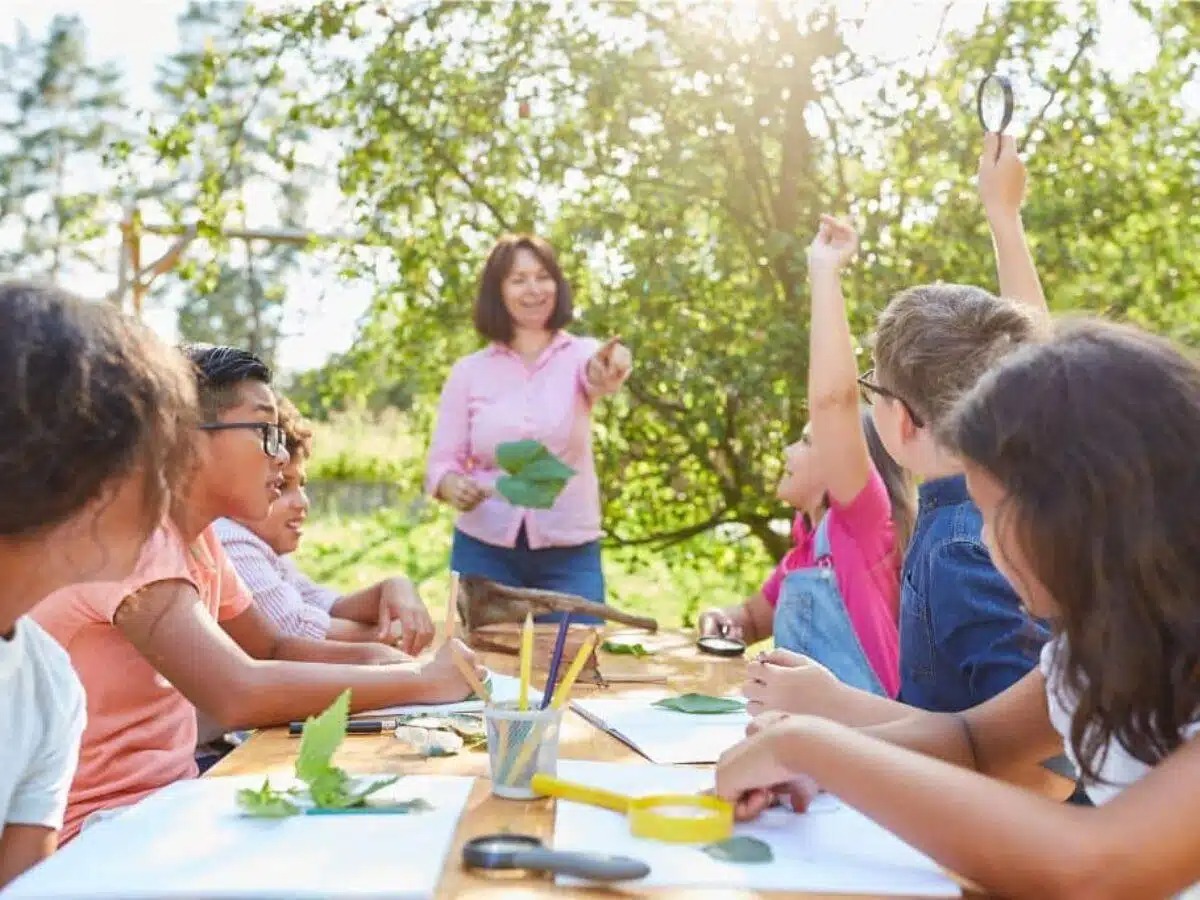

As we approach 2025, outdoor learning environments are increasingly being utilized as powerful tools for climate change education. Schools are leveraging their natural surroundings to provide tangible, experiential lessons about the impacts of climate change and the importance of environmental stewardship.
Climate monitoring stations are being set up in school grounds, allowing students to collect and analyze local weather data over time. This hands-on approach helps students understand climate patterns and how they’re changing, making the abstract concept of global warming more concrete and relatable.
Phenology gardens, where students observe and record the timing of natural events like leaf budding or bird migrations, are becoming common. These gardens serve as living laboratories for studying the effects of climate change on local ecosystems.
Outdoor art installations are being created to visualize climate data. For example, students might create sculptures that represent rising sea levels or changing precipitation patterns, combining scientific understanding with artistic expression.
Role-playing exercises set in outdoor environments are being used to teach about climate policy and decision-making. Students might take on roles as community leaders, scientists, or policy makers, grappling with real-world climate challenges in their local context.
Climate-resilient gardening practices are being taught in school gardens. Students learn about drought-resistant plants, water conservation techniques, and how to adapt agricultural practices to changing climate conditions.
Field trips to local areas affected by climate change, such as eroding coastlines or areas prone to wildfires, are becoming integral parts of the curriculum. These trips provide firsthand observations of climate impacts and often include discussions with local experts or community members.
By integrating climate change education into outdoor learning settings, schools are not only increasing students’ understanding of this critical issue but also empowering them to take action. This approach fosters a sense of connection to the environment and a commitment to sustainability that students carry with them beyond the classroom.


