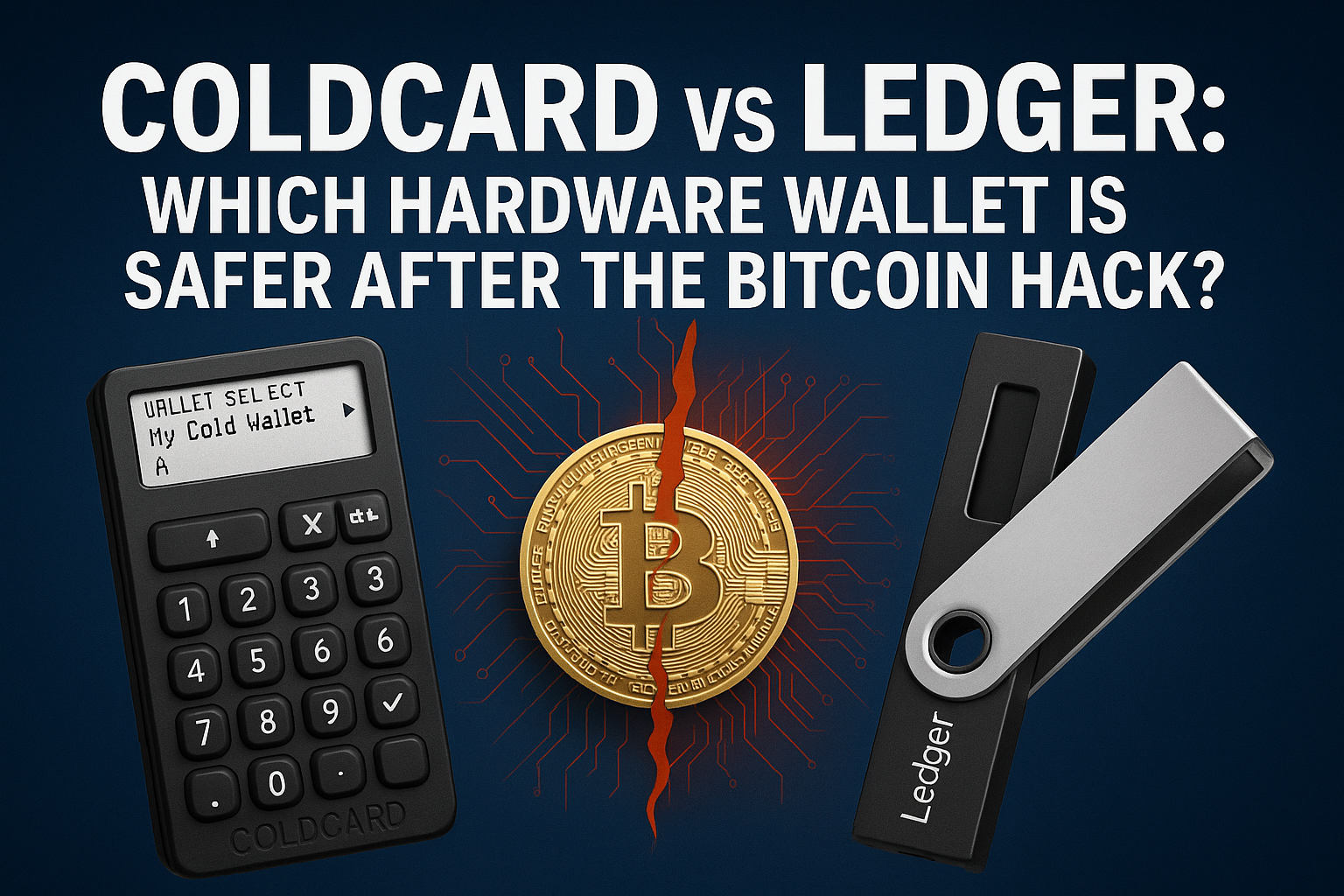

“`json
{
“title”: “Coldcard vs. Ledger: The $130 Million Bitcoin Heist That Just Changed Everything”,
“content”: “
When it comes to safeguarding your precious Bitcoin and other cryptocurrencies, the choice of hardware wallet isn’t just a technical preference; it’s a critical security decision. For years, devices like the Coldcard and Ledger have been championed as the gold standard for self-custody, offering a robust shield against the constant threats lurking in the digital ether. But what happens when that shield develops a crack, and millions of dollars vanish into thin air? The recent, devastating hack affecting Coldcard users has thrown the entire hardware wallet industry into a maelstrom of panic and re-evaluation, forcing us to ask: which device truly offers superior protection?
\n\n
This isn’t just another cautionary tale; it’s a seismic event, potentially the worst self-custody hit in Bitcoin’s history. Between $70 million and $130 million in Bitcoin has been siphoned from over 1,200 addresses since July 30, 2026, all thanks to a critical firmware flaw in Coldcard wallets running versions 4.0.0 to 4.1.9. This vulnerability allowed attackers to exploit weakened cryptographic seed randomness, leading to remote key reconstruction and, ultimately, theft. The CEO of Coldcard, Rodolfo Novak, has urgently advised users to move their funds, igniting a fierce debate among security experts about everything from AI’s role in discovering such flaws to the fundamental integrity of our chosen custodians. As investors scramble, a thorough Coldcard vs Ledger hardware wallet comparison is more vital than ever.
\n\n
1. The Coldcard Vulnerability Explained: A Flaw in the Foundation
\n\n
Let’s dive straight into the heart of the matter: the Coldcard hack. For those unfamiliar, Coldcard has long been lauded for its ‘air-gapped’ security model, meaning it never directly connects to an internet-connected computer for transactions. Instead, it uses an SD card to transfer signed transactions, theoretically minimizing exposure to online threats. This design philosophy has always appealed to the most security-conscious Bitcoin maximalists. See also cybersecurity threats overview.
\n\n
However, the recent incident exposed a terrifying chink in its armor: a critical firmware flaw within versions 4.0.0 through 4.1.9. This wasn’t a phishing scam or a user error; it was a fundamental weakness in the device’s cryptographic seed generation. Specifically, the attacker managed to exploit a flaw that weakened the randomness of the cryptographic seed. Imagine the random number generator that creates your private keys – the very foundation of your wallet’s security – having a predictable pattern. That’s essentially what happened. This vulnerability allowed malicious actors to remotely reconstruct private keys, effectively giving them the master key to affected wallets. The sheer scale of the theft, with one victim’s post detailing their loss garnering 7.6 million views, paints a grim picture of widespread panic and financial devastation.
\n\n
2. Ledger’s Security Architecture: A Different Approach to Trust
\n\n
Now, let’s turn our attention to Ledger, a competitor that employs a somewhat different security philosophy. Ledger devices, like the popular Nano S Plus or Nano X, rely on a Secure Element (SE) chip. This is a tamper-resistant chip, certified independently, that’s designed to host cryptographic keys and perform cryptographic operations in a highly isolated environment. Think of it as a tiny, fortified vault within the device itself. Your private keys never leave this Secure Element, even when signing transactions. (See: Bitcoin hack analysis by The New York Times.)
\n\n
While Ledger devices typically connect directly to a computer or smartphone via USB or Bluetooth (in the case of the Nano X), the critical operations—like generating seeds and signing transactions—are strictly confined to the Secure Element. This means that even if your computer is compromised with malware, the private keys on your Ledger device should remain safe because they are never exposed to the potentially infected host. This architectural choice has been a cornerstone of Ledger’s appeal, aiming to isolate the most sensitive data from the inherently insecure general-purpose computing environment.
\n\n
3. The “Air-Gapped” Ideal vs. Practicality: Coldcard vs Ledger Hardware Wallet Comparison
\n\n
The Coldcard’s primary appeal has always been its air-gapped nature. The idea is simple: if your device never touches the internet, it can’t be hacked over the internet. You use an SD card to move transaction data between the Coldcard and an online computer, ensuring a physical barrier. This approach has a certain purity to it, resonating with those who prioritize absolute isolation.
\n\n
However, the recent exploit demonstrates that even an air-gapped design isn’t impervious to flaws in its fundamental cryptography. The vulnerability wasn’t about internet connectivity; it was about the integrity of the randomness used to generate the seed phrase within the device itself. This is a crucial distinction. It highlights that while air-gapping reduces a significant attack vector, it doesn’t eliminate the risk of internal software or hardware vulnerabilities. Ledger, on the other hand, embraces connectivity but attempts to secure the critical components with its Secure Element. This Coldcard vs Ledger hardware wallet comparison shows two distinct philosophies, both now tested by real-world events.
\n\n
4. Firmware Audits and Open Source Debate: Transparency Under Scrutiny
\n\n
The Coldcard incident has reignited the perennial debate about open-source transparency versus proprietary security. Coldcard’s firmware is largely open-source, allowing independent security researchers to scrutinize its code for vulnerabilities. In theory, this should lead to more robust security as more eyes can spot potential flaws. However, the recent hack proves that even open-source scrutiny isn’t a guarantee against critical vulnerabilities, especially in complex cryptographic implementations.
\n\n
Ledger, conversely, utilizes a proprietary Secure Element and its firmware, while publicly audited, isn’t fully open-source. This has historically been a point of contention for some in the crypto community who advocate for full transparency. They argue that a closed-source approach makes it harder for the community to verify security claims. Yet, Ledger’s track record, while not flawless (they’ve had their own share of controversies, particularly around data breaches not directly related to fund security), hasn’t seen a direct fund loss exploit of this magnitude related to its core cryptographic functions. This difference in transparency models certainly plays a role in any comprehensive Coldcard vs Ledger hardware wallet comparison. (See: CDC's insights on cryptocurrency security.)
\n\n
5. Multi-Signature Solutions: The Path Forward for Enhanced Security
\n\n
The sheer scale of the Coldcard hack has underscored the urgent need for enhanced security practices beyond single-device custody. This is where multi-signature (multisig) solutions come into play. With a multisig setup, multiple hardware wallets (or even a combination of hardware and software wallets) are required to authorize a transaction. For example, a 2-of-3 multisig setup would require two out of three designated keys to sign off on any transaction before it can be broadcast to the blockchain.
\n\n
This approach dramatically reduces the risk of a single point of failure. If one of your Coldcards (or any hardware wallet, for that matter) is compromised, or even lost, your funds remain secure because the attacker still needs a second key to move anything. This is why multi-signature custody solutions are rapidly gaining traction, particularly for those holding substantial amounts of crypto. It’s a proactive measure that mitigates the impact of even a devastating exploit like the recent Coldcard debacle, offering a layered defense that single-device custody simply cannot match. Related reading: vulnerabilities in crypto bridges.
\n\n
6. The Human Element and AI’s Role: Beyond the Code
\n\n
The debate surrounding the Coldcard hack isn’t just about code; it’s also deeply entwined with the human element and the emerging role of AI in cybersecurity. Some experts are speculating whether AI played a part in discovering this complex cryptographic vulnerability, given the sophistication required to exploit weakened seed randomness. If AI is becoming an increasingly potent tool for attackers, what does this mean for the future of hardware wallet security?
\n\n
Ultimately, however, the flaw itself stemmed from human engineering error. It’s a stark reminder that even the most brilliant minds can introduce subtle vulnerabilities that have catastrophic consequences. The incident serves as a powerful testament to the ongoing arms race between security developers and malicious actors. It highlights the absolute necessity of rigorous, continuous security audits, not just of the code, but of the fundamental cryptographic primitives upon which these devices rely. As one victim put it, \”I did everything right,\” yet still lost millions. This sentiment captures the frustration and helplessness many are feeling, emphasizing that the burden of security shouldn’t solely rest on the end-user’s flawless execution. (See: Research on cryptocurrency vulnerabilities.)
\n\n
7. Migrating Funds and Future Considerations: What You Need To Do Now
\n\n
If you’re a Coldcard user running firmware versions 4.0.0 through 4.1.9, the message from CEO Rodolfo Novak is unequivocal: migrate your funds immediately. This means creating a new wallet with a fresh seed on a secure, updated device (or a different brand entirely) and transferring all your assets. This isn’t a suggestion; it’s an urgent directive to protect your wealth. Even if you haven’t been affected yet, the risk remains. Once your funds are safe, consider updating your Coldcard to the latest firmware, which presumably patches this specific vulnerability. However, given the severity of the exploit, many users might understandably choose to transition to an alternative hardware wallet or explore robust multi-signature setups.
\n\n
For everyone in the crypto space, this incident is a brutal wake-up call. It underscores that trust in any single hardware wallet, no matter how highly regarded, should always be tempered with a healthy dose of skepticism and layered security practices. Diversifying your holdings across different wallet types, embracing multisig solutions, and staying relentlessly informed about security audits and potential vulnerabilities are no longer optional extras; they are fundamental requirements for anyone serious about self-custody in this volatile, high-stakes environment. The Coldcard vs Ledger hardware wallet comparison, while still relevant, now shifts focus from mere features to fundamental resilience against unprecedented attacks.
\n\n
The crypto world is inherently risky, but the goal of hardware wallets is to mitigate that risk significantly. When a trusted device like Coldcard suffers such a profound breach, it sends shockwaves through the community, forcing a re-evaluation of what ‘secure’ truly means. While Ledger hasn’t faced a similar catastrophic fund loss event related to its core cryptography, no hardware wallet can ever guarantee 100% imperviousness. The lesson here is clear: vigilance, diversification, and a commitment to advanced security protocols like multisig are your best defense in an increasingly complex and dangerous digital landscape.
”
}
“`
Trending Now
Frequently Asked Questions
Is Coldcard safe after the recent hack?
The recent hack affecting Coldcard users has raised significant concerns about its safety. A critical firmware flaw allowed attackers to exploit vulnerabilities, leading to substantial theft. Users are advised to move their funds and consider alternative wallets until the issues are fully resolved.
How does Ledger compare to Coldcard in terms of security?
While both Ledger and Coldcard have been considered secure hardware wallets, the recent Coldcard hack has highlighted potential vulnerabilities. Ledger's security features, like its secure element and regular firmware updates, may make it a more reliable choice for users concerned about safety.
What caused the Coldcard hack?
The Coldcard hack was caused by a critical firmware flaw in versions 4.0.0 to 4.1.9, which weakened cryptographic seed randomness. This vulnerability enabled attackers to remotely reconstruct keys and steal funds from over 1,200 addresses, resulting in losses between $70 million and $130 million.
What should Coldcard users do after the hack?
Coldcard users should immediately move their funds to a secure wallet, as advised by the company's CEO. It's crucial to avoid using affected firmware versions and consider switching to a different hardware wallet, such as Ledger, until Coldcard resolves the security issues.
Are hardware wallets still safe after the Coldcard incident?
Yes, hardware wallets can still be safe, but users must choose reputable brands and stay updated on security practices. The Coldcard incident serves as a reminder of the importance of regularly updating firmware and being aware of potential vulnerabilities in any device.
What did we miss? Let us know in the comments and join the conversation.