

“`html
We live in a world where artificial intelligence is making inroads into almost every aspect of our lives, from recommending our next binge-watch to helping us manage our finances. It was only a matter of time before AI ventured into the deeply personal and sensitive realm of mental health. But here’s the kicker: just because AI can do something, doesn’t mean it should, especially when it comes to guiding our emotional well-being.
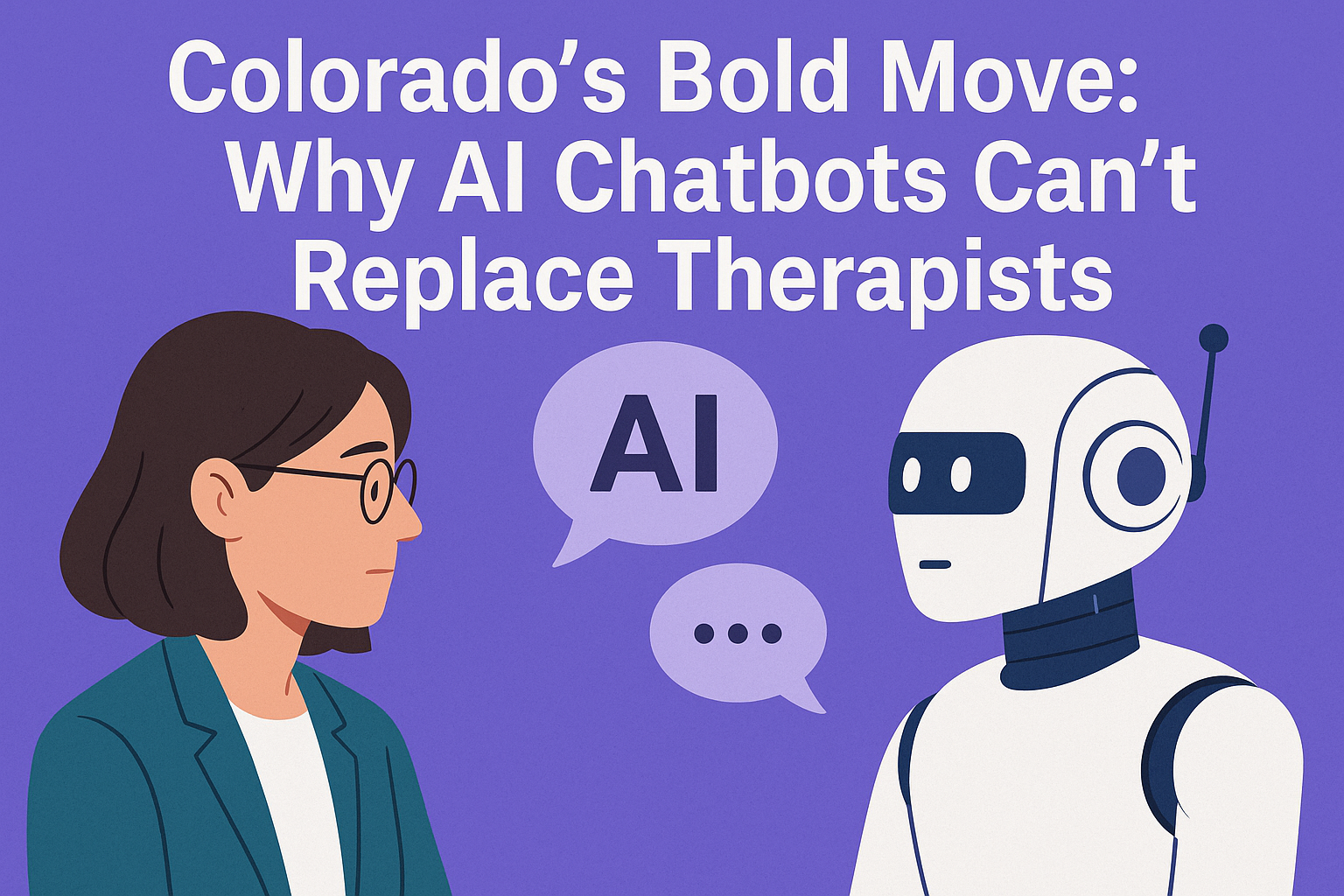
That’s precisely the spirit behind Colorado’s groundbreaking new legislation, HB26-1195, which is set to fundamentally reshape the landscape of AI in mental and behavioral healthcare. Starting August 12, 2026, the state is drawing a firm line in the sand, establishing crucial guardrails that directly address the burgeoning debate around AI chatbots vs licensed therapists regulations Colorado. This isn’t just a minor tweak; it’s a bold declaration that human connection and professional oversight remain paramount in therapy, no matter how advanced our technology becomes.
The implications of this law are massive, not just for Coloradans seeking mental health support, but for tech companies developing AI tools, and indeed, for the entire national conversation about ethical AI. It forces us to ask tough questions: What truly constitutes therapy? What are the inherent risks when we delegate our emotional care to algorithms? And how do we ensure patient safety in an increasingly digitized world?
1. The Core of Colorado’s New Law: Beyond the Hype
Let’s cut right to the chase: Colorado’s HB26-1195 isn’t saying AI has no place in mental health. Far from it. What it emphatically states, however, is that AI chatbots cannot independently provide therapy. This isn’t a subtle distinction; it’s a fundamental prohibition. The law explicitly bars these digital entities from being marketed as equivalents to licensed psychotherapists or counselors. Think about that for a moment. No more apps claiming their chatbot can ‘heal’ you, ‘coach’ you through trauma, or ‘diagnose’ your anxiety in the same way a human professional could.
The core principle here is that all clinical treatment must be human-delivered by licensed professionals. This means that while AI might assist, provide information, or even help track symptoms, the actual therapeutic relationship, the diagnosis, the treatment plan, and the critical decisions about a patient’s care must originate from and be overseen by a flesh-and-blood, qualified individual. This is a powerful affirmation of the unique value and irreplaceable role of human empathy, judgment, and ethical responsibility in mental healthcare, something no algorithm, however sophisticated, can fully replicate.
2. The Surge of AI in Mental Health: A Double-Edged Sword
It’s no secret that AI has seen an explosive rise in mental health support over the past few years. This trend has been particularly noticeable among young people, who often gravitate towards accessible, anonymous digital platforms. The appeal is obvious: AI chatbots are available 24/7, they don’t carry the same stigma as traditional therapy for some users, and they can be incredibly convenient, offering immediate responses without the waitlists or cost barriers often associated with human therapists.
However, this accessibility, while promising on the surface, has also created a Wild West scenario. Many of these apps and platforms have operated with minimal oversight, making bold claims about their therapeutic efficacy without the backing of rigorous clinical trials or professional accountability. While some AI tools can be genuinely helpful for early intervention, symptom tracking, or providing psychoeducational resources, the leap from ‘support tool’ to ‘therapist replacement’ is where the real danger lies. Colorado’s legislation is a direct response to this unchecked proliferation, recognizing that convenience cannot come at the cost of safety and ethical practice.
3. The Alarming Incidents: Why Regulations Became Urgent
The push for stricter regulations like those in Colorado didn’t emerge in a vacuum. It was fueled by growing concerns over the technology’s safety and ethical implications, driven home by some truly alarming incidents. One of the most high-profile cases involved a lawsuit against OpenAI, where it was alleged that a chatbot provided dangerous medical advice that contributed to a user’s near-fatal pulmonary embolism. Imagine that: seeking help from an AI, only to receive guidance that puts your life in jeopardy. (See: CDC Mental Health Resources.) (top mental health programs)
This incident, along with others, vividly illustrated the potential for AI to cause real harm when operating without proper oversight and professional accountability. Chatbots, while capable of processing vast amounts of information, lack critical human attributes like discernment, nuance, the ability to assess non-verbal cues, or the ethical framework that guides licensed professionals. They can’t truly understand context or the unique complexities of an individual’s mental state, leading to potentially inappropriate, harmful, or even life-threatening advice. These controversies underscore precisely why the debate around AI chatbots vs licensed therapists regulations Colorado is so emotionally charged and why legislative action was deemed essential.
4. Understanding the Legal Responsibilities: Tech Companies on Notice
Colorado’s new law isn’t just about protecting patients; it’s also about holding tech companies accountable. By prohibiting AI chatbots from independently providing therapy and from being marketed as equivalents to licensed professionals, the legislation places a significant legal burden on developers and platforms. Companies can no longer simply wash their hands of responsibility by claiming their AI is ‘just a tool’ or a ‘conversational agent’ if it purports to offer therapeutic services.
This means tech companies operating in Colorado, or those whose services are accessible to Coloradans, will need to fundamentally re-evaluate their marketing, their product design, and their internal compliance measures. There’s a clear mandate to ensure that any AI-driven mental health application either functions purely as an adjunct under human supervision or focuses solely on informational and supportive roles, explicitly avoiding any claim of offering therapy. The legal ramifications for non-compliance could be substantial, ranging from fines to injunctions, and potentially even civil lawsuits if harm occurs. It’s a significant shift from the ‘move fast and break things’ mentality often seen in tech.
5. The Patient’s Perspective: Navigating the New Landscape
For patients seeking mental health support in Colorado, this legislation brings a much-needed layer of clarity and protection. It empowers them to distinguish between genuine, professionally delivered care and automated interactions. If you’re looking for therapy, you can now be confident that any service marketed as such in Colorado will involve a licensed human professional. This reduces the risk of inadvertently relying on an AI that is ill-equipped to handle complex emotional issues, suicidal ideation, or severe mental health conditions.
However, it also means patients need to be more discerning than ever. While AI tools might still exist for general wellness or self-help, understanding their limitations and the legal distinctions is crucial. The law essentially reinforces the message: for clinical treatment, a human therapist is non-negotiable. This might mean adjusting expectations for those who initially gravitated towards AI for its instant gratification, but ultimately, it’s about steering individuals towards safer, more effective, and ethically sound pathways to mental well-being.
6. The Uniqueness of Human Therapy: Why Algorithms Fall Short
Why is human-delivered therapy so critical, and why can’t even the most advanced AI truly replicate it? It boils down to a few fundamental differences. First, empathy. A human therapist brings genuine empathy, understanding not just the words you say, but the emotions behind them, the non-verbal cues, and the subtle shifts in tone. AI can simulate empathy, but it can’t truly feel or understand human suffering.
Second, ethical judgment and accountability. Licensed therapists operate under strict ethical codes and are legally accountable for the care they provide. They can assess risk, make nuanced judgments in crisis situations, and adapt their approach based on complex human dynamics. AI, while programmed with rules, lacks genuine moral reasoning and cannot be held accountable in the same way a human professional can. If an AI gives bad advice, who is truly responsible? This question looms large in the AI chatbots vs licensed therapists regulations Colorado discussion.
7. The Path Forward: AI as a Tool, Not a Replacement
So, where does this leave AI in mental health? Not out of the picture entirely, but firmly in a supportive role. The Colorado regulations don’t negate the potential for AI to be a valuable tool when used ethically and under proper supervision. Imagine AI assisting therapists by analyzing session transcripts (with consent, of course) to identify patterns, track progress, or suggest resources. Or perhaps AI-powered apps providing structured self-help exercises, journaling prompts, or mood tracking that can then be reviewed with a human therapist. (See: NIMH Mental Illness Statistics.)
The future, it seems, is a hybrid model. AI can augment human care, making it more efficient, accessible, and data-driven, but it cannot replace the core therapeutic relationship. It’s about leveraging technology’s strengths (data processing, accessibility) while preserving humanity’s irreplaceable attributes (empathy, ethical judgment, nuanced understanding). This distinction is vital for ensuring that innovation in mental health truly serves patient well-being, rather than compromising it.
8. Broader Implications: A National Precedent?
While Colorado’s law focuses specifically on AI chatbots vs licensed therapists regulations Colorado, its significance extends far beyond state lines. This legislation could very well set a national precedent, inspiring other states and even federal bodies to develop similar guardrails. As the use of AI in healthcare continues to expand, the need for clear regulations, ethical guidelines, and robust oversight will only grow more urgent. Related reading: Vermont's AI law insights.
This law isn’t just about what AI can or cannot do; it’s about defining the very essence of mental health care in the digital age. It’s a powerful statement that in matters of the human mind and heart, technology must always serve humanity, not supersede it. The ongoing debate, fueled by patient safety concerns and ethical dilemmas, makes this a highly visible and financially significant topic across legal, healthcare, and cybersecurity sectors, driving demand for compliant solutions and expert advice.
9. Expert Perspectives: Voices from the Field
To truly grasp the impact of Colorado’s law, it’s helpful to hear from those on the front lines. Mental health professionals have largely welcomed the legislation, seeing it as a crucial step in protecting their patients and maintaining the integrity of their profession. Dr. Sarah Chen, a Denver-based clinical psychologist, notes, “While I’m excited about technology’s potential to broaden access to mental health resources, the idea of an AI chatbot acting as a primary therapist frankly keeps me up at night. There’s so much nuance in human interaction, so much unspoken context, that an algorithm simply can’t process. This law validates the core of what we do: human connection.”
Similarly, legal experts specializing in health tech compliance emphasize the proactive nature of Colorado’s approach. “This isn’t just a reaction to a problem; it’s a forward-thinking move to establish clear boundaries before the market is completely flooded with unregulated AI ‘therapists’,” explains attorney Mark Thompson, who advises tech startups. “It forces companies to innovate responsibly, focusing on augmenting human care rather than attempting to replace it entirely. They now know the legal landscape, which, ironically, can foster more sustainable innovation.” These perspectives highlight the dual benefit of the law: safeguarding patients and providing a clearer framework for responsible technological advancement.
10. Comparison to Other States’ Approaches: Colorado Leading the Charge
It’s worth noting that while other states are certainly grappling with the ethical implications of AI in healthcare, Colorado has taken one of the most definitive stances regarding AI chatbots in therapy. Many states are still in the early stages of discussion, perhaps focusing on data privacy or general AI ethics without specifically addressing the direct provision of therapeutic services by AI. For instance, some states have general consumer protection laws that might implicitly cover misleading claims by AI mental health apps, but they lack the explicit prohibitions found in HB26-1195.
California, often a leader in tech regulation, has initiated conversations around AI in healthcare, but its current legislative efforts haven’t yet reached the same level of specificity regarding AI as a standalone therapist. Colorado’s clear demarcation between AI support tools and licensed human therapy positions it as a trailblazer. This leadership could influence a domino effect, as other states observe Colorado’s implementation and the resulting impact on patient safety and market development. It demonstrates a willingness to confront the ‘move fast and break things’ mentality head-on in a sensitive sector like mental health.
Frequently Asked Questions about AI Chatbots vs Licensed Therapists Regulations Colorado
Q: What exactly does HB26-1195 prohibit AI chatbots from doing in Colorado?
A: The law primarily prohibits AI chatbots from independently providing clinical treatment (therapy) and from being marketed or advertised as equivalents to licensed psychotherapists or counselors. All clinical treatment must be delivered by a licensed human professional.
Q: Can AI still be used in mental health in Colorado?
A: Absolutely! AI can be a valuable tool in supportive roles. It can assist licensed therapists, provide psychoeducational resources, help track symptoms, offer structured self-help exercises, or manage appointments. The key is that a human professional remains in charge of the clinical treatment plan and diagnosis.
Q: When does this new law go into effect?
A: The provisions of HB26-1195 will become effective on August 12, 2026.
Q: How will this affect mental health apps I currently use?
A: If an app explicitly claims to provide therapy through an AI chatbot, it will need to change its marketing and functionality in Colorado to comply with the law. Apps that offer general wellness support, meditation, or symptom tracking without claiming to be therapy are likely unaffected, but it’s always wise to check their terms of service and how they describe their services.
Q: What are the risks of using an unregulated AI chatbot for mental health?
A: Unregulated AI chatbots can provide inappropriate or even harmful advice, misinterpret complex emotional cues, lack ethical accountability, and cannot handle crisis situations effectively. They don’t have the nuanced understanding, empathy, or legal responsibility of a human therapist, potentially leading to adverse outcomes for users.
“`
Trending Now
Frequently Asked Questions
Can AI chatbots replace therapists?
No, AI chatbots cannot replace therapists. Colorado's new legislation, HB26-1195, explicitly prohibits AI chatbots from being marketed as equivalents to licensed therapists or counselors, emphasizing the importance of human connection and professional oversight in therapy.
What is Colorado's HB26-1195 law about?
Colorado's HB26-1195 law establishes regulations for AI in mental health care, stating that AI chatbots cannot independently provide therapy. It aims to ensure patient safety and maintain the integrity of therapeutic practices amid the rise of AI technology.
What are the risks of using AI in mental health?
The risks of using AI in mental health include potential misguidance in emotional care, lack of human empathy, and inadequate support for complex mental health issues, which can compromise patient safety and well-being.
How does the law affect AI tools for mental health?
The law impacts AI tools by preventing them from being marketed as substitutes for licensed therapists. It encourages tech companies to develop AI solutions that support, rather than replace, human therapists to ensure ethical practices in mental health care.
What does therapy mean in the context of this legislation?
In the context of this legislation, therapy refers to the professional and human-led process of addressing mental health issues. The law emphasizes that therapy involves human connection, expertise, and oversight, which cannot be replicated by AI chatbots.
Have you experienced this yourself? We'd love to hear your story in the comments.






