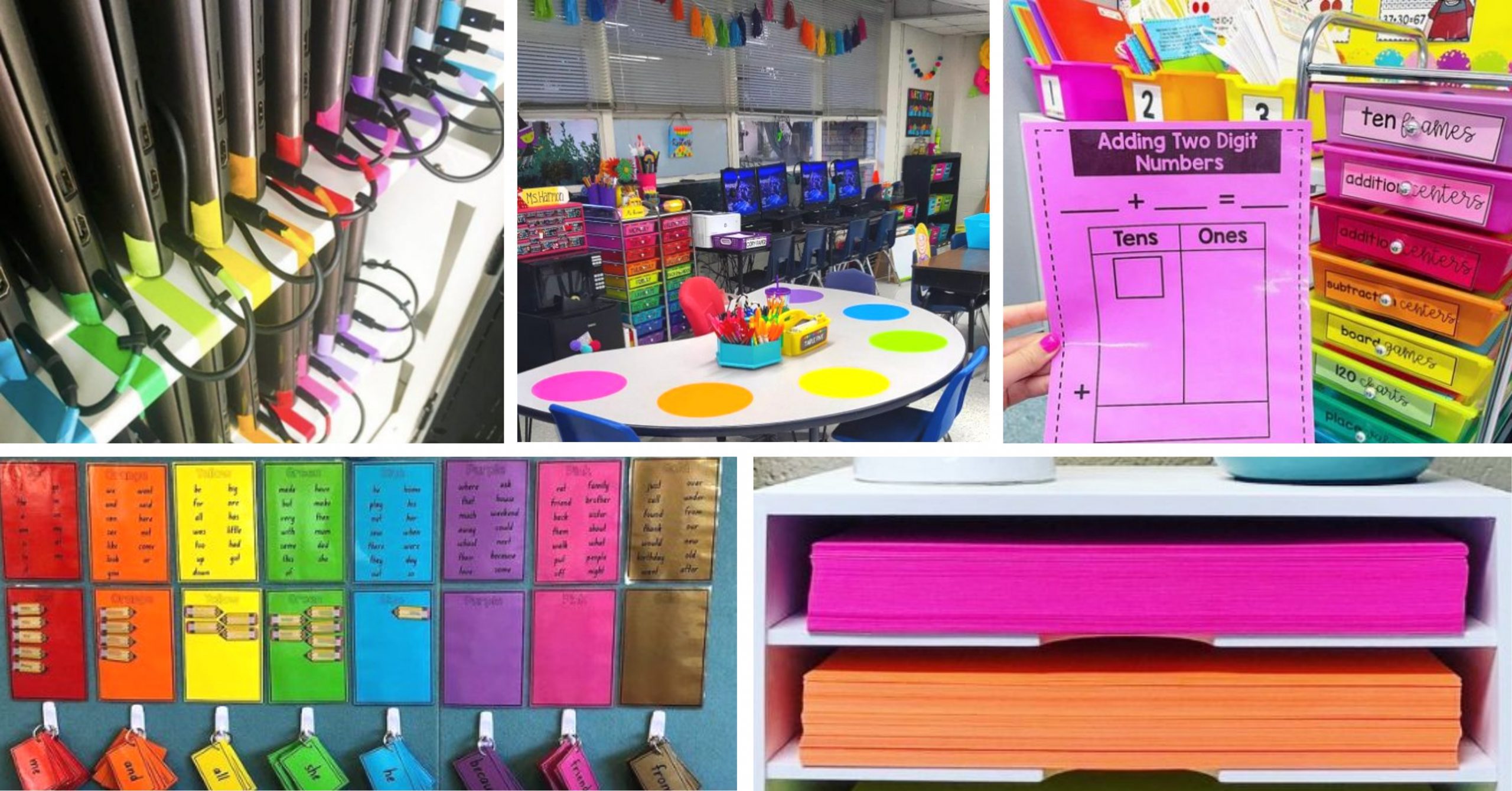

Colour coding in the classroom is more than just an aesthetic choice—it’s a powerful tool that can enhance learning and organization. Many educators have turned towards this vibrant stratagem to bring about a transformative change in their teaching environments. But what makes colour coding such a celebrated technique among teachers? Let’s delve into the exciting world of chromatic organization and its benefits in an educational setting.
The classroom is a bustling hub of activities, subjects, and resources, which can often lead to chaos if not managed properly. Colour coding presents a simple yet effective solution for maintaining order. Teachers can assign different colours for each subject or activity, making it easy for students to identify what they need at a glance. For example, blue folders might be used for mathematics, green for science, and yellow for history. This visual organization extends beyond folders; it can be applied to book covers, bins, and even sections on whiteboards.
Not only does this system help with physical organization, but it also aids memory and learning. Studies have shown that colours can improve cognition and recall by creating associations in our brains. When students consistently see particular colours in association with certain subjects or concepts, they’re more likely to remember them. Utilizing colour as an educational cue enables quick recollection and retrieval of information during classes or exams.
Teachers appreciate colour coding because it also streamlines their work, making it easier to plan lessons and manage materials. They can organize teaching aids and stationery by colour, saving precious time during preparations. Moreover, when each student’s work is marked with a specific colour, it simplifies tracking progress and submissions, ensuring nothing gets misplaced or overlooked.
Classroom behaviour management benefits too—setting clear behavioural expectations through colour-coded charts or systems aids clarity for students. A traffic light system, for instance, with green indicating good behaviour, yellow as a cautionary reminder, and red for notice of poor behaviour patterns helps students visually gauge their own behaviour throughout the day.
Another advantage lies in inclusivity—colour coding is immensely helpful for students with learning differences such as dyslexia or ADHD. It reduces cognitive load by providing clear visual boundaries and categorizations that assist in focusing attention and understanding organizational systems.
Finally, colour coding nurtures autonomy among students; when they know exactly where to find what they need without constant guidance from the teacher, they develop independence in their learning journey.
In conclusion, colour coding is much more than just making the classroom look pleasant—it’s an instrumental asset that enhances pedagogical efficiency, reinforces memory, aids behavioural management, supports inclusivity, and fosters independence among students. By painting the classroom with purposeful strokes of hue-coded organisation, teachers worldwide are embracing a practical rainbow that spells success in large vivid letters.