
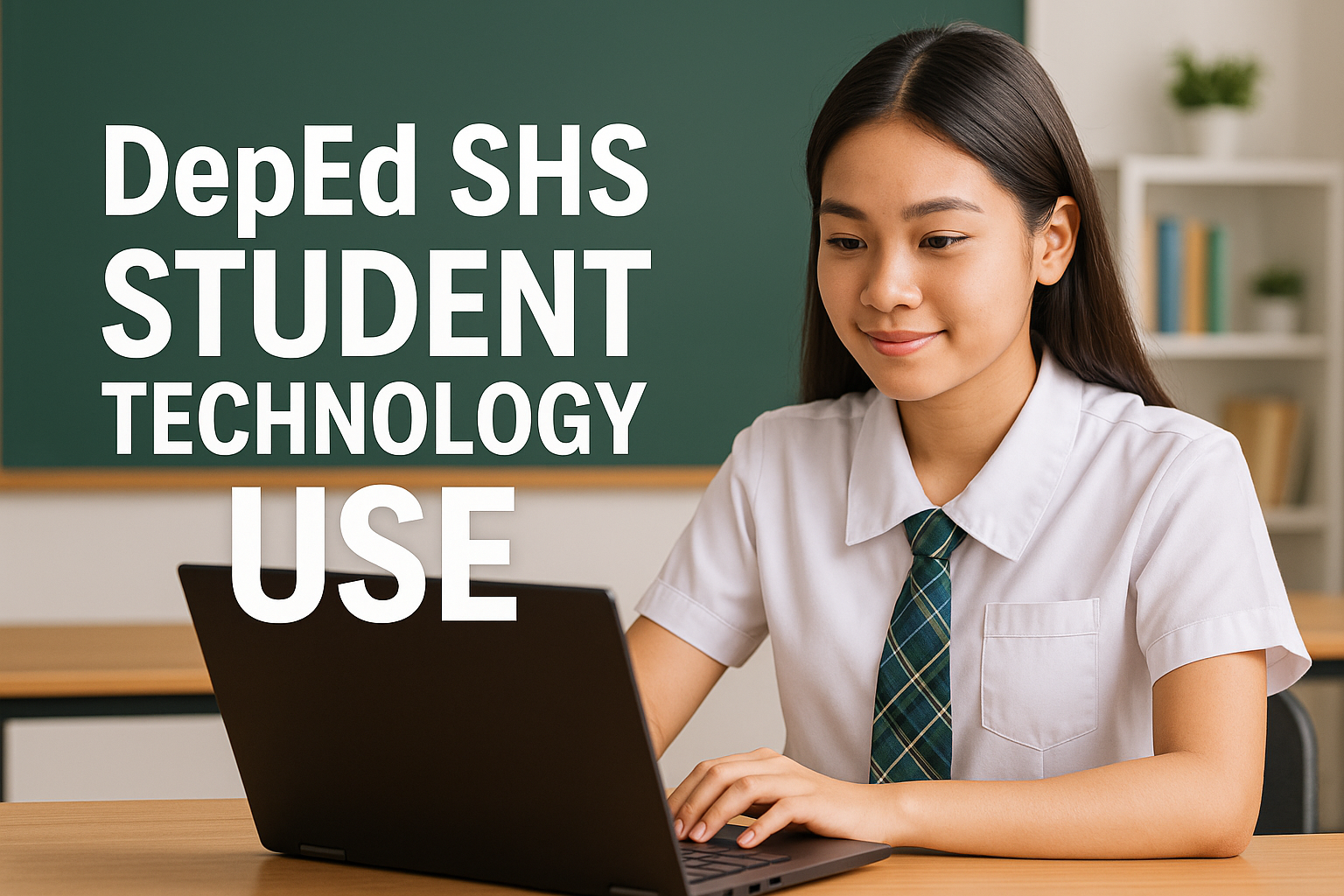

In the bustling corridors of today’s educational institutions, particularly in the Philippines’ Senior High School (SHS) program under the Department of Education (DepEd), a silent revolution is underway. It’s not a change instigated by policy papers or curriculum overhauls, but by the ubiquitous presence of technology in the hands and lives of students. The question isn’t whether students use technology; it’s how they use it, what impact it has, and what educators and parents can do to harness its potential while mitigating its pitfalls. Understanding this dynamic landscape of student technology use is paramount for anyone invested in the future of education.
For many young people, especially those in their formative senior high school years, technology isn’t just a tool; it’s an extension of their social lives, their learning processes, and even their identities. From smartphones to laptops, tablets to smartwatches, these devices are constant companions, offering a portal to information, entertainment, and connection. Yet, this digital immersion presents a complex challenge for the DepEd SHS framework, which aims to prepare students for higher education and the workforce. How do we ensure that this pervasive student technology use genuinely supports learning outcomes rather than detracting from them? That’s the million-dollar question, and it requires a nuanced understanding of both the opportunities and the considerable risks involved.
The Double-Edged Sword of Digital Access in SHS
Let’s be honest: the idea of completely banning technology from schools in 2024 is, for most, a non-starter. It’s like trying to stop the tide with a teacup. The digital age is here, and our students are digital natives. The real challenge lies in discerning how student technology use can be a powerful accelerator for learning, rather than a distraction. On one hand, technology offers unparalleled access to information. A student can research a complex topic, watch an educational documentary, or collaborate on a project with peers across town – all from a single device. This democratizes knowledge in ways previous generations could only dream of. It can foster independent learning, critical thinking, and problem-solving skills, especially when guided effectively by educators.
Consider the practical applications: imagine a STEM student using a simulation app to visualize complex physics principles, or an Arts and Design student utilizing graphic design software to bring their creative visions to life. These aren’t just enhancements; they’re transformative. They move learning beyond rote memorization into experiential engagement. Furthermore, technology can bridge geographical gaps, allowing students in remote areas to access resources and expertise that might otherwise be unavailable. It can also personalize learning, adapting to individual paces and styles, offering remedial exercises or advanced challenges as needed. The potential for inclusive and differentiated instruction through technology is immense, especially within a diverse educational system like the DepEd SHS.
However, this gleaming coin has a flip side, and it’s one that keeps many educators and parents up at night. The very devices that offer endless educational opportunities also present endless distractions. Social media notifications, gaming apps, and instant messaging can easily pull a student’s attention away from a lesson or assignment. The temptation for off-task behavior is constant and often irresistible for developing minds. Moreover, the prevalence of misinformation online, the pressures of digital comparison, and the potential for cyberbullying add layers of complexity and risk to unchecked student technology use. Striking that delicate balance between leveraging technology’s benefits and mitigating its drawbacks is perhaps the most significant pedagogical challenge of our time. (key tech concepts for educators)
Understanding the Landscape: What Tech Are Students Really Using?
When we talk about student technology use in the SHS context, what exactly are we referring to? It’s not just about desktop computers in a lab anymore. The landscape has become far more personal and portable. Smartphones are, without a doubt, the dominant device. These pocket-sized supercomputers offer internet access, communication tools, cameras, and a vast ecosystem of applications. Many students use them for everything from conducting research to submitting assignments via learning management systems (LMS) like Google Classroom or Microsoft Teams, which have become standard in many schools, especially since the pandemic. (See: impact of technology on youth.)
Beyond smartphones, laptops and tablets also play a significant role. Laptops, in particular, are often seen as essential for more intensive academic tasks, such as writing lengthy research papers, coding, or engaging in graphic design. Tablets, with their touch-screen interfaces, offer a blend of portability and functionality, often preferred for reading e-books, annotating documents, or artistic endeavors. Wearable technology, while less prevalent for direct academic tasks, still contributes to the overall digital environment, keeping students connected and sometimes providing access to notifications that can disrupt focus. We covered additional tech insights for teachers in more detail.
It’s also crucial to distinguish between technology use for academic purposes and for leisure. While a student might be using a laptop for a research paper, they might simultaneously have multiple tabs open for social media or streaming services. The lines blur, making it challenging for educators to monitor and guide appropriate usage. This dual-purpose nature of personal devices means that any strategy for managing student technology use must acknowledge and address both aspects. Simply put, we can’t ignore the fact that students bring their entire digital lives into the classroom, and that includes their entertainment and social connections.
Navigating the Academic Benefits and Pitfalls of Student Technology Use
Let’s dive deeper into the academic implications. On the positive side, technology can significantly enhance learning experiences. For instance, online collaborative tools allow students to work together on projects regardless of their physical location, fostering teamwork and communication skills – competencies highly valued in the modern workforce. Access to a global library of information through search engines and academic databases means students can delve into subjects far beyond the scope of a single textbook. Interactive simulations and virtual reality (VR) experiences can bring abstract concepts to life, making complex topics more understandable and engaging. Imagine a biology student dissecting a virtual frog with unparalleled detail, or a history student exploring ancient Rome through a VR tour. These aren’t just novelties; they are powerful pedagogical tools.
However, the pitfalls are equally compelling. The most obvious is distraction. Studies consistently show a correlation between smartphone presence and decreased academic performance. The constant ping of notifications can fragment attention, making deep, focused work difficult. Beyond simple distraction, there’s the issue of digital literacy itself. Not all students are adept at critically evaluating online sources, leading to the spread of misinformation or the submission of poorly researched work. The ease of copying and pasting also fuels plagiarism, challenging academic integrity. Furthermore, excessive screen time can lead to physical issues like eye strain and poor posture, and psychological impacts such as increased anxiety, sleep disturbances, and diminished attention spans. We’re also seeing the rise of a “shallow processing” effect, where students skim information rather than engaging in deep reading and critical analysis, thanks to the rapid-fire nature of online content consumption.
For educators, this means their role evolves. It’s no longer just about delivering content but about teaching students how to effectively navigate the digital world, how to discern credible sources, how to use technology ethically, and how to manage their own digital well-being. This requires a shift from simply providing access to technology to actively integrating digital literacy and citizenship into the curriculum. It’s a huge ask, but a necessary one, to ensure that student technology use truly serves educational goals.
The Role of Educators and Parents in Guiding Digital Natives
The responsibility for fostering productive student technology use doesn’t fall solely on the school system. It’s a shared endeavor that requires active participation from both educators and parents. For teachers, it means more than just familiarity with new gadgets. It means developing pedagogical approaches that intentionally integrate technology as a learning tool, rather than an add-on. This could involve using educational apps for interactive quizzes, leveraging online platforms for project-based learning, or teaching students how to use productivity software effectively. Professional development for teachers on digital integration, cybersecurity awareness, and managing classroom technology is absolutely crucial. (See: technology in education news.)
Furthermore, establishing clear classroom policies around technology use is vital. Should phones be completely put away during lectures? Are laptops only for note-taking? These guidelines need to be communicated clearly and consistently enforced. It’s also about modeling appropriate digital behavior and engaging students in discussions about responsible online conduct, digital citizenship, and the ethical implications of technology. Encouraging critical thinking about online information and media literacy should be embedded in every subject, not just taught as a standalone unit.
Parents, too, have a significant role. Their influence on their children’s digital habits cannot be overstated. Open conversations at home about screen time, online safety, cyberbullying, and the balance between academic and recreational technology use are essential. Setting boundaries for device usage, especially during study hours and before bedtime, can make a huge difference. Parents can also monitor their children’s online activities (respecting privacy while ensuring safety) and encourage them to use technology for creative and educational purposes, not just passive consumption. A united front between home and school, with consistent messages and expectations, is the most effective way to guide students through the complexities of the digital world. This builds on implementing personalized learning.
DepEd’s Vision and the Reality on the Ground
The Department of Education in the Philippines, through its K to 12 program and specifically the SHS curriculum, acknowledges the importance of technology. There’s a clear recognition that students need to be equipped with 21st-century skills, and digital literacy is at the core of that. DepEd has initiatives to provide schools with computer laboratories and internet access, although the reality on the ground often varies greatly from urban centers to remote provinces. The goal is to integrate technology across various learning areas, from specialized technical-vocational-livelihood (TVL) tracks that rely heavily on specific software and hardware, to academic tracks where research and digital presentations are commonplace.
However, the implementation faces significant hurdles. Infrastructure remains a major challenge. Not all schools have reliable internet connectivity, and many lack sufficient devices for all students. Teacher training is another area that needs continuous improvement. While many educators are enthusiastic, some may feel overwhelmed by the rapid pace of technological change or lack the specific skills to integrate it effectively into their lessons. There’s also the issue of equity; students from socio-economically disadvantaged backgrounds may not have access to personal devices or reliable internet at home, creating a digital divide that can exacerbate existing inequalities. This gap makes uniform expectations for student technology use across the entire SHS system difficult to achieve.
The pandemic, ironically, accelerated the adoption of technology out of necessity, pushing many schools and students into online learning environments they weren’t fully prepared for. This experience highlighted both the potential and the profound challenges. While it forced a rapid digital transformation, it also exposed the systemic weaknesses in infrastructure, digital literacy, and equitable access. Moving forward, DepEd’s strategy must address these foundational issues, ensuring that policies are not just aspirational but are supported by concrete resources and sustained professional development to truly make student technology use a force for good. (See: technology's role in education.)
Towards a Balanced and Purposeful Integration of Technology
So, where do we go from here? The path forward for student technology use in the SHS program, and indeed in education globally, isn’t about rejection or wholesale adoption, but rather about thoughtful, purposeful integration. It requires a strategic approach that prioritizes learning outcomes and student well-being above all else. This means fostering a culture of digital responsibility, where students understand the power and pitfalls of their devices.
Firstly, schools need to develop comprehensive digital literacy programs that go beyond basic computer skills. These programs should teach critical evaluation of online sources, responsible online communication, cybersecurity basics, and the importance of digital well-being. Secondly, investment in infrastructure and resources is non-negotiable. This includes not just devices and internet access, but also robust learning management systems and educational software that are user-friendly and truly enhance learning. Thirdly, ongoing and effective professional development for teachers is paramount. Educators need to be empowered with the skills and confidence to integrate technology creatively and effectively into their pedagogy. equalizing learning through technology offers useful background here.
Finally, and perhaps most importantly, we need open and continuous dialogue among all stakeholders: students, parents, teachers, administrators, and policymakers. Students themselves often have valuable insights into how technology can best serve their learning. By listening to their perspectives and involving them in developing guidelines, we can create more relevant and effective strategies. The aim isn’t to turn every student into a tech guru, but to equip them with the ability to navigate, create, and thrive in an increasingly digital world. The journey of integrating student technology use effectively into education is ongoing, complex, and requires constant adaptation, but it’s a journey we must undertake with conviction and foresight for the sake of the next generation.
Trending Now
Frequently Asked Questions
How is technology used by Senior High School students in the Philippines?
Senior High School students in the Philippines use technology as an integral part of their learning and social lives. Devices like smartphones, laptops, and tablets serve as tools for research, communication, and accessing educational resources, making technology an extension of their identities and learning processes.
What are the benefits of technology in SHS education?
Technology in SHS education offers numerous benefits, including enhanced access to information, interactive learning experiences, and improved communication between students and teachers. It allows students to engage with complex topics more effectively and fosters collaborative learning through digital platforms.
What challenges does technology pose in Senior High School learning?
While technology can enhance learning, it also presents challenges such as distractions, misinformation, and potential over-reliance on digital devices. Educators and parents must navigate these pitfalls to ensure that technology genuinely supports educational outcomes instead of detracting from them.
How can educators harness student technology use effectively?
Educators can harness student technology use effectively by integrating digital tools into the curriculum, promoting responsible use, and providing guidance on navigating online resources. Encouraging critical thinking and digital literacy helps students leverage technology as a powerful learning accelerator.
What role do parents play in managing technology use for SHS students?
Parents play a crucial role in managing technology use for Senior High School students by setting boundaries, fostering open communication about online activities, and encouraging balanced tech use. Their involvement helps students develop healthy habits that prioritize education while still enjoying the benefits of technology.
Agree or disagree? Drop a comment and tell us what you think.






