
“`html
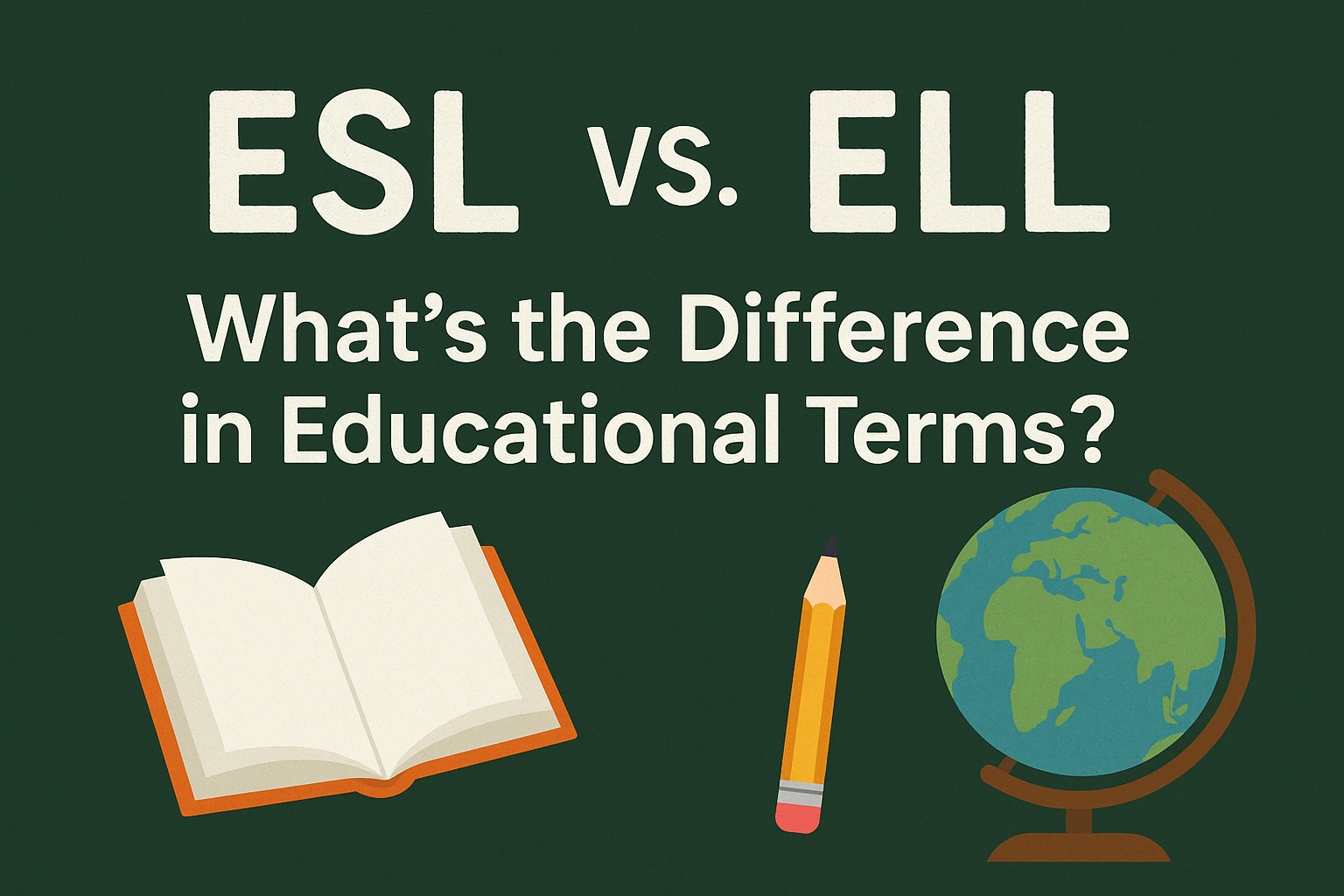
In the world of education, especially in the context of language acquisition, two terms often surface: ESL and ELL. While they might seem interchangeable at first glance, they represent distinct concepts that are crucial for educators and learners alike. Understanding the nuances of ESL vs ELL is essential for better educational outcomes and effective pedagogical strategies.
1. Defining ESL and ELL
ESL stands for English as a Second Language. This term is predominantly used to describe programs or courses designed for individuals whose primary language is not English and who are learning English in an English-speaking country. ESL programs focus on developing proficiency in English language skills, including reading, writing, listening, and speaking. Generally, these programs cater to students who have varying degrees of prior exposure to English, ranging from beginners to advanced learners.
On the other hand, ELL, or English Language Learner, refers to students who are in the process of learning English. This term encompasses all learners who are not native English speakers, regardless of the number of languages they know or the context in which they are learning English. ELLs can include students who were born in English-speaking countries but come from non-English speaking households, as well as immigrants and refugees who have relocated to an English-speaking environment.
2. Historical Context and Evolution
The educational terms ESL and ELL have evolved over the years to better align with our understanding of language acquisition and cultural diversity. The ESL framework began gaining prominence in the mid-20th century as globalization increased and more non-native speakers began to migrate to English-speaking countries. Initially, ESL programs were often criticized for their one-size-fits-all approach, which did not account for the diverse backgrounds and experiences of learners.
In response to these criticisms, the term ELL emerged in the 1990s. This shift not only broadened the scope of language learners but also emphasized the importance of cultural identity in the language learning process. Rather than solely focusing on language mechanics, ELL programs encourage a more holistic approach that respects and incorporates the student’s native language and culture as integral to their learning experience.
3. Pedagogical Approaches: How ESL and ELL Programs Differ
The primary distinction between ESL and ELL lies in their pedagogical approaches. ESL programs often adopt a structured curriculum focused on grammatical structures, vocabulary, and pronunciation tailored to English language acquisition. These programs typically emphasize immersion, where learners are placed in an English-speaking environment to facilitate rapid learning through exposure.
In contrast, ELL programs prioritize a learner-centered approach that recognizes and values the students’ bilingualism. Rather than viewing students’ native languages as obstacles, ELL methodologies seek to leverage these languages as tools for learning. Instruction in ELL programs may include dual-language education, where students receive instruction in both their native language and English, promoting literacy skills across languages. This approach not only aids in English proficiency but also enhances cognitive abilities and cultural appreciation.
4. Current Trends and Research in ESL and ELL Education
Current educational research increasingly supports the notion that ELL frameworks are often more effective than traditional ESL models. Studies have shown that engaging ELL students in their native languages can lead to better academic performance and higher retention rates. For instance, a report by the National Center for Education Statistics found that students in bilingual education programs showed greater proficiency in both English and their native languages compared to those in ESL-only programs. (See: U.S. Department of Education on English Learners.)
Moreover, educators are embracing culturally responsive teaching practices that address the unique needs of ELLs. By acknowledging the diverse backgrounds of students, teachers can create inclusive classrooms that foster a sense of belonging. This trend has become particularly important as classrooms become increasingly multicultural. By valuing student diversity, educators can promote engagement and motivation, essential factors for successful language acquisition.
5. Challenges Faced by ESL and ELL Learners
Despite the growth of tailored programs, ESL and ELL learners face significant challenges. Language barriers can hinder academic performance, participation in class discussions, and social integration. ELL students, in particular, may struggle with feelings of isolation or inadequacy due to their limited English proficiency.
Additionally, the lack of resources and qualified teachers can severely impact the effectiveness of ESL and ELL programs. Many schools, especially those in underfunded districts, may not have the resources necessary to provide adequate support for ELL students. This can lead to a cycle of underachievement, where language learners do not receive the education they need to thrive academically.
6. The Role of Technology in ESL and ELL Education
Technology has emerged as a powerful ally in the education of ESL and ELL students. Online platforms and language learning applications offer interactive and engaging ways for students to practice their language skills outside of the classroom. Tools like Duolingo, Rosetta Stone, and even virtual reality applications are making it easier than ever for learners to immerse themselves in English language contexts.
Moreover, educators are leveraging technology to create customized learning experiences. For instance, digital resources can provide personalized feedback and adaptive learning paths that cater to the individual needs of ESL and ELL students. This not only enhances their learning experience but also allows teachers to monitor progress effectively and make informed instructional decisions.
7. Comparative Analysis of ESL and ELL Approaches
When discussing ESL vs ELL, a direct comparison of their approaches can further illuminate their differences and potential synergies. ESL programs predominantly focus on a structured approach to language acquisition, which can be effective for students needing to quickly gain communicative competence for everyday interactions or academic settings.
In contrast, ELL programs often incorporate social and emotional learning, recognizing that language acquisition is not just about mastering vocabulary and grammar but also about developing confidence and social skills. For instance, projects that require collaboration and discussion among students can help ELLs practice language in meaningful contexts, promoting not just language skills but also teamwork and social integration.
Statistics also reveal insights into program effectiveness. Research from the Migration Policy Institute indicates that students enrolled in ELL programs often outperform their peers in ESL settings: ELL students were 25% more likely to graduate on time when compared to those in traditional ESL programs. This data underscores the importance of a comprehensive approach that takes into account the whole child—cognitively, socially, and emotionally. (See: CDC resources for English learners.)
8. Expert Perspectives on ESL and ELL Education
Educators and researchers continue to weigh in on the debate between ESL and ELL methodologies. Dr. Lydia D. M. P. Romo, an expert in bilingual education, emphasizes, “The key to language acquisition is not just the method of teaching but understanding the learner’s context. When students feel their cultural background is valued, they’re more likely to engage and succeed.”
Similarly, Professor Mark S. Richards from the University of Southern California advocates for the integration of ESL and ELL approaches. He believes that “a hybrid model that combines elements of both can offer a more comprehensive solution. By incorporating structured language instruction with culturally relevant pedagogy, schools can better support diverse learners.”
9. Frequently Asked Questions about ESL and ELL
What are some common misconceptions about ESL and ELL?
One common misconception is that all ESL and ELL learners are the same. In reality, these programs cater to diverse students with unique backgrounds, language experiences, and learning needs. Another myth is that students must become entirely fluent in English before they can succeed academically, whereas many ELL strategies promote gradual language acquisition alongside content learning.
How can parents support their children in ESL or ELL programs?
Parents can play a crucial role by fostering a positive language environment at home. Encouraging children to maintain their native language while learning English can boost their confidence and cognitive skills. Additionally, parents should engage in their child’s education by participating in school meetings and communicating with teachers about their child’s progress.
Are ESL and ELL programs available at all educational levels?
Yes, ESL and ELL programs are offered at various educational levels, from elementary to high school and even in adult education programs. Schools are increasingly recognizing the need to support language learners at all stages of their educational journey.
What role does cultural competency play in ESL and ELL education?
Cultural competency is vital in ESL and ELL education as it helps educators understand the diverse cultural backgrounds of their students. This awareness enables teachers to create more inclusive learning environments and adapt their teaching strategies to meet the unique needs of each learner effectively.
10. Strategies for Effective ESL and ELL Instruction
To ensure success in both ESL and ELL programs, educators can implement various instructional strategies. For instance, using visuals, realia (real-life objects), and hands-on activities can help bridge the gap between language and comprehension. These techniques enable students to make connections beyond verbal communication, enhancing their understanding and retention of new vocabulary and concepts.
Additionally, fostering a collaborative learning environment can be beneficial. Group work and peer support not only promote language development but also create a sense of community among learners. When students collaborate, they can practice their English skills in context, thus reinforcing their learning while building friendships.
11. Future Directions in ESL and ELL Education
As we look to the future, the landscape of ESL and ELL education is likely to evolve even further. With the rise of global migration and the increasing number of multilingual learners, educational systems will need to adapt to cater to these changing demographics. Policymakers and educators may focus on creating more integrated programs that combine language learning with academic content, allowing students to develop both linguistic and subject matter proficiency simultaneously.
Additionally, the integration of artificial intelligence in language learning tools can provide personalized learning experiences, further enhancing engagement and effectiveness. As technology continues to advance, it will play a crucial role in shaping how ESL and ELL education is delivered, making learning more accessible and tailored to individual needs.
12. Conclusion: Bridging the Gap Between ESL and ELL
Understanding the differences between ESL and ELL is crucial for educators, policy-makers, and stakeholders invested in language education. By recognizing that these terms represent different approaches and philosophies, we can better support language learners in their quest for proficiency.
As educational environments continue to diversify, the focus on culturally responsive teaching, along with modern technological interventions, can help bridge the gap between ESL and ELL frameworks. Ultimately, the goal should be to create inclusive and supportive classrooms where all students, regardless of their language background, have the opportunity to succeed. In the debate of ESL vs ELL, the key takeaway is not just the terminology, but the commitment to foster an educational experience that values every learner’s journey.
“`
Trending Now
Frequently Asked Questions
What does ESL stand for?
ESL stands for English as a Second Language. It refers to programs designed for individuals whose primary language is not English, focusing on developing their proficiency in English skills such as reading, writing, listening, and speaking.
What is the difference between ESL and ELL?
The main difference is that ESL refers to programs for non-native English speakers learning the language, while ELL, or English Language Learner, describes students who are in the process of learning English, regardless of their background or the context of their learning.
Who qualifies as an ELL?
An ELL, or English Language Learner, includes any student who is not a native English speaker. This can include individuals from non-English speaking households in English-speaking countries, as well as immigrants and refugees.
Why has the term ELL become more popular than ESL?
The term ELL has gained popularity as it reflects a broader understanding of language acquisition and cultural diversity, addressing the varied experiences of learners and moving away from the one-size-fits-all approach often associated with ESL programs.
What are the goals of ESL programs?
ESL programs aim to develop proficiency in English language skills, including reading, writing, listening, and speaking, for non-native speakers. They cater to learners at different levels, from beginners to advanced students, ensuring effective language acquisition.
Have you experienced this yourself? We’d love to hear your story in the comments.