
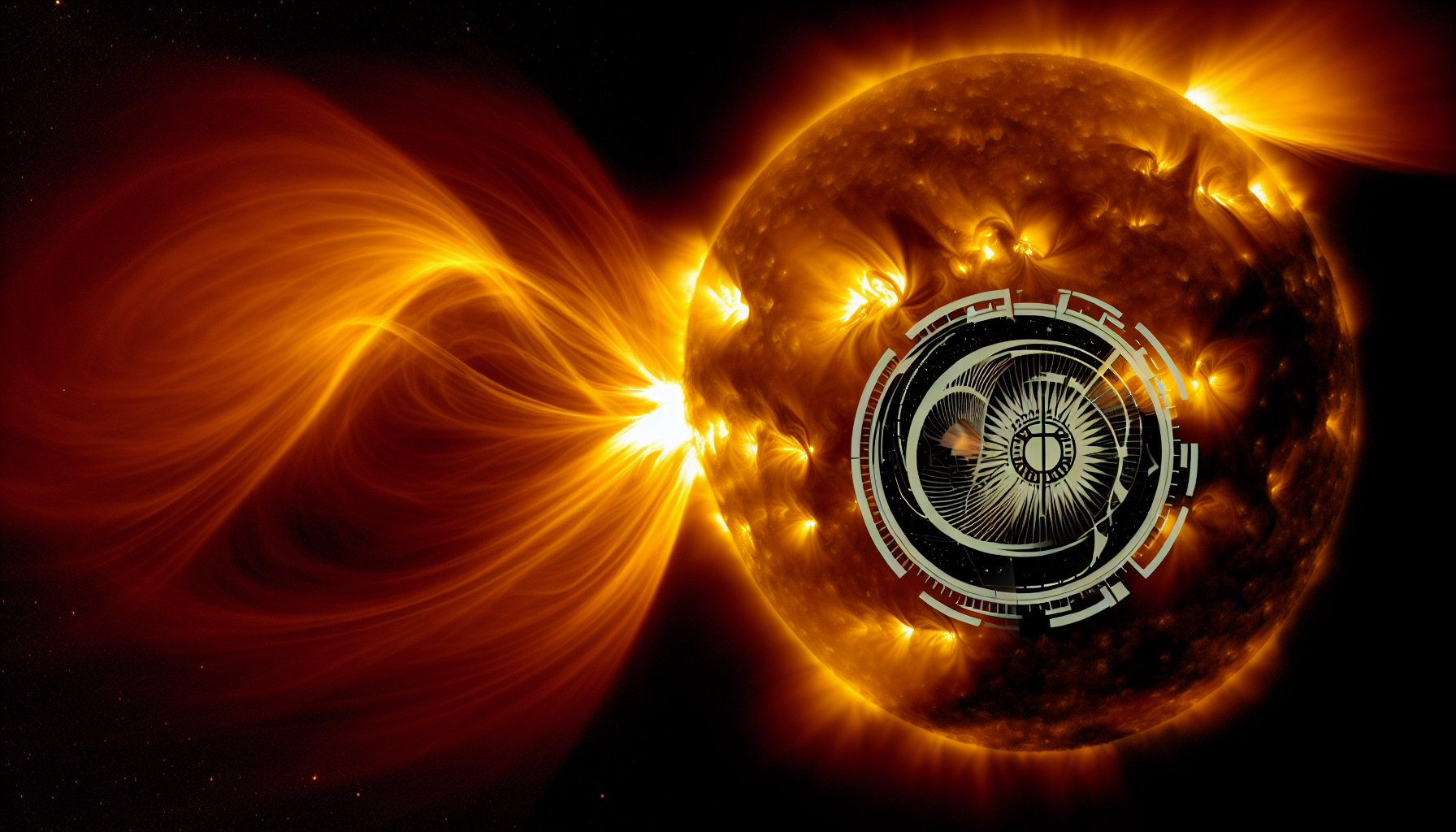

On April 4, 2026, NASA’s Solar Dynamics Observatory (SDO) provided a breathtaking view of our sun, showcasing a range of dynamic solar phenomena, including solar flares, coronal mass ejections (CMEs), and coronal holes. This footage is particularly significant as it follows the peak of solar activity observed during the solar maximum, which reached its zenith in late summer 2024. As the sun’s activity begins to decline post-maximum, the SDO continues to reveal that there are still substantial solar events worth observing.
Understanding Solar Flares and Their Impact
Solar flares are sudden eruptions of energy that occur on the sun’s surface, and they can have profound effects on space weather. These intense bursts of radiation are caused by the release of magnetic energy stored in the sun’s atmosphere. The energy emitted during a solar flare can travel to Earth at the speed of light and can disrupt satellite communications, GPS systems, and even power grids.
NASA’s SDO captured several significant flares in its April 2026 footage. These eruptions not only highlight the sun’s dynamic nature but also serve as a reminder of the potential impacts on technology and life on Earth. The SDO utilizes advanced imaging technology to observe these events in various wavelengths, allowing scientists to study the flares’ characteristics and their immediate effects on the surrounding solar environment.
Coronal Mass Ejections: A Closer Look
Coronal Mass Ejections (CMEs) are another critical aspect of solar activity that were featured in the SDO’s recent observations. A CME is a large expulsion of plasma and magnetic field from the sun’s corona, and these events can release billions of tons of solar material into space. When directed towards Earth, CMEs can cause geomagnetic storms, leading to beautiful auroras as well as potential disruptions to technology.
In the video footage, viewers can witness the violent nature of CMEs as they erupt from the sun’s surface. The energy associated with CMEs can significantly impact the Earth’s magnetosphere, which protects our planet from solar and cosmic radiation. Understanding the timing and scale of these ejections is crucial for predicting their effects on Earth and safeguarding our technology.
Coronal Holes: Windows to the Solar Atmosphere
Alongside solar flares and CMEs, the SDO captured images of coronal holes on the sun’s surface. Coronal holes are areas where the sun’s magnetic field opens up, allowing solar wind to escape more freely into space. These regions are often associated with high-speed solar wind streams that can reach Earth, contributing to geomagnetic activity.
The identification of coronal holes is essential for space weather forecasting. As the SDO continues to monitor these features, scientists can better predict when increased solar wind may impact Earth’s magnetic field, which can lead to heightened auroral activity and potential disruptions in satellite operations.
The Importance of Continuous Monitoring
The data collected by NASA’s SDO is invaluable for both scientists and the general public. Despite the decline in overall solar activity following the solar maximum, the presence of ongoing solar events such as flares, CMEs, and coronal holes underscores the importance of continuous monitoring of the sun.
NASA’s SDO has been operational since 2010, and its mission is to provide a continuous stream of high-resolution images and data about the sun. This information helps researchers understand the sun’s behavior, its impact on the solar system, and the mechanisms driving solar activity. The insights gained from the SDO are crucial for improving space weather forecasting and ensuring the safety of our technology-dependent society.
The Role of Music in Solar Exploration
The April 2026 footage is accompanied by an indie folk music track, which adds an engaging element to the viewing experience. The choice of music serves to enhance the visual presentation of solar phenomena while making the scientific content more accessible to a broader audience. By combining art and science, NASA invites viewers to appreciate the beauty and complexity of solar activity.
Looking Ahead: The Future of Solar Observation
As we move further away from the recent solar maximum, the SDO will continue to play a vital role in understanding the sun’s activity. The upcoming solar cycle is expected to reach its next peak around 2025-2026, and scientists are keenly observing how the sun will behave in the lead-up to this period.
Moreover, advancements in solar observation technology, including new missions and instruments, will provide even more detailed insights into the sun’s activity. This ongoing research is essential for predicting solar events and mitigating their potential impacts on Earth.
Conclusion
The footage captured by NASA’s SDO on April 4, 2026, serves as a reminder of the sun’s dynamic nature and the ongoing solar phenomena that continue to unfold even after the recent solar maximum. With solar flares, coronal mass ejections, and coronal holes, there remains much to observe and understand. As we continue to study these events, we enhance our ability to predict their effects on Earth and protect our technological infrastructure.
As we look to the future, the importance of solar observation cannot be overstated. The sun is a powerful force that influences not only our planet but also our technological advancements. With continuous monitoring and research, we can better appreciate and prepare for the impacts of solar activity on our daily lives.






