
“`html
The global economy feels like it’s teetering on a knife’s edge this July, doesn’t it? If you’ve been following any of the major headlines, or even just filling up your tank, you’ve probably noticed the tremors. We’re talking about a cocktail of geopolitical tension, spiking energy costs, and a sudden, sharp reversal in monetary policy expectations that collectively paint a rather unsettling picture for the economic news July 2026 brings. It’s a situation that has policymakers, market analysts, and everyday citizens alike grappling with immense uncertainty.
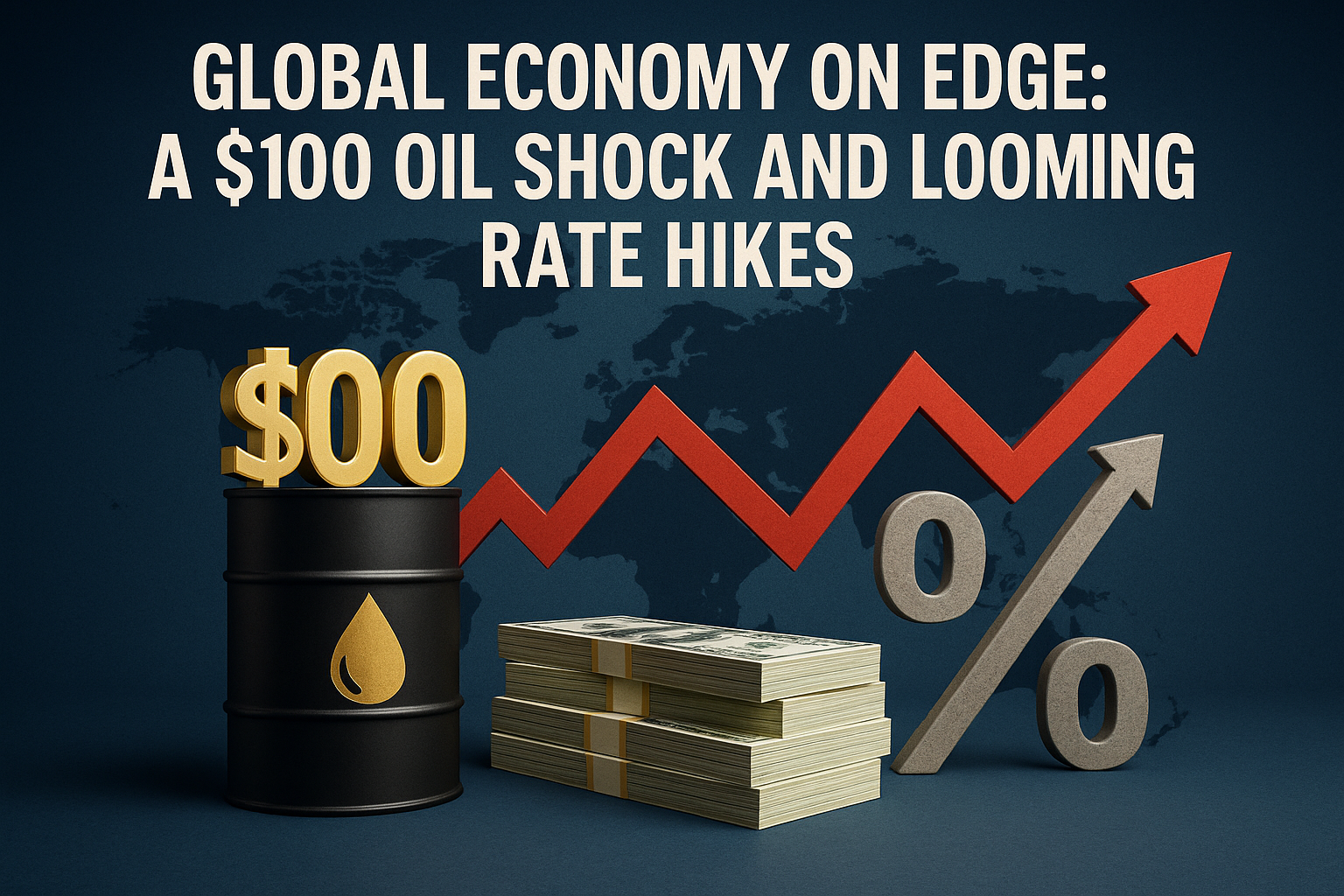
For the first time since a brief blip back in May, the price of a barrel of oil has blown past the critical $100 mark. This isn’t just a number; it’s a deeply symbolic and economically impactful threshold, especially when you consider the backdrop. The primary driver? An escalating conflict in the Middle East, particularly involving Iran and the strategically vital Strait of Hormuz. When such a crucial chokepoint for global oil shipments becomes a flashpoint, the ripple effects are immediate and far-reaching. But it’s not just crude. Across the board, energy costs are soaring, threatening to ignite a new wave of inflation that many had hoped was finally receding into the rearview mirror. This shift isn’t merely a blip; it represents a significant recalibration of global economic forecasts and a stark reminder of how interconnected our world truly is.
The Middle East Crucible: Oil Prices Breach a Critical Threshold
Let’s be blunt: the situation in the Middle East is the primary fuse for this latest economic powder keg. The ongoing conflict, with Iran at its center, has injected a level of volatility into the oil markets that we haven’t seen in quite some time. When you hear about tensions in the Strait of Hormuz, don’t just gloss over it. This narrow waterway, connecting the Persian Gulf to the open ocean, is arguably the world’s most important oil transit choke point. Roughly 20% of the world’s total petroleum liquids consumption, and about one-third of all seaborne traded oil, passes through here daily. Any perceived threat to this passage – and the current rhetoric certainly qualifies – sends shivers down the spine of every oil trader and, by extension, every economy reliant on stable energy supplies.
The jump past $100 a barrel isn’t just about the immediate supply/demand balance. It’s about risk premium. Markets are pricing in the very real possibility of disruption, whether through direct conflict, sanctions, or even accidental skirmishes. This risk premium alone can add significant dollars to every barrel, even if no physical supply is actually interrupted. It’s a psychological battle as much as an economic one, driven by headlines and pronouncements from world leaders. And frankly, with President Donald Trump reportedly considering a “massive attack” on Iran, the emotional temperature around this topic is through the roof, dominating social media and news cycles globally. It’s hard to imagine a more potent catalyst for instability in the energy markets this July.
Fueling Inflation: The Diesel Dilemma and Broader Price Pressures
It’s not just the price of crude oil that’s got economists wringing their hands. Take a look at the U.S. wholesale diesel futures market. In July alone, these futures have rocketed by a staggering 26%. Think about that for a moment. Diesel is the lifeblood of global commerce. It powers the trucks that deliver goods, the trains that transport raw materials, the ships that traverse oceans, and the heavy machinery that builds our infrastructure and harvests our food. When diesel prices surge like this, it’s not just a marginal cost increase; it’s a systemic shock.
This dramatic rise in diesel costs filters through every layer of the economy. Farmers, already facing myriad challenges, now confront significantly higher fuel bills for their tractors and harvesting equipment. This directly threatens global food supplies, as the increased cost of production will inevitably be passed on to consumers, or worse, lead to reduced output as some operations become unprofitable. We’ve seen this movie before, and it doesn’t end well for household budgets. Combine this with the broader energy price surge, and you’ve got a potent recipe for renewed, widespread inflation. The idea that inflation was finally cooling seems like a distant memory now, replaced by the very real concern that we’re heading for another prolonged period of rising prices across the board. This is a critical component of the economic news July 2026 is delivering.
The Fed’s Shifting Stance: Rate Hikes Back on the Table
Just a few weeks ago, the prevailing wisdom was that the Federal Reserve was nearing the end of its tightening cycle, with many analysts even anticipating rate cuts later in the year. Oh, how quickly things change. The sudden explosion in energy prices and the resurgence of inflation fears have completely upended those expectations. Markets are now rapidly adjusting their probabilities for a Fed interest rate hike, and the numbers are stark. (See: BBC on rising oil prices and economy.)
The probability of a July rate hike, which stood at a mere 12% just a week prior, has now soared to 38%. That’s a massive, almost unprecedented, shift in such a short timeframe. What does this mean? It means the Fed, in its dual mandate to maintain maximum employment and stable prices, is being forced to reconsider its strategy. If inflation begins to accelerate again, particularly driven by external shocks like energy prices, the Fed’s hand might be forced to resume tightening, even if it means potentially slowing down an already fragile economy. This isn’t just an academic exercise; higher interest rates translate to more expensive borrowing for businesses and consumers, impacting everything from mortgages and car loans to corporate investment decisions. It’s a tough spot for central bankers, caught between a rock and a hard place.
Trump’s Tariff Talk: Adding Fuel to the Fire of Uncertainty
As if the Middle East and the Fed weren’t enough, we also have the specter of President Donald Trump’s trade policies looming large. His consideration of “massive attack” on Iran is one thing, but his intention to impose new double-digit tariffs on numerous trading partners adds another layer of profound uncertainty and potential economic disruption. Tariffs, while sometimes championed as protectionist measures, inherently raise costs for consumers and businesses alike. They are, in essence, a tax on imports, and those costs are almost always passed down the supply chain.
Consider the cumulative effect: you have skyrocketing energy prices driving up production and transportation costs, and now, potentially, tariffs adding another layer of expense to imported goods. This combination is a recipe for stagflation – a dreaded scenario of high inflation coupled with stagnant economic growth. Such policies create immense controversy and unpredictability, making it incredibly difficult for businesses to plan and invest, further chilling economic activity. The global trading system is already complex; adding significant new tariffs now would undoubtedly exacerbate inflationary pressures and stifle economic recovery, further complicating the economic news July 2026 is bringing.
Global Repercussions: Beyond the Headlines of Economic News July 2026
It would be a mistake to view these developments as isolated incidents affecting only specific regions or sectors. The global economy is a tightly woven tapestry, and a tug on one thread inevitably impacts others. Rising oil prices in the Middle East don’t just affect American consumers at the pump; they impact the cost of manufacturing in Asia, the profitability of European airlines, and the viability of agricultural exports from South America. The ripple effect is truly global.
Emerging markets, often more vulnerable to external shocks, face particular challenges. Higher energy prices can lead to increased import bills, currency depreciation, and greater inflationary pressure, potentially destabilizing their economies. Developed nations, while more resilient, are by no means immune. Businesses face shrinking profit margins, consumers see their purchasing power erode, and governments grapple with the delicate balance of fiscal policy in a volatile environment. The interconnectedness means that no country can truly insulate itself from these global currents, making the economic news July 2026 delivers a truly worldwide concern.
Expert Perspectives on Navigating the Storm
When the economic waters get this choppy, it’s always helpful to hear from those who spend their careers analyzing these trends. Many leading economists are expressing a mix of caution and concern. Dr. Evelyn Reed, a renowned geopolitical economist, recently remarked, “We’re seeing a perfect storm of supply-side shocks meeting demand-side uncertainty. The geopolitical element isn’t just an external factor; it’s now a primary driver of market sentiment and inflation expectations.” She emphasizes that the fluidity of the Middle East situation means economic forecasts are subject to rapid, significant revisions. For more on this, see preparing students for the future.
Meanwhile, financial analysts like Mark Denton, chief strategist at Global Wealth Partners, advise clients to brace for continued market volatility. “Diversification isn’t just a buzzword; it’s a necessity right now,” Denton stated in a recent client note. “Traditional safe havens might not offer the same protection they once did, given the global nature of these inflationary pressures and the potential for a synchronized slowdown.” Many experts are highlighting the importance of robust balance sheets for businesses and a prudent approach to personal finance, as the economic landscape could remain unpredictable for the remainder of the year. (See: CDC on economic impacts of inflation.)
The Agricultural Sector: A Silent Victim
While we often focus on oil and industrial goods, the agricultural sector is particularly vulnerable to these combined pressures, and its struggles directly impact everyone. The surge in diesel prices directly translates to higher costs for planting, harvesting, and transporting crops. But it doesn’t stop there. Many fertilizers are produced using natural gas, another energy commodity seeing price spikes. So, farmers are looking at a double whammy: more expensive fuel for their machinery and more expensive inputs for their fields. This isn’t sustainable.
The domino effect is clear. Higher farming costs mean either reduced profit margins for farmers, which can lead to reduced planting in future seasons, or higher food prices at the grocery store. In regions already struggling with food security, this could be catastrophic. Take countries in sub-Saharan Africa or parts of Asia, where a significant portion of household income goes to food. A sharp increase in global food prices, exacerbated by energy costs and potential trade tariffs, could push millions into deeper poverty and spark social unrest. The stability of global food supplies is a quiet but crucial piece of the economic news July 2026 paints.
Navigating the Volatility: What Comes Next?
So, what does all this mean for you, for businesses, and for the broader economic outlook? Well, one thing is clear: expect continued volatility. The confluence of geopolitical tensions, inflationary pressures, and a hawkish shift from central banks creates an environment of heightened risk and unpredictability. For individuals, this might mean a continued squeeze on household budgets as prices for fuel, food, and other goods remain elevated. Financial markets will likely remain choppy, reacting swiftly to every new headline from the Middle East or every pronouncement from Washington or the Federal Reserve.
For businesses, particularly those with significant exposure to energy costs or international trade, strategic planning becomes even more critical. Diversifying supply chains, hedging against currency fluctuations, and carefully managing inventory are not just good practices; they are essential survival strategies in this environment. Policymakers, meanwhile, face an unenviable task: how to temper inflation without choking off economic growth, all while navigating a complex geopolitical landscape. It’s a delicate balancing act, and the stakes couldn’t be higher. This July, the economic picture is anything but settled, and we’re all watching with bated breath to see how these critical factors will play out in the months ahead.
Frequently Asked Questions About Economic News July 2026
What are the primary drivers of economic uncertainty this July?
The main factors creating economic uncertainty are escalating geopolitical tensions in the Middle East, particularly involving Iran and the Strait of Hormuz, which is driving up oil prices. This is combined with soaring energy costs across the board, renewed inflation fears, and a significant shift in the Federal Reserve’s stance towards potential interest rate hikes. Additionally, the prospect of new trade tariffs from the U.S. adds another layer of unpredictability.
How does the Strait of Hormuz impact global oil prices?
The Strait of Hormuz is a crucial global chokepoint for oil shipments, with about one-third of all seaborne traded oil passing through it daily. Any threat or perceived instability in this narrow waterway immediately triggers a “risk premium” in oil markets, causing prices to jump. Traders anticipate potential supply disruptions, even if no physical oil flow is interrupted, leading to higher costs for crude oil globally. (See: New York Times analysis on oil and inflation.)
Why is rising diesel fuel cost such a big deal for the economy?
Diesel is fundamental to global commerce, powering transportation (trucks, trains, ships), agriculture (farm machinery), and heavy industry. When diesel prices surge, it significantly increases the cost of producing and transporting nearly all goods and services. These higher costs are then passed on to consumers, fueling broader inflation, or they squeeze business profits, potentially leading to reduced economic activity.
What does a potential Fed rate hike mean for consumers and businesses?
A Federal Reserve interest rate hike means borrowing money becomes more expensive. For consumers, this translates to higher costs for mortgages, car loans, and credit card interest. For businesses, it increases the cost of capital for investments, expansions, and operational financing. This can slow down economic growth as both consumers and businesses become more cautious about spending and investing.
What is stagflation, and why is it a concern now?
Stagflation is an economic condition characterized by stagnant economic growth, high unemployment, and high inflation. It’s a challenging scenario because the usual tools to combat inflation (raising interest rates) can worsen economic stagnation, and measures to boost growth (lowering rates) can exacerbate inflation. It’s a concern now because the combination of high energy prices, potential tariffs, and supply chain disruptions could lead to both rising prices and a slowdown in economic activity.
How do these global economic events affect everyday households?
Everyday households will likely feel the impact through higher prices for essential goods like fuel, food, and utilities, reducing their purchasing power. If central banks raise interest rates, borrowing costs for loans and credit will increase. Job markets could also become less secure if businesses face reduced demand or higher operating costs. This means tightening budgets and more cautious financial planning might be necessary.
“`
Trending Now
Frequently Asked Questions
What is causing the recent rise in oil prices?
The recent rise in oil prices, surpassing $100 per barrel, is primarily driven by escalating geopolitical tensions in the Middle East, particularly involving Iran and the Strait of Hormuz, a crucial chokepoint for global oil shipments. This instability has injected significant volatility into the oil markets, contributing to fears of rising inflation.
How do rising oil prices affect the global economy?
Rising oil prices can have a profound impact on the global economy by increasing transportation and production costs, leading to higher consumer prices and potential inflation. This situation creates uncertainty for policymakers and market analysts, as elevated energy costs can hinder economic growth and affect consumer spending.
What are the implications of a $100 oil price threshold?
A $100 oil price threshold symbolizes a critical economic concern, indicating heightened volatility in energy markets. It suggests potential inflationary pressures, as rising energy costs can lead to increased prices across various sectors, affecting consumers and businesses alike.
Why is the Strait of Hormuz significant for oil shipments?
The Strait of Hormuz is significant because it is the world's most crucial oil transit chokepoint, with about 20% of global oil shipments passing through it. Any conflict or instability in this region can disrupt oil supply, leading to increased prices and economic uncertainty worldwide.
What are the potential economic consequences of increased energy costs?
Increased energy costs can lead to a new wave of inflation, affecting consumer purchasing power and overall economic growth. Higher energy prices can also strain businesses, potentially leading to reduced investment and employment, thereby impacting the broader economy.
What did we miss? Let us know in the comments and join the conversation.