

“`html
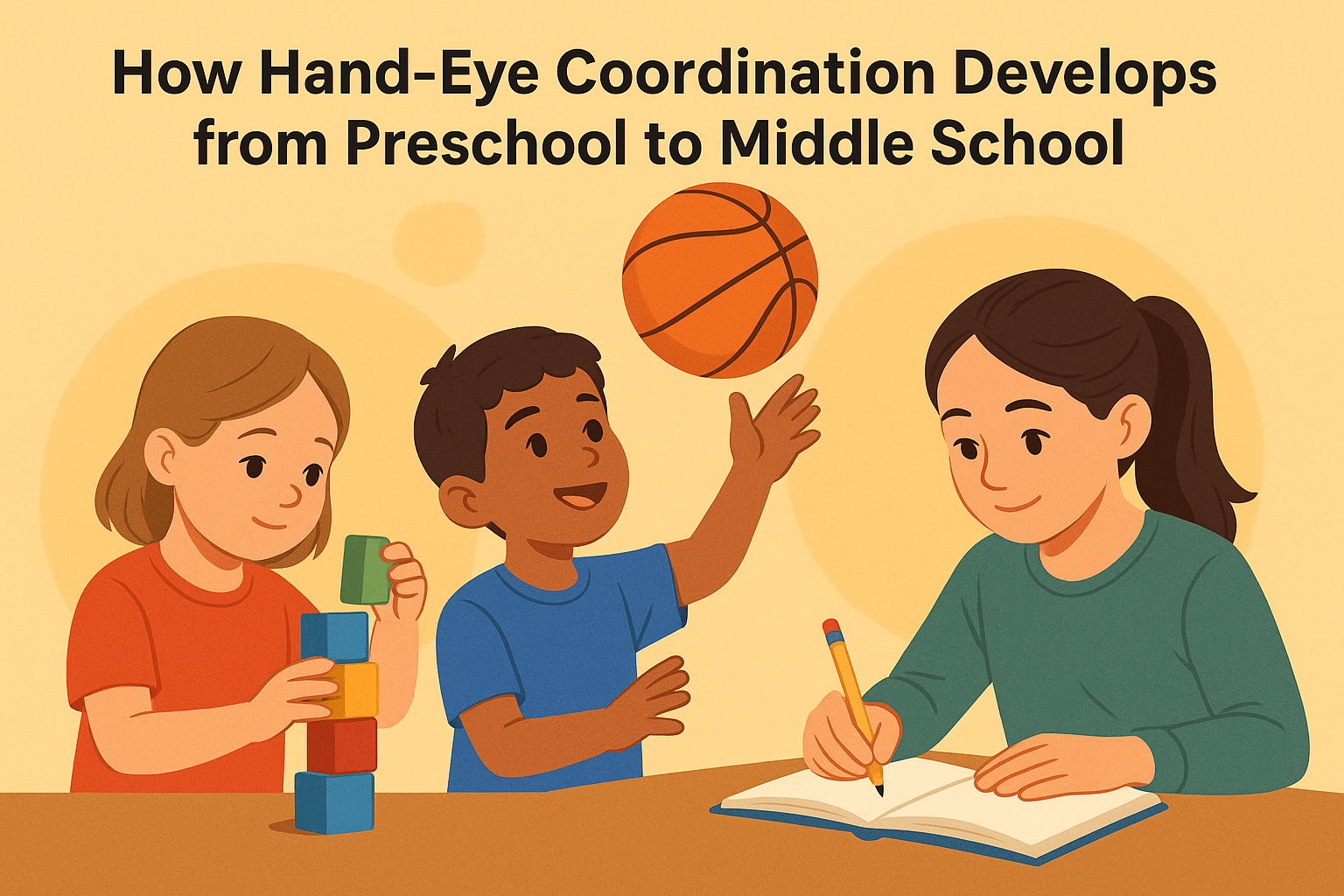
Hand-eye coordination development is a critical aspect of a child’s growth, impacting their ability to perform everyday tasks and engage in sports and creative activities. From the playful exploration of preschool to the structured learning environment of middle school, children refine this essential skill in numerous ways. This article explores how hand-eye coordination evolves during these formative years, providing insights into its significance, the stages of its development, and practical tips for parents and educators.
The Importance of Hand-Eye Coordination
Hand-eye coordination refers to the ability to synchronize eye movement with hand actions, allowing individuals to perform tasks that require precision and timing. This skill is crucial not only for physical activities but also for academic success. For instance, a child needs hand-eye coordination to write neatly, catch a ball, or use scissors effectively.
Research indicates that there is a strong correlation between hand-eye coordination and other skills, such as reading and math. Children who struggle with hand-eye coordination may face challenges in these areas, underscoring the need for early intervention and continuous development throughout childhood.
Developmental Stages of Hand-Eye Coordination
Hand-eye coordination development can be categorized into several key stages, each marked by specific milestones and learning opportunities. Understanding these stages can help parents and educators offer appropriate guidance and support.
1. Preschool Years (Ages 3-5)
During the preschool years, children’s hand-eye coordination is primarily developed through play. Activities such as building blocks, drawing, and simple puzzles help them refine their motor skills. At this age, children are beginning to explore their environment and are eager to experiment with different movements.
Fine motor skills are particularly important during this stage. Activities that promote hand strength and dexterity include:
- Drawing and coloring to enhance grip and control.
- Cutting with safety scissors to develop precision.
- Playing with playdough or clay to strengthen fingers.
- Engaging in simple ball games, like tossing or rolling, to improve hand-eye coordination.
Preschoolers also benefit from activities that involve imitation and repetition, as these help reinforce their learning and build confidence. Singing songs with hand motions and playing follow-the-leader games can significantly contribute to motor skill development.
2. Early Elementary (Ages 6-8)
As children enter early elementary school, their hand-eye coordination becomes more refined and purposeful. This age group typically engages in more structured activities, such as sports and organized games, which challenge their coordination skills. They often begin to develop specific interests, whether in sports like soccer or activities like arts and crafts. (See: CDC developmental milestones.)
In addition to play, academic tasks also demand improved hand-eye coordination. Writing neatly and using tools like rulers and compasses become essential skills. Children at this age should be encouraged to practice their fine motor skills through:
- Playing with building sets that require assembly.
- Participating in sports that involve catching and throwing.
- Engaging in arts and crafts projects that require cutting, gluing, and assembling.
Furthermore, children start to understand the concepts of planning and executing movements based on visual input. This is where games that involve tracking moving objects, such as marbles or balls, can be particularly beneficial.
3. Late Elementary (Ages 9-11)
By the time children reach late elementary school, they have usually developed more advanced hand-eye coordination skills. They can perform tasks that require complex movements and greater precision. For instance, writing becomes more fluid, and they can participate in sports with increased control. We covered 25 fun activities for toddlers in more detail.
At this stage, children can benefit from activities that promote both coordination and strategic thinking. Examples include:
- Team sports that require coordination with others, like basketball or volleyball.
- Video games that demand precise timing and hand movements.
- Challenging craft projects that involve intricate designs.
Children also start to engage in more competitive environments, which can further enhance their coordination as they learn to adapt quickly to changing circumstances. This is an excellent time to introduce them to activities that reinforce teamwork and sportsmanship, helping them understand the connection between physical skill and social interaction.
4. Transition to Middle School (Ages 12-14)
As children transition to middle school, they experience significant physical and cognitive changes that affect their hand-eye coordination. Growth spurts can alter their sense of balance and body awareness. This period is crucial for refining existing skills, as children engage in more specialized sports and hobbies.
Middle school students often participate in organized sports teams, where they can focus on specific skills such as dribbling, shooting, or pitching. Additionally, technology plays a more significant role in their lives, with video games and computers demanding precise coordination. To support their development, parents and educators can encourage:
- Participation in advanced sports that challenge their skills and teamwork.
- Engagement with technology in a balanced way, combining screen time with physical activities.
- Opportunities to try new sports or activities that require different coordination skills.
It’s also essential to recognize that this stage can be marked by increased pressure. Children may feel anxiety about performance in sports or academics, which can affect their coordination. Encouraging a growth mindset, where mistakes are seen as opportunities to learn, can help alleviate this pressure.
Challenges to Hand-Eye Coordination Development
While many children develop hand-eye coordination skills naturally, some face challenges that can hinder their progress. Factors such as lack of encouragement, limited opportunities for physical activity, or specific developmental disorders can all impact a child’s ability to refine these skills. (See: NIH on learning disorders.)
For instance, children diagnosed with conditions such as ADHD or sensory processing disorder may struggle with coordination due to difficulties in motor planning or sensory integration. Recognizing these challenges early on is vital for implementing strategies that can support their development.
Parents and educators should also be mindful of the influence of technology. While video games can enhance certain coordination skills, excessive screen time can lead to a sedentary lifestyle that hampers physical development. Striking a balance between technology use and physical activity is essential for fostering healthy hand-eye coordination.
Practical Tips for Parents and Educators
Supporting hand-eye coordination development requires an intentional approach, especially as children grow from preschool to middle school. Here are some practical tips for parents and educators:
- Encourage varied activities: Introduce children to a wide range of activities that promote motor skills, from sports to crafts. Variety keeps them engaged and helps develop different aspects of coordination.
- Provide positive reinforcement: Celebrate achievements in motor skills, no matter how small. Positive feedback boosts confidence and encourages continued practice.
- Limit screen time: Set boundaries around technology use to ensure children have ample opportunities for physical activity. Encourage outdoor play, which is vital for developing coordination.
- Incorporate playful learning: Use games and playful activities to teach coordination. Simple games like catch, Simon Says, or obstacle courses can make learning fun.
- Model behavior: Engage in physical activities with children, whether it’s playing sports, dancing, or simply going for walks. Children learn by example, and your involvement can inspire them.
- Support with patience: Understand that every child develops at their own pace. Be patient and offer help without rushing them, allowing their coordination skills to flourish naturally.
Expanding Understanding of Hand-Eye Coordination Development
Understanding hand-eye coordination isn’t just about recognizing its importance during childhood; it’s also crucial to acknowledge how various factors can influence its development. For example, research shows that children who engage in physical play have better-developed coordination skills than those who spend more time in sedentary activities. A study published in the journal “Developmental Psychology” found that active children showed marked improvements in their hand-eye coordination over a year compared to their more sedentary peers.
Additionally, the type of activities children engage in can also make a difference. Activities that combine physical and cognitive challenges, such as dance or martial arts, can greatly enhance coordination. These activities often require children to respond quickly to visual cues while executing precise movements, effectively developing both cognitive and motor skills simultaneously.
Expert Perspectives on Hand-Eye Coordination
Experts in child development emphasize the role of hand-eye coordination in building a foundation for future skills. Dr. Sarah Johnson, a pediatric occupational therapist, notes, “Coordination is fundamental to a child’s ability to learn and grow. When children struggle with these skills, it can affect their self-esteem and willingness to engage in activities.” This highlights the importance of nurturing these skills early on to foster a positive developmental trajectory.
How Hand-Eye Coordination Affects Academic Performance
There’s also a notable connection between hand-eye coordination and academic performance. A report from the American Psychological Association suggests that children with well-developed coordination skills often perform better in classroom activities that require fine motor skills, such as writing and drawing. This correlation underlines the importance of integrating physical activity into educational settings. Schools that incorporate movement-based learning have reported improvements in student engagement and academic outcomes.
FAQs About Hand-Eye Coordination Development
What age do children develop hand-eye coordination?
Hand-eye coordination begins to develop in infancy and continues to improve through childhood. Basic skills can typically be observed by age 3, with significant advancements occurring during preschool and into early elementary school.
Can hand-eye coordination be improved?
Yes, hand-eye coordination can definitely be improved through targeted activities and practice. Engaging children in sports, arts and crafts, and specific exercises designed to enhance coordination can lead to marked improvements.
How can I tell if my child is struggling with hand-eye coordination?
Signs of struggling hand-eye coordination can include difficulty catching or throwing balls, messy handwriting, trouble with crafts, or avoidance of activities that require fine motor skills. If you notice persistent challenges, it may be helpful to consult with a pediatrician or occupational therapist.
Are there specific sports that enhance hand-eye coordination?
Many sports can enhance hand-eye coordination, including baseball, basketball, soccer, and tennis. Games that require tracking moving objects and making quick decisions are particularly beneficial.
What role does technology play in hand-eye coordination development?
While some video games can improve coordination by requiring precise timing and movements, excessive screen time can lead to decreased physical activity and hinder overall development. It’s crucial to strike a balance and encourage active play alongside technology use.
Conclusion
Hand-eye coordination development is a vital component of a child’s overall growth, influencing their ability to engage in a variety of activities. From the playful exploration of preschool to the structured environments of middle school, children progress through distinct stages that shape their coordination skills. By understanding these stages and providing appropriate support, parents and educators can help children navigate their developmental journey with confidence and success.
“`
Trending Now There’s a fuller look at teaching scissor skills effectively.
Frequently Asked Questions
How does hand-eye coordination develop in preschoolers?
In preschoolers, hand-eye coordination develops primarily through play. Activities like building blocks, drawing, and simple puzzles help refine their motor skills. At this age, children explore their environment and experiment with movements, which is crucial for developing fine motor skills.
What are the stages of hand-eye coordination development?
Hand-eye coordination development can be categorized into several stages, starting from preschool years (ages 3-5) where play is essential, to middle school where skills become more structured. Each stage involves specific milestones that are important for guiding children's growth.
Why is hand-eye coordination important for children?
Hand-eye coordination is crucial for performing everyday tasks and engaging in sports and creative activities. It impacts academic success as well, since skills like writing, catching a ball, and using scissors require precise coordination, which can affect reading and math abilities.
What activities improve hand-eye coordination in children?
Activities that improve hand-eye coordination include building blocks, drawing, playing catch, and working on puzzles. Engaging in these activities helps children refine their motor skills and develop the necessary coordination for both physical and academic tasks.
How can parents support their child's hand-eye coordination development?
Parents can support hand-eye coordination development by providing a variety of play-based activities that encourage fine motor skills. Simple tasks like arts and crafts, playing with toys that require manipulation, and outdoor sports can significantly enhance their child's coordination.
What’s your take on this? Share your thoughts in the comments below — we read every one.



