
Understanding kitchen measurements is essential for successful cooking and baking. The relationship between cups and quarts is one of the most fundamental conversions in the American measurement system. This comprehensive guide explores this conversion, provides historical context, compares different measurement systems, and offers practical applications for home cooks and bakers.
The Basic Conversion: Cups to Quarts
In the United States customary measurement system, the relationship between cups and quarts is straightforward:
1 quart = 4 cups
This means:
- ¼ quart = 1 cup
- ½ quart = 2 cups
- ¾ quart = 3 cups
- 1 quart = 4 cups
- 2 quarts = 8 cups
- 3 quarts = 12 cups
- 4 quarts (1 gallon) = 16 cups
Understanding this 4:1 ratio is the foundation for many cooking and baking conversions.
The Complete U.S. Volume Measurement Hierarchy
The cup-to-quart relationship fits within a broader system of volume measurements in the United States customary system:
- 3 teaspoons (tsp) = 1 tablespoon (tbsp)
- 2 tablespoons = 1 fluid ounce (fl oz)
- 8 fluid ounces = 1 cup ©
- 2 cups = 1 pint (pt)
- 2 pints = 1 quart (qt)
- 4 quarts = 1 gallon (gal)
This means a quart can be expressed in multiple ways:
- 1 quart = 4 cups
- 1 quart = 2 pints
- 1 quart = 32 fluid ounces
- 1 quart = 64 tablespoons
- 1 quart = 192 teaspoons
- 1 quart = ¼ gallon
Visual References for Cups and Quarts
To visualize these measurements:
- A standard coffee mug is roughly 1-2 cups
- A typical soup bowl holds about 1½ to 2 cups
- A quart is roughly the size of a standard milk or orange juice carton
- A quart container is about the size of a medium saucepan
Dry vs. Liquid Measurements
It’s important to note that while the conversion of 4 cups to 1 quart remains the same for both liquid and dry ingredients, the measuring tools differ:
Liquid Measuring Cups:
- Clear containers with a pour spout
- Measurement lines below the rim to prevent spilling
- Designed to measure volume to the line at eye level
Dry Measuring Cups:
- Fill-to-the-rim cups designed to be leveled off with a straight edge
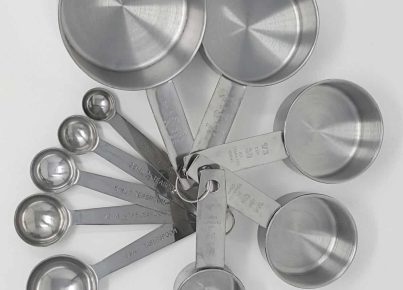
- Often come in nesting sets of ¼, ⅓, ½, and 1 cup measures
- Designed for ingredients that can be heaped and leveled
For the most accurate results, especially in baking:
- Use liquid measuring cups for liquids (water, milk, oil)
- Use dry measuring cups for dry ingredients (flour, sugar, rice)
- Consider measuring dry ingredients by weight rather than volume for greatest precision
U.S. vs. Imperial vs. Metric Measurements
The relationship between cups and quarts varies across different measurement systems:
U.S. System:
- 1 U.S. quart = 4 U.S. cups = 32 U.S. fluid ounces = 0.95 liters
Imperial (UK) System:
- 1 Imperial quart = 4 Imperial cups = 40 Imperial fluid ounces = 1.14 liters
The Imperial quart is about 20% larger than the U.S. quart, which can significantly impact recipe outcomes when using cookbooks from different countries.
Metric System:
- 1 liter = 4.23 U.S. cups = 1.06 U.S. quarts
- 1 liter = 3.52 Imperial cups = 0.88 Imperial quarts
For practical cooking purposes when converting between systems:
- 1 U.S. quart ≈ 950 milliliters
- 1 liter ≈ 1.06 U.S. quarts
- 1 Imperial quart ≈ 1.14 liters
- 1 liter ≈ 0.88 Imperial quarts
When following recipes from different countries, it’s important to know which measurement system the recipe uses to ensure successful results.
Why the Cup-to-Quart Conversion Matters
Understanding how many cups are in a quart is crucial for several reasons:
- Recipe Scaling: Knowing that 4 cups equal 1 quart makes it easier to scale recipes up or down. If you need to double a recipe that calls for 1½ quarts, you can quickly calculate that you’ll need 12 cups (4 cups/quart × 3 quarts).
- Equipment Substitution: If a recipe calls for a 1-quart saucepan but you don’t have one, you can use a 4-cup measuring cup or bowl instead.
- Ingredient Management: For meal planning, understanding that a quart of milk contains 4 cups helps determine if you have enough for several recipes.
- Efficient Shopping: When recipes list ingredients in cups but stores sell them by the quart (like berries, cream, or stock), this conversion helps you purchase the correct amount.
Common Cooking Scenarios Using Cups and Quarts
Soups and Stews
Most soup recipes yield between 2 and 3 quarts (8-12 cups), serving 4-6 people. Understanding this helps in:
- Selecting an appropriately sized pot (a 4-quart pot will comfortably hold a 3-quart soup recipe)
- Determining storage container needs for leftovers
- Adjusting batch sizes for larger or smaller groups
Beverages
When preparing drinks for a gathering:
- A 1-gallon punch recipe requires 16 cups of ingredients
- A quart of lemonade provides four 1-cup servings
- Two quarts (8 cups) typically serves 8-10 people with standard drinking glasses
Baking
Many baking recipes use cup measurements, but understanding quarts becomes useful when:
- Working with large quantities of batter (like for commercial baking)
- Selecting appropriate mixing bowls (a 2-quart bowl can hold 8 cups of ingredients)
- Measuring the capacity of baking dishes (an 8×8-inch square pan holds approximately 2 quarts or 8 cups)
Historical Context of Cups and Quarts
The terms “cup” and “quart” have fascinating etymological and historical origins:
- “Quart” comes from the Latin “quartus,” meaning “fourth” (of a gallon)
- “Cup” has Germanic roots related to “kupp” meaning a small vessel
Before standardization, cup and quart sizes varied widely by region and context. The current U.S. standard cup (8 fluid ounces) was established in the late 19th century, while the imperial system was standardized in the United Kingdom in 1824 with the Weights and Measures Act.
Until relatively recently, recipes often used vague terms like “teacupful” or “coffeecupful,” which could vary significantly in volume. Modern standardization has made recipes more reliable and reproducible.
Digital Conversion Tools
While the basic conversion of 4 cups to 1 quart is easy to remember, other kitchen conversions can be more complex. Numerous digital tools are available to assist:
- Smartphone Apps: Dedicated cooking conversion apps provide instant conversions between all types of measurements.
- Voice Assistants: Smart speakers can quickly convert between units with simple voice commands.
- Online Calculators: Websites offer conversion tools for all kitchen measurements, including cups to quarts and cross-system conversions.
- Smart Kitchen Scales: Modern scales can display measurements in multiple units, converting between volume and weight for common ingredients.
Teaching Children About Measurement Conversions
The relationship between cups and quarts provides an excellent opportunity for practical math education:
- Hands-on Learning: Have children measure 4 cups of water and pour them into a quart container to visualize the relationship.
- Baking Projects: Follow recipes that use both cups and quarts to reinforce the conversion through practical application.
- Fraction Work: Converting between partial cups and partial quarts (like ¾ quart to cups) helps develop fraction skills.
- Ratio Understanding: The 1:4 ratio between quarts and cups introduces the concept of ratios in a practical context.
Conclusion
The simple relationship of 4 cups to 1 quart serves as a foundation for kitchen measurement in the United States. Whether scaling recipes, selecting appropriate cookware, or shopping for ingredients, this conversion is an essential piece of culinary knowledge. While different measurement systems across countries can add complexity, understanding the basic cup-to-quart relationship empowers home cooks to navigate recipes with confidence, adjust quantities as needed, and achieve consistent results in their culinary endeavors.
By mastering this and other kitchen conversions, you can move beyond rigid recipe following to more intuitive cooking, where measurements become second nature and your focus can remain on creativity and technique rather than conversion calculations.