
Understanding the relationship between ounces and pounds is essential for everyday activities like cooking, shopping, and maintaining health. This comprehensive guide explores this fundamental weight conversion, its applications across different contexts, and important distinctions to remember.
The Basic Conversion
In the standard United States customary and British imperial weight systems:
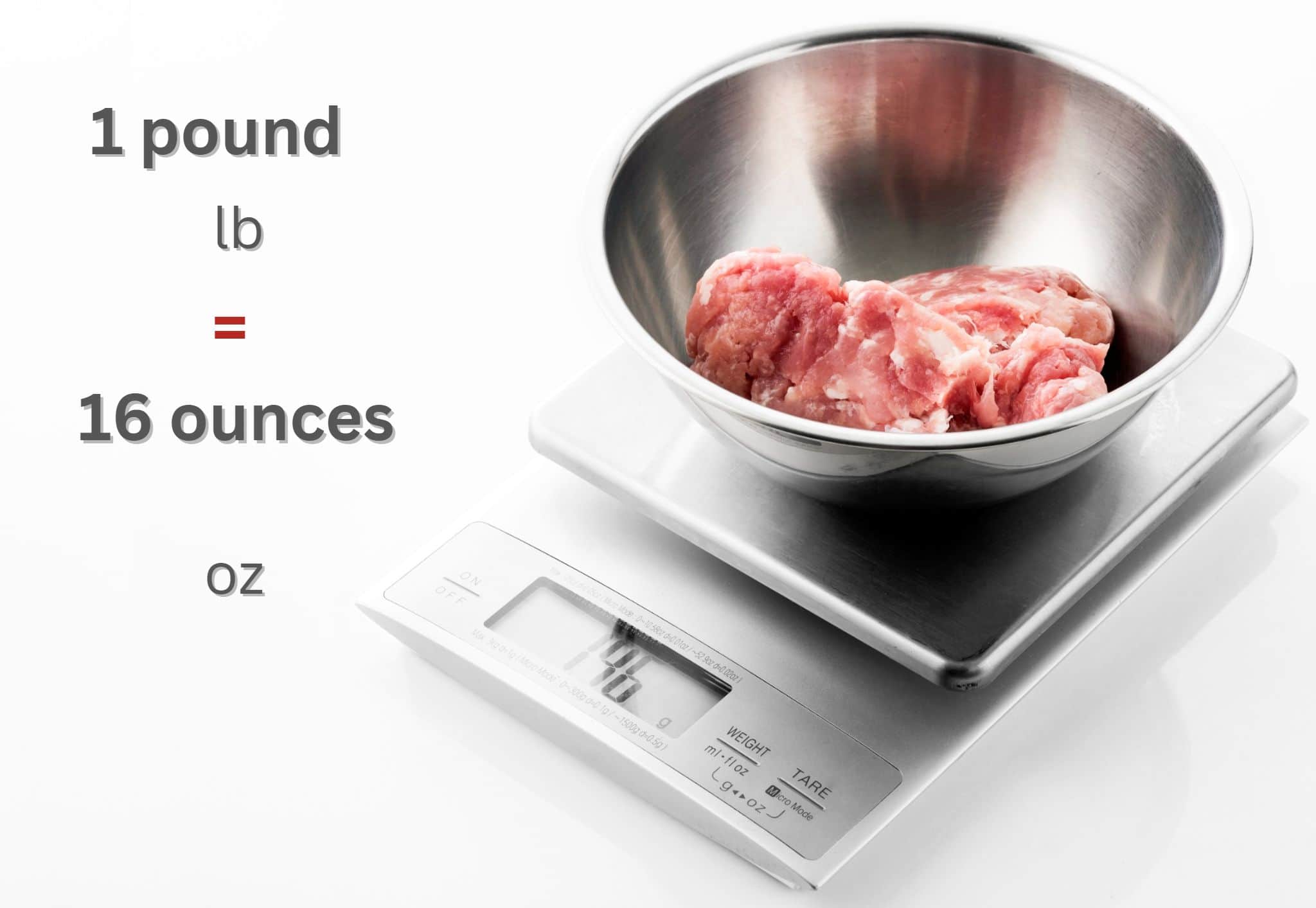
1 pound (lb) = 16 ounces (oz)
This straightforward conversion is consistent across both measurement systems, making it one of the more reliable weight conversions to remember.
To convert between pounds and ounces:
- To convert pounds to ounces: multiply the number of pounds by 16
- To convert ounces to pounds: divide the number of ounces by 16
Common Pound-to-Ounce Conversions
| Pounds | Ounces |
| ¼ lb | 4 oz |
| ½ lb | 8 oz |
| ¾ lb | 12 oz |
| 1 lb | 16 oz |
| 1½ lb | 24 oz |
| 2 lb | 32 oz |
| 2½ lb | 40 oz |
| 3 lb | 48 oz |
| 4 lb | 64 oz |
| 5 lb | 80 oz |
Weight vs. Volume: Avoiding a Common Confusion
One of the most common sources of confusion regarding ounces is the distinction between:
- Weight ounces (oz): Measure how heavy something is
- Fluid ounces (fl oz): Measure volume, or how much space something occupies
While both share the term “ounce,” they measure fundamentally different properties. The conversion of 16 ounces to 1 pound applies exclusively to weight ounces, not fluid ounces.
For water at room temperature, 16 fluid ounces weighs approximately 1 pound, which can cause additional confusion. However, this convenient equivalence doesn’t hold for other substances. For instance:
- 16 fluid ounces of olive oil weighs approximately 14.7 ounces (0.92 pounds)
- 16 fluid ounces of honey weighs approximately 24 ounces (1.5 pounds)
The Troy Weight System: An Important Exception
Not all ounce-to-pound conversions follow the standard 16:1 ratio. The troy weight system, used for precious metals like gold and silver, uses a different conversion:
1 troy pound = 12 troy ounces
Troy ounces are also heavier than standard (avoirdupois) ounces:
- 1 troy ounce = 31.1035 grams
- 1 standard ounce = 28.3495 grams
This means that when dealing with precious metals:
- A 1-ounce gold coin weighs 1 troy ounce (31.1035 grams), not 1 standard ounce
- A pound of gold weighs 12 troy ounces, not 16 standard ounces
Practical Applications of the Pounds-to-Ounces Conversion
Cooking and Recipes
Understanding the 16 ounces per pound conversion is crucial in the kitchen:
- Recipe scaling requires converting between larger and smaller weight units
- Many ingredients are sold by the pound but recipes might call for ounces
- Meat and produce are typically priced per pound but may be purchased in smaller quantities
- International recipes may use grams or kilograms instead of ounces and pounds
Health and Fitness
Weight measurements are fundamental to health monitoring:
- Birth weights are commonly expressed in pounds and ounces (e.g., 7 lbs 8 oz)
- Weight loss is often tracked in both pounds and ounces, especially for newborns and during dieting
- Nutrition labels list serving sizes in both ounces and grams
- Exercise equipment may be marked in pounds but also specify the equivalent in kilograms
Shipping and Postage
The postal system and shipping industry rely heavily on weight measurements:
- Postage rates are determined by weight, often with price breaks at specific ounce or pound thresholds
- Shipping restrictions may limit packages to certain weights
- International shipping requires conversion between pounds/ounces and the metric system
- Digital postal scales typically display weight in pounds and ounces for domestic mail
Metric Equivalents and Conversions
While the U.S. continues to use pounds and ounces in everyday life, the scientific community and most countries worldwide use the metric system. Understanding metric equivalents is increasingly important:
- 1 ounce = 28.3495 grams
- 1 pound = 453.592 grams = 0.453592 kilograms
Common conversions between systems include:
- 100 grams ≈ 3.5274 ounces
- 500 grams ≈ 1.1023 pounds
- 1 kilogram = 2.2046 pounds
Historical Context of Pounds and Ounces
The relationship between pounds and ounces has a rich history:
- The word “ounce” comes from the Latin “uncia,” meaning a twelfth part
- The Roman “libra” (pound) was divided into 12 unciae (ounces), which is still reflected in the abbreviation “lb” for pound
- The avoirdupois system we use today developed in the 13th and 14th centuries for weighing wool
- The 16-ounce pound became standardized in England around the 16th century
- The United States customary system maintained these measurements after independence, while the UK slightly redefined them in 1824 with the Imperial Weights and Measures Act (though the pound-to-ounce ratio remained 16:1)
Digital Measurement Tools and Conversions
Modern technology has simplified weight conversions:
- Digital kitchen scales can toggle between ounces, pounds, grams, and kilograms
- Smartphone apps provide instant conversions between weight units
- Voice assistants can answer conversion questions hands-free
- Online shopping automatically converts between measurement systems based on location
Other Weight Systems and Their Ounce Equivalents
Besides the standard avoirdupois and troy systems, several other specialized weight systems exist:
- Apothecaries’ System: Used historically for pharmaceuticals, with 1 apothecaries’ pound = 12 apothecaries’ ounces
- Tower System: An obsolete British system where 1 Tower pound = 12 Tower ounces
- Metric Ounce: Some European countries adopted a metric “ounce” of 25 or 30 grams as a transitional measure when switching to the metric system
Conclusion
The fundamental conversion of 16 ounces to 1 pound serves as an essential reference point in everyday life, particularly in the United States. While this relationship seems simple, understanding its applications across different contexts—and recognizing exceptions like the troy weight system—can prevent confusion and ensure accuracy whether you’re cooking, shipping packages, monitoring health, or working with precious metals.
As global commerce and communication increase, familiarity with both the traditional ounce-pound relationship and metric equivalents becomes increasingly valuable, allowing for seamless navigation between different measurement systems.