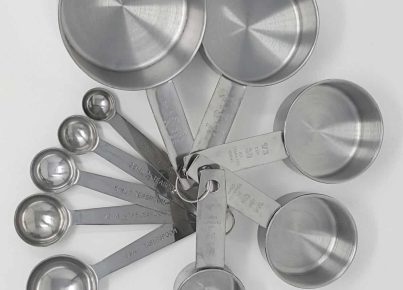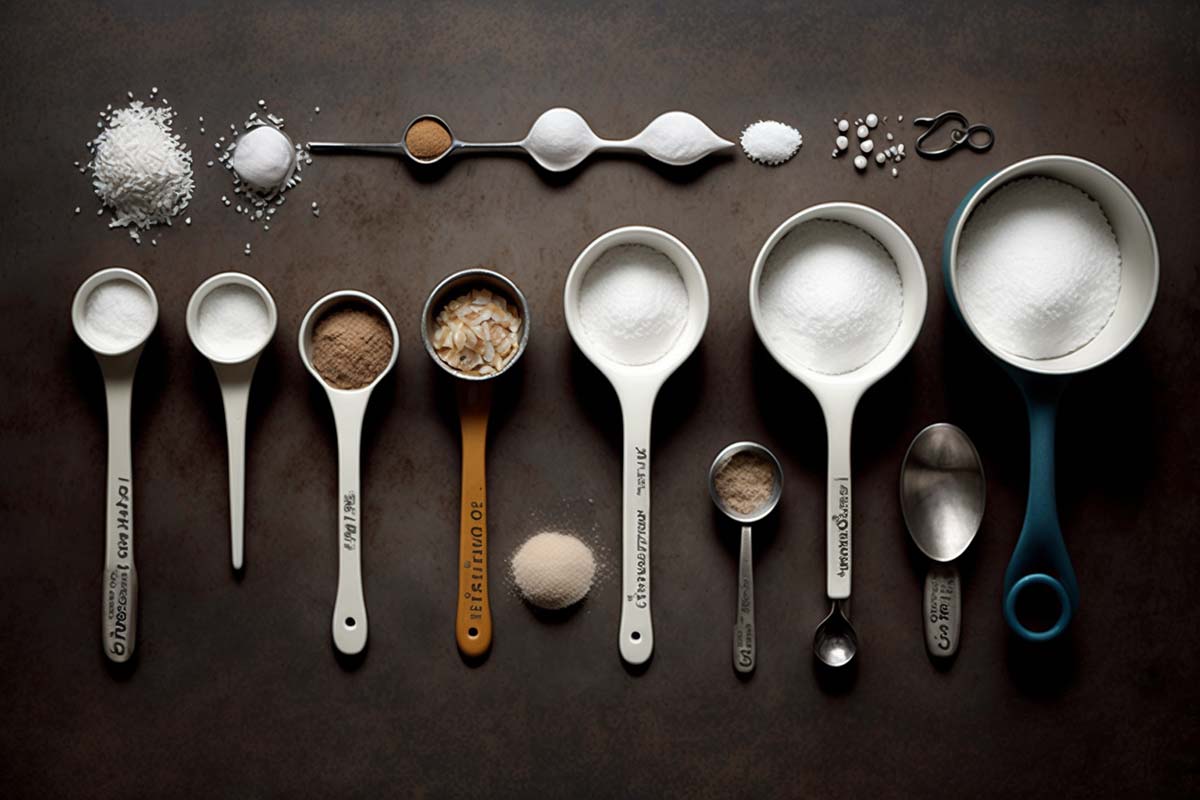

Understanding kitchen measurements is essential for cooking and baking success. One of the most common conversion questions involves teaspoons and tablespoons. While this might seem like a simple matter, knowing exactly how many teaspoons are in a tablespoon can make the difference between a culinary triumph and a disappointing outcome. This comprehensive guide explores the teaspoon-to-tablespoon relationship, its variations across different countries, practical applications, and helpful conversion tips.
The Standard Conversion
In the United States and most countries that use the imperial measurement system:
1 tablespoon (tbsp) = 3 teaspoons (tsp)
This straightforward 3:1 ratio is consistent throughout standard U.S. recipe measurements and is the foundation for many cooking and baking conversions.
To convert between these measurements:
- To convert tablespoons to teaspoons: multiply the number of tablespoons by 3
- To convert teaspoons to tablespoons: divide the number of teaspoons by 3
Common Conversions Chart
| Tablespoons | Teaspoons |
| ⅓ tbsp | 1 tsp |
| ⅔ tbsp | 2 tsp |
| 1 tbsp | 3 tsp |
| 2 tbsp | 6 tsp |
| 3 tbsp | 9 tsp |
| 4 tbsp | 12 tsp |
| 5 tbsp | 15 tsp |
International Variations
While the 3:1 ratio is standard in the United States, measurements can vary internationally:
United States
- 1 tablespoon = 3 teaspoons = 14.79 milliliters
United Kingdom (UK)
- 1 tablespoon = 3 teaspoons = 17.76 milliliters
- UK tablespoons are slightly larger than US tablespoons
Australia
- 1 tablespoon = 4 teaspoons = 20 milliliters
- This is the only major country where a tablespoon contains 4 teaspoons
Metric System
- 1 metric tablespoon = 15 milliliters
- 1 metric teaspoon = 5 milliliters
- Maintains the 3:1 ratio
These variations can significantly impact recipe outcomes when using cookbooks from different countries, especially for recipes requiring precise measurements like baking and cocktails.
The Complete Kitchen Measurement Hierarchy
The teaspoon-to-tablespoon conversion fits within a larger system of kitchen measurements:
U.S. Volume Measurements
- 3 teaspoons (tsp) = 1 tablespoon (tbsp)
- 2 tablespoons = 1 fluid ounce (fl oz)
- 8 fluid ounces = 1 cup ©
- 2 cups = 1 pint (pt)
- 2 pints = 1 quart (qt)
- 4 quarts = 1 gallon (gal)
This means:
- 1 tablespoon = 3 teaspoons
- 1 fluid ounce = 6 teaspoons
- 1 cup = 48 teaspoons or 16 tablespoons
- 1 pint = 96 teaspoons or 32 tablespoons
- 1 quart = 192 teaspoons or 64 tablespoons
- 1 gallon = 768 teaspoons or 256 tablespoons
Historical Context of the Tablespoon and Teaspoon
The terms “tablespoon” and “teaspoon” have fascinating historical origins:
- Tablespoon: Originally referred to the largest spoon at the table, used for serving food. By the 18th century, it began to be recognized as a standardized measure.
- Teaspoon: Initially designed for stirring tea, the teaspoon became a standard measure during the expansion of tea culture in the 17th and 18th centuries.
Before standardization, recipes often used vague terms like “a dessert spoon” or “a coffee spoon,” leading to inconsistent results. Modern standardized measurements were established in the late 19th and early 20th centuries to ensure recipe reliability.
Practical Applications in Cooking and Baking
Understanding the teaspoon-to-tablespoon conversion is essential in various cooking scenarios:
Recipe Scaling
When halving or doubling recipes, converting between teaspoons and tablespoons simplifies the process. For example, instead of using 6 teaspoons, you can measure 2 tablespoons.
Substitutions
When specific measuring spoons are unavailable, knowing the conversion allows for adaptability:
- If your tablespoon is missing, use 3 teaspoons
- If your ½ tablespoon is missing, use 1½ teaspoons
- If your ¼ teaspoon is missing, use ⅓ of a ¾ teaspoon
Precision in Baking
Baking requires exact measurements for chemical reactions to occur properly. Understanding the precise relationship between teaspoons and tablespoons ensures consistent results in:
- Leavening agents (baking powder, baking soda)
- Salt measurement
- Spice proportions
- Extract quantities
Medication and Supplements
Beyond the kitchen, the teaspoon-to-tablespoon conversion is crucial for accurate medication dosing:
- Many liquid medications specify doses in teaspoons or tablespoons
- Incorrect conversion can lead to underdosing or overdosing
- Modern medical recommendations increasingly favor milliliter measurements to avoid confusion
Common Conversion Scenarios
Several everyday cooking situations call for teaspoon-to-tablespoon conversions:
Adjusting Seasonings
When a recipe tastes too bland, you might add:
- ¼ teaspoon of salt (equivalent to ⅙ of a ½ tablespoon)
- ½ teaspoon of herbs (equivalent to ⅙ of a tablespoon)
Converting Between Measurement Systems
When following international recipes:
- An Australian tablespoon (4 teaspoons) equals 1⅓ US tablespoons
- A UK tablespoon (17.76 ml) is approximately 1.2 US tablespoons
Reducing Written Fractions
Converting awkward measurements for simplicity:
- 4½ teaspoons simplifies to 1½ tablespoons
- 15 teaspoons converts to 5 tablespoons
Digital Conversion Tools
While remembering that 3 teaspoons equal 1 tablespoon is straightforward, several digital tools can help with more complex conversions:
- Kitchen Conversion Apps: Dedicated smartphone applications provide instant conversions between various kitchen measurements.
- Voice Assistants: Smart speakers can answer measurement questions hands-free while cooking.
- Online Calculators: Numerous websites offer free conversion calculators for all kitchen measurements.
- Smart Kitchen Scales: Modern scales can display measurements in multiple units and even convert between them.
Tips for Accurate Measuring
Knowing the conversion is only half the battle—proper measuring technique is equally important:
For Dry Ingredients
- Spoon and Level Method: Spoon ingredients into the measuring spoon, then level with a straight edge
- Avoid Compacting: Don’t pack ingredients like flour or spices unless specified
- Consistency: Use the same measuring technique throughout a recipe
For Liquid Ingredients
- Eye Level Reading: Hold liquid measures at eye level to ensure accuracy
- Surface Tension: Account for the meniscus (curved surface) of liquids
- Specialized Spoons: Consider using measuring spoons designed for liquids
For Sticky Ingredients
- Oil the Spoon: Lightly coat measuring spoons with oil before measuring honey, molasses, or other sticky substances
- Silicone Spatulas: Use to ensure complete transfer from the measuring spoon
- Warm Water Bath: Place bottles of thick substances in warm water to improve flow and measuring accuracy
Visualizing Teaspoons and Tablespoons
To help conceptualize these measurements without tools:
- A tablespoon is approximately the size of an ice cube
- A teaspoon is about the size of the tip of your thumb from the first knuckle
- 1 tablespoon is roughly equivalent to the size of a standard plastic bottle cap
- 3 teaspoons can fit in a standard bottle cap, visualizing the 3:1 ratio
Teaching the Conversion to Children
The teaspoon-to-tablespoon relationship provides an excellent opportunity for teaching fractions and measurement to children:
- Hands-on Demonstration: Fill 3 teaspoons with water and pour them into a tablespoon to show equivalence
- Kitchen Math Practice: Have children convert recipes as fractions practice
- Cooking Projects: Apply the knowledge in simple recipes where precise measurements matter
- Memory Aids: Teach rhymes or mnemonics like “3 teaspoons take their place to fill a tablespoon with grace”
Conclusion
The simple conversion of 3 teaspoons to 1 tablespoon serves as a fundamental building block in culinary measurement. While this ratio remains consistent in most contexts, awareness of international variations is important when following recipes from different countries.
Whether you’re halving a cookie recipe, precisely measuring a critical ingredient, or dosing medication, understanding this basic kitchen conversion ensures greater accuracy and better results. Ultimately, mastering the teaspoon-to-tablespoon relationship—along with proper measuring techniques—builds confidence in the kitchen and opens the door to more advanced cooking and baking endeavors.