
Introduction:
Inclusion is a vital aspect of a healthy and supportive educational environment. Primary schools focus not only on academic achievement but also on the social development and well-being of its students. One essential area where social development occurs is the playground – a place for children to interact, learn, and grow together. However, disabled children often face barriers that restrict their involvement in these spaces. This article will discuss the importance of including disabled children in primary school playgrounds and suggest ways to make play areas more accessible and inclusive.
The Importance of Inclusive Playgrounds:
1. Fosters Social Integration:
Inclusive playgrounds promote social integration by providing opportunities for all children, regardless of their abilities, to engage in play and interact with one another. This exposure to diverse perspectives encourages understanding, acceptance, and empathy among peers.
2. Enhances Physical Development:
Play is essential for the physical development of all children, especially those with disabilities. Inclusive playgrounds enable disabled children to participate in activities designed to strengthen different muscle groups, enhancing their physical skills and overall health.
3. Boosts Cognitive Skills:
Playing in an inclusive environment challenges disabled children cognitively by requiring them to think critically and solve problems through engagement with diverse games and activities.
4. Improves Emotional Well-being:
Inclusive playgrounds provide a safe space for disabled children to freely express themselves, positively impacting their self-confidence and emotional well-being.
Creating Inclusive Primary School Playgrounds:
1. Universal Design:
Playgrounds should be designed using the concept of Universal Design, ensuring that they are usable by everyone, regardless of ability or age. This includes wide paths, ramps, handrails, sensory play components, equipment with adaptive seating options, and surfaces suitable for wheelchairs or walkers.
2. Accessible Equipment:
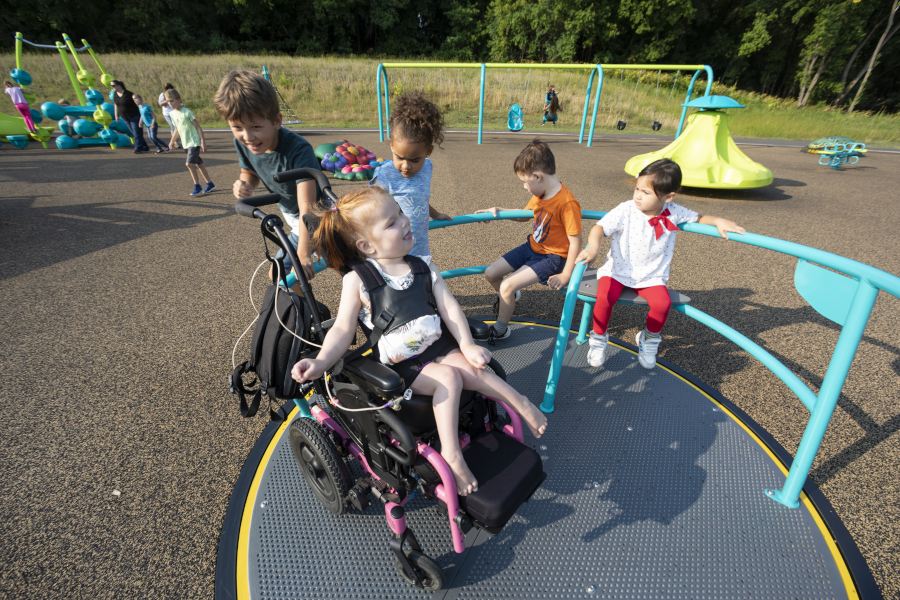
Selecting accessible play equipment will encourage engagement from all students. This may include merry-go-rounds that can accommodate wheelchairs, swings with harnesses or high backs, and sensory play panels incorporating different textures and sounds.
3. Inclusive Games and Activities:
Schools should incorporate games and activities that can be adapted to the needs of all children. Staff should be trained to modify rules and equipment when necessary to ensure that everyone can participate.
4. Safety Measures:
Safety is paramount in accessible playgrounds, both for the children and their caregivers. The area should be surrounded by fences to discourage wandering, with clear emergency exits. Surfaces should be made of shock-absorbing materials to minimize injury risk in falls.
5. Collaboration with Special Education Professionals:
Working closely with special education professionals and therapists ensures a comprehensive understanding of each child’s needs, enabling the development of customized strategies for inclusion.
Conclusion:
Inclusive primary school playgrounds offer benefits for all students, fostering social integration and empathy while promoting health, cognitive skills, and emotional well-being. By following guidelines on Universal Design, accessible equipment, inclusive games, safety measures, and collaboration with special education professionals, schools can ensure that every child has an equal opportunity to thrive in their play environment.
Let’s embrace inclusion by making primary school playgrounds a welcoming space for all children to learn, play, and grow together!