
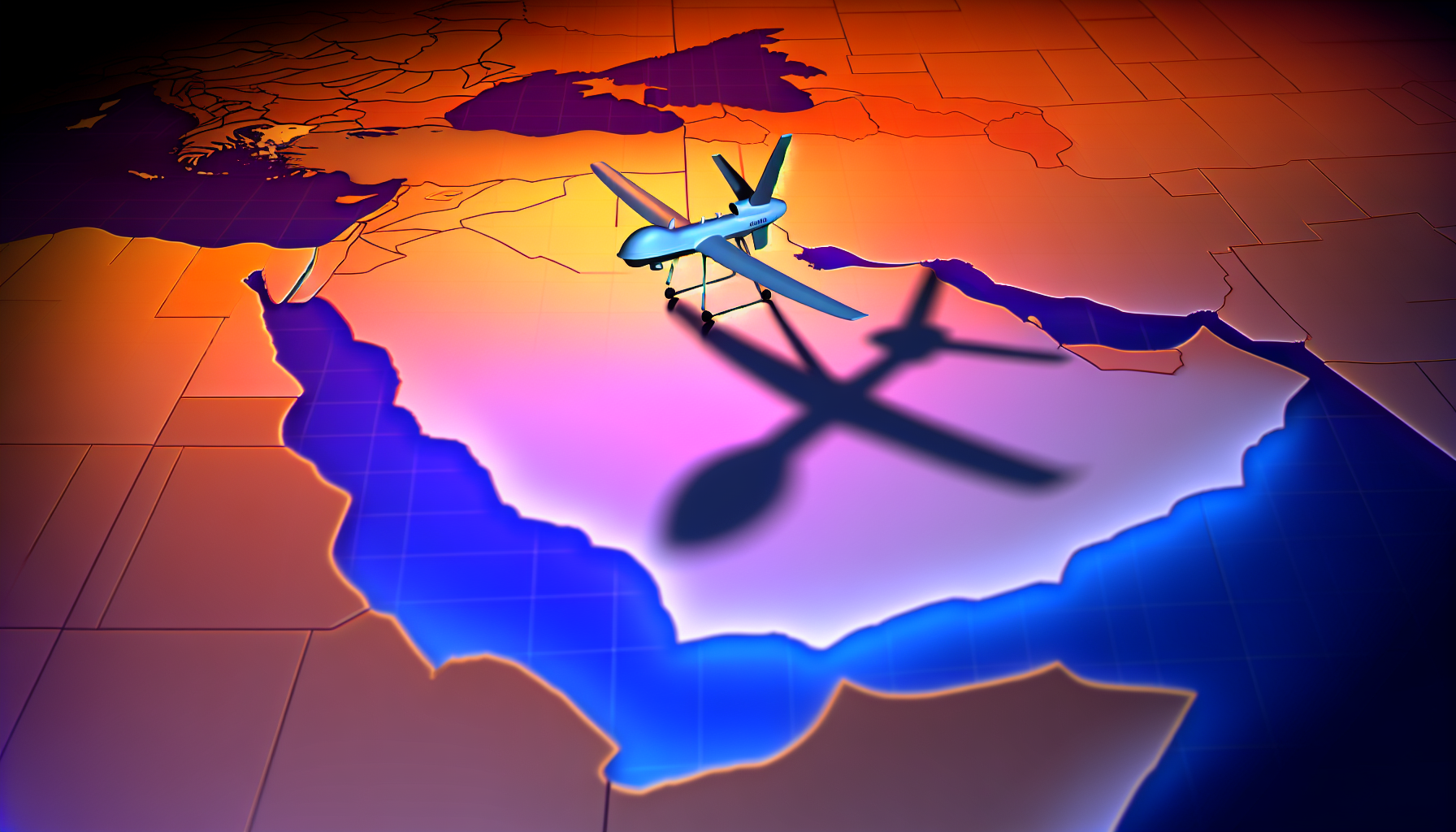

The geopolitical landscape of the Middle East has witnessed a significant shift as Iran’s Islamic Revolutionary Guard Corps (IRGC) has executed a series of sophisticated drone strikes targeting U.S. military installations in the region. This coordinated attack marks a notable escalation in the ongoing conflict and highlights Iran’s advancements in drone technology.
The Attack: A Coordinated Assault
In a startling show of military capability, the IRGC launched a meticulously planned drone offensive against multiple U.S. bases situated throughout the Middle East. These strikes are not merely isolated incidents but rather a calculated maneuver that aims to demonstrate Iran’s growing prowess in aerial combat technology.
Locations Targeted
- U.S. bases in Iraq
- U.S. installations in Syria
- Strategic military outposts around the Gulf region
The choice of targets underscores the IRGC’s intent to challenge U.S. military presence in a region that has long been a focal point of American foreign policy.
Technological Advancements in Drone Warfare
One of the most striking aspects of the recent drone assaults is the sophistication of the technology employed. Iran has significantly enhanced its drone capabilities over the years, transitioning from basic reconnaissance models to advanced strike drones capable of carrying out precision attacks. This evolution is a testament to Iran’s commitment to developing its military technology in the face of international sanctions and isolation.
Key Features of Iranian Drones
- Long-range capabilities: Many of Iran’s drones can travel considerable distances, allowing them to strike targets far from their launch sites.
- Payload capacity: The drones are equipped to carry various munitions, increasing their lethality.
- Stealth technology: Some models are designed to evade detection, complicating defensive measures.
These advancements not only pose a direct threat to U.S. forces but also raise concerns among allies in the region, prompting discussions on how to effectively counter this emerging threat.
Escalating Regional Tensions
The drone attacks come at a time when tensions between Iran and the United States are already high. Following the U.S. withdrawal from the Iran nuclear deal in 2018 and the imposition of stringent sanctions, relations have deteriorated, leading to a series of confrontations in the region. The latest drone strikes represent a significant escalation, with Iran clearly signaling its willingness to engage in direct conflict with U.S. forces.
Responses from the U.S. and Allies
In response to these aggressive actions, U.S. military officials have condemned the strikes, labeling them as reckless provocations that threaten the stability of the entire region. The U.S. has vowed to defend its personnel and interests in the area, potentially leading to a military response.
Furthermore, U.S. allies in the region, including Saudi Arabia and Israel, have expressed apprehension regarding Iran’s growing military capabilities. The potential for a wider conflict looms as neighboring nations may feel compelled to bolster their defenses in anticipation of further Iranian aggression.
Impact on Global Security
The implications of Iran’s drone warfare extend beyond the Middle East, affecting global security dynamics. As countries grapple with the challenges posed by non-state actors and advanced military technologies, the situation underscores the need for a reevaluation of defense strategies worldwide. The increasing use of drones by state and non-state actors alike raises critical questions about the future of warfare and international security.
International Reactions
Internationally, the drone attacks have elicited a range of responses. Some nations have called for restraint and dialogue, urging both sides to seek diplomatic solutions. Others, however, have expressed solidarity with the U.S., emphasizing the need to counter Iranian aggression in the region.
As discussions unfold, the international community must consider the broader implications of Iran’s military actions, weighing the risks of escalation against the potential for renewed diplomatic engagement.
The Future of Drone Warfare
The recent events highlight a critical juncture in the evolution of drone warfare. As countries like Iran continue to refine their drone capabilities, the global landscape may witness a shift towards more frequent use of unmanned aerial vehicles in conflicts. This trend raises ethical and strategic questions about the nature of warfare in the 21st century, as well as the responsibilities of nations to regulate and manage emerging military technologies.
Conclusion
The drone attacks by Iran’s IRGC signify a pivotal moment in Middle Eastern geopolitics, as the interplay between technology and military strategy evolves. The implications for U.S. forces, regional allies, and global security are profound, necessitating a reevaluation of defense postures and diplomatic strategies. As the world watches closely, the next steps taken by both Iran and the United States will shape the future of the region and potentially the global order.






