
“`html
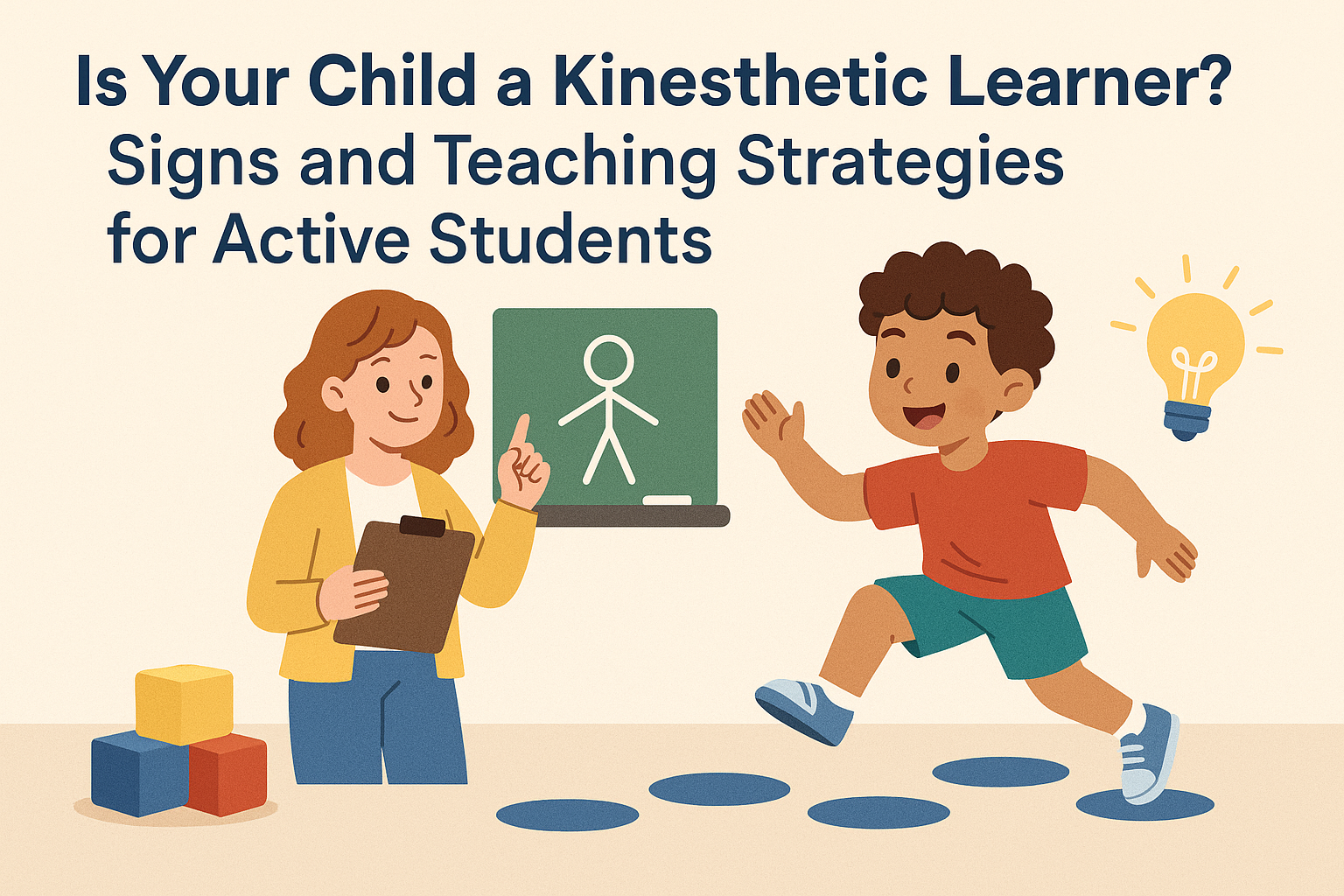
Every child learns differently, and understanding your child’s unique learning style can be the key to unlocking their potential. Have you ever noticed your child fidgeting during lessons, tapping their foot, or doodling while trying to focus? These behaviors might indicate they are a kinesthetic learner. In this article, we’ll explore the characteristics of kinesthetic learners, the signs that your child may fit this category, and effective kinesthetic learner strategies to support their education.
What is a Kinesthetic Learner?
Kinesthetic learners are often referred to as tactile learners, meaning they learn best through hands-on experiences, movement, and physical interaction with their environment. This learning style is one of the three primary types identified by educational theorist Howard Gardner in his theory of multiple intelligences, alongside auditory and visual learning styles.
Kinesthetic learners thrive when they can engage their bodies in the learning process. This might include activities like solving math problems using physical objects, participating in role-playing exercises, or conducting science experiments. If your child enjoys activities that require movement, they’re likely tapping into their kinesthetic learning strengths.
Signs Your Child Might Be a Kinesthetic Learner
Recognizing whether your child is a kinesthetic learner can help you tailor their educational experiences to better fit their needs. Here are some common signs that may indicate a kinesthetic learning style:
- Restlessness: If your child has difficulty sitting still in class and often fidgets or stands up, it may be a sign that they learn best through movement.
- Hands-On Activities: They may prefer to learn through practical experiences, such as building, crafting, or engaging in sports rather than through traditional lessons.
- Memory Recall: Kinesthetic learners often remember information better when they have physically engaged with it. For instance, they might recall facts more easily after participating in a related activity.
- Preference for Experiential Learning: They’re likely to enjoy field trips, simulations, and real-life applications of concepts over textbook learning.
- Verbal and Physical Communication: Kinesthetic learners might express themselves better through gestures or movement than through writing alone.
Understanding these signs can empower you to implement effective kinesthetic learner strategies in your child’s education.
Effective Kinesthetic Learner Strategies
Here are several practical strategies that can help kinesthetic learners thrive in their educational settings:
1. Incorporate Movement into Learning
Integrating movement into lessons is a vital strategy for supporting kinesthetic learners. This can include: (See: Kinesthetic Learning in Education.)
- Interactive Games: Play games that require physical movement. For example, using educational board games or scavenger hunts that involve moving around can make learning more enjoyable.
- Role-Playing: Create scenarios where your child can act out different historical figures or scientific concepts. This active involvement can deepen understanding and retention.
- Breaks for Movement: Schedule short breaks during homework sessions to allow your child to stretch, jump, or dance. These breaks can refresh their focus and help them return to study more effectively.
2. Utilize Hands-On Learning Materials
Kinesthetic learners often benefit from tangible materials that they can manipulate. Consider these approaches:
- Use Educational Tools: Tools like building blocks, clay, or science kits can provide a tactile learning experience. For example, using LEGO bricks to teach math concepts can be both fun and educational.
- Incorporate Art and Crafts: Allow your child to express their understanding of a subject through art projects, models, or other crafts that require physical engagement.
- Experiential Learning Opportunities: Look for local workshops, classes, or activities that encourage hands-on learning, such as cooking classes, gardening, or coding boot camps.
3. Leverage Technology Wisely
In an increasingly digital world, technology can be both a distraction and a tool for kinesthetic learning. Here’s how to effectively utilize technology:
- Interactive Learning Apps: There are numerous apps designed for kinesthetic learners that offer interactive experiences. Programs that incorporate movement, such as dance or fitness games, can help reinforce concepts while keeping them engaged.
- Online Courses with Practical Components: Seek out online learning platforms offering courses that include hands-on projects or demonstrations, allowing your child to learn actively.
- Video Tutorials: Encourage your child to use video content for learning new skills or information. They can follow along with tutorials that require them to replicate what they see.
4. Encourage Active Participation in Class
Advocate for your child’s active involvement in their classroom setting. Here are some suggestions:
- Group Projects: Encourage your child to take part in group work where they can collaborate with peers through discussions, presentations, and interactive tasks.
- Classroom Movement: Suggest strategies to teachers that incorporate movement into lessons, such as allowing students to stand while discussing topics or using movement-based activities during lessons.
- Hands-On Experiments: Support your child in engaging with science experiments or projects that require them to participate physically.
5. Create a Conducive Learning Environment at Home
Designing a home environment that supports kinesthetic learning can greatly enhance their educational experience:
- Flexible Study Space: Provide a learning area where your child can move around comfortably. A standing desk or a designated space for movement can be beneficial.
- Designate a Craft Area: Set up a corner of your home dedicated to arts and crafts, where your child can explore and create without restrictions.
- Utilize Outdoor Space: Whenever possible, move learning activities outside. Nature can serve as an excellent backdrop for hands-on learning experiences.
The Importance of Tailoring Education to Kinesthetic Learners
Recognizing your child’s learning style is crucial in a system that often emphasizes traditional, static learning methods. Adapting educational approaches to suit kinesthetic learners isn’t just beneficial—it’s essential for fostering a love of learning and ensuring academic success.
Research has shown that when education aligns more closely with a student’s natural inclinations, it can lead to improved engagement and retention of information. By implementing kinesthetic learner strategies, you can help your child harness their innate abilities, paving the way for a more fulfilling educational journey.
Current Relevance of Kinesthetic Learning
As educational systems evolve, there is a growing recognition of diverse learning styles and the importance of incorporating different methodologies in classrooms. The rise of project-based learning and experiential education reflects this shift, emphasizing active participation and critical thinking.
In the wake of disruptions caused by the COVID-19 pandemic, many educators have begun to see the value of fluid learning environments that allow for movement and interaction. Virtual and hybrid learning models have prompted educators to explore innovative ways to engage kinesthetic learners, making it more critical than ever to implement effective strategies tailored to their needs.
Examples of Successful Kinesthetic Learning Strategies
Many educators and parents have successfully implemented kinesthetic learning strategies in various settings. Here are some examples:
- Outdoor Lessons: Teachers have embraced the outdoors for lessons. For example, a science teacher might take students outside to conduct experiments on soil types and plant growth, allowing them to physically interact with nature while learning about ecosystems.
- Movement-Based Math: In a creative approach to math, educators have used games where students hop on number mats to solve equations. This active engagement not only aids in comprehension but also keeps students physically active.
- Cooking Classes: Some schools have started implementing cooking classes that tie into science and math lessons. Students learn measurements, chemical reactions, and nutrition while physically preparing meals, making the learning experience memorable and delicious.
Statistics Supporting Kinesthetic Learning
Various studies demonstrate the effectiveness of kinesthetic learning strategies. For instance:
- A study published in the Journal of Educational Psychology found that students who engaged in hands-on learning scored significantly higher on assessments than those who relied on traditional lecture-based methods.
- Research from the Journal of Learning Sciences indicated that students enrolled in kinesthetic learning environments showed a 30% increase in retention rates compared to their peers.
- According to the National Center for Learning Disabilities, incorporating movement in the classroom leads to improved focus and decreased behavioral issues, particularly among kinesthetic learners.
Expert Perspectives on Kinesthetic Learning
Educational experts emphasize the importance of recognizing and catering to different learning styles. Dr. Barbara Oakley, an engineering professor and author of A Mind for Numbers, states, “For kinesthetic learners, involving the body in learning is crucial. It creates pathways in the brain that visual and auditory learning alone cannot achieve.”
Similarly, Dr. John Medina, a developmental molecular biologist and author of Brain Rules, highlights that movement can enhance brain function. He asserts, “The brain is not a passive observer. It grows through activity and engagement, especially in children.” This reinforces the need for kinesthetic approaches in the classroom.
Frequently Asked Questions
What are some common myths about kinesthetic learners?
One common myth is that kinesthetic learners are less intelligent or have shorter attention spans. In reality, they may simply need different methods to engage their minds effectively.
How can I tell if my child is struggling with traditional learning methods?
Signs of struggle may include frustration during homework time, complaints of boredom, or a lack of interest in school activities. If your child shows these signs, it might be time to explore kinesthetic learning strategies.
What subjects can benefit from kinesthetic learning strategies?
While kinesthetic learning strategies can be applied across all subjects, they are particularly effective in areas such as science, math, physical education, and the arts, where hands-on experience is integral to understanding concepts.
Can kinesthetic learning be integrated with other learning styles?
Absolutely! Kinesthetic strategies can complement visual and auditory methods. For example, a learner might watch a video (visual) about a science experiment and then conduct the experiment themselves (kinesthetic), enhancing their understanding through multiple pathways.
What resources are available for supporting kinesthetic learners?
There are many resources available, including educational websites, books focused on kinesthetic learning techniques, and online communities where parents and educators share strategies. Some popular resources include the book Learning Styles: A Guide for Teachers and websites like Edutopia that offer articles and videos on engaging kinesthetic learners.
How can I encourage my child’s kinesthetic learning at home?
Encouraging kinesthetic learning at home can be as simple as incorporating hands-on activities into daily routines. Cooking together, engaging in science experiments, or even turning chores into fun games can promote learning through movement. You can also create a learning schedule that includes plenty of breaks for physical activity to keep their mind fresh.
Conclusion
Understanding your child’s learning style is a crucial step in supporting their educational journey. If you suspect your child is a kinesthetic learner, recognizing the signs and implementing effective kinesthetic learner strategies can help nurture their strengths and build confidence. In an age where education is rapidly changing, advocating for movement, hands-on experiences, and interactive learning can make all the difference in your child’s academic success.
“`
Trending Now
- Explore Your Potential with LawnStarter: A Staff Product Engineer Education Opportunity in São Paulo
- “Developmentally Appropriate Practice in Kindergarten: Balancing…
- our breakdown of “understanding attachment theory: how early bonds shape children’s development”
- our breakdown of “why neuroscientists say learning styles theory lacks scientific evidence”
- read the full story
Frequently Asked Questions
What are the characteristics of a kinesthetic learner?
Kinesthetic learners are characterized by their preference for hands-on experiences and physical movement. They often learn best through activities that engage their bodies, such as building, crafting, or participating in sports, and may struggle with traditional, sedentary learning methods.
How can I tell if my child is a kinesthetic learner?
Signs that your child may be a kinesthetic learner include restlessness in class, a preference for hands-on activities, and better memory recall when engaging physically with the material. If they frequently fidget or enjoy movement-based tasks, they might fit this learning style.
What teaching strategies work best for kinesthetic learners?
Effective strategies for teaching kinesthetic learners include incorporating hands-on activities, using physical objects to explain concepts, and allowing movement during lessons. Activities like role-playing, science experiments, and interactive games can enhance their learning experience.
Are kinesthetic learners at a disadvantage in traditional classrooms?
Kinesthetic learners may face challenges in traditional classrooms that emphasize sitting still and passive learning. However, with tailored strategies that incorporate movement and hands-on activities, these students can thrive and engage more effectively in their education.
Can kinesthetic learners excel in academics?
Yes, kinesthetic learners can excel academically when their learning environment accommodates their needs. By integrating movement, practical experiences, and interactive tasks, educators and parents can help these students leverage their strengths to achieve academic success.
What’s your take on this? Share your thoughts in the comments below — we read every one.