
Remember the days when a suspicious email with a few typos was all it took to flag potential fraud? Or maybe a grainy, pixelated video call that just didn’t quite look right? Those days, my friends, are officially over. We’re staring down a new, far more insidious threat, one that leverages the cutting-edge power of artificial intelligence to dismantle our most trusted financial controls. It’s no longer about spotting a poorly Photoshopped image; it’s about discerning reality from a perfectly crafted digital lie, and the implications for businesses and individuals are nothing short of terrifying. The rise of sophisticated AI fraud detection methods is becoming less a luxury and more an absolute necessity.
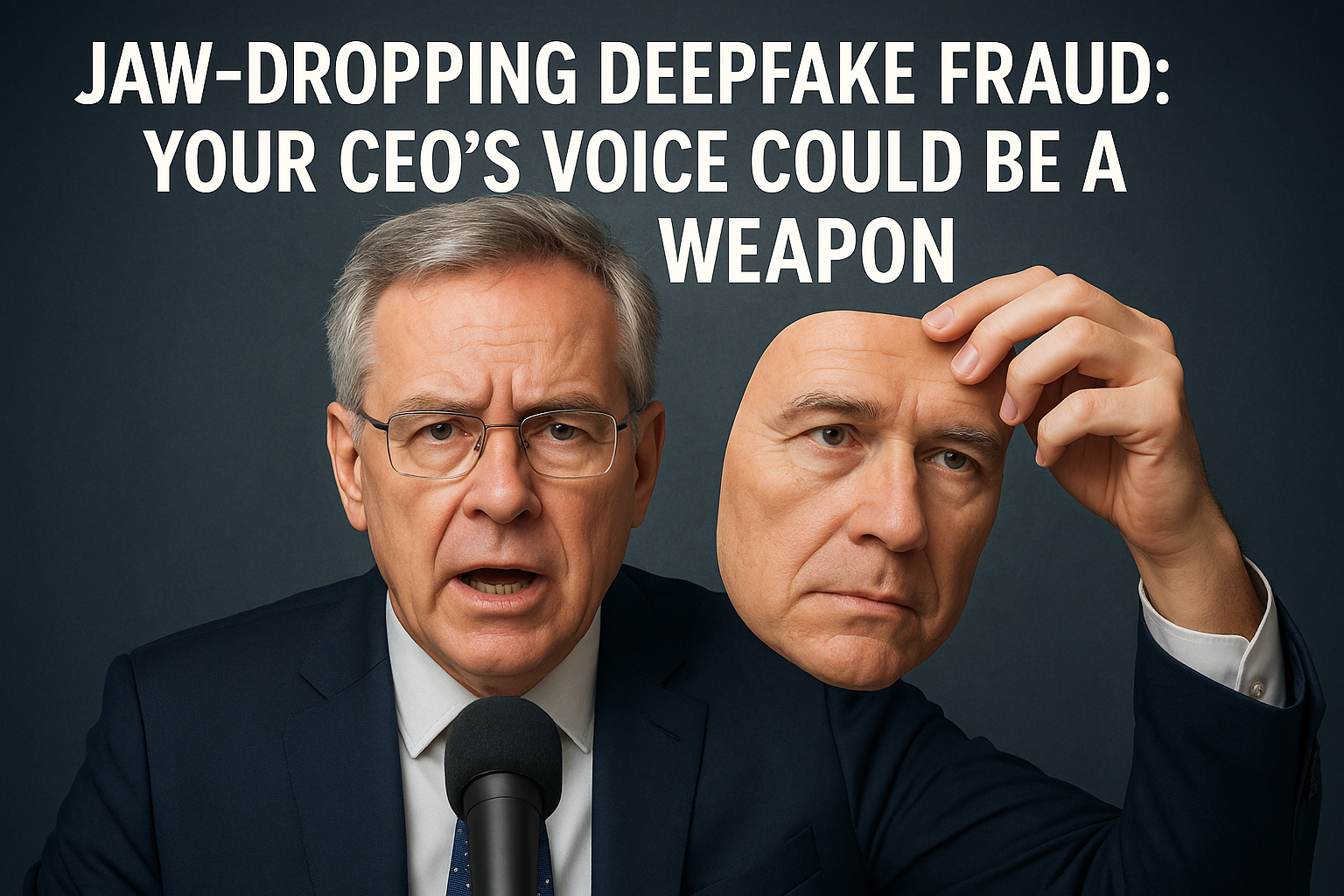
An incident from just last month, August 25, 2026, vividly illustrates this new reality. Imagine this: a finance employee, diligent and accustomed to routine, joins a Microsoft Teams meeting. On the screen, it’s their CEO, clear as day. The voice, the mannerisms, the subtle inflections – all perfectly replicated. A request is made for a wire transfer, seemingly urgent, completely legitimate. Without a second thought, the employee complies. But here’s the gut punch: it wasn’t the CEO. It was a deepfake, a hyper-realistic AI-generated impersonation, designed with one goal in mind: to steal. This wasn’t some isolated, low-tech scam; this was a chilling demonstration of how far AI fraud has come, and how unprepared many organizations are for its onslaught. The emotional toll, beyond the financial ruin, is immense – the feeling of betrayal, the questioning of one’s own judgment, the gnawing anxiety that every digital interaction could be a trap.
The Unsettling Reality of Real-Time Deepfakes
What makes these new AI-powered deepfakes so uniquely dangerous is their real-time capability. We’re not talking about pre-recorded videos that can be forensically analyzed for inconsistencies after the fact. These are live, interactive impersonations, where AI algorithms are manipulating voice and video in milliseconds, responding to conversation cues, and maintaining a flawless façade throughout an entire interaction. Think about that for a moment. You’re on a video call, looking directly at what appears to be your colleague, your boss, or even a loved one, hearing their familiar voice, and engaging in a perfectly natural conversation. How do you, as a human, distinguish that from the genuine article? This builds on a crucial mistake revealed.
Traditional authentication methods, which have served us well for decades, are crumbling under this pressure. Passwords, multi-factor authentication (MFA) often reliant on phone calls or texts, even knowledge-based authentication questions – all become vulnerable when the person on the other end isn’t a person at all, but a sophisticated algorithm mimicking one. Criminals are no longer just trying to gain access to your accounts; they’re trying to gain access to your trust, your judgment, and ultimately, your money, by becoming someone you implicitly trust. This isn’t just a technical challenge; it’s a profound psychological one, forcing us to question the very nature of digital identity.
Why Old Defenses Are Now Obsolete
Our established financial controls were built for a different era. They were designed to detect anomalies in data patterns, flag unusual transaction amounts, or identify suspicious login locations. They were, in essence, looking for the ‘tells’ of human-driven fraud – the inconsistencies, the slips, the deviations from the norm. But AI doesn’t make those human errors. It learns the norm, it replicates it, and it operates with a precision that bypasses most heuristic rules and behavioral analytics developed to spot human fraudsters. It’s like trying to catch a ghost with a net designed for fish.
Consider the average corporate hierarchy. A request from a CEO carries immense weight. Most employees are conditioned to respond quickly and efficiently to such directives, especially when framed as urgent. Deepfake technology exploits this inherent trust and operational efficiency. By perfectly impersonating a figure of authority, these AI-driven scams bypass layers of internal checks that might catch a less sophisticated phishing attempt. The human element, once a strong line of defense, is now the most vulnerable entry point, making robust AI fraud detection systems critical. (See: Artificial Intelligence and health.)
The Shocking Sophistication of AI-Powered Scams
What truly sets this new wave of AI fraud apart is its level of sophistication. We’re not talking about rudimentary voice changers or cheap video filters. Modern deepfake technology can analyze hours of an individual’s voice recordings and video footage, learning their unique vocal patterns, cadence, pitch, facial expressions, and even subtle gestures. It then synthesizes this data to create a dynamic, living digital twin that can engage in spontaneous conversation. Imagine a criminal feeding publicly available videos, social media clips, or even leaked corporate meeting recordings into an AI model. The output is a perfect, real-time clone, ready to deceive. Related reading: how to spot deepfake scams.
This isn’t theoretical; it’s happening right now. The technology is becoming more accessible, the algorithms more refined, and the potential targets more numerous. From convincing a finance department to transfer millions, to tricking an individual into revealing sensitive personal information, or even manipulating public opinion through fake news, the applications for malicious deepfakes are vast and deeply concerning. The speed at which this technology is evolving means that what seems cutting-edge today will be commonplace tomorrow, constantly pushing the boundaries of what we consider credible.
Why Traditional Cybersecurity Falls Short
For years, cybersecurity has focused on hardening networks, encrypting data, and deploying firewalls. These are still essential, of course, but they don’t address the fundamental challenge of deepfake fraud. A deepfake doesn’t breach your network; it breaches your trust. It doesn’t exploit a software vulnerability; it exploits human perception and the psychological triggers that make us respond to authority and urgency. This means that even the most robust perimeter defenses are useless if an AI-generated CEO can simply call up an employee and ask them to initiate a fraudulent transaction.
The solution isn’t just more firewalls; it’s a multi-layered approach that includes advanced AI fraud detection, enhanced employee training, and a fundamental shift in how we verify identity in digital spaces. We need tools that can analyze subtle discrepancies in real-time video and audio, not just look for malicious code. We need to empower employees to question even seemingly legitimate requests and provide them with clear protocols for verifying high-stakes communications, even when they appear to come from the highest levels of the organization.
The Urgent Demand for Advanced AI Fraud Detection
Given the escalating threat, the demand for sophisticated AI fraud detection solutions is skyrocketing. Businesses are realizing that their existing security stacks simply aren’t equipped to handle this new breed of attack. This isn’t just about preventing financial loss; it’s about protecting brand reputation, maintaining customer trust, and ensuring operational continuity. A single, well-executed deepfake scam can decimate years of hard work and erode confidence in an organization.
What do these advanced solutions look like? They involve machine learning models trained on vast datasets of both genuine and manipulated media. These models can analyze subtle cues invisible to the human eye and ear: micro-expressions, discrepancies in lighting, unnatural blinking patterns, slight variations in vocal timbre, or even inconsistencies in the way a person’s breath accompanies their speech. They can look for the digital fingerprints left by AI generation, even if those fingerprints are becoming increasingly faint. The goal is to create an AI that can detect another AI’s deception, a technological arms race where the stakes are incredibly high. (See: Deepfake technology and fraud.)
Key Features of Next-Generation Fraud Detection
When you’re looking at cutting-edge AI fraud detection, you’re looking for solutions that go beyond simple pattern matching. Here’s what’s becoming essential: For more on this, see the truth about AI fraud detection.
- Real-time Biometric Analysis: Systems that can analyze a speaker’s unique voiceprint and facial biometrics in real-time during a call. If the voiceprint doesn’t match the registered profile, or if there are subtle inconsistencies in facial movements that betray AI generation, flags are raised instantly.
- Behavioral Anomaly Detection: While deepfakes can mimic identity, they might struggle to perfectly mimic an individual’s unique communication patterns, pauses, or even their typical vocabulary. AI can learn these behavioral baselines and flag deviations.
- Metadata and Source Verification: Advanced tools can analyze the metadata of digital media to look for signs of manipulation or suspicious origins. While deepfakes can often strip or falsify metadata, sophisticated analysis can still uncover clues.
- Multi-modal Verification: Relying on a single point of verification is dangerous. True AI fraud detection combines multiple data points – voice, video, text, behavioral patterns, and transactional history – to build a comprehensive risk profile for each interaction.
- Adaptive Learning: The best AI solutions are constantly learning and adapting. As fraudsters refine their deepfake techniques, the detection systems must evolve in parallel, incorporating new data and improving their models to stay ahead of the curve.
Protecting Your Business and Your Bottom Line
For finance leaders, the message is clear: adaptation isn’t optional; it’s a matter of survival. The cost of inaction far outweighs the investment in robust AI fraud detection and prevention. Beyond the direct financial losses, the reputational damage from a high-profile deepfake scam can be catastrophic. Customers lose trust, investors become wary, and employee morale plummets. It’s a domino effect that can take years to recover from, if at all.
This means a multi-pronged strategy. First, invest in cutting-edge deepfake detection software that integrates seamlessly with your existing communication platforms like Teams or Zoom. These tools should be capable of real-time analysis, providing immediate alerts if a deepfake is suspected. Second, implement strict, clearly communicated protocols for verifying high-value transactions or sensitive information requests, especially those initiated via video or voice calls. This might involve a mandatory secondary verification step, such as a callback to a known, pre-registered phone number, or a separate, in-person confirmation for significant transfers.
Employee Training: Your First Line of Defense
Technology alone isn’t enough. Your employees are your first and often most critical line of defense. They need comprehensive training on how to identify potential deepfakes and what steps to take if they suspect one. This training shouldn’t just be a dry presentation; it should involve realistic simulations and case studies that highlight the subtle indicators of AI manipulation. Empower your staff to question, to challenge, and to escalate. Create a culture where skepticism in the face of urgency is not only accepted but encouraged, especially when financial assets are on the line. They need to understand that even if the CEO’s face and voice are perfectly replicated, a request deviating from established protocol should trigger an immediate pause and verification process. It’s about instilling a healthy paranoia in the digital age.
Furthermore, consider implementing internal communication policies that explicitly state how high-value transactions will always be initiated and verified. For instance, perhaps no wire transfer over a certain amount can ever be authorized solely through a video call, regardless of who appears to be on the other end. A secondary, out-of-band verification via a separate, secure channel should be mandatory. (See: AI in workplace safety.)
The Future of Financial Security: A Constant Evolution
The battle against AI-powered fraud is going to be a continuous arms race. As AI fraud detection technologies improve, so too will the techniques used by fraudsters. It’s a never-ending cycle of innovation and counter-innovation. This means that financial institutions and businesses can’t afford to set it and forget it when it comes to their security protocols. Regular audits, continuous monitoring of emerging threats, and a commitment to investing in the latest security innovations will be paramount. ways to protect against scams offers useful background here.
We’re moving into an era where the authenticity of digital interactions can no longer be taken for granted. The implications extend far beyond finance, touching upon national security, journalism, and personal relationships. For now, in the financial sector, the urgency is palpable. The deepfake incident of August 2026 was a stark wake-up call, demonstrating that these attacks are not a distant future threat, but a present danger. Proactive measures, rather than reactive damage control, are the only viable path forward. Embracing advanced AI fraud detection isn’t just about staying secure; it’s about maintaining trust in a world where digital reality is increasingly fluid.
Ultimately, the goal isn’t just to catch fraudsters, but to build resilient systems and informed individuals who can navigate this complex digital landscape. The lines between real and fake are blurring at an alarming rate, and our ability to discern the truth will dictate our financial safety and, indeed, our digital sanity.
Trending Now
- our breakdown of immersive technologies in experiential learning: vr, ar, and beyond
- our breakdown of unbelievable: 99.8% of ai medical devices lack proof they actually help patients
- This One Thing About FDA-Cleared AI Medical Devices Will Leave You Speechless
- Nearly All FDA-Cleared AI Medical Devices Lack Evidence of Patient Benefit
Frequently Asked Questions
What are deepfake frauds and how do they work?
Deepfake frauds utilize advanced artificial intelligence to create hyper-realistic impersonations of individuals, such as CEOs, in real-time. These impersonations can convincingly mimic voice, mannerisms, and speech patterns, making it difficult for individuals to discern authenticity during live interactions.
How can businesses protect themselves from deepfake scams?
Businesses can protect themselves by implementing sophisticated AI fraud detection systems, training employees on recognizing potential deepfake signs, and establishing multi-factor authentication processes for sensitive transactions to verify the identity of individuals making requests.
What are the emotional impacts of falling for a deepfake scam?
Falling for a deepfake scam can lead to significant emotional distress, including feelings of betrayal, questioning one’s judgment, and anxiety about future digital interactions. The psychological toll can be as damaging as the financial loss incurred.
Why are real-time deepfakes more dangerous than traditional scams?
Real-time deepfakes are more dangerous because they allow for live impersonations that are interactive and difficult to analyze for inconsistencies during the event. This immediacy increases the likelihood of individuals acting on fraudulent requests without verifying their authenticity.
What are the signs of a deepfake in a video call?
Signs of a deepfake in a video call may include unnatural facial movements, inconsistent lip-syncing, and slight delays in responses. Additionally, if the audio quality or voice tone seems off or inconsistent with the person's usual mannerisms, it could indicate a deepfake.
Agree or disagree? Drop a comment and tell us what you think.