
“`html
In recent years, the education sector has been waking up to the profound impact of kinesthetic learning strategies on student engagement and retention. In elementary classrooms, where attention spans can be short and learning styles vary significantly, integrating movement into lessons has emerged as a vital approach. This article explores the background, significance, and practical applications of kinesthetic learning, particularly through techniques like brain breaks and movement integration.
Understanding Kinesthetic Learning
Kinesthetic learning, often referred to as tactile learning, emphasizes the importance of physical activity in the learning process. It is one of the multiple intelligences identified by psychologist Howard Gardner in his groundbreaking work on human development. Kinesthetic learners often thrive in environments where they can engage in hands-on activities, manipulate materials, and participate in movement-based tasks.
Research reveals that incorporating movement into learning not only aids in cognitive retention but also enhances creativity and problem-solving skills. According to a study published in the Journal of Learning Sciences, students who engaged in kinesthetic activities remembered information better and performed significantly better on assessments than their peers who were taught through traditional, sedentary methods.
Moving Beyond Traditional Teaching Methods
For years, traditional classroom settings have sought to create a structured environment where students sit at desks and absorb information passively. While this method may suit some learners, it often fails to engage those who learn best through movement. The integration of kinesthetic learning strategies not only acknowledges different learning styles but actively seeks to cater to them.
Incorporating kinesthetic learning doesn’t mean abandoning lecture or reading altogether. Instead, it encourages teachers to blend these traditional methods with active participation. For instance, instead of solely reading about shapes, students might use clay to form those shapes or engage in a scavenger hunt to find objects around the classroom that match specific geometric criteria.
The Role of Brain Breaks in Enhancing Learning
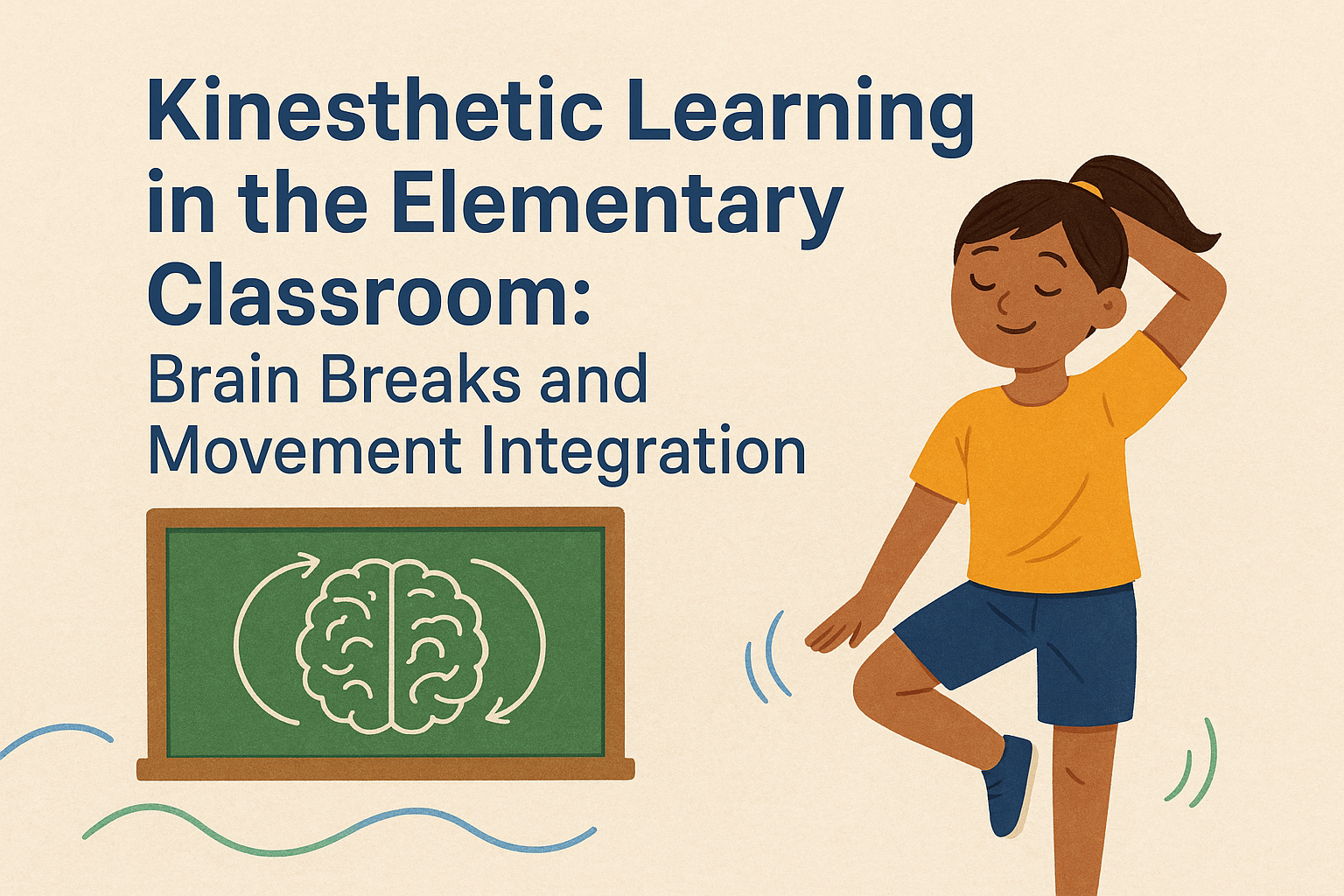
One effective kinesthetic learning strategy is the implementation of brain breaks. These short, intentional pauses in the instructional day allow students to release pent-up energy and refocus their attention. Not only do brain breaks serve to rejuvenate the mind, but they also provide opportunities for children to engage in physical activities.
According to a study from The University of Illinois, students who took structured brain breaks performed better academically and showed increased levels of motivation and engagement. Brain breaks can vary from simple stretching exercises to fun dance routines or quick fitness activities. For example, a teacher might pause a lesson every 20-30 minutes to lead students through a series of jumping jacks or a brief dance party. These activities can significantly improve concentration and readiness to learn when students return to their desks.
Movement Integration in the Curriculum
Integrating movement into lessons goes beyond just taking breaks. It involves embedding physical activity directly into the curriculum. This could involve using songs and movements to teach math concepts, incorporating role-playing and acting to explore historical events, or even integrating outdoor learning experiences into science lessons. (See: Physical Activity in Education.)
For instance, in a lesson about ecosystems, students might be tasked with creating a human model of a food chain by physically representing different animals and plants. They could walk around the classroom to locate different “habitats,” allowing them to experience how each component of an ecosystem interacts with one another. This physical involvement fosters a deeper understanding of the subject matter.
Examples of Effective Kinesthetic Learning Strategies
Several practical kinesthetic learning strategies have been successfully implemented in elementary classrooms. Here are a few notable examples:
- Learning Stations: Setting up various stations around the classroom where students can rotate through different activities allows for movement and hands-on learning. These could include puzzles, art projects, or science experiments.
- Gesture-Based Learning: Associating physical gestures with vocabulary words or math processes can help students memorize and understand complex concepts. For instance, students can use hand motions to represent different mathematical operations.
- Outdoor Learning: Taking lessons outside can create a more dynamic learning environment. Nature walks, field trips, or even outdoor science experiments allow students to learn in a more engaging, kinesthetic manner.
- Movement Games: Incorporating educational games that require movement, such as relay races that involve answering questions or sorting materials, can reinforce learning while keeping students active.
Challenges and Considerations
While the benefits of kinesthetic learning strategies are substantial, implementing them effectively can present challenges. Teachers often find themselves balancing the need for movement with the constraints of standardized testing and curriculum requirements. In some cases, administrators may be resistant to a departure from traditional teaching methods.
Additionally, classroom space can be a limiting factor. In densely packed classrooms, there may not always be room for movement-based activities without causing disruption. However, creative solutions can often overcome these barriers. Teachers can make use of available resources, such as the schoolyard for outdoor activities or designated movement zones within the classroom.
Current Relevance and Future Directions
As we continue to navigate a post-pandemic educational landscape, the relevance of kinesthetic learning strategies has never been more pronounced. Many students have experienced significant disruptions to their learning routines, leading to increased anxiety and a decline in attention spans. The push for mental and emotional well-being in educational settings has sparked a renewed interest in integrating movement into learning.
Furthermore, as technology continues to evolve, educators are finding new ways to incorporate kinesthetic learning strategies into digital platforms. Virtual reality (VR) and augmented reality (AR) technologies offer exciting opportunities for immersive learning experiences that engage students’ bodies as well as their minds.
Ultimately, fostering an environment that values kinesthetic learning strategies can transform the educational experience, making it more inclusive, engaging, and effective for all learners.
FAQs About Kinesthetic Learning Strategies
What is kinesthetic learning?
Kinesthetic learning is a style of learning where individuals learn best through physical activities. It involves engaging in hands-on tasks and moving around, which helps reinforce knowledge and skills.
How can teachers implement kinesthetic learning strategies in the classroom?
Teachers can implement kinesthetic learning strategies by using movement-based activities, such as role-playing, learning stations, and outdoor lessons. Incorporating brain breaks and movement games can also enhance engagement. (See: Teaching Physical Activity in Schools.)
What are brain breaks, and why are they important?
Brain breaks are short, intentional pauses in instruction that allow students to engage in physical activity. They are important because they help improve concentration, reduce fatigue, and increase motivation, making students more receptive to learning.
Are kinesthetic learning strategies suitable for all subjects?
Yes, kinesthetic learning strategies can be adapted for all subjects. Whether teaching math, science, language arts, or social studies, educators can integrate movement to reinforce concepts, making lessons more interactive and memorable.
Can kinesthetic learning strategies benefit students of all ages?
Absolutely! While kinesthetic learning strategies are often emphasized in elementary education, they can benefit students of all ages. Adolescents and adults can also engage in movement-based learning to enhance retention and engagement.
What challenges might teachers face when implementing these strategies?
Teachers may face challenges such as limited classroom space, resistance from administration, and the need to balance movement with curriculum requirements. However, with creativity and planning, these challenges can often be addressed effectively.
How do kinesthetic learning strategies support inclusion in the classroom?
Kinesthetic learning strategies support inclusion by acknowledging diverse learning styles. They create opportunities for all students, including those with different needs, to engage in the learning process actively, promoting a more equitable learning environment.
Expert Perspectives on Kinesthetic Learning Strategies
Experts in education emphasize the importance of recognizing various learning styles and adapting teaching methods accordingly. Dr. Patricia Kuhl, a cognitive scientist, highlights the connection between movement and brain development, stating, “When children are allowed to move, they engage more fully, leading to deeper understanding and retention of knowledge.” By weaving kinesthetic learning strategies into daily lessons, educators can create a rich tapestry of learning experiences that resonate with students on multiple levels.
Comparative Analysis: Kinesthetic Learning vs. Traditional Learning
Understanding the impact of kinesthetic learning strategies also involves comparing them with traditional learning methods. Traditional education typically focuses on verbal and visual learning, where information is presented through lectures, textbooks, and written assignments. While these methods can be effective for some students, they often leave out those who learn better through physical interaction.
For example, in a traditional math class, students may learn about fractions through written exercises and numerical problems. In contrast, a kinesthetic approach involves using physical objects like pie slices or blocks to represent fractions, allowing students to manipulate and visualize the concept. This hands-on experience can lead to greater comprehension, particularly for those who struggle with abstract concepts.
Statistics support this notion, as studies show that students engaged in kinesthetic learning often score higher on assessments compared to their peers who rely solely on traditional methods. Schools that have adopted kinesthetic strategies report not only improved test scores but also higher levels of student satisfaction and lower rates of behavioral issues.
Looking Ahead: The Future of Kinesthetic Learning in Education
The future of kinesthetic learning strategies looks promising, especially as educational technology continues to advance. Tools such as interactive apps and online platforms are being developed to incorporate movement-based learning into digital environments. For instance, some educational programs now integrate motion sensors that allow students to engage in physical activities while learning, making lessons more dynamic and interactive.
Educators are increasingly recognizing the need for flexible learning environments that promote movement. Schools are re-evaluating classroom layouts to create spaces that encourage interaction and active participation. Furthermore, professional development programs for teachers are beginning to include training on kinesthetic learning strategies, ensuring that educators are equipped to implement these methods effectively.
As we look toward the future, the integration of kinesthetic learning strategies may not just benefit individual classrooms but could influence educational policy at larger levels. Emphasizing movement in learning could transform not only how subjects are taught but also how success is measured within education systems.
Conclusion: Embracing Movement for Learning Success
Kinesthetic learning strategies are not just a trend; they represent a fundamental shift in how we understand learning. By embracing movement in the classroom, educators can cater to various learning styles, enhance student engagement, and foster a more dynamic environment for growth and development. While challenges exist, the potential benefits far outweigh them. As we continue to adapt and innovate in education, prioritizing kinesthetic learning can lead to significant academic and social-emotional gains for students. It’s time to move beyond traditional boundaries and create classrooms where learning is an active, joyful experience.
“`
Trending Now
Frequently Asked Questions
What is kinesthetic learning in the classroom?
Kinesthetic learning is a teaching approach that emphasizes physical activity as an essential part of the learning process. It engages students through hands-on activities and movement-based tasks, catering to those who learn best by doing rather than through passive absorption of information.
How do brain breaks enhance learning?
Brain breaks are short, structured periods of physical activity that help re-energize students and improve focus. Incorporating these breaks into lessons can boost cognitive retention and engagement, allowing students to return to learning tasks with increased attention and motivation.
Why is movement integration important in elementary education?
Movement integration is crucial in elementary education because it caters to diverse learning styles, particularly for kinesthetic learners. This approach enhances creativity, problem-solving skills, and cognitive retention, leading to better academic performance compared to traditional sedentary teaching methods.
What are some examples of kinesthetic learning activities?
Examples of kinesthetic learning activities include role-playing, interactive games, hands-on experiments, and using movement-based tasks like acting out stories or conducting science experiments. These activities allow students to engage physically while learning, making the experience more memorable.
How can teachers implement kinesthetic learning strategies?
Teachers can implement kinesthetic learning strategies by incorporating movement into lessons, using brain breaks, and blending traditional teaching methods with interactive activities. Creating a dynamic classroom environment where students can move, collaborate, and engage in hands-on tasks is key to fostering kinesthetic learning.
What’s your take on this? Share your thoughts in the comments below — we read every one.