

“`html
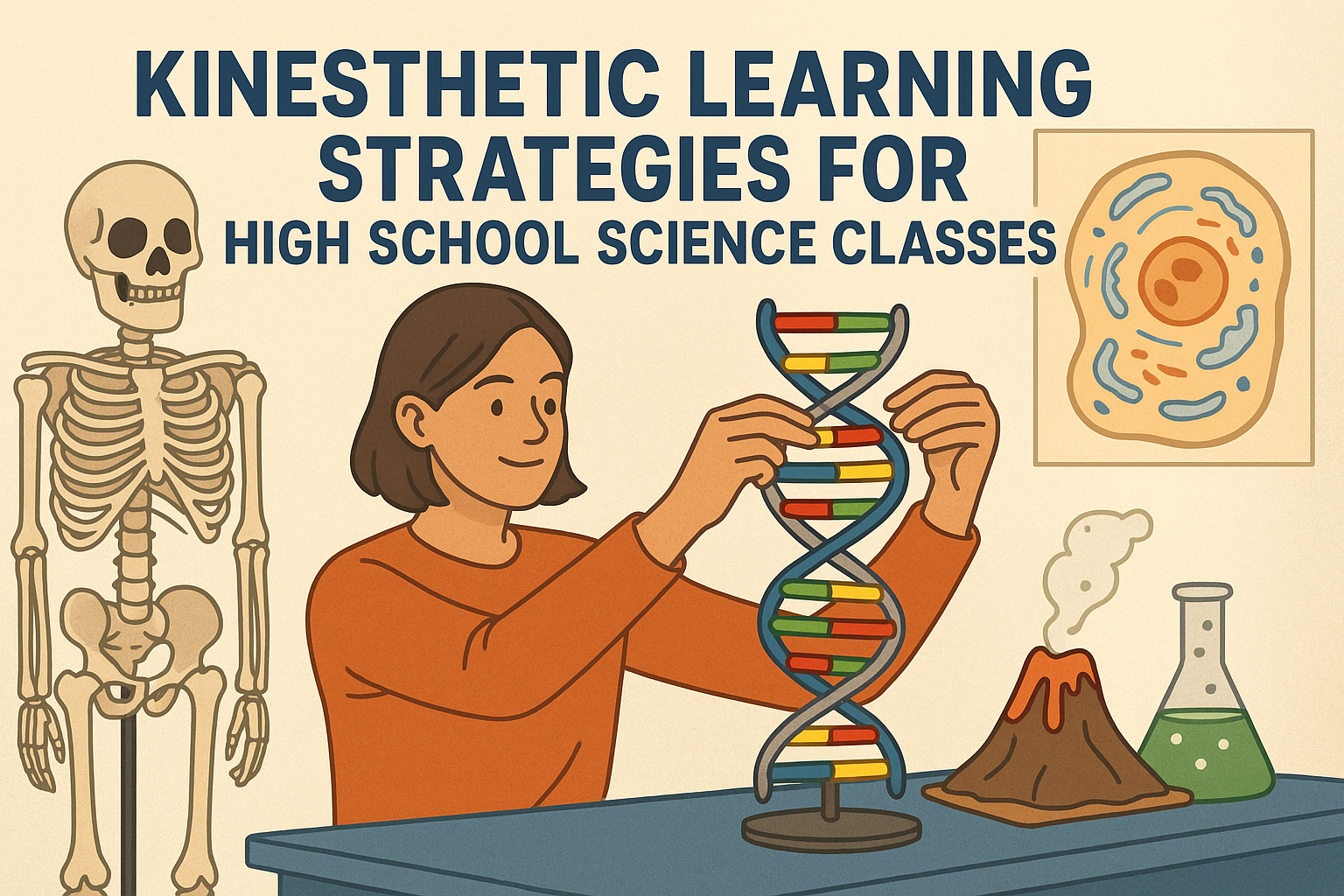
When it comes to engaging students, especially in subjects like science, traditional lectures often fall flat. Enter kinesthetic learning strategies, a dynamic approach that allows students to learn through hands-on experiences. This article will explore these strategies in depth, providing practical insights that can revolutionize high school science classes.
Understanding Kinesthetic Learning
Kinesthetic learning, often referred to as tactile learning, prioritizes movement and physical activity as crucial components of the educational process. The concept recognizes that many students grasp concepts more effectively when they can touch, manipulate, and experiment with materials rather than merely listening to a teacher or reading from a textbook. According to educational theorist Howard Gardner, who introduced the concept of multiple intelligences, bodily-kinesthetic intelligence is one of the key types of intelligence, emphasizing the importance of physical activity in the learning process.
In a typical high school science class, students might be expected to memorize complex theories or participate in passive learning. However, studies indicate that engaging students in hands-on activities can enhance their comprehension and retention of scientific concepts. This article outlines seven effective kinesthetic learning strategies that can be seamlessly integrated into high school science curricula.
1. Hands-On Experiments
One of the most effective kinesthetic learning strategies is incorporating hands-on experiments into the curriculum. Rather than simply reading about the scientific method, students can actively participate in conducting experiments. For instance, in a biology class, students can explore plant growth by planting seeds in different environmental conditions. They can measure growth over weeks, documenting their observations and drawing conclusions based on real-time data.
In chemistry classes, conducting safe experiments, such as creating chemical reactions with household items, provides students with a tangible understanding of chemical properties and reactions. This experiential learning not only reinforces theoretical knowledge but also cultivates critical thinking and problem-solving skills as students analyze the results of their experiments.
2. Role-Playing and Simulations
Another engaging strategy is role-playing or simulations. In science classes, students can take on various roles—such as scientists, researchers, or even elements like atoms or molecules—to visualize complex processes. For example, a physics lesson on energy transfer can be enhanced by having students physically demonstrate how energy moves through different mediums.
By simulating real-world scientific scenarios—like climate change debates, ecological conservation efforts, or medical breakthroughs—students gain a deeper understanding of the implications of scientific concepts. This immersive approach not only makes lessons more memorable but also encourages teamwork and collaboration among students.
3. Field Trips and Outdoor Learning
Field trips offer an unparalleled opportunity for kinesthetic learning. Taking students out of the classroom and into nature or to science museums can significantly enhance their understanding of scientific concepts. For example, a trip to a local botanical garden allows biology students to observe ecosystems, plant biology, and biodiversity firsthand. We covered understanding kinesthetic learning in more detail.
Outdoor learning experiences can also include activities like hiking to study geology, visiting science centers to engage with interactive exhibits, or participating in community science projects, such as water testing in local rivers. These experiences reinforce classroom learning while allowing students to apply what they’ve learned in a real-world context. (See: importance of kinesthetic learning.)
4. Interactive Technology
In today’s digital age, integrating technology into kinesthetic learning strategies can also yield great results. Virtual labs and simulations make it possible to conduct experiments that may not be feasible due to safety concerns, cost, or time constraints. Programs like Labster provide virtual lab experiences that allow students to conduct complex experiments in a controlled digital environment.
Additionally, using mobile devices and apps to gather data during outdoor experiments can enhance the learning experience. For instance, students can use data collection apps to monitor temperature, humidity, or soil pH levels during an ecology lesson, making the data collection process interactive and engaging.
5. Building Models and Prototypes
Creating models is another effective kinesthetic learning strategy, especially in subjects like physics and biology. Students can build 3D representations of molecules, ecosystems, or even the solar system using everyday materials like cardboard, clay, and other craft supplies. This hands-on activity not only reinforces theoretical concepts but also encourages creativity and innovation.
In physics classes, constructing simple machines or prototypes can help students understand principles like force, motion, and mechanics. Through trial and error, students learn how their designs function and relate them back to the scientific principles they’ve studied. This approach fosters a deeper connection between theory and application, solidifying their understanding.
6. Inquiry-Based Learning
Inquiry-based learning is a student-centered approach that encourages learners to ask questions, conduct investigations, and develop solutions. In a science classroom, teachers can pose open-ended questions related to a scientific phenomenon and allow students to explore answers through experimentation and research.
For instance, a teacher may ask, “What factors affect the rate of photosynthesis?” Students can then design their experiments to test different variables such as light intensity or carbon dioxide levels, documenting their findings in a lab report. This strategy fosters critical thinking, problem-solving, and collaboration as students work together to uncover answers.
7. Integrating Movement into Lessons
Finally, incorporating physical movement directly into lessons can dramatically enhance engagement and retention. Simple strategies like having students stand up when answering questions or moving to different corners of the classroom based on their responses can break up the monotony of traditional lectures.
In science classes, teachers can create interactive games that require physical participation, such as scavenger hunts for scientific concepts around the classroom or school. This not only makes learning active but also promotes a fun and energetic environment conducive to learning.
The Current Relevance of Kinesthetic Learning Strategies
As educational paradigms shift to focus more on student-centered learning, kinesthetic learning strategies are becoming increasingly relevant. With the rise of remote learning during the COVID-19 pandemic, educators are seeking innovative ways to engage students at a distance. Many of the strategies discussed can be adapted for online platforms, using virtual simulations or interactive online activities to maintain student engagement.
Furthermore, as educational institutions strive to prepare students for the demands of the 21st-century workforce, kinesthetic learning provides essential skills such as collaboration, adaptability, and creative problem-solving. By embracing these strategies, educators can foster an environment that not only enhances academic performance but also prepares students for future challenges. (See: impact of hands-on activities.)
Challenges and Considerations
While implementing kinesthetic learning strategies can offer numerous benefits, there are certain challenges educators might face. One common issue is classroom space. Not all classrooms are designed to facilitate movement, which can limit the effectiveness of some kinesthetic activities. To address this, teachers can utilize creative arrangements or dedicate specific times for outdoor learning.
Another challenge is ensuring that all students can participate equally. Some students may have physical limitations or different comfort levels with movement-based activities. Teachers need to be mindful and provide alternative options that still engage these students without alienating them. For example, allowing students to engage in a simulation while their peers perform a physical activity can keep everyone involved.
Expert Perspectives
Educational experts often weigh in on the significance of kinesthetic learning. Dr. Patricia H. Miller, an education researcher, suggests that incorporating movement not only helps with retention but also reduces behavioral issues in the classroom. She states, “When kids are allowed to move, they’re not just learning better; they’re also less likely to disrupt their peers.” This insight demonstrates the dual benefits of kinesthetic strategies, fostering a more conducive learning environment while also enhancing educational outcomes.
Additionally, cognitive neuroscientist Dr. John Medina emphasizes that movement boosts emotional engagement. His studies reveal that when students engage physically with the material, they form stronger emotional connections, leading to improved memory retention. Educators might consider these perspectives when developing their lesson plans, recognizing that the emotional aspect of learning is just as crucial as the cognitive one.
Statistics Supporting Kinesthetic Learning
Data supports the effectiveness of kinesthetic learning strategies. A study conducted by the University of California found that students who engaged in hands-on activities outperformed their peers in traditional learning environments by up to 30%. This statistic highlights the potential of kinesthetic strategies to enhance learning outcomes significantly.
Moreover, a survey by the National Education Association indicated that 83% of educators believe that incorporating movement into lessons improves student engagement. With such encouraging numbers, it’s clear that educators can benefit from adopting these strategies in their classrooms. See also engaging interactive simulations.
Frequently Asked Questions (FAQs)
What are kinesthetic learning strategies?
Kinesthetic learning strategies involve teaching methods that engage students through hands-on activities, movement, and physical interaction with the learning material. These strategies can include experiments, role-playing, building models, and outdoor learning.
How can kinesthetic learning be implemented in a virtual classroom?
Even in a virtual setting, kinesthetic learning can be integrated through activities like virtual labs, simulations, and interactive online games that require physical participation. Teachers can assign projects that involve students creating models or conducting simple experiments at home and sharing their findings online.
Are kinesthetic learning strategies effective for all subjects?
Yes, while these strategies are particularly beneficial in science, they can be adapted for multiple subjects, including mathematics, history, and language arts. The key is to find creative ways to incorporate hands-on activities relevant to the content being taught.
What if my classroom lacks space for movement?
If space is a limitation, consider organizing activities that can be done in smaller groups or using online resources to simulate kinesthetic experiences. Rearranging desks creatively or conducting outdoor lessons when possible can also help overcome space challenges.
Can kinesthetic learning strategies support students with learning disabilities?
Absolutely! Kinesthetic learning strategies can be particularly beneficial for students with learning disabilities. The physical engagement helps reinforce memory and understanding. For instance, students with dyslexia may find that moving while learning helps them process information more effectively. By incorporating diverse learning modalities, educators can create a more inclusive environment for all students.
What are some simple kinesthetic activities I can try in class?
Here are a few ideas to get started:
- Science scavenger hunt: Create a list of scientific terms or concepts, and have students find items in the classroom or outside that correlate to each term.
- Model building: Use clay or building blocks to have students construct models of biological systems or physical structures.
- Energy transfer demonstration: Have students physically demonstrate different forms of energy transfer (e.g., transferring a ball to represent kinetic energy).
The Future of Kinesthetic Learning Strategies
As education continues to evolve, kinesthetic learning strategies are poised to play an even more significant role. With advancements in technology, the possibilities for interactive and engaging learning experiences are expanding. Virtual and augmented reality, for example, could offer new dimensions to kinesthetic learning, allowing students to engage with complex scientific concepts in immersive ways.
Additionally, the growing emphasis on social-emotional learning in schools aligns perfectly with kinesthetic strategies. By promoting movement and physical engagement, educators can help foster not just academic skills but also emotional intelligence, resilience, and collaboration among students. As we move forward, embracing these strategies will be essential for creating dynamic and effective learning environments.
Conclusion
Kinesthetic learning strategies offer high school science educators an invaluable toolkit for engaging students in meaningful ways. By incorporating hands-on experiments, role-playing, field trips, and technology, teachers can create a dynamic learning environment that fosters curiosity and enthusiasm for science. As we continue to evolve our teaching methods, embracing the principles of kinesthetic learning will undoubtedly enrich student experiences and contribute to a deeper understanding of scientific concepts.
“`
Trending Now
- this guide on unlock your potential: senior ai engineer education opportunities with a.team
- this guide on conservation vs. irreversibility: understanding piaget’s concepts
- How to Use Bloom’s Taxonomy for Differentiated Instruction
- Formative Assessment Techniques for High School Math Classes
Frequently Asked Questions
What are kinesthetic learning strategies?
Kinesthetic learning strategies involve engaging students through hands-on experiences and physical activities. This approach allows learners to grasp scientific concepts more effectively by manipulating materials and participating in experiments, rather than relying solely on traditional lectures.
How can kinesthetic learning be applied in high school science classes?
In high school science classes, kinesthetic learning can be implemented through hands-on experiments, interactive demonstrations, and collaborative projects. These activities encourage students to actively engage with the material, enhancing their understanding and retention of scientific concepts.
What are some examples of hands-on experiments for science classes?
Examples of hands-on experiments include planting seeds in varying conditions to study growth in biology, conducting safe chemical reactions in chemistry, or building models to understand physics principles. Such activities allow students to observe and analyze real-time data.
Why is kinesthetic learning important for students?
Kinesthetic learning is important because it caters to students who learn best through movement and physical activity. This approach enhances engagement, improves comprehension, and increases retention of information, making it particularly effective in subjects like science.
Who developed the concept of kinesthetic learning?
The concept of kinesthetic learning is associated with educational theorist Howard Gardner, who introduced the theory of multiple intelligences. He identified bodily-kinesthetic intelligence as a key type of intelligence, highlighting the role of physical activity in learning.
Agree or disagree? Drop a comment and tell us what you think.



