
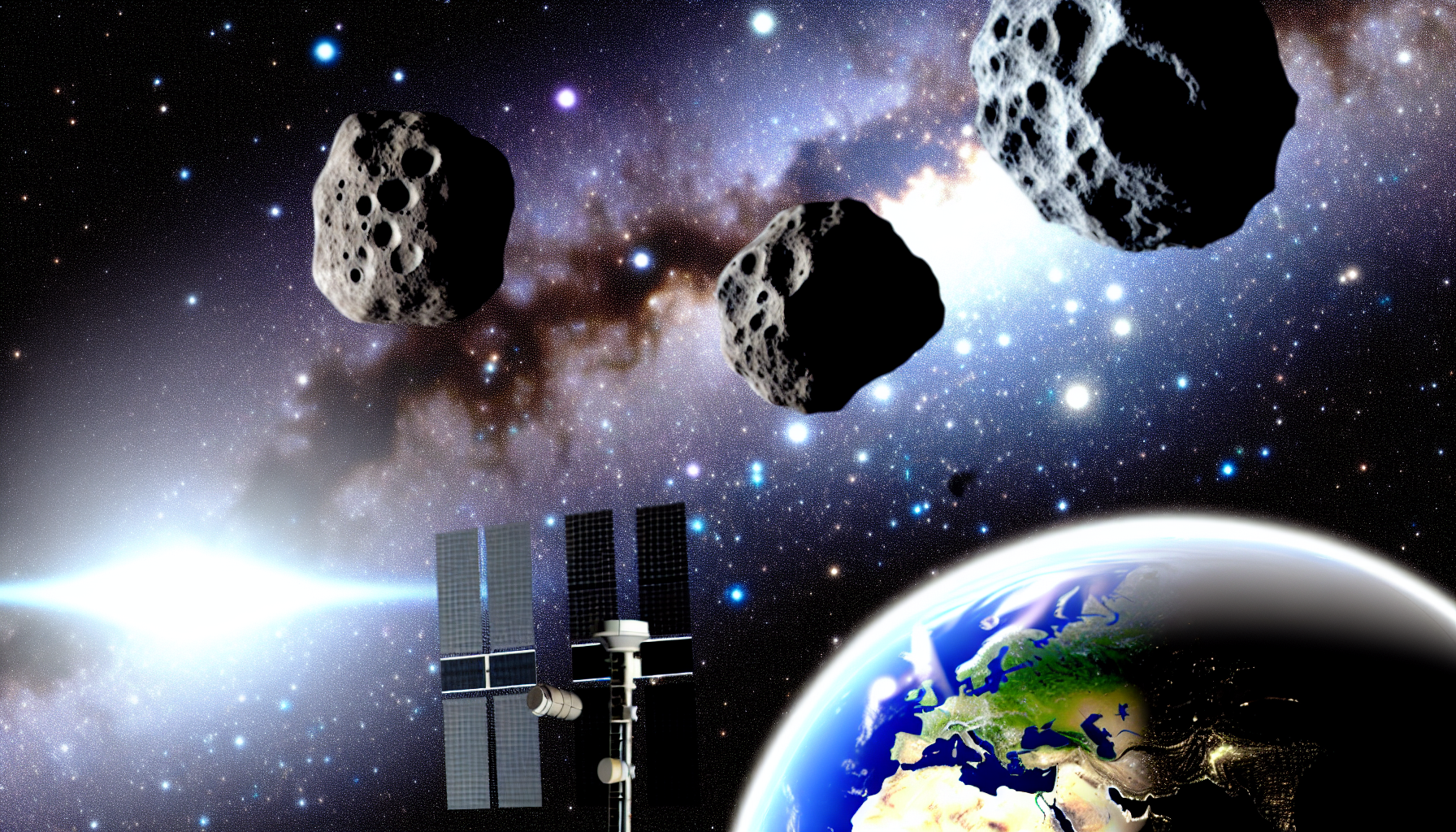

NASA’s Jet Propulsion Laboratory (JPL) is on high alert as it tracks the trajectory of three sizable asteroids that are set to make close approaches to Earth on March 16, 2026. These celestial bodies, while large in size, are expected to pass at safe distances, posing no threat to our planet.
Understanding the Asteroids
The three asteroids under observation include:
- (2026 ET2) – A bus-sized asteroid measuring approximately 25 feet in width, which will pass by Earth at a distance of about 495,000 miles.
- (2026 CR3) – This is a larger, airplane-sized asteroid, measuring around 230 feet wide, and will travel at a considerably greater distance of about 4,640,000 miles from our planet.
- (Unnamed Third Asteroid) – While specific details on the third asteroid are not provided, it is also being monitored closely by NASA’s JPL.
The Importance of Monitoring Near-Earth Objects
NASA’s ongoing efforts to track near-Earth objects (NEOs) are critical for several reasons:
- Planetary Safety: Monitoring NEOs helps in assessing potential threats to Earth. Although the asteroids mentioned will not pose any risk, understanding their paths is essential for future encounters.
- Scientific Insights: Studying these asteroids provides valuable information regarding their size, shape, and composition. This knowledge enhances our understanding of the solar system’s formation and the materials that comprise it.
- Impact Preparedness: By continually tracking and analyzing NEOs, scientists can develop strategies for potential impact scenarios, ensuring that the planet is prepared for any future threats.
How Asteroids Are Tracked
Nasa’s JPL employs a variety of sophisticated techniques and technologies to track the movement of asteroids:
- Radar Observations: Radar technology is utilized to bounce signals off asteroids to determine their distance, speed, and trajectories. This helps create accurate models of their orbits.
- Telescopic Surveys: Ground-based and space-based telescopes are used to survey the sky for new asteroids. The Pan-STARRS and NEOWISE missions are pivotal in discovering new NEOs.
- Computational Models: Advanced algorithms and computer models are employed to predict the paths of asteroids and assess any potential risks they may pose to Earth.
The Role of International Collaboration
The monitoring of asteroids is not solely a responsibility of NASA. International collaboration plays a significant role in planetary defense:
- Global Networks: Organizations from around the world, including the European Space Agency (ESA) and the Japanese Aerospace Exploration Agency (JAXA), work together to share data and coordinate efforts in tracking NEOs.
- Joint Missions: Collaborative missions, such as the NASA-ESA AIDA initiative, aim to study asteroids in detail and assess potential deflection strategies.
- Public Awareness: International partnerships help increase public awareness and understanding of asteroids and the importance of planetary defense.
What Lies Ahead
As we move closer to the date of the asteroids’ approach, NASA will continue to refine its observations and predictions. The agency’s commitment to monitoring these objects is part of a broader effort to safeguard Earth from potential hazards.
The interest in asteroids extends beyond safety; they are also seen as potential resources for future space missions. Some asteroids contain valuable materials, including metals and water, which could be utilized in space exploration.
Conclusion
While the prospect of large asteroids passing near Earth can be alarming, it is important to remember that NASA’s monitoring efforts are thorough and designed to ensure our safety. The upcoming approaches of asteroids (2026 ET2) and (2026 CR3) on March 16, 2026, serve as a reminder of the dynamic nature of our solar system and the continued need for vigilance in tracking these celestial objects.
In the meantime, scientists will keep a close watch on these asteroids, providing updates and insights into their movements and characteristics. Through ongoing research and international cooperation, we can better understand the cosmos and prepare for whatever challenges may lie ahead.






