
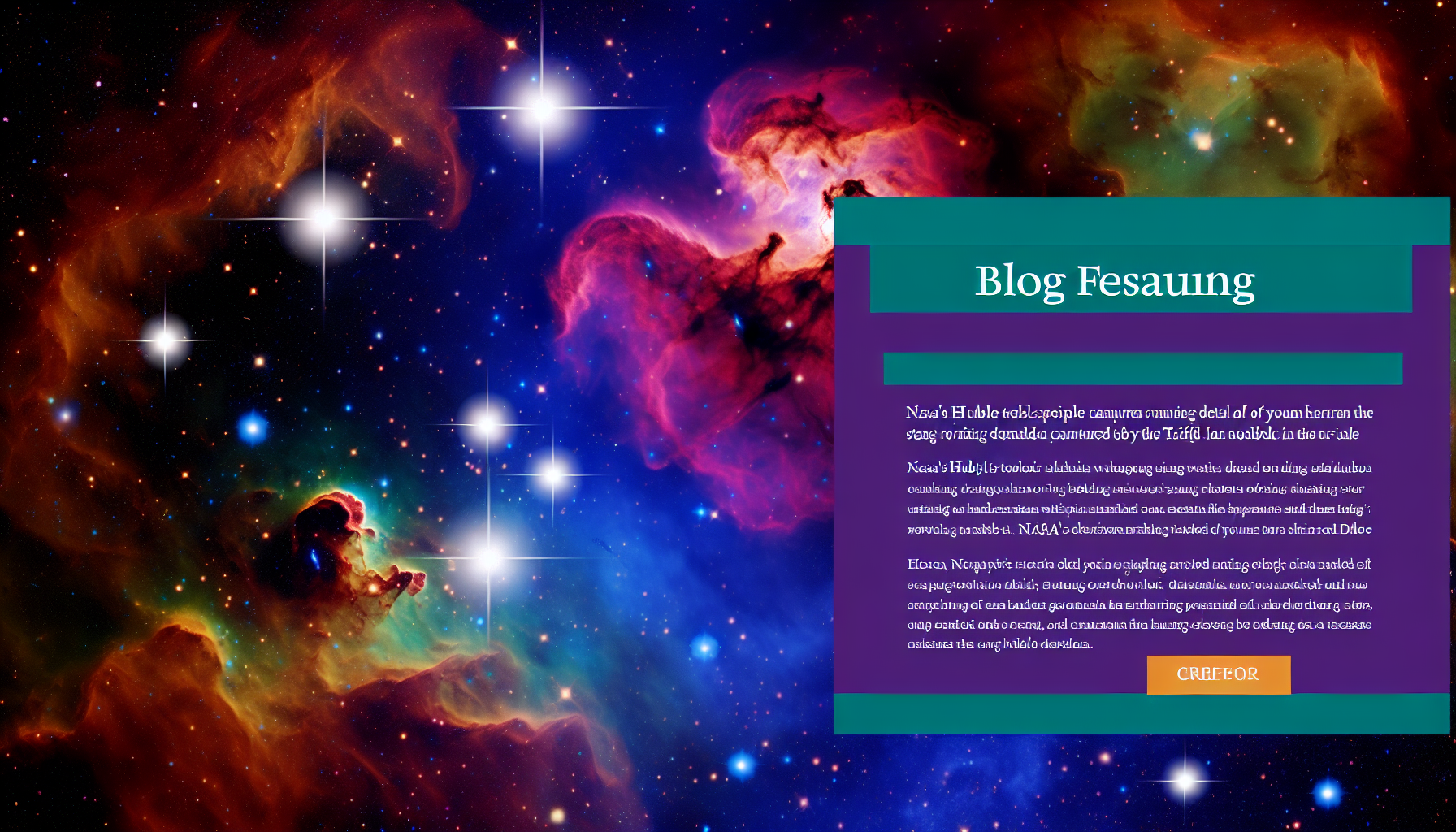

NASA recently celebrated the 36th anniversary of the Hubble Space Telescope with a breathtaking new image of the Trifid Nebula, a vibrant star-forming region located approximately 5,000 light-years from Earth. This latest close-up showcases the intricate details of young stars shimmering in this cosmic nursery, underscoring Hubble’s enduring capability to capture the dynamic processes of star formation.
The Trifid Nebula: A Cosmic Jewel
The Trifid Nebula, also known as M20, is one of the most photographed nebulae in the sky, and for good reason. Its name, derived from the Latin word for “three-lobed”, reflects its distinct three-part structure. The nebula is located in the constellation Sagittarius and is part of a larger molecular cloud complex that plays a crucial role in the formation of stars.
A Brief History of Hubble’s Observations
Since its launch in 1990, the Hubble Space Telescope has provided astronomers with unprecedented views of the universe. One of its early successes was the imaging of the Trifid Nebula in 1997, which allowed researchers to study the nebula’s complex structure and the processes involved in star formation. The latest image, released to commemorate Hubble’s 36th anniversary, reveals even greater detail, showcasing the telescope’s technological advancements over the decades.
The Science Behind Star Formation
Star formation is a complex process that begins in nebulae like the Trifid. These clouds of gas and dust are the birthplaces of stars, where dense regions collapse under their own gravity, leading to the formation of protostars. Over time, these young stars accumulate mass, heat up, and eventually ignite nuclear fusion, marking their entry into the main sequence phase of their lifecycle.
Components of the Trifid Nebula
The Trifid Nebula is a combination of different astronomical features:
- Emission Nebula: The bright red regions in the nebula are primarily composed of hydrogen gas that is being ionized by the young, hot stars within it.
- Reflection Nebula: The blue areas of the nebula are dust clouds reflecting light from nearby stars, creating a stunning contrast against the red hues.
- Dark Nebula: The darker regions of the Trifid Nebula are dense clouds of dust and gas that block light from behind them, adding depth to the overall structure.
Hubble’s Technological Advancements
The Hubble Space Telescope has undergone numerous upgrades and improvements since its launch. These enhancements have significantly increased its observational capabilities, allowing it to capture high-resolution images of celestial phenomena. Key advancements include:
- Wide Field Camera 3: Installed in 2009, this camera allows Hubble to capture more detailed images across a broader spectrum, revealing the intricate structures of nebulae like Trifid.
- Advanced Camera for Surveys: This camera, deployed in 2002, enhances Hubble’s ability to survey large areas of the sky, making it easier to identify and study distant star-forming regions.
- Gyroscope Upgrades: Improved gyroscopes have enhanced Hubble’s stability and pointing accuracy, crucial for obtaining clear images of fast-moving celestial objects.
The Impact of Hubble’s Observations
Hubble’s observations have transformed our understanding of the universe. By studying the Trifid Nebula and other star-forming regions, astronomers have gained insights into the life cycle of stars, the nature of molecular clouds, and the dynamics of galaxy formation.
Moreover, Hubble’s images have not only contributed to scientific knowledge but have also inspired public interest in astronomy. The stunning visuals captured by Hubble have ignited curiosity and wonder about the cosmos, making it an essential tool for both researchers and educators.
Looking Ahead: The Future of Space Observations
As we celebrate the achievements of the Hubble Space Telescope, it is also essential to look forward to the next generation of space observatories. The James Webb Space Telescope (JWST), scheduled for launch in December 2021, promises to complement Hubble’s capabilities by observing the universe in infrared wavelengths. This will allow astronomers to peer deeper into the cosmos, studying the formation of stars and galaxies in unprecedented detail.
Conclusion
The latest image from Hubble of the Trifid Nebula serves as a reminder of the telescope’s remarkable contributions to our understanding of the universe. As we continue to explore the cosmos, Hubble remains an invaluable asset, revealing the beauty and complexity of star formation processes. With ongoing advancements in technology and upcoming missions like the JWST, the future of space observations looks promising, offering new opportunities to unravel the mysteries of the universe.
Further Resources
For those interested in learning more about the Trifid Nebula and the Hubble Space Telescope, the following resources may be helpful:
- Hubble Space Telescope Official Website
- NASA’s Official Website
- European Space Agency – Hubble Space Telescope
In conclusion, the Trifid Nebula continues to captivate astronomers and the public alike, with Hubble at the forefront of these explorations. The stunning images and insights gained from this cosmic nursery reaffirm our place in the universe and inspire future generations to look to the stars.


