
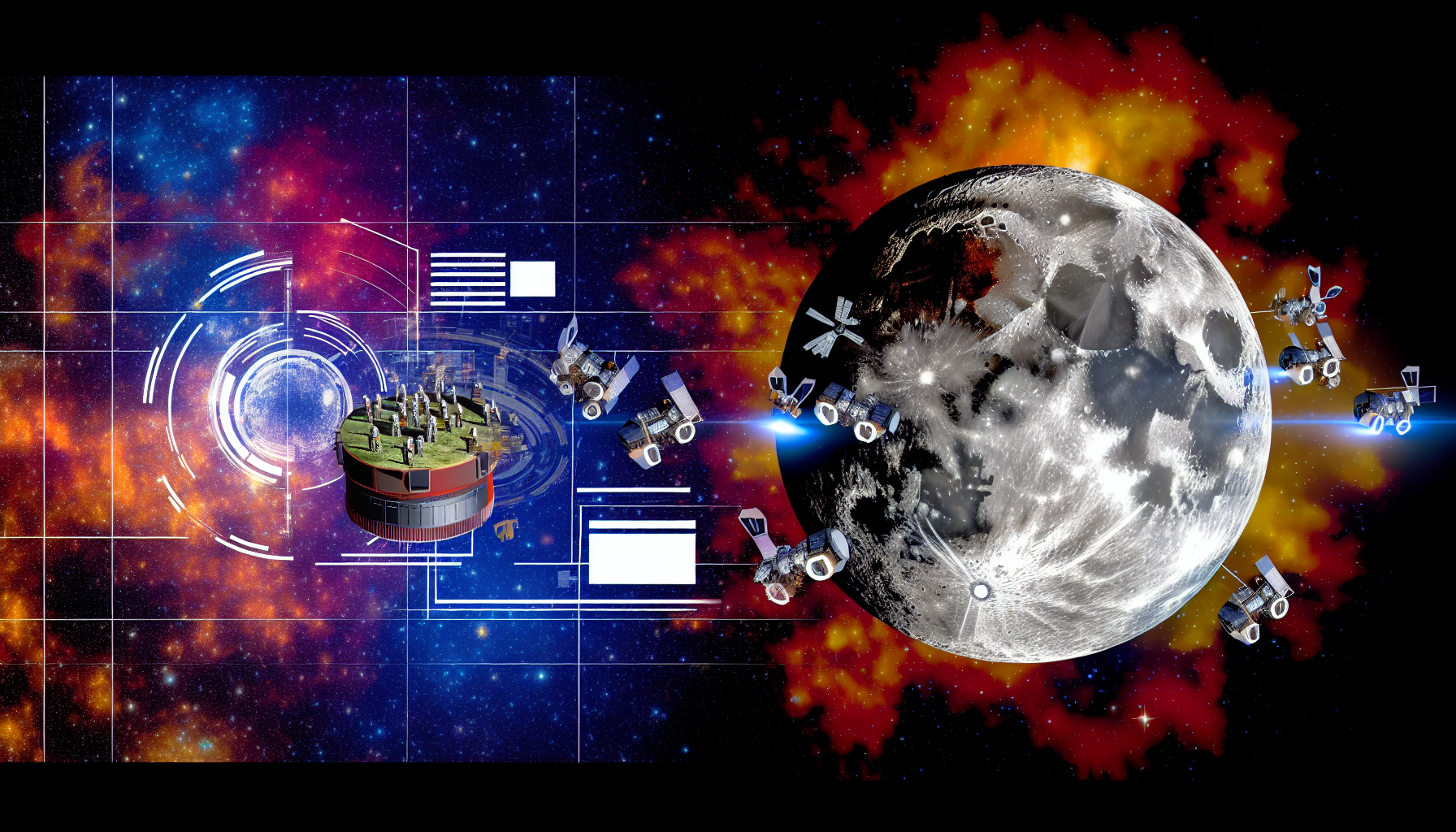

On March 13, 2026, NASA unveiled an extensive update on its new Moon strategy, highlighting the agency’s commitment to advancing deep space exploration endeavors. This announcement is part of a broader initiative aimed at not only returning humans to the lunar surface but also establishing a sustainable presence on the Moon, paving the way for future missions to Mars and beyond.
The Vision for Lunar Exploration
NASA’s latest lunar exploration program is anchored in the Artemis program, which aims to land the first woman and the next man on the Moon by the mid-2020s. This initiative is designed to foster international partnerships, mobilize commercial space capabilities, and inspire future generations of scientists and engineers.
Key Objectives of the Artemis Program
- Human Exploration: Establish a sustainable human presence on the Moon by the end of the decade.
- Scientific Research: Conduct extensive scientific research to understand the Moon’s resources and history.
- Technological Development: Develop technologies and systems that will be critical for future Mars missions.
- International Collaboration: Engage with international space agencies and commercial partners to foster a cooperative approach to lunar exploration.
Challenges of Space Environments
As NASA prepares for its ambitious lunar missions, the agency acknowledges the numerous challenges astronauts will face in the harsh space environments. The unique conditions of the Moon, such as extreme temperatures, radiation exposure, and microgravity, necessitate rigorous training and advanced technology.
Adapting to the Lunar Environment
To successfully navigate these challenges, NASA is focusing on several critical areas:
- Radiation Protection: Developing materials and habitats that provide adequate protection from cosmic radiation and solar particle events.
- Life Support Systems: Enhancing life support systems to ensure astronauts have a reliable supply of air, water, and food during extended missions.
- Mobility and Operations: Designing lunar rovers and tools that can function effectively in the Moon’s low-gravity environment.
Technological Innovations and Advancements
As part of its strategic plan, NASA is continually investing in new technologies that will facilitate a successful return to the Moon. These innovations span various domains, including propulsion systems, habitat construction, and resource utilization.
Key Technological Innovations
- Space Launch System (SLS): NASA’s powerful rocket designed to transport astronauts and cargo to the Moon and beyond.
- Orion Spacecraft: A crew vehicle capable of deep space travel, designed to support long-duration missions.
- Lunar Gateway: A planned space station that will orbit the Moon, serving as a staging point for lunar landings and a platform for scientific research.
- In-Situ Resource Utilization (ISRU): Technologies aimed at utilizing lunar resources, such as water ice, to support human exploration efforts.
International Partnerships and Collaboration
Recognizing that no single nation can tackle the challenges of space exploration alone, NASA has actively sought international collaboration. The agency’s partnerships with various space agencies and private companies are pivotal to the success of the Artemis program.
Notable Collaborations
- European Space Agency (ESA): Involved in the development of the Orion spacecraft’s service module.
- Canadian Space Agency (CSA): Contributing the Canadarm3, an advanced robotic system for the Lunar Gateway.
- Japan Aerospace Exploration Agency (JAXA): Collaborating on lunar lander technology and exploration strategies.
Future Missions Beyond the Moon
NASA’s lunar strategy is not an end in itself but a stepping stone toward more ambitious goals, particularly the exploration of Mars. The Artemis program’s findings will inform the agency’s approach to human missions to the Red Planet, expected in the 2030s.
Key Focus Areas for Mars Exploration
- Life Support and Sustainability: Developing systems that can sustain human life for extended periods on Mars.
- Surface Operations: Planning for mobility, habitation, and resource extraction on the Martian surface.
- Scientific Research: Investigating the possibility of past life on Mars and understanding its climate and geology.
Inspiring the Next Generation
NASA’s renewed commitment to lunar exploration is also about inspiring future generations. The agency recognizes the importance of education and outreach in promoting STEM (Science, Technology, Engineering, and Mathematics) fields.
Engagement Initiatives
NASA is implementing various initiatives aimed at reaching students and educators, including:
- Educational Programs: Developing tailored curricula and resources for schools.
- Public Outreach: Engaging the public through events, social media, and interactive platforms.
- Internships and Scholarships: Providing opportunities for students to participate in NASA missions and research projects.
Conclusion
Nasa’s new Moon strategy represents a bold step toward the future of space exploration. Through the Artemis program, the agency aims to return humans to the lunar surface, establish a sustainable presence, and lay the groundwork for Mars exploration. With a focus on technological innovation, international collaboration, and inspiring future generations, NASA is not only expanding our understanding of the cosmos but also redefining humanity’s place within it. As we stand on the brink of a new era of exploration, the excitement for what lies ahead is palpable, and the journey to the Moon and beyond is just beginning.






