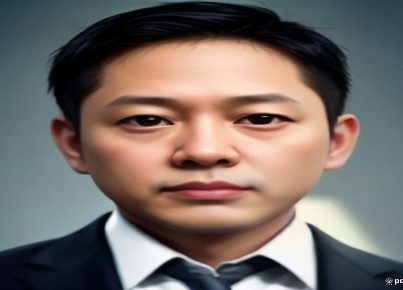

The tech world, already a whirlwind of innovation and disruption, was rocked recently by news that felt more like a Hollywood thriller than a corporate announcement. Jensen Huang, the charismatic and often leather-clad co-founder and CEO of Nvidia, the undisputed titan of artificial intelligence, has stepped down. This wasn’t a graceful retirement or a planned succession; his departure, effective immediately, came amidst a swirling scandal involving alleged affairs with a suspected Chinese spy and a company executive. It’s the kind of story that makes you pause and wonder: how does a leader who steered his company to unimaginable heights, pushing its market value past the $4 trillion mark, find himself in such a precarious position?
The Al Jazeera report painted a picture of intense pressure mounting on Huang. The scandal didn’t just rattle the executive suite; it sent ripples through the market, causing Nvidia’s market capitalization to dip below $4 trillion for the first time since July 2025. For a company that has become synonymous with the AI revolution, supplying the crucial chips that power everything from ChatGPT to autonomous vehicles, such instability at the top is more than just a boardroom drama. It raises fundamental questions about leadership, national security, and the future trajectory of global AI.
The Spy Scandal That Triggered the Nvidia CEO Resignation
Let’s get straight to the heart of the matter: the allegations that ultimately led to the Nvidia CEO resignation. The scandal wasn’t just about a breach of corporate ethics or personal conduct; it had a far more sinister undertone. Reports emerged detailing alleged affairs between Jensen Huang and two individuals, one of whom was identified as Alice Huang, a suspected Chinese intelligence asset. A second alleged affair with another company executive further complicated the picture, but it was the national security implications that truly sent shockwaves through Washington and beyond.
For a company like Nvidia, whose technology is deemed critical to national security – particularly with its advanced AI chips being at the forefront of a technological arms race between the US and China – any perceived ties, however indirect, to foreign intelligence are incredibly problematic. The US government has been increasingly vigilant about preventing advanced technology from falling into the hands of potential adversaries. Huang’s alleged relationship with Alice Huang, if proven to be with a genuine intelligence asset, would represent a catastrophic lapse in judgment and security protocols, potentially exposing sensitive company information or even broader strategic insights about US technological capabilities.
The intensity of this situation can’t be overstated. Imagine the boardroom discussions as Nvidia’s board grappled with these accusations. They weren’t just weighing personal conduct; they were weighing the potential for severe damage to the company’s reputation, its relationships with government agencies, and its continued ability to operate freely in key markets. The very foundation of trust that Nvidia had built as a critical enabler of American technological dominance was at stake. This wasn’t just about PR; it was about the very core of national economic and technological security.
Market Tremors and the $4 Trillion Threshold
The immediate aftermath of the scandal saw a tangible financial fallout. Nvidia’s market value, a staggering testament to its dominance in the AI sector, fell below $4 trillion. This wasn’t merely a statistical blip; it was a psychological blow and a clear signal of investor anxiety. For context, Nvidia had only crossed the $4 trillion mark relatively recently, in July 2025. To see it dip back down so quickly, directly linked to leadership instability and national security concerns, highlighted just how sensitive the market is to these kinds of events, especially when they involve such a pivotal company. (See: BBC report on Nvidia's market impact.)
Investors thrive on predictability and strong leadership. When the CEO of a company as central to the global economy as Nvidia is embroiled in scandal, it creates immense uncertainty. Will the company be able to maintain its innovation pace? Will its relationships with key suppliers and customers be impacted? Most critically, will government scrutiny lead to restrictions that could hamper its growth or even its existing operations? These are the questions that fuel market corrections, and in Nvidia’s case, they were potent enough to wipe billions off its valuation.
It’s a stark reminder that even the most innovative and successful companies are not immune to external pressures and internal controversies. The perceived risk, particularly concerning potential chip export violations that could arise from compromised leadership, was enough to spook even the most steadfast investors. The market’s reaction underscored the immense responsibility that comes with leading a company at the cutting edge of technology, where geopolitical considerations often intertwine with corporate strategy.
Colette Kress Steps Up as Interim CEO
In the immediate wake of the Nvidia CEO resignation, the company’s board moved swiftly to appoint an interim leader: Colette Kress, Nvidia’s Chief Financial Officer. Kress is a known quantity within Nvidia and in the broader tech industry. She’s been instrumental in managing Nvidia’s explosive growth, navigating its complex financial landscape, and communicating its story to investors. Her appointment offers a degree of continuity and stability during a turbulent period, which is precisely what the company and its shareholders desperately need.
Choosing an internal candidate, particularly the CFO, for an interim role makes a lot of sense. Kress possesses an intimate understanding of Nvidia’s operations, its financial health, and its strategic priorities. She won’t need a steep learning curve to get up to speed. Her immediate priorities will undoubtedly include reassuring investors, maintaining operational momentum, and ensuring that the company’s crucial development pipelines for next-generation AI chips remain on track. This is no small feat, considering the pressure and the high stakes involved.
However, an interim role, by its very nature, carries its own set of challenges. While Kress brings a steady hand, the company will still face questions about its long-term vision and leadership. The board has initiated a search for a permanent replacement, and that process itself will be under intense scrutiny. The person who ultimately fills Huang’s shoes will have enormous expectations to meet, not just in terms of innovation and financial performance, but also in restoring confidence and navigating the complex geopolitical landscape that Nvidia operates within.
The Broader Implications for AI and National Security
The Nvidia CEO resignation isn’t just a corporate drama; it has significant ramifications for the global artificial intelligence boom and national security. Nvidia isn’t just a chipmaker; it’s the foundational infrastructure for most of the world’s advanced AI. Without Nvidia’s GPUs, the rapid advancements we’ve seen in large language models, image generation, and scientific computing simply wouldn’t be possible. Any disruption to Nvidia’s ability to innovate or deliver its chips could have a cascading effect across the entire AI ecosystem. (See: New York Times coverage of CEO resignation.)
The national security concerns raised by Huang’s alleged ties to a suspected Chinese intelligence asset are particularly acute. The US government views AI as a critical domain for maintaining its technological superiority. The ability to design and manufacture cutting-edge AI chips is a strategic imperative. If a company at the heart of this effort is perceived to be compromised, it raises alarms about potential vulnerabilities, intellectual property theft, or even the subtle influencing of technological development that could benefit rival nations.
This incident will almost certainly lead to increased scrutiny on tech executives and their affiliations, especially those leading companies deemed critical infrastructure for national defense and economic competitiveness. It underscores the delicate balance between fostering global collaboration and protecting national interests. For the AI industry, it’s a sobering reminder that the geopolitical chessboard is always in play, and even seemingly personal matters can have profound strategic consequences.
What’s Next for Nvidia’s AI Dominance?
With Jensen Huang, the visionary leader, now gone, a major question looms: what does this mean for Nvidia’s unparalleled dominance in AI? Huang wasn’t just a CEO; he was the driving force, the public face, and the strategic architect behind Nvidia’s transformation from a graphics card company into the AI powerhouse it is today. His personal vision and relentless pursuit of innovation were central to the company’s success. Can Nvidia maintain its trajectory without him?
The immediate challenge for Nvidia will be to reassure investors and customers that its product roadmap remains robust. The company is known for its aggressive pace of innovation, consistently delivering next-generation chips that push the boundaries of what’s possible in AI. Any perceived slowdown or disruption in this cycle could give competitors an opening. Companies like AMD and Intel are constantly vying for a larger share of the AI chip market, and while they lag significantly behind Nvidia, a stumble from the leader could change the competitive landscape.
Beyond product, the new leadership will also need to address the lingering questions about corporate governance and security. Rebuilding trust, particularly with government stakeholders, will be paramount. This might involve implementing stricter internal protocols, conducting thorough security audits, and demonstrating an unwavering commitment to national security interests. The future of Nvidia, and arguably the pace of AI development itself, hinges on how effectively the company navigates this unprecedented challenge. (See: Research on AI leadership and ethics.)
The Search for a New Leader: A High-Stakes Decision
The board’s decision to launch a search for a permanent replacement for Jensen Huang is arguably the most critical task facing Nvidia right now. This isn’t just about finding another CEO; it’s about finding a leader who can not only fill enormous shoes but also chart a course through treacherous waters. The ideal candidate will need a blend of technical acumen, strategic vision, leadership experience, and an unblemished record.
The pool of potential candidates will likely include both internal high-performers and external tech luminaries. An internal candidate, perhaps someone from the executive team who has worked closely with Huang, might offer continuity and a deep understanding of Nvidia’s culture and technology. However, an external hire could bring fresh perspectives, new strategies, and a clean slate, particularly helpful in addressing the reputational damage from the recent scandal. The board will need to weigh these factors carefully, considering the diverse challenges ahead.
Whoever takes the helm will face immense pressure. They will inherit a company that is at the peak of its power but also at a critical juncture. They’ll need to inspire confidence in employees, customers, and investors, maintain the blistering pace of innovation, navigate complex geopolitical landscapes, and ensure that Nvidia remains at the absolute forefront of the AI revolution. It’s a job that demands not just brilliance, but also an unimpeachable character and an unwavering commitment to the company’s long-term success and integrity. The stakes couldn’t be higher for Nvidia, and indeed, for the future of AI itself.
Trending Now
Frequently Asked Questions
Why did Nvidia CEO Jensen Huang resign?
Jensen Huang resigned amid a scandal involving alleged affairs with a suspected Chinese spy and a company executive. His immediate departure raised concerns about corporate ethics and national security, significantly impacting Nvidia's market capitalization.
What were the allegations against Jensen Huang?
The allegations included affairs with two individuals, one identified as Alice Huang, suspected of being a Chinese intelligence asset. These claims not only questioned Huang's personal conduct but also posed national security risks.
How did Huang's resignation affect Nvidia's stock?
Following Huang's resignation, Nvidia's market capitalization dipped below $4 trillion for the first time since July 2025. This instability raised concerns among investors about the company's future amid ongoing leadership turmoil.
What impact does the Nvidia CEO resignation have on the AI industry?
Huang's resignation raises fundamental questions about leadership in the AI sector, particularly for a company as pivotal as Nvidia, which supplies essential chips for AI technologies like ChatGPT and autonomous vehicles.
What can we learn from Jensen Huang's departure?
Huang's departure highlights the intersection of corporate leadership and national security, illustrating how personal conduct can have far-reaching implications for a company's reputation and market stability, especially in high-stakes industries like AI.
What did we miss? Let us know in the comments and join the conversation.