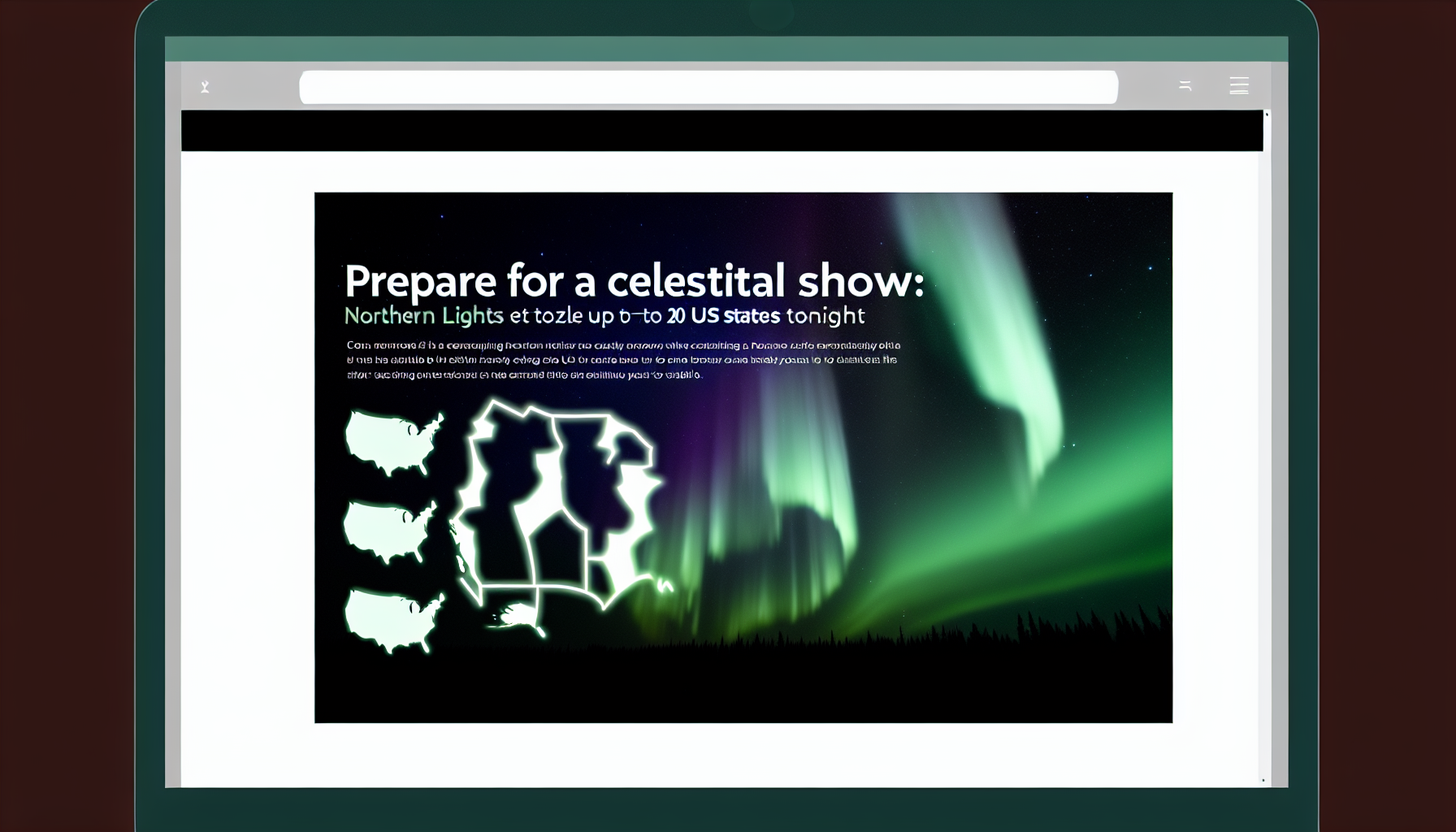

The night sky is preparing to deliver one of nature’s most mesmerizing spectacles as a G2 (Moderate) geomagnetic storm is forecasted to illuminate the heavens across various regions of the United States and southern Canada. This stunning auroral display is anticipated to occur on the night of April 17–18, 2026, thanks to a high-speed solar wind stream originating from a coronal hole in the sun’s outer atmosphere.
The Science Behind the Storm
Geomagnetic storms are classified by their strength, with G1 being minor and G5 being extreme. The NOAA Space Weather Prediction Center’s issuance of a G2 storm watch indicates a level of intensity that could allow the Northern Lights, or auroras, to be visible much further south than usual. This particular storm is attributed to a high-speed solar wind stream traveling at speeds of 600–700 km/s.
The solar wind is a continuous flow of charged particles released from the sun’s outer layer. When these particles collide with the Earth’s magnetic field, they can cause disturbances, leading to spectacular light displays known as auroras. In this case, the solar wind is expected to be accompanied by a co-rotating interaction region (CIR), which further enhances the likelihood of geomagnetic activity.
The Perfect Conditions for Viewing
Adding to the excitement of this celestial event is the timing of the new moon on April 17. This lunar phase will result in minimal moonlight interference, creating a dark sky that is ideal for viewing the auroras. When combined with the geomagnetic storm, skywatchers will have an exceptional opportunity to witness the Northern Lights in all their glory.
The absence of lunar light pollution means that even in areas where light pollution is typically a concern, the chances of spotting the auroras will be significantly increased. This provides a unique chance for both amateur astronomers and casual observers to enjoy one of nature’s most beautiful phenomena.
Where to Expect the Northern Lights
As the storm progresses, the Northern Lights are expected to be visible across up to 20 northern U.S. states and southern Canada. While the exact visibility will depend on local weather conditions and light pollution, the following states are predicted to have the best chances of catching a glimpse of the auroras:
- Maine
- New Hampshire
- Vermont
- New York
- Pennsylvania
- Michigan
- Wisconsin
- North Dakota
- South Dakota
- Montana
- Idaho
- Washington
- Oregon
- Wyoming
- Colorado
- Utah
- Illinois
- Indiana
- Ohio
- California
Those living in southern regions of these states, and even in some areas further south, may still have a chance to catch the auroras if they are particularly vibrant. It is advisable to find a location with minimal light pollution, such as rural areas or parks, and to be prepared for the cold, as April nights can still be chilly.
How to Prepare for the Aurora Viewing
To maximize your chances of experiencing the Northern Lights, consider the following tips:
- Check the Weather: Clear skies are essential for viewing the auroras. Monitor local weather forecasts leading up to the event and choose a location that is likely to be free of clouds.
- Find a Dark Location: Avoid areas with significant light pollution. Parks, rural areas, or elevated locations away from city lights will provide the best viewing conditions.
- Dress Warmly: April nights can be cold, especially in northern states. Layer your clothing, wear a warm hat, gloves, and sturdy boots to stay comfortable while you wait for the show to begin.
- Bring a Camera: If you want to capture the beauty of the auroras, make sure to bring a camera with manual settings. A tripod is also recommended to stabilize long exposure shots.
- Be Patient: Auroras can be unpredictable. Be prepared to wait for the lights to appear, and enjoy the experience of being outdoors under a starlit sky.
Understanding Auroras
Auroras are the result of charged particles from the sun colliding with gases in Earth’s atmosphere. When these particles interact with oxygen and nitrogen in the atmosphere, they create stunning displays of light. The colors of the auroras vary depending on the type of gas that is involved and the altitude at which the collisions occur:
- Green: The most common color, produced by oxygen at lower altitudes (up to 240 km).
- Red: A rarer color, also produced by oxygen, but at higher altitudes (above 240 km).
- Purple and Blue: These colors are produced by nitrogen, with purple occurring at lower altitudes and blue at higher altitudes.
The shapes of the auroras can also vary; they can appear as arcs, patches, or spirals, and they often shift and dance across the sky, creating a dynamic and ever-changing spectacle.
Historical Significance of Auroras
Auroras have captivated humanity for centuries, inspiring myths and legends across cultures. In many indigenous cultures, these lights were viewed as omens or messages from the gods. For example, the Inuit believed that the auroras were the spirits of their ancestors playing games in the sky, while some Native American tribes viewed them as a sign of impending battles or significant events.
In modern times, auroras have become a subject of scientific study, revealing insights into solar activity and the Earth’s magnetic field. The study of geomagnetic storms and auroras is not only fascinating but also critical for understanding space weather’s impact on technology and communications.
Impacts of Solar Activity
Geomagnetic storms can have various effects on Earth, ranging from beautiful auroras to potential disruptions in technology. Some of the impacts include:
- Disruption of Satellite Operations: Increased solar activity can interfere with satellite communication and navigation systems, leading to potential outages.
- Power Grid Failures: In severe cases, geomagnetic storms can induce currents in power lines, potentially damaging transformers and causing widespread power outages.
- Aviation Risks: Airlines flying over polar regions may need to reroute flights during intense solar storms to avoid increased radiation exposure.
- Radio Communication Disruptions: Geomagnetic storms can affect high-frequency radio communications, impacting maritime and aviation operations.
As we prepare for this G2 geomagnetic storm and the potential for stunning auroras, it is essential to be aware of these impacts and understand the science behind them. The connection between solar activity and Earth’s atmosphere is a reminder of the dynamic and interconnected nature of our universe.
Looking Ahead
As the sun continues its cycle of activity, opportunities to witness auroras will arise more frequently, especially during periods of heightened solar activity. The upcoming years will likely bring additional chances to observe these awe-inspiring lights as solar cycles progress.
For those interested in astronomy and space weather, staying informed through resources such as the NOAA Space Weather Prediction Center and local astronomy clubs can enhance your understanding and appreciation of these celestial displays. As we anticipate the Northern Lights lighting up the sky tonight, let us embrace the wonder of this natural phenomenon and the science that explains it.
Conclusion
The forecast of Northern Lights visibility across up to 20 U.S. states and southern Canada is an exciting event for skywatchers and nature enthusiasts alike. With optimal conditions expected due to the new moon and the G2 geomagnetic storm, this evening presents a unique opportunity to witness one of nature’s most breathtaking spectacles. Prepare your viewing locations, gather your friends and family, and get ready for an unforgettable night under the stars!