
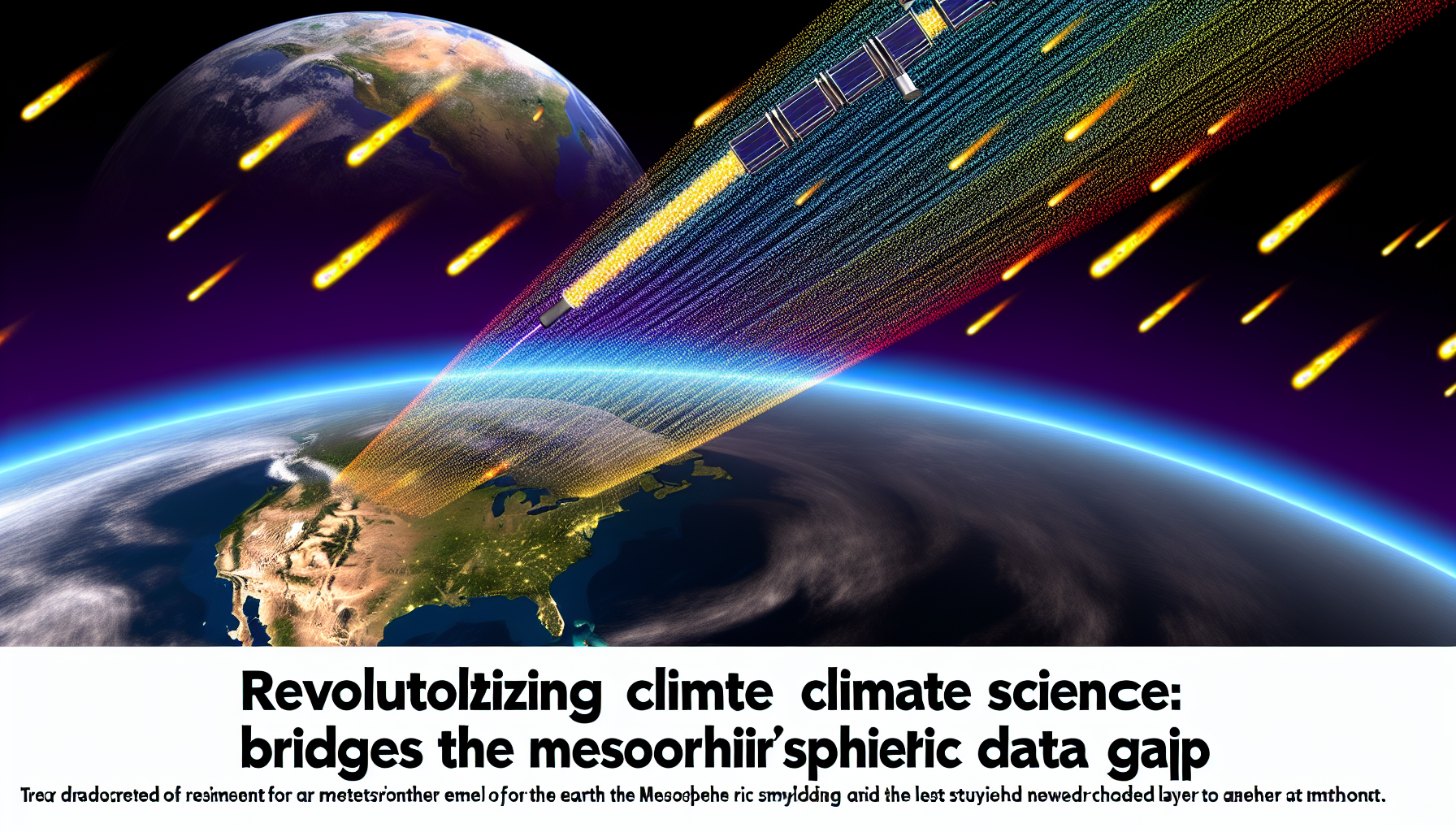

The exploration of Earth’s atmosphere remains a frontier of scientific inquiry, particularly in the layers known as the stratosphere and mesosphere. These regions, located approximately 50 to 100 kilometers above the Earth’s surface, are crucial for understanding climate dynamics, but until recently, they have suffered from a significant data deficiency. The METEOR project, a groundbreaking initiative led by a team of dedicated scientists, has made remarkable strides in addressing this issue by creating the first comprehensive merged climate data records of mesospheric ozone and temperature spanning over 30 years.
Understanding the Importance of the Mesosphere
The mesosphere, which lies above the stratosphere and below the thermosphere, plays a key role in the Earth’s atmospheric processes. It is during this layer that ozone depletion occurs and where temperature fluctuations can influence weather patterns and climate variability. However, the mesosphere has historically been less studied compared to other atmospheric layers, leading to a data gap that hindered our understanding of its dynamics.
The METEOR Project: A Pioneering Effort
Launched to fill this critical gap, the METEOR project has successfully compiled and analyzed satellite observations to produce the METEOR-O₃ and METEOR-T datasets. These datasets provide detailed records of ozone concentrations and temperature variations in the mesosphere, offering scientists an invaluable resource for climate research.
According to the project’s findings, the datasets include information from various satellite missions and cover an extensive time frame from 1991 to 2023. By merging these records, researchers have been able to create a continuous and cohesive view of atmospheric conditions in the mesosphere, allowing for more accurate trend analyses.
Key Findings from Trend Analyses
The analysis of the METEOR datasets has yielded significant insights into the trends of ozone and temperature in the mesosphere:
- Ozone Recovery in the Upper Stratosphere: The analysis indicates a recovery of ozone levels at a rate of 1-2% per decade in the upper stratosphere since the turn of the century. This recovery is largely attributed to the global commitment to the Montreal Protocol, which successfully phased out ozone-depleting substances.
- Persistent Ozone Declines in the Mesosphere: Contrasting with the recovery observed in the upper stratosphere, the mesosphere continues to experience alarming declines in ozone levels, estimated at 1-3% per decade at altitudes of 60-80 km and a staggering 8-12% per decade at 80-90 km.
- Temperature Trends: The data also reveals negative temperature trends within the mesosphere, with decreases ranging from -0.5 to -2 K per decade. This trend raises concerns about the long-term impacts on atmospheric dynamics and climate stability.
Implications for Future Climate Monitoring
The METEOR datasets are not just a collection of historical data; they serve as a foundational tool for ongoing climate monitoring and model validation. By making these datasets openly available, the METEOR project aims to foster collaboration among researchers, policymakers, and educators, facilitating a deeper understanding of atmospheric processes.
Furthermore, the datasets account for various influencing factors such as the Quasi-Biennial Oscillation (QBO), El Niño Southern Oscillation (ENSO), and solar variability. This comprehensive approach allows researchers to contextualize their findings within a broader framework, enhancing the reliability of climate models and predictions.
The Role of International Collaboration
The success of the METEOR project underscores the importance of international collaboration in scientific research. With contributions from scientists across the globe, the project exemplifies how pooling resources, expertise, and data can lead to groundbreaking advancements in our understanding of complex systems like the atmosphere.
As climate change continues to be a pressing global challenge, initiatives like METEOR are vital for equipping scientists with the information they need to develop effective mitigation strategies. By closing the mesospheric data gap, the project not only enhances our current understanding but also paves the way for future research endeavors.
Conclusion
The METEOR project represents a significant leap forward in atmospheric science, providing the first comprehensive climate data records for the mesospheric region. With its findings highlighting both ozone recovery in the upper stratosphere and concerning declines in the mesosphere, the project serves as a wake-up call about the fragility of our atmosphere.
As we move forward, it is crucial for the scientific community to leverage these datasets for predictive modeling and to inform policy decisions aimed at protecting our planet. The open availability of the METEOR-O₃ and METEOR-T datasets marks a new era of transparency in climate science, empowering researchers to explore the intricate relationship between ozone, temperature, and climate change.






