

“`html
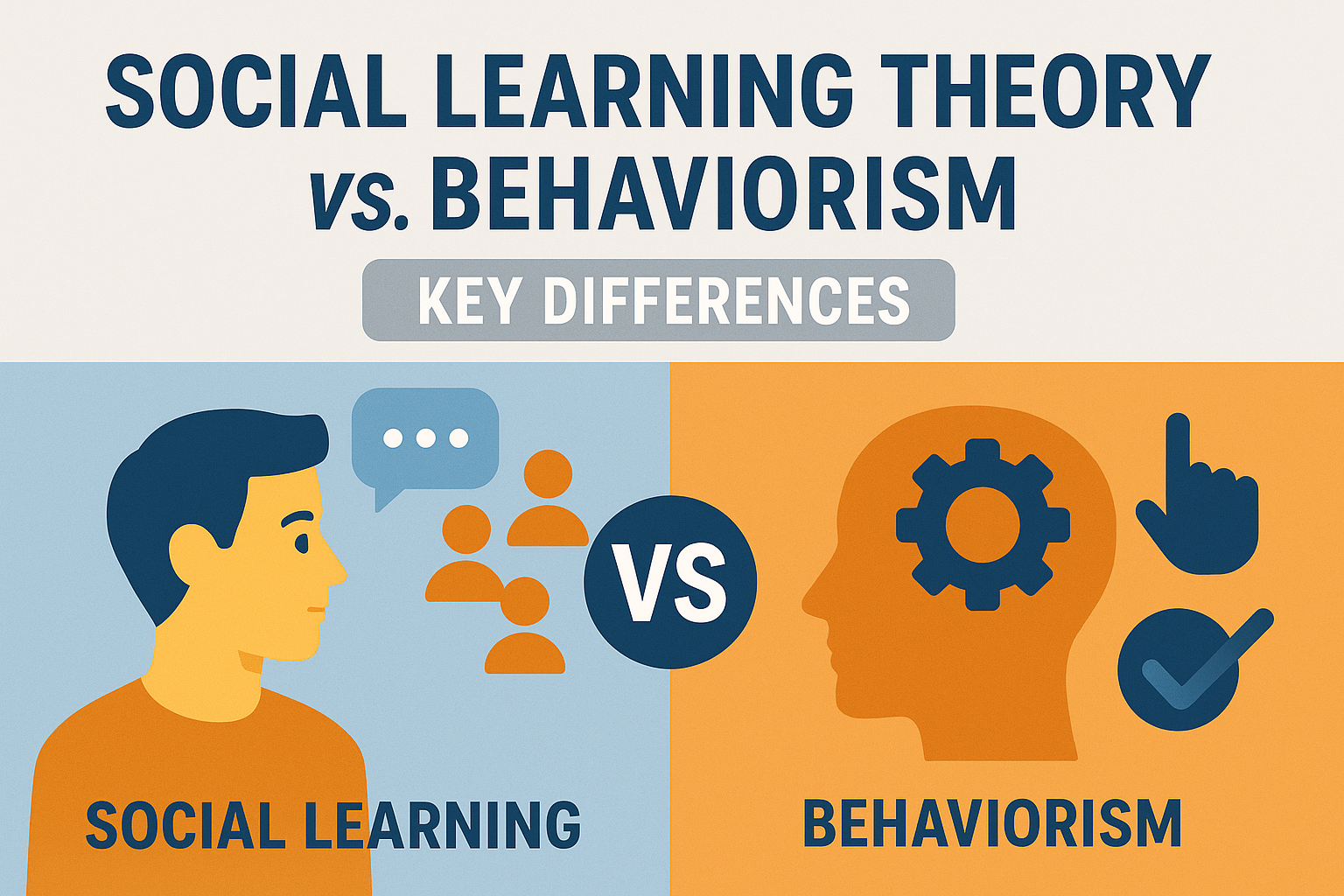
Social learning theory vs behaviorism is a debate that has shaped educational practices and psychological understanding for decades. Each approach offers unique insights into how humans learn and behave. This article will delve into the key differences between these two theories, exploring their origins, core principles, applications, and relevance in today’s world.
1. Foundations of Behaviorism
Behaviorism emerged in the early 20th century, with notable figures like John B. Watson and B.F. Skinner leading the charge. The theory posits that all behaviors are learned through interaction with the environment. Behaviorists believe that psychology should focus on observable behaviors rather than internal thoughts or feelings. This perspective gave rise to the famous phrase, “The mind is a black box; we can only study what we can see.” (exploring positive behavior strategies)
Central to behaviorism is the concept of conditioning. There are two primary types: classical conditioning, exemplified by Pavlov’s dogs, and operant conditioning, which Skinner advanced. In classical conditioning, a neutral stimulus becomes associated with a meaningful stimulus, leading to a conditioned response. In contrast, operant conditioning involves reinforcement and punishment to shape behavior. For example, rewarding a child for good behavior increases the likelihood of that behavior being repeated.
2. Roots of Social Learning Theory
Social learning theory, developed by Albert Bandura in the 1960s, builds upon the foundations laid by behaviorism but introduces a significant twist: observation. Bandura posited that people can learn new behaviors by watching others, a process he termed modeling. This theory emphasizes the importance of social context and the influence of role models.
One of Bandura’s most famous experiments, the Bobo doll study, illustrated this concept. Children who observed adults behaving aggressively towards a Bobo doll were more likely to imitate that behavior. This finding challenged the behaviorist notion that all learning is a result of direct reinforcement and demonstrated the role of vicarious reinforcement — learning through the experiences of others.
3. Core Principles of Behaviorism
At the heart of behaviorism are several core principles that guide its application. These principles are derived from a deterministic view of behavior, where external stimuli dictate responses. This can be summarized in a few key points:
- Observable Behavior: Only observable actions can be scientifically studied.
- Conditioning: Learning occurs through conditioning, either classical or operant.
- Reinforcement and Punishment: Behaviors can be encouraged or discouraged through reinforcement and punishment.
Behaviorism has been successfully applied in various fields, including education and therapy. Techniques such as token economies and behavior modification programs are grounded in behavioral principles. For instance, educators often implement classroom management strategies that utilize reinforcement to encourage positive behavior.
4. Core Principles of Social Learning Theory
Social learning theory stands in contrast to behaviorism with its unique focus on the social aspects of learning. Here are the main principles that define social learning:
- Modeling: Learning occurs through observing others, especially role models.
- Attention, Retention, Reproduction, and Motivation: For learning to take place, an observer must pay attention to the model, retain the information, reproduce the behavior, and be motivated to do so.
- Vicarious Reinforcement: Individuals can learn from the consequences of others’ behaviors rather than direct experience.
This theory has profound applications in media, education, and behavior change strategies. For instance, educators can leverage social learning by using peer modeling to encourage collaborative skills among students. Furthermore, social learning theory has found its place in understanding behaviors in the digital age, especially with social media influencing various aspects of daily life. (See: Wikipedia article on Behaviorism.)
5. Key Differences: Learning Process
The fundamental difference between social learning theory vs behaviorism lies in how each theory views the learning process. Behaviorism posits that learning is a direct result of interaction with the environment and reinforcement, while social learning theory emphasizes that observation plays a critical role.
In behaviorism, the learner is often seen as a passive recipient of stimuli, with little agency. In contrast, social learning theory recognizes that individuals actively engage with their environment and can influence their own learning by choosing whom to observe. This active engagement means that learners can adapt behaviors based on the observed outcomes, which is not a focus of behaviorism.
6. Applications in Education
Both behaviorism and social learning theory have been widely applied in educational contexts, but their approaches differ significantly. Behaviorist strategies often focus on structured environments with clear expectations and consequences. Techniques such as drills, practice tests, and immediate feedback are common, emphasizing mastery through repetition.
On the other hand, social learning theory encourages collaborative learning and the use of role models. Group projects, discussions, and peer-to-peer teaching are effective methods grounded in this theory. For example, when students work together and observe each other’s problem-solving strategies, they can learn new approaches and enhance their understanding.
7. Current Relevance and Critiques
In today’s rapidly changing world, both theories continue to hold relevance. However, critiques have emerged against each. Behaviorism has been criticized for its reductionist approach, ignoring the complexities of human thought and emotion. Critics argue that it fails to account for intrinsic motivation and that a sole focus on external rewards can lead to superficial learning.
Social learning theory, while more holistic, isn’t without flaws. Some critics point out that it may overemphasize the influence of role models, potentially leading to the adoption of negative behaviors if the observed models are not positive. Additionally, with the rise of digital media, understanding the impact of virtual role models has become increasingly complex. Despite these criticisms, both theories provide valuable insights into the mechanisms of learning and behavior.
8. Integrating Approaches for Effective Learning
Given the strengths and weaknesses of both theories, an integrated approach may offer the most effective framework for understanding learning. Educators and psychologists can combine behaviorist techniques with elements of social learning theory to create a comprehensive learning environment.
For instance, a classroom could implement a behaviorist strategy by establishing clear rules and consequences while simultaneously encouraging group work and peer modeling. By doing this, educators can foster an atmosphere where students understand the importance of following guidelines while also learning from each other. This balanced approach acknowledges that learning is multifaceted, influenced by external reinforcement and social interaction.
9. Real-World Applications of Social Learning Theory vs Behaviorism
In real-world settings, the applications of both theories can be found in various fields. In therapeutic practices, behaviorism has shaped approaches like cognitive-behavioral therapy (CBT), where changing behavior patterns is paramount. CBT often incorporates behaviorist techniques such as exposure therapy, where clients gradually face their fears in a controlled setting. (See: CDC on Social Emotional Learning.)
On the other hand, social learning theory finds its application in community health campaigns. For instance, anti-smoking campaigns often use social modeling to showcase positive behaviors, such as young people opting not to smoke. When individuals see peers successfully resisting peer pressure, they may be more inclined to do the same.
10. Statistics on Learning Behaviors
Understanding the prevalence of behaviorist and social learning principles in real-life situations sheds light on their effectiveness. Research shows that approximately 70% of learning in organizations occurs through informal means, which aligns closely with social learning theory. This statistic underscores the importance of observation and interaction in the learning process, suggesting that structured learning alone often falls short.
Additionally, studies indicate that reinforcement strategies can improve retention rates by as much as 50%. This statistic highlights the effectiveness of behaviorism in educational settings, where immediate feedback and rewards can significantly enhance learning outcomes.
11. Expert Perspectives
Several experts have weighed in on the debate between social learning theory and behaviorism. Notably, Albert Bandura himself emphasized that understanding human behavior requires more than just external stimuli. He stated, “People are not just products of their environments; they create their environments through behavior.” This perspective highlights the dynamic interplay between individual actions and social contexts, which is often overlooked in traditional behaviorist approaches.
Psychologist Daniel Willingham asserts that “memory is the residue of thought.” This statement aligns with social learning theory, suggesting that how we process and think about observations significantly affects what we learn. There’s a fuller look at application in classroom settings.
12. FAQs about Social Learning Theory vs Behaviorism
What is the main focus of behaviorism?
Behaviorism primarily focuses on observable behaviors and the ways they are influenced by external stimuli, emphasizing that learning occurs through conditioning.
How does social learning theory differ from behaviorism?
While behaviorism emphasizes direct reinforcement and observable actions, social learning theory highlights the role of observation and social context in learning new behaviors.
Can both theories be applied in education simultaneously?
Yes, educators can integrate both theories by combining behaviorist techniques, such as reinforcement, with social learning strategies, such as group work and peer modeling.
What are some real-world examples of social learning theory in action?
Examples include community health campaigns that use role models to promote positive behaviors and educational environments where peer teaching enhances learning outcomes.
Are there any criticisms of social learning theory?
Critics argue that social learning theory may overemphasize the influence of role models, which can lead to negative behaviors if the observed models are not positive.
How can social learning theory be applied in the digital age?
In the digital age, social learning can be applied through online platforms where users share knowledge and experiences, such as forums, webinars, and social media. Content creators on platforms like YouTube often serve as role models, influencing viewers’ behaviors.
Is there a way to measure the effectiveness of each approach?
Yes, effectiveness can be measured through various assessments, including pre- and post-tests, observational studies, and surveys that gauge behavioral changes in response to specific teaching methods rooted in either theory.
What role do emotions play in learning according to these theories?
Behaviorism tends to downplay emotions, focusing instead on observable actions. Social learning theory, however, acknowledges that emotions can influence motivation and the likelihood of imitating modeled behaviors. Understanding this interplay can enhance teaching strategies.
Conclusion
The debate surrounding social learning theory vs behaviorism highlights the complexity of human learning. By examining both theories, we gain a deeper appreciation for the diverse factors that influence how we acquire knowledge and behaviors. As we move forward in an increasingly interconnected world, understanding the interplay between these theories becomes crucial for educators, psychologists, and learners alike.
“`
Trending Now
Frequently Asked Questions
What is the main difference between social learning theory and behaviorism?
The main difference lies in the approach to learning. Behaviorism focuses on observable behaviors and conditioning through reinforcement and punishment, while social learning theory emphasizes learning through observation and modeling, suggesting that people can acquire new behaviors by watching others.
Who are the key figures in behaviorism?
Key figures in behaviorism include John B. Watson, who established the theory, and B.F. Skinner, who further developed it through concepts like operant conditioning. Their work emphasized that behaviors are learned through environmental interactions rather than internal mental states.
What are the types of conditioning in behaviorism?
Behaviorism identifies two primary types of conditioning: classical conditioning, where a neutral stimulus becomes associated with a meaningful stimulus (as seen in Pavlov's dogs), and operant conditioning, which uses reinforcement or punishment to shape behavior.
How does social learning theory explain learning?
Social learning theory, developed by Albert Bandura, explains learning as a process that occurs through observation and imitation of others, known as modeling. It highlights the role of social context and the influence of role models in acquiring new behaviors.
What is the significance of Bandura's Bobo doll study?
Bandura's Bobo doll study is significant as it demonstrated that children could learn aggressive behaviors through observation. This experiment provided empirical support for social learning theory, showing that behaviors can be acquired by watching others, rather than solely through direct reinforcement.
Have you experienced this yourself? We’d love to hear your story in the comments.



