
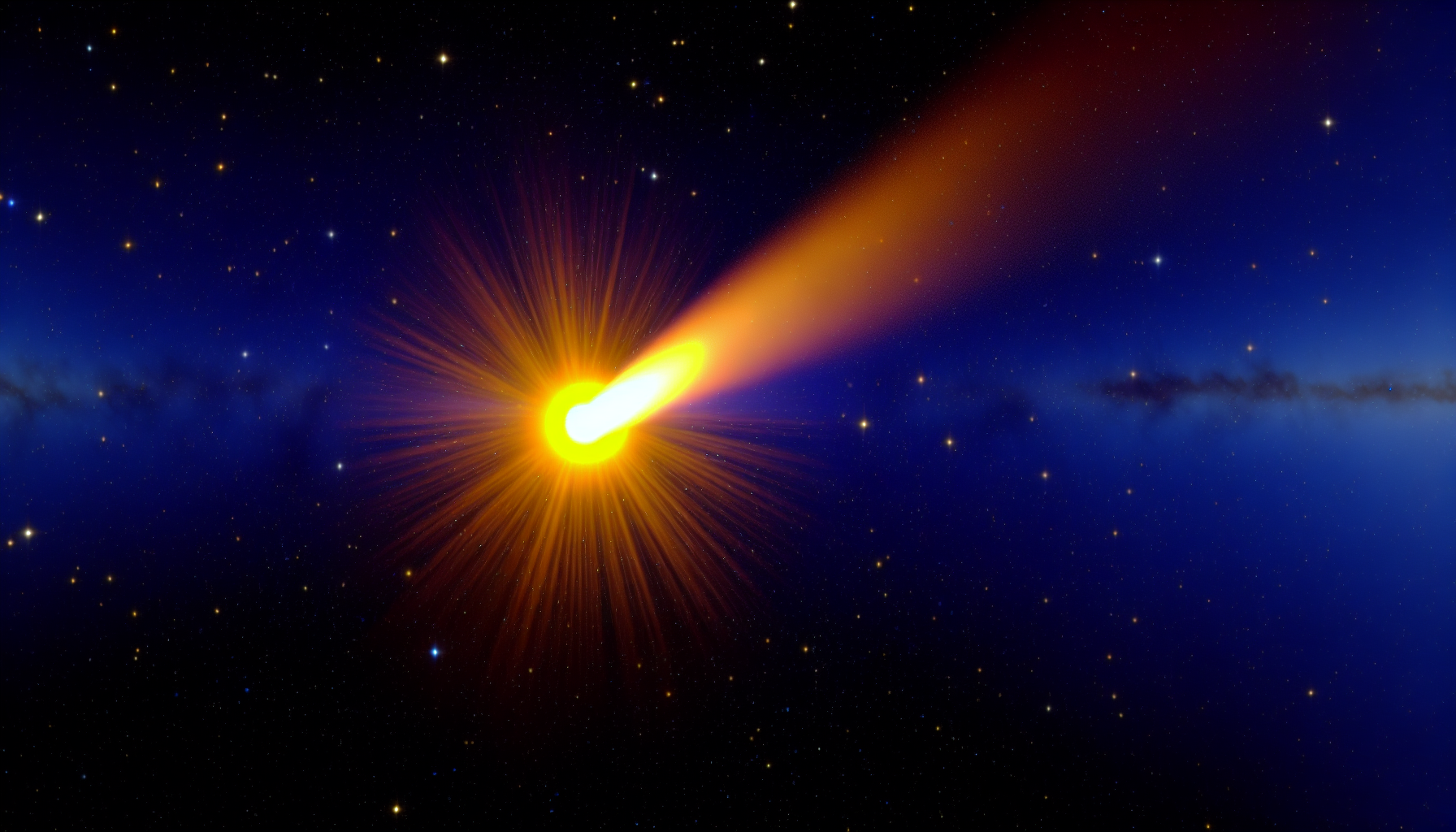

The cosmos is once again treating skywatchers to a spectacular sight as Comet C/2026 A1 (MAPS) brightens on its journey towards the Sun. As of mid-March 2026, this sungrazing comet has reached a magnitude of 10, making it potentially observable with small telescopes. As we approach the new moon phase on March 18-19, enthusiasts in lower latitudes will have a prime opportunity to catch a glimpse of this dazzling celestial traveler.
The Path of C/2026 A1 (MAPS)
Comet C/2026 A1 (MAPS) is a notable sungrazing comet that is set to make its closest approach to the Sun, a point known as perihelion, on April 4, 2026. At this moment, the comet will be a mere 99,400 miles (160,000 km) from the Sun’s surface, placing it in a precarious position where disintegration is a real possibility due to the intense solar radiation and gravitational forces.
Visibility and Brightness
Skywatchers can expect a potentially breathtaking display from C/2026 A1, with predictions suggesting that it may reach peak brightness between -5 to -15 magnitude. For context, objects around magnitude -5 can be as bright as Venus, while those reaching -15 are comparable to the brightest stars. This significant increase in brightness could make C/2026 A1 one of the most visible comets in recent years, especially just after it passes perihelion.
- Current brightness: Magnitude 10 (mid-March 2026)
- Perihelion date: April 4, 2026
- Closest approach to the Sun: 99,400 miles (160,000 km)
- Predicted peak brightness: -5 to -15 magnitude
- Closest approach to Earth: April 5-6, 2026, at 89 million miles (143 million km)
Viewing Conditions
For those hoping to see C/2026 A1, timing and location will be crucial. The comet will be positioned low in the western sky for observers in lower latitudes during the new moon phase, which is ideal for comet observation as the absence of moonlight provides darker skies. Using small telescopes, enthusiasts should be able to spot the comet, especially as it continues to brighten closer to its perihelion.
Images captured by astronomers Gerald Rhemann and Michael Jager have showcased the comet’s stunning greenish hue, a characteristic typical of comets due to the presence of diatomic carbon and other molecules in the comet’s coma. This greenish tint adds to the allure of C/2026 A1, making it an exciting target for both amateur and professional astronomers alike.
Future Prospects
As the comet approaches Earth, it will reach its closest point on April 5-6, 2026, at a distance of approximately 89 million miles (143 million km). While this distance is relatively far in astronomical terms, the proximity of C/2026 A1 to the Sun and Earth during this period will create a unique observational opportunity. The potential for a bright display raises questions about how visible it will become as it nears its perihelion.
The Science Behind Comets
Comets are fascinating celestial bodies composed of ice, dust, and rocky material. They originate from the outer regions of the solar system, primarily from the Kuiper Belt and the Oort Cloud. As they approach the Sun, the heat causes the ices to vaporize, releasing gas and dust and forming a glowing coma and often a tail that points away from the Sun.
Comet C/2026 A1 belongs to a category known as sungrazers, which pass extremely close to the Sun. This category is particularly interesting to astronomers because these comets can exhibit dramatic changes in brightness and structure as they undergo intense heating. The risk of disintegration adds an element of unpredictability, making observations of sungrazers particularly exciting.
How to Observe Comet C/2026 A1 (MAPS)
For those wishing to observe C/2026 A1, here are some tips to enhance your viewing experience:
- Use a telescope: While some bright comets can be seen with the naked eye, a small telescope will significantly improve your chances of spotting C/2026 A1, especially as it brightens.
- Find a dark location: Light pollution can hinder visibility, so seek out a place away from city lights for the best chance of seeing the comet.
- Check local astronomy clubs: Many local astronomy clubs often organize events and provide telescopes for public viewing, which can enhance your experience.
- Monitor updates: Keep track of the comet’s brightness and visibility through reputable astronomy websites and social media channels.
The Excitement of Cometary Discoveries
The approach of Comet C/2026 A1 (MAPS) is a reminder of the dynamic nature of our solar system. With each new comet, astronomers gain further insights into the formation and evolution of these fascinating celestial bodies. Whether you are an experienced observer or a novice enthusiast, the chance to witness a bright comet is always an exhilarating event.
As we eagerly await the arrival of C/2026 A1, the celestial community is buzzing with anticipation. Will this comet dazzle us with its brilliance? Only time will tell, but one thing is for certain: the skies are alive with possibility, and C/2026 A1 is poised to be a highlight of 2026.






