
Introduction:
Close reading is a crucial skill that students need to develop in order to effectively understand and analyze complex texts. Various teaching techniques have been employed by educators to nurture this ability in students, and a recent survey has shed valuable light on teachers’ experiences with close reading in the classroom. This article delves into the key findings of the survey, providing insights into the challenges and successes experienced by educators as they guide their students through the practice of close reading.
Survey Respondents:
The survey collected responses from 300 teachers across diverse grade levels, ranging from elementary school to high school. Participants shared their thoughts on close reading, its effectiveness as a teaching tool, and any struggles they may have encountered in implementing close reading strategies.
Emphasis on Literary Elements:
The survey revealed that a majority of teachers prioritize discussions around literary elements such as theme, symbol, plot, and character when engaging students in close reading. This focus allows students to make critical connections within the text while simultaneously honing their skills of observation, analysis, and interpretation.
Effective Strategies for Close Reading:
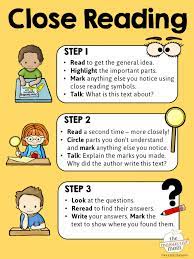
A significant portion of respondents reported that model-guided instruction has proven particularly effective within their classrooms. Here, teachers work closely with students by walking them through an excerpt step-by-step and demonstrating how to identify important details, understand context clues, and make educated inferences. Also popular among the surveyed teachers was the use of annotation – encouraging students to engage directly with texts by taking notes and highlighting key information.
Challenges Faced by Teachers:
One prominent challenge faced by educators relates to differentiating instruction according to their students’ varying skill levels. To counter this issue, a number of respondents mentioned using leveled texts for differentiation purposes or implementing peer tutoring systems for collaborative learning. The survey also highlighted time constraints as a common obstacle: dedicating adequate class time to engage in comprehensive close readings may take away from other instructional topics.
Teachers’ Recommendations for Improving Close Reading Instruction:
As a result of the survey, teachers noted several recommendations for effectively teaching close reading. Expanding the variety of texts, including both fiction and nonfiction selections, can provide students with broader perspectives and additional frameworks for analysis. Integrating frequent opportunities for student-led discussion fosters peer-learning, which can enhance students’ understanding of diverse viewpoints. Respondents also suggested providing teachers with supplemental resources, professional development opportunities and collaborative planning time to foster a more successful implementation of close reading.
Conclusion:
The survey’s findings underscore the significance of close reading as a skill that must be cultivated in the classroom. By understanding teachers‘ experiences and concerns while simultaneously implementing their suggested strategies, we can work together to ensure each student becomes a proficient and passionate close reader, capable of making sense of even the most complex literary texts.