
retention and social promotion series

Pass or Fail: Retention and its Roots in Early American Public Education

In this multi-part series, I provide a dissection of the phenomenon of retention and social promotion. Also, I describe the many different methods that would improve student instruction in classrooms and eliminate the need for retention and social promotion if combined effectively.

While reading this series, periodically ask yourself this question: Why are educators, parents and the American public complicit in a practice that does demonstrable harm to children and the competitive future of the country?

Today’s practice of retaining students is a far cry from what took place in America’s earliest public school classrooms. 

Before assessing the American education system, it is necessary to understand where our roots lie. We must consider how public education became enshrined in the United States, what the objectives of public education were, how the public education system in the United States was developed, and what efforts have been made to reform the system since its inception.

The United States should be viewed from an educational standpoint as an essentially European-derived enterprise. In particular, because of the religious make-up of the first European settlers, we have a strong Protestant lineage. The goal of America’s public education system has been relatively consistent: to produce satisfying outcomes in eight broad categories:

  1. Basic academic knowledge and skills, including reading, writing, math skills, and knowledge of science and history.
  2. Critical thinking and problem-solving abilities, including the ability to analyze information and apply knowledge to new situations.
  3. Appreciation of the arts and literature, including participation in and appreciation of musical, visual, and performing arts as well as cultivation of a love of literature.
  4. Preparation for skilled employment, including appropriate workplace qualifications.
  5. Social skills and a strong work ethic, including communication skills, a feeling of personal responsibility, and the ability to work with and interact with others from varied backgrounds.
  6. Citizenship and community responsibility, including public ethics and knowledge of how government works.
  7. Physical health, including lifelong exercise and healthy eating habits.
  8. Emotional health, including self-confidence and respect for self and others.

In 1749 Benjamin Franklin pioneered American thinking on education by proposing that Pennsylvania establish a public academy of education for adolescents. Franklin suggested that such an institution should also emphasize physical fitness, as well as academics. A man of many ideas and insights, Franklin also spoke up on the importance of studying history, because it taught students temperance, order, frugality, and perseverance. Franklin thought schools should require competence in reading, arithmetic, and science, and that they should be accountable for teaching these skills. However, Franklin and his contemporaries did not envision assessments of the quality of educational institutions based on how well students acquired the skills and knowledge.

The Federalists, led by Alexander Hamilton, held yet a slightly different view on education, suggesting that universal education would assist in socializing citizens, helping them to accept the values of their rulers, but also preparing young people for a “law-abiding” adulthood.

Falling somewhere between the aforementioned two perspectives was George Washington, who contended in his first State of the Union address that Congress should promote schools that taught citizens how “to value their own rights.” Washington recognized that public opinion makes policy in a democracy and, as a result, “it is essential that public opinion should be enlightened.” In none of these instances, though, does it appear that rigid standards for reading, writing, and arithmetic are the foundation for accountability. Schools were expected to go well beyond such basic provisions and, in effect, become responsible for the creation of productive, well-informed, and engaged citizens.

More than 70 years after Franklin’s comments on the components of an optimal public education, Jefferson clarified and elaborated. Jefferson believed a proper education should give all citizens the information they needed to undertake transactions at their businesses. He thought it should enable citizens to calculate for themselves, express their ideas, contracts, and accounts in writing; to improve their morals and faculties via reading, and to understand their duties to their neighbors and country.

The 1780 Massachusetts Constitution, drafted by John Adams, another of the founding fathers, laid out the first legal requirement for public education. This state constitution noted that the duty of the legislative and executive branches would be to maintain public schools. “Wisdom and knowledge,” the document declared, “as well as virtue, diffused generally among the body of the people, [is] necessary for the preservation of their rights and liberties. In addition to teaching academic subjects, public schools should also be required to include lessons on the principles of humanity and general benevolence, public and private charity, industry and frugality, honesty and punctuality, sincerity, good humor, and all social affections, and generous sentiments.”

There is clear evidence that the government took to heart much of what the founding fathers had to say on this topic. The 1787 Northwest Ordinance provided funds to new states that allowed them to establish public education systems, declaring that “religion, morality, and knowledge, being necessary for good government and the happiness of mankind, schools and the means of education shall forever be encouraged.”

Even in the earliest days of America, the notion that public education was a necessity was accepted. Of course, at that time the nation lacked the infrastructure to provide effective access to public education, so such support was mostly theoretical. Still, there were many who came forward in support of a public education system that embraced most, if not all, of the ideas and principles that the founding fathers had set forth.

This basic support was founded on the fact that people believed in access to education as a right — a belief that would be dissected over time to bring us to the retention-social promotion context of today.

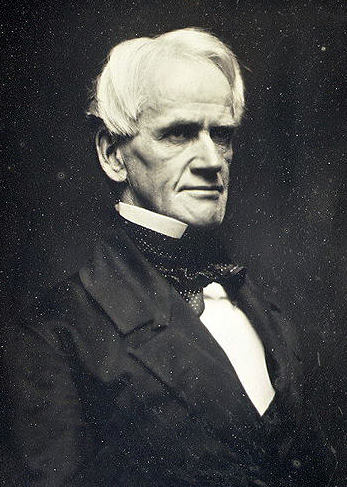
 

Pass or Fail: Horace Mann – An American Public School Pioneer

In this multi-part series, I provide a dissection of the phenomenon of retention and social promotion. Also, I describe the many different methods that would improve student instruction in classrooms and eliminate the need for retention and social promotion if combined effectively.

While reading this series, periodically ask yourself this question: Why are educators, parents and the American public complicit in a practice that does demonstrable harm to children and the competitive future of the country?

Horace Mann brought the ideal of public education for ALL children, regardless of income or ability, to the forefront in the 19th century and ushered in new philosophy on what public school should entail. 

Horace Mann

There were many early supporters of equal education for all, but there was still considerable controversy about access to education. Questions arose about whether poor children were being restricted to instruction in basic skills while the middle classes received broad education meant to maintain and improve their quality of life. It was in this period of transition from theoretical public education to an implemented system that worked for all citizens, that Horace Mann emerged as one of the principal champions of education.

Horace Mann, who many education experts and historians consider to be the father of the common school concept. With his craggy features and passionate speeches, he embodied the spirit of educational idealism during the first half of the 1800s.

Mann was born into an impoverished Massachusetts family and was largely self-taught. He managed to secure a place at Brown University, where his oratorical prowess first became evident. He was to use this rhetorical ability to further his careers in law and politics. As secretary of the first board of education in the United States, he gave lectures and started the influential Common School Journal.

Picking up on many of the ideas of the founding fathers, Mann went on to envisage how a system of universal education would best serve the social, economic, and political needs of society. He centered his lofty hopes for the nation on the solo successes of children because he believed that a common experience in school could mold them into successful individuals.

Mann developed six educational principles that would come to define his involvement, and would influence the American education system for decades:

(1) Citizens cannot maintain both ignorance and freedom;

(2) This education should be paid for, controlled, and maintained by the public;

(3) This education should be provided in schools that embrace children from varying backgrounds;

(4) This education must be nonsectarian;

(5) This education must be taught using tenets of a free society; and

(6) This education must be provided by well-trained, professional teachers.

Ever expansive in his ideas, Mann also believed that common schooling would reduce hostilities among citizens. As children grew into adults sharing a common educational experience, Mann posited that different socioeconomic, religious, and ethnic backgrounds would become less significant. Mann’s vision for schools included a common moral and political foundation, as well as the provision of opportunities for children from disadvantaged backgrounds to achieve self-sufficiency and use education to lift themselves from poverty.

By 1837, Horace Mann was busy working to mobilize support for public schools and argued that they were the training ground for youth and for individuals to be able to participate effectively as citizens of a democratic nation. Mann clearly valued a balanced and broad curriculum and supported the development of one in public schools.

Indeed, Mann’s ideal school system brought children from all backgrounds to learn together in an ungraded school. Mann advocated for the education of heterogeneous groups of students to achieve unifying goals and believed specifically in the connection between freedom, self-government, and universal education. He believed in the value of a common learning environment and the development of self-discipline. These, he maintained, could be transferred into the types of skills and behaviors needed for a free society where citizens were not only educated, but had the ability to make intelligent decisions needed for moral judgment and government participation. For Mann, the purpose of education went beyond intellectual and utilitarian goals.

Accepting that children differ regarding ability, interests, and temperament, Mann laid the groundwork for lessons to be adapted to meet the individual needs of children. The one-room school, now a nostalgic icon of American history, embodied Mann’s idyllic vision of the common school. There was little consistency in the curriculums used by one-room schools, though, and teachers had difficulty grouping children for instructional purposes.

Students studied in groups based on what they knew and what they needed to know. Students of multiple ages received instruction at the same level. Given the number of children and the different ages of children in the classroom, children principally learned via memorization. Teachers had little time to target individual needs in the classroom. Even with these drawbacks, however, the non-graded one-room school was an invaluable institution for providing free and public education for children during the 18th and 19th centuries.

Many children excelled in learning reading, writing, and arithmetic, even when the time at school was disrupted by the need to work on the family farm. The ungraded structure of the one-room school allowed for the return to school after an extended absence. It also allowed children to take a break and then return to learning, based on the knowledge they had retained.

Though the standardized assessments that are part of the educational system today did not exist, children did have oral exams at the end of the school year. These were formal quizzes on what they had learned over the course of the year. The purpose of these exams was to provide teachers with information about where to start children at the beginning of the next school year.

Passing and failing were not descriptors used to classify children’s learning behaviors in the one-room school, as progress was allowed to occur at different rates. Only when students took the exams needed to enter high schools outside of their rural communities would they experience their first taste of scholastic success or failure.

Was the one-room school on to something?
