teachers

A Digital Future: What Will EdTech Look Like By 2117

Rapidly changing technology continues to make its mark on K-12 learning. Let’s take a look at the future and see how technology will improve education in the next 100 years. What will be the new innovations in EdTech? What will future classrooms look like?  Will the need to study medicine, law, and science disappear when robots start working in these professions?  What about art? Sure, no robot can be better than David Bowie, Leonardo Da Vinci, or Shakespeare (not yet), but with the number of innovations we see every day, we can’t be sure it won’t happen. While these innovations could have some detrimental side effects (such as job loss, impacts to the economy, etc.), they also have their advantages. It is up to us to use these innovations with caution and maximize their benefits. Here are the technologies that I believe will transform education by 2117.

Horizon #1: In the next year, or less.

Widespread use of makerspaces: Imagine the hands-on fun and learning that happens at play stations throughout a preschool room, then add some really cool edtech tools like an earthquake table, cutting laser, high-tech microscopes, or 3-D printer. Then give the students real-life research to complete. Now you have imagined a makerspace, a blended workspace growing in popularity.

A makerspace is a shared learning experience long used in the Maker Culture,  but now being honed for classrooms. They combine DIY crafts, manufacturing, engineering, and technology. Makerspaces are not limited to K12; Colleges are developing maker spaces to prepare students to solve real life problems. These stations can be mobile and shared, to decrease the cost.

Makerspaces fit well into the growing trends of Project Based Learning and Deeper Learning. Project-based Learning is learning which happens as students complete authentic projects. Deeper Learning is the process in which students meet and work with other students from around the world (Global Collaboration) as well as with experts in the field, through the use of technology.

Blended Education is another technique that will grow in significance. Classrooms will see an increase in the use of technology blended with traditional student-teacher interaction. Driven by algorithms; students will be placed in groups and given assignments. Students will often work collaboratively, broken into groups through a calculation of strengths, weaknesses, and interests.

Horizon #2: Within two to five years.

Widespread use of personalized learning: A tech-created schedule will move students through the day according to progress, focus, and interest while integrating each person’s needs with the needs of the class as a whole. Teachers will float from group to group as the face-to-face tutor and coach and periodically teach a lesson. NPR reviews this type of classroom this report, Meet the Classroom of the Future. Do you see it?

Adaptive learning will personalize learning in our classrooms. Adaptive education, at its best, is using technology to measure a student’s strengths and weaknesses and then adapting their education accordingly. When the goal of adaptive education is to develop the student, not meet pre-established standards, then real education can take place.

Horizon #3: Within ten years.

Interactive surfaces while working in groups will become a reality. The trend in education is to have collaborative group learning. We are currently at the point where every child has his or her own electronic device. As the group learning model improves, it will be harder for children to follow courses separately on their personal devices.  What would happen if the desk they sat at was itself a computer? That way, the group can use a multi-touch interface and collaborate better, with less time comparing what is on each device.

Interactive surfaces are already a reality, but the costs are still big. Just a few decades ago, computers were expensive and considered a luxury item, so it’s safe to predict that these interactive surfaces will become more affordable as time passes and will be used in schools for everyday basics.

Horizon #4: Within twenty years.

Tracking every student’s move will become a reality. Student tracking is already a reality in some schools. In the future, it’s entirely plausible that all schools will track students and teachers using Radio Frequency Identification (RFID). There is currently one obstacle: costs. Once there is a cheaper way to replace lost or stolen RFIDs, it will become more common to track when students attend school and their trips around the open classroom. This way, by knowing where and when students are, more time can be spent giving instructions and explanations.

Many parents would argue that it is not fair to track their child’s every move all the time. On the other hand, this can greatly improve safety in schools. In modern schools with more than 1,000 students in a classroom, it could be very hard to locate missing child without tracking.

Horizon #5: Within fifty years.

Students will become teachers. Teachers will become facilitators and children will teach each other based on their own interests. While this concept seems strange now, it has a significant probability of becoming a reality one day. Even younger children are capable of finding their own path, and by allowing them to follow their individual interests while they are growing up, we will have more satisfied people in the future.

Horizon #6: Within 100 years.

There will be many new tools. Educational tools are evolving, and it will be interesting to see what happens in the future. We can predict that instead of using pens and pencils to write on paper or keyboards to write on computers and tablets, one day, children will use Google glasses (or its successor) to transfer their thoughts and notes on a computer. Other futuristic thoughts include new tools to protect devices from viruses, Cloud Learning (which would eliminate paper), increased use of e-communities, hologram lessons, and international collaboration.

Conclusion

Imagining the edtech reformation of education we will see by 2117; you may feel like you are falling through the rabbit hole. But don’t be frightened, just buckle-up and enjoy the fall into the brilliant future of edtech and education. In coming posts, I will take a closer look at each of these technologies and their implications on K-12 learners. Which do you think will have the greatest impact?


Australia is very average when it comes to maths and science performance – here’s what needs to change

This article was written by Alan Finkel

As a school student, I awaited the arrival of the end-of-year report with a bracing mix of hope and fear.

Now, as Australia’s Chief Scientist, I’m worried once again about school reports.

Our proudly first-class country, with a prosperous economy and an egalitarian spirit, must not be fair-to-middling when it comes to science and maths in schools. On the evidence before me, we are.

Do I believe that international testing can capture everything of importance in Australian education? No.

But do I take these findings seriously? Yes, I do.

Be it the international studies Programme for International Student Assessment (PISA) and Trends in International Mathematics and Science Study (TIMSS), or the national scheme National Assessment Program – Literacy and Numeracy (NAPLAN), the message is clear.

Our performance in absolute terms is stalling, or in decline, and our position in global rankings continues to fall.

International comparisons

Canada now scores significantly higher across all PISA and Year 8 TIMSS domains. England has improved its TIMSS performance, while also decreasing the proportion of low-performing students.

Australia, by contrast, is one of only three countries with significantly decreased maths and science scores in this round of PISA. And the difference between children in Australia’s highest and lowest socioeconomic quartiles recorded by PISA is the equivalent of three full years of school.

While we demand to be top ten in sport, we are barely scraping top 20 in schools.

In PISA maths, we have fallen as low as 25. How much lower are we prepared to go?

My concern is not the temporary wound to national pride. It is the enduring harm we do when students leave school with malnourished potential – or worse, no interest at all – in disciplines that they require to navigate their world. We need to improve.

Let’s start by defining the aim: the best possible education in maths and science (and literacy) for every child, irrespective of gender, region, income or incoming ability.

In the 21st century, we can no more write off a child because “he’s not into numbers” any more than we would accept that “she’s not keen on the alphabet”.

Maths is not just the language of science and technology, but the foundation of commerce, the core of engineering, and the bread and butter of every trade from cooking to construction.

How can we hold governments to account if journalists can’t interpret data and citizens can’t make sense of charts?

How can we resist the prophets of the post-truth world? When everything we value is at stake, surely nothing less than our utmost will do.

So with that aim in mind, let’s agree to share the task: yes, we do bear individual responsibility; but, no, we cannot lay the blame solely on individuals, be they principals, teachers, parents or students.

There is no point in exhorting individuals to aim high unless we help them to make the leap. If we want excellence, we have to provide a system with the incentives, enablers and rewards for improvement built in.

Policy responses

For me, that comes down to a new three Rs for education.

Restore maths prerequisites for courses

Restore meaningful maths prerequisites for all university courses that, no-one could argue, need numbers.

This would reverse the exodus from advanced maths courses and set students up for success – in commerce and accounting, as well as science and engineering. Just as importantly, it would give principals a reason to make the quality of their maths programs a priority all the way from kindergarten to Year 12.

Respect teaching

The single most important factor in the classroom is the human up the front. The education system must be engineered around that fundamental premise, so that high-achieving students become highly qualified teachers with well-targeted professional development.

Crucially, teacher training and development need a strong discipline-specific focus. It should be expected that our science and maths teachers are experts in their fields, with both the technical and pedagogical knowledge to teach them well.

The Commonwealth Science Council strongly endorsed this principle at its last meeting in September, and requested the Department of Education to investigate options to bring it about.

Recognise the influence of school leaders

Principals set the tone in their schools and, with the right strategic focus, they can drive a culture of constant improvement. Without that senior leadership, it is simply too hard for individual teachers to keep the bar consistently high – another reality the Commonwealth Science Council has acknowledged.

Of course, ambitious aims have investment pathways attached. But money spent is not a proxy for effort invested, and it is certainly not a reliable predictor of success.

As a businessman, I learned that no project delivers what you want unless the how comes before the how much.

Face the hard truths, aim high, be strategic – and we might just receive a school report we can be proud to display.

The Conversation

Alan Finkel, Chief Scientist for Australia, Office of the Chief Scientist

This article was originally published on The Conversation. Read the original article.

Behind Singapore’s PISA rankings success – and why other countries may not want to join the race

This article was written by Amanda Wise

Singapore has topped the global Programme for International Student Assessment (PISA) rankings in maths, science and reading, while countries including Australia, France and the UK sit in the bottom batch of OECD countries for achievement in these areas.

So what is Singapore doing right, and do other countries want to emulate it?

Clearly there are things to learn. Singapore has invested heavily in its education system. Its teachers are the best and brightest, and it has developed highly successful pedagogic approaches to science, maths, engineering and technology (STEM) teaching, such as the “Maths Mastery” approach.

Culturally, Singaporeans have a strong commitment to educational achievement and there is a national focus on educational excellence.

Success in PISA rankings and other global league tables are an important part of the Singapore “brand”. Singaporean academic Christopher Gee calls this the “educational arms race”. Highly competitive schooling is the norm.

Role of private tuition

Public discussion in Australia around why we are not doing as well as the Singaporeans is largely focused on what goes on in that country’s schools.

Yet there is one thing missing from the reporting on Singapore’s success: the role of private tuition (private tutors and coaching colleges) and the part it plays in the overall success of students in the tiny city-state. Here are some startling figures:

  • 60% of high school, and 80% of primary school age students receive private tuition.
  • 40% of pre-schoolers receive private tuition.
  • Pre-schoolers, on average, attend two hours private tuition per week, while
    primary school aged children are attending, on average, at least three hours per week.

That’s right. Eight out of ten primary school aged students in Singapore receive private tuition, either by way of private tuition or coaching colleges.

In 1992, that figure was around 30% for high school and 40% for primary school. The hours spent in tuition increase in late primary school, and middle-class children attend more hours than less well-off families.

The number of private coaching colleges has also grown exponentially in the last decade, with 850 registered centres in 2015, up from 700 in 2012.

Impact on family income

According to Singapore’s Household Expenditure Survey, private tuition in Singapore is a SGD$1.1 billion dollar industry (for a nation with a population of about 5.6 million) almost double the amount households spent in 2005 ($650 million). How does that look at the household level?

34% of those with children currently in tuition spend between $500 (AU$471) and $1,000 (AU$943) per month per child, while 16% spend up to $2,000.

Considering the bottom 5th quintile of households earn about $2,000 (AU$1,886) per month – the next quintile around $5,000 (AU$4,716) – this is a very large chunk of the family budget.

Imagine a family with two or three children and we get a sense of the potential socioeconomic inequalities at work when educational success depends on private tuition.

Surveys show that only 20% of those in the lowest two income brackets (a monthly income of less than $4,000) have a child in tuition.

One of the major tuition centre chains with outlets in shopping malls across Singapore. Author provided

Tuition centres

Tuition centres and coaching colleges range from more affordable neighbourhood and community based centres to large national “branded” coaching colleges with outlets in major shopping malls across the island.

The quality of tuition received is very much linked to how much one can afford to pay. It is big business.

The marketing strategies of the coaching colleges are very good at inducing anxiety in parents about fear of failure unless they are willing to pay to help their children get ahead.

Many parents complain that the schools “teach beyond the text”. That is, there is a perception that some teachers assume all the kids in the class are receiving tuition and thus teach above the curriculum level. Imagine the impact on those few children who are not receiving extra help.

Why does this start in pre-school and primary?

Singapore’s Primary School Leaving Exam (PSLE) is a seriously high-stakes exam that determines not just what high school a child will enter, but whether a child is streamed into a school that will fast track them to university.

Singaporeans do not have an automatic right to enrol their children into the “local” high school.

All high schools are selective and the best schools have the pick of the PSLE crop.
Primary students are streamed into four types of high school : the top ones feed students direct to university via the A-Level exams, while the bottom “technical” and “normal stream” schools feed into the institutes of technical education and polytechnics, with a much more complex pathway towards university.

Advertising poster for one of Singapore’s leading chain of coaching colleges ‘Mindchamps’. Author provided

The PSLE exam induces in 11 and 12 year olds the same level of anxiety seen in teenagers sitting the Higher School Certificate (HSC) or Victorian Certificate of Education (VCE) in Australia.

Many middle-class parents believe the “race” starts early.

Parents are increasingly expected to have their pre-school aged child reading and writing, and with basic maths skills before they even enter school – and this is frequently achieved through private pre-schools and “enrichment” tuition.

While there is much to genuinely admire about Singapore’s educational success story, there is a question about the role of private enterprise (private coaching colleges) in shaping childhoods and stoking parental anxieties.

A potential concern when private tuition reaches saturation point is that schools come to assume the level of the “coached child” as the baseline for classroom teaching.

Many Singaporean parents I have spoken to bemoan the hyper-competitive environment that forces their children into hours of extra tuition, impacting on family time and relationships and reducing opportunities for childhood free play, developing friendships and simply getting some decent rest. Many feel they have no choice.

Singaporeans have a term for this pathology: “Kiasu”, which means “fear of falling behind or losing out”. Policymakers, and indeed reporting, needs to be cognisant of exactly what produces these outlying educational success stories.

This is not to argue Singapore’s success is entirely due to out of school coaching. Singaporean schooling excels on many fronts. However given the levels of private tuition, it needs to be seen as a key part of the mix.

The Conversation

Amanda Wise, Associate professor, Macquarie University

This article was originally published on The Conversation. Read the original article.

NAPLAN results reveal little change in literacy and numeracy performance – here are some key takeaway findings

This article was written by Suzanne Rice

The national report on National Assessment Program – Literacy and Numeracy (NAPLAN) outcomes has been released today, showing the test results of Australian students in Years 3, 5, 7 and 9.

The report outlines student achievement in reading, numeracy, spelling, and grammar and punctuation, and shows performance has stagnated.

Around 95% percent of students are included in NAPLAN results, meaning they provide a reasonable guide to how well Australian students are learning core skills.

Other than Year 9 writing, over the last few years, overall Australian achievement has flatlined – it hasn’t gone backwards but nor has it improved.

Here is a breakdown of the findings for each year group that’s assessed:

Year 3

Student performance in Year 3 reading and spelling, grammar and punctuation has improved since 2008.

Boys are on average doing better than girls in numeracy, but girls on average do better in reading, writing, grammar and punctuation, and spelling.

Since 2008, reading scores in Australian Capital Territory, New South Wales, Northern Territory, Victoria, Queensland, and West Australia have improved.

Year 5

Student performance in reading and numeracy is significantly better in 2016 than it was in 2008. Average reading scores rose from 484.4 in 2008 to 501.5 in 2016. Numeracy scores rose from 475.9 in 2008 to 493.1 in 2016.

Reading scores in Tasmania, Victoria, West Australia and Queensland improved between 2008 and 2016. Girls on average scored higher than boys in writing, spelling, and grammar and punctuation, but not in reading.

Year 7

Overall, there has been little change in any area for Year 7 students since 2008. Girls on average scored higher than boys in some of the literacy domains.

Year 9

Numeracy and reading achievement has remained the same for Year 9 students since 2008.

Writing achievement has decreased since 2011, however, there have been changes in the genre examined over this time – from narrative writing to persuasive writing – so this may be influencing the results. From 2016 the genre returned to narrative writing.


Students from non-English speaking backgrounds:

In a number of cases the achievement of students from non-English speaking backgrounds tends to have a bigger spread than that of students whose parents’ first language is English. Our strongest students from non-English speaking backgrounds are doing very well, but there is a long achievement tail.

Indigenous students

Indigenous students are still achieving well below non-Indigenous students.

Over the past 9 years, there has been some improvement for Indigenous students in Years 3 and 5 in reading, and in Year 5 numeracy. But as with the national data, the improvements appeared in the first few years of NAPLAN and there has not been much progress recently.

Impact of parents’ education

Student achievement analysed by their parents’ education and employment makes familiar reading.

The report shows that the higher the parents’ levels of qualifications, and the higher their level of employment, the better their children do in school.

In most cases, the biggest gap is between the achievement of students whose parents completed Year 12, and those whose parents finished school in Year 11.

Does location make a difference?

On average, students based at schools in major cities perform the best. This is followed by those in inner regional locations, then outer regional locations. In remote and very remote areas, average achievement is lowest.

These results tell us that as a country we are not doing particularly well at neutralising the effects of disadvantage, whether this is through location or as reflected in levels of parental education and occupation.

The recent PISA results already showed us that Australian education does not do well on equity compared to similar countries like Canada.

Our school systems are not good at reducing the influence of students’ home backgrounds on their achievement. We need to try harder here.

This is likely to require a range of government actions that include a more equitable school funding regime, quality targeted teacher professional learning, and actions to reduce the class divisions that riddle our education systems.

What doesn’t it tell us?

While the report tells us a lot about the impact of broad factors such as student background, it can’t provide information on what is happening at a school level, or the reasons behind the general lack of improvement over the last few years.

Establishing why student achievement has flatlined is a complex business and is not covered by the data collected or the analyses.

Where to?

There are two important responses to the report that governments can take.

First, we could apply what we know is likely to improve student achievement across the board: supporting quality teacher professional learning based on our knowledge about improving student learning from the work of people like education expert John Hattie.

Second, we can and must do more to reduce the impact students’ home backgrounds has on their achievement.

A funding system that targets funding much more strongly to high-needs students and schools is important.

Research shows that individual student background has an impact on achievement, but so does the mix of students in a school. Australia’s education system has become increasingly stratified.

So policies promoting a mix of student backgrounds in our schools, for example, by requiring that all schools enroll a percentage of students from more disadvantaged backgrounds to receive funding, would be another place to start.

The Conversation

Suzanne Rice, Senior Lecturer, Education Policy and Leadership, University of Melbourne

This article was originally published on The Conversation. Read the original article.

Should teachers pay for apps?

**The Edvocate is pleased to publish guest posts as way to fuel important conversations surrounding P-20 education in America. The opinions contained within guest posts are those of the authors and do not necessarily reflect the official opinion of The Edvocate or Dr. Matthew Lynch.**

A guest post by Maria Constantides

I very often talk to teachers about online apps and great new tools and the standard question always is: “Is it free?’”

And of course it’s natural for teachers – who are amongst the world’s worst paid people for the amount and quality of the work they have to do – to look for free apps and tools.

Reasons?

On a UK pay scale, a colleague recently told me that they make 23 pounds an hour. In Athens, if you  have training and experience, you will be lucky if you make 9 or 10 euros – the average is 6 per hour while the official hourly rate is 4,5 euros per hour  for only 8 months a year; in the summer you can live off the sun and the sea and unemployment benefit of 300 euros per month  (for some people, not even that).

So if most of my better paid colleagues look for free apps, why would the low-paid colleague do anything different? Teachers look for freebies because

  • Their school won’t pay
  • They can’t afford to pay themselves
  • If it’s free, why pay?

So we all flock to the free options and use them, create accounts, create materials, until one day, the company goes bust and we lose everything!

Of course, the paying users lose even more!

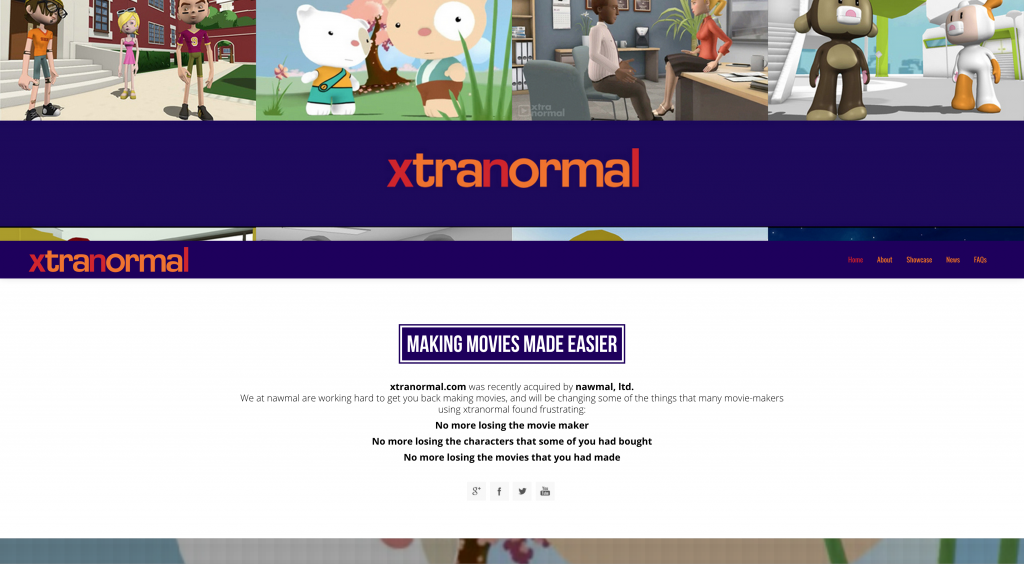
A typical example was one of my favourite online animation tools Xtranormal  I loved this app and used the free version along with thousands of other teachers, then started paying to buy more scenes and more characters and to have the option to download and save my videos!  Suddenly the company announced they were closing and loads and loads of teachers lost all their work.

This is what you can now read on their website, written by a team of people trying to resurrect the service: xtranormal

No more losing the movie maker

No more losing the characters that some of you had bought

No more losing the movies that you had made

So what are the going rates?

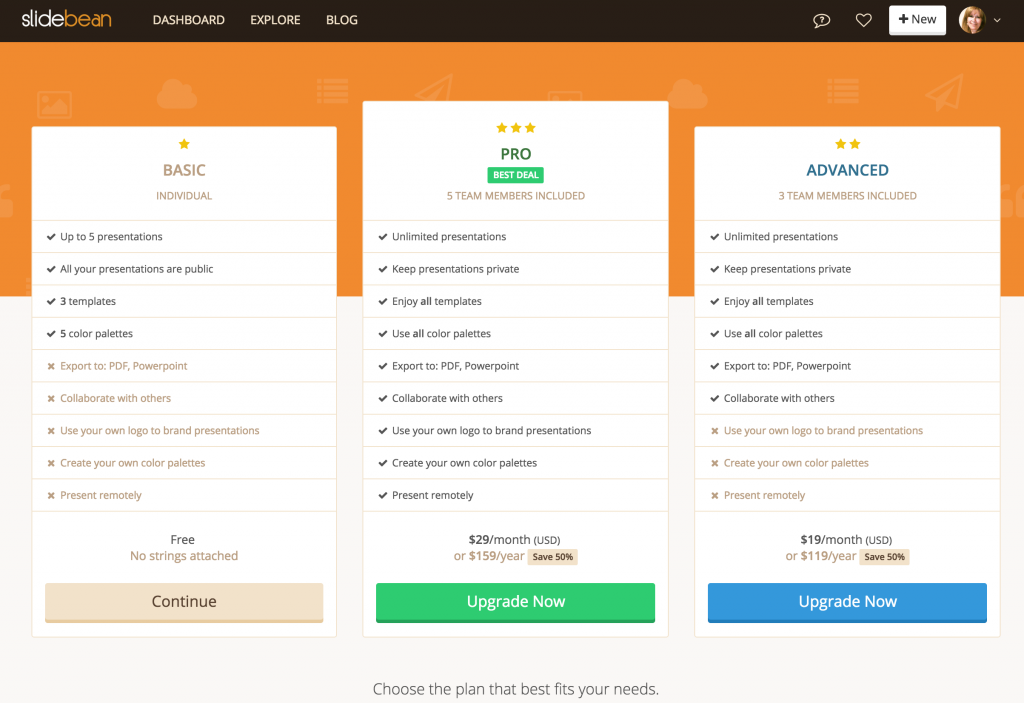
On the flipside of this, you have your average startup company which creates a great product or serivce and they offer a free plan for a limited range of presentations and one or two templates.

Pricing Slidebean

I believe most start ups think in terms of ‘Well, what’ 29 dollars a month? It’s not that much money!’  Or 19 dollars a month!!!

Well, I tell you that at the end of the day, if you pay for a few services like we do as a school, the bill at the end of each month is quite steep!!!!

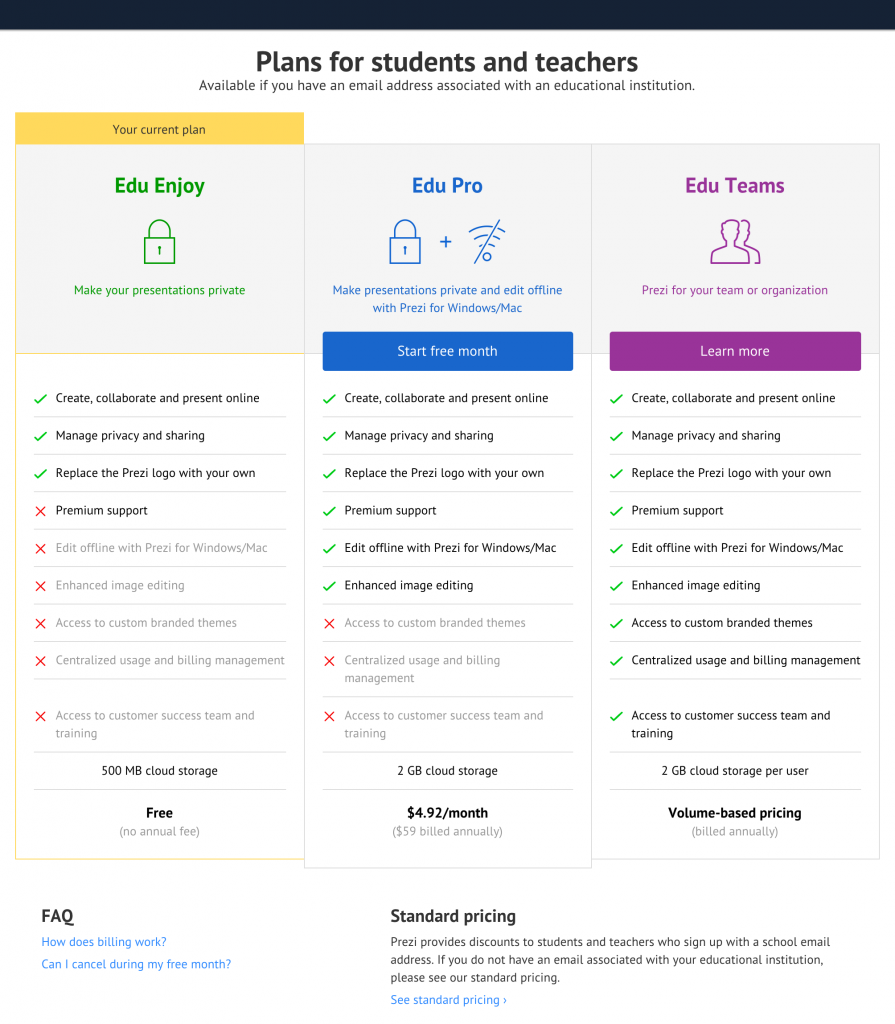
Compare this to the infinitely more versatile and original Prezi pricing plan and you will note the difference.

Of the two services, this is the one I would be more likely to pay for for this, and of course, other reasons, such as the versatility of the presentation templates, the desktop variation of a presentation which can be downloaded and played on one’s pc or laptop…

Pricing Prezi

Up to a couple of years ago, I used to pay a 29 euros per month subscription to Survey Monkey – when I calculated the cost of each survey I did using their services, it has cost me more than 300 or 400 euros!!!!

Google does it for free!!!!

One more example – my favourite screencast software – the famous Jing

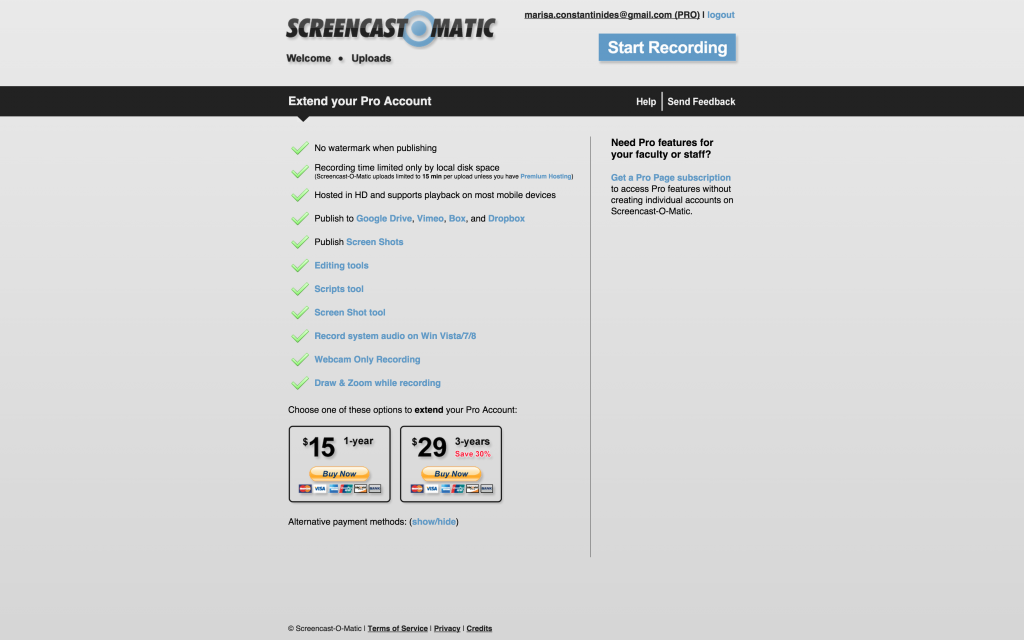
TechSmith Screencast.com online video sharing Plans and PricingCompare it with my OTHER favourite screencasting software, Screen-cast-0-matic

Go Pro Screencast O Matic Free online screen recorder for instant screen capture video sharing.

Compare two great screencast apps – Jing at about 100 dollars a year and Screen-cast-o-matic for 15 or under 10 if you go for the 3 year discount!

Apps

By contrast, most tablet  apps are much lower in price; for example, purchasing Microsoft Powerpoint for my iPad costs nothing, where you would have to pay almost 80 dollars US for the PC version. Keynote is now free but if you purchase an iPhone or iPad and even if you need to buy it is less than 20 dollars US – compare to powerpoint above!


Make the price right!

Make the price right, people! You can’t jump from nothing to 30 dollars a month – bring your prices down and you might get a lot more people paying!

You  let me have dropbox for free but if I want to pay, you ask me for 100 euros per month! 

Why would I pay that when Amazon asks for 70 a year for unlimited storage space!!!! Get real!!!! And OneDrive gives me 50 GB for free – Plus free online use of the latest versions of the Office Suite! 

This has happened to me time and again! I am willing to pay to keep my content safe but prices are too high – so I will keep going for the free versions for as long as I can.


P.S. Just like governments would make more money if they lowered their taxes – but greedy so and so’s that they are, they keep losing more and more money every year!!!!!

This post originally appeared on marisaconstantinides.edublogs.org, and was republished with permission.

____________________

Marisa Constantinides runs CELT Athens, a Teacher Development centre based in the capital of Greece, and is a Course Supervisor for all courses, including the DELTA Cambridge/RSA Diploma, the Institute of Linguists Diploma in Translation and off-site seminars and workshops on a variety of topics.

7 Educational Technology Concepts Every Teacher Should Know About

Since the Information Era began some decades ago, it has dramatically changed the way we educate our children. We live in a world of rapid change and the resemblance to yesterday is fleeting. Above all, communication has changed, and an enormous variety of information is now accessible to almost everyone at the click of a mouse or swipe of a finger.

We have seen a lot of advancement in education technology designed for the classroom, and to be effective, teachers need to stay abreast of these new technologies and concepts. The summer is the perfect time for teachers to receive retooling in the area of education and several innovations and concepts are available to help teachers familiarize themselves with important concepts.

Here, I will discuss ten education technologies and concepts that every teacher should know about:

1. BYOD (Bring Your Own Device): As a kind of movement within education, BYOD has already gained momentum in many districts across the country. In places like Chesapeake Public Schools, students are allowed to use privately owned electronic devices to access the wireless network on the school system’s filtered Internet. In Chesapeake, as in the other public and private schools where BYOD policies exist, students must sign a responsibility form that says they will only use the mobile device for academic enrichment while on school property. Students who bring their own devices into the classroom eliminate the initial costs and are also already comfortable with the technology. The downside is that not all students can readily afford such technology. Many must look for schools to develop technology financial assistance programs for families to help offset the full cost and maintenance of school-owned devices.

2. Customized learning experiences. Self-directed learning experiences are based upon the needs of individual students. The traditional way to look at learning is via the creation and assignment of work by teachers in a one-size-fits-all approach for every classroom. Customized learning, however, allows students to direct focus on feedback techniques that provide strategies for improvement during the process, instead of waiting for a given test period see if the methods are working. 

The idea of personalized learning is often met with hostility, especially as teachers must relinquish some classroom control for this trend to really work. On the flip side, though, customized learning has the potential to incorporate a variety of resources, such as virtual learning, to aid in the learning process while allowing teachers to moderate one-on-one learning experiences in practical ways. I think that the idea of handing control to students is frightening to some educators and administrators but once attempted, even on a small scale, it is easy to see the benefits of personalized learning.

3. Online learning. Virtual learning is certainly not new to the K-12 scene, but its increasing popularity is difficult to ignore. Once, only the world of distant learning embraced the process of online learning. Today, though, online learning is increasingly part of more traditional learning experiences. It is no longer all or nothing. Distance learning has become mainstream and will continue to transform in-classroom learning. Virtual learning also makes it possible for parents, teachers and students to have access to information they may need regardless of their actual physical location. In essence, it expands the classroom and gives students more time and space to complete and comprehend their lesson.

4.Virtual Laboratories. Virtual laboratories are popping up in school districts and online learning curricula across the country and making it easier and less expensive for students to do experiments remotely. Perhaps the most often cited benefit of any online learning is convenience. The same is true of virtual laboratories if the experiments are on the student’s own time. In some cases, a virtual lab may be used during regular class time but still, in such instances, there is flexibility for the teacher who is not limited by using resources within a strict timeframe.

Another benefit of virtual laboratories is instant feedback. Students can redo experiments on the spot if needed. All the results are recorded automatically, making communication between teachers and students more efficient too. Experiments no longer have a “one chance” option and students can analyze what went wrong immediately and critically. There is a fee associated with using virtual labs, but the capital and maintenance costs are drastically reduced. Instead of one school footing the bill for resources, the cost is split among the clients of the particular virtual lab. This allows schools to provide a better learning experience for students at a fraction of the cost.

5. Autism and iPads. Depending who you ask, the iPad has varying effects on children with autism – but most parents and teachers would say that the device has made in-roads in their students’ attitude towards learning. Experts at Apple say that iPads “cure” sensory overload and give autistic children control, along with opportunities for effective communication. Using less extreme language, researchers at Vanderbilt University say that speech-generating devices, like iPads, can encourage late-speaking children with autism spectrum disorders to speak. In other words, the basic technology that is readily available in classrooms and many households may also support learning initiatives for children with a specific disorder that impact traditional learning.

6. Online Tutoring. The supplemental education services industry is expected to make over $10 billion per year annually in North America by 2017, and it’s no wonder. As students face higher pressures in classrooms, companies like Sylvan and Kumon make millions every year by encouraging parents to bring in their students and pay a premium fee to have them tutored one-on-one.

However, tutoring outside school hours is inconvenient for both parents and students who already have tight schedules. After a day in school, kids are not keen to head back into a traditional learning environment, which can mean a lot of extra tension between parents and kids that surrounds an already-anxious experience.

But what if the same flexibility that is afforded to regular K-12 and college classes was extended to tutoring too? Of course, many online tutoring options are already available but as an industry, online tutoring lacks the sophistication of the larger-scale academic offerings. As demand for this form of flexible learning rises, though, tutoring in remote ways will see a spike in popularity and availability.

Students are already native online learners and virtual tutoring could open the doors for a lot of breakthroughs – and at a greater convenience and lesser cost to students. These emerging companies just need to look for ways to set themselves apart from the outdated model of in-person tutoring to provide the most help and succeed.

7. Cloud computing. When it comes to greater educational collaboration, cloud computing has unlimited potential. This is true for teacher-to-teacher, teacher-to-parent, and teacher-to-student applications. By using a common location, academic expectations can be better accessed, along with actual student work. Instructors can also share learning materials and experiences through the remote opportunities that cloud computing provides.

Simply put, cloud storage saves space, money, and time for teachers, parents, students, and administrators. A report by CDW Government found that over 40 percent of schools use cloud applications to store their data. By 2016, schools are expected to spend 35 percent of IT budgets on the cloud. The savings add up though. Right now, K-12 schools report that their cloud initiatives are saving them an average of 20 percent on IT costs. By 2016, those savings are expected to reach 27 percent.

We are living in the midst of a tremendous upheaval in the fields of technology and communication. There is so much to look forward to when it comes to K-12 classrooms. The seven concepts and technologies that I have discussed will allow educators to better prepare students for the rest of their academic careers and for lifelong success.

Read all of our posts about EdTech and Innovation by clicking here. 

4 Tips Cash-Strapped Districts Can Use to Pay Teachers What They Deserve

It’s no secret that teachers in the United States receive little recognition and a salary below their abilities, and that their training after hire consists of professional development that rarely leads to much growth. There is also little incentive for teachers to strive to earn more because pay isn’t based on excellence, but on time on the job. This can lead to quality teachers feeling burned out, with no recourse for better pay for their efforts.

But with a little creativity, this truth can be reversed—even for districts on a tight budget.

Without further ado, here are some things to consider so that teachers can get paid what they’re worth, whether funds are abundant or limited:

1. Rethink the “teachers on an assembly line” mentality. There is a tendency for American teachers to be treated like factory workers. The No Child Left Behind program holds teachers entirely responsible for their students’ performance on state achievement tests, regardless of the many variables that influence students’ performance on these tests. For example, it is extremely difficult, if not impossible, to prepare a sixth grade student reading at a second grade level to perform well on a state achievement test. It is no wonder that standardized testing has caused schools and teachers to panic.

2. Put it into perspective: remember that school principals and other administrators receive comfortable salaries. In addition to concerns about job security, low compensation, and student performance on high stakes test, teachers must also worry about subpar principals who are overcompensated for the successes of teachers. Although administrators deserve to be fairly compensated for their work, their pay does not seem equitable compared to that of teachers. If administrators are to be compensated fairly for the job performed, then teachers, too, should be fairly compensated.

3. Prioritize paying teachers more, and question the assumption that this has to be expensive. When considering these issues, a major mistake made by reform groups is to table efforts at improving teacher salaries because the expenditure does not fit into the school budget. If children are America’s most precious commodity and the focal point of the nation’s educational system, then the lack of funding is no excuse to forgo efforts. Many school reform efforts are cost-effective and can be implemented by resourceful educators. When there is a lack of money, change is contingent upon the faith and commitment level of the faculty and staff. Money should not be wasted on model programs and unsubstantiated trends.

4. Think about the indirectly related factors that will help teachers. Considering factors such as teachers’ professional development, while at first may seem unrelated, can be a key factor for successfully improving teaching salaries as well. When analyzing budgets, it is important to set aside money to hire teachers with the ability to create and teach in-service professional development programs. The ability to train the staff and educators internally will save the school money, and will give the teacher/expert a feeling of usefulness. For instance, a teacher with 30 years of experience and a demonstrated ability to obtain amazing results from her specific teaching strategies might create a professional development seminar to share her expertise. This saves the school an enormous amount of money, and saves the administrator the trouble and cost of hiring a consultant. These savings can then be passed on to the teachers, perhaps in the form of bonuses, etc.

In the end, schools operating with limited funds to support reform efforts will need to be both resourceful and creative in order to affect positive change and strive toward equitable pay for superior teachers. Forward thinking leaders, committed and imaginative teachers, and a supportive community can contribute to change that improves the working environment of our teachers – and their salaries too.

I am sure that you also have some interesting insights on how to pay teachers what they deserve, even on shoestring budgets. So share your thoughts below in the comments.

Student reflection and data collection

**The Edvocate is pleased to publish guest posts as way to fuel important conversations surrounding P-20 education in America. The opinions contained within guest posts are those of the authors and do not necessarily reflect the official opinion of The Edvocate or Dr. Matthew Lynch.**

A guest post by Carol Miller

We all need to reflect.  What has worked; what hasn’t.  What do I need to remember to do again or what needs to be tweaked a bit.  I like to ask the students what they feel has worked for them and what they have liked.  I think we all do this, but it is a great way to collect data and measure the effectiveness of our program.

For me, I can’t believe the school year is over.  I thought the students did a great job with their video projects and STOP signs.  I also loved the stories we shared.  I wished we had more time for a few more crafts, but we packed a lot into our time together.  I do think there are a few lessons that next year I would try to do in a different room, and I realize that the boys want to do a boys only video.  I might have to create another Lunch Bunch just for video making.  It is a big hit, and the more we did, the more I was able to have students take over the filming and the planning.

This week I sent out several surveys to parents of my lunch bunch students and to our 5th and 6th grade teachers.  I also wanted their opinions as to whether they thought my programs offered any benefits to students.

For parents, I sent out a survey through google forms, and then emailed it to each parent.

I love that the responses come back in an excel spreadsheet.

Here are some of the responses so far:

My daughter befitted from the StarBound group My daughter enjoyed working with the other girls in the group. My daughter enjoyed working with the leader in the group. My daughter learned new skills and is using the skills in an out of school. I would recommend StarBound to other families. Additional Comments.
1 1 1 1 1 My daughter was new this school year and was shy. This program helped her come out of her she’ll. She has made many new friends and understands more about life as a girl. I can’t thank you enough for cracking my daughters shell and mind. I’m so thankful for this group!
1 1 1 1 1 This is a wonderful program. Our students don’t get enough of how to be a great citizen in our schools. It would be great if all students could go through this type of program.
1 1 1 1 1 Isabella told me about EVERY meeting and loved that special time and the activities Carol provided. It helped her feel more empowered and brought her closer together with her friends.
It was so beneficial!
1 1 1 2 1
1 1 1 1 1 I believe my daughters interaction in Starbound has created teacher led small group conversations/activities outside of the classroom allowing her to find common ground with classmates she may not otherwise associate with in her peer group.
2 1 1 2 1
1 1 1 1 1
1 1 1 1 1 Carol Miller is a great asset to Lansing School

I asked teachers the following questions:

  1. Is the student more likely to participate in class discussions or assume a leadership role in group activities?
  2. Is the student exhibiting more positive relationships with peers?
  3. Have you seen an improvement in good student skills–homework completion, studying for tests, etc?
I then collected data on grades, behavior referrals, and personal observations.
Over the next few days, I will have student surveys.  I will share those with you as well once they are completed.
Most of all, it is important to take notes and reflect on your own experiences.  I do this after each project I work on, whether it’s testing, Lunch Bunch, or scheduling.  It has been really helpful to pull out my folder and look back at my notes, so I know what I need to change or fix for the next time.  Sometimes, I need to start projects earlier, or fix a memo I will send out, or add something to a presentation.  Whatever it is, I know I will be ready thanks to my notes and reflections.
This post originally appeared on The Middle School Counselor, and was republished with permission.
___________________
Carol has organized School Counseling Conferences for several years in Central New York through TACA and has presented at these conferences on College Admissions, Best School Counseling Programs, and Sharing Counseling Resources. She is a member and past President of the Tompkins Area Counselor Association, and  a member of NYSSCA and NACAC, and NYSACAC. Carol is a mom to three sons, a crafter at heart, and a soccer and basketball coach in her free time.

Beyond the shine : Finding the technology in the standard

**The Edvocate is pleased to publish guest posts as way to fuel important conversations surrounding P-20 education in America. The opinions contained within guest posts are those of the authors and do not necessarily reflect the official opinion of The Edvocate or Dr. Matthew Lynch.**

A guest post by Mike Gorman

I remember when I first started using digital  technology in the classroom. I was in awe of the amazing Apple Classic and programs such as Claris Works and Hyper Card. In fact, I tried to find anyway I could to make this new technology fit the curriculum. Students were so engaged with programs such as Oregon Trail and Lemonade Stand that teachers found ways to make them fit, regardless of the standards. It was 1980 something and computers had finally entered the classroom. Many times it was one computer and thirty-five students, and everyone was being mesmerized by the shine of new technology. I may have forgotten a standard or two, possible even over taught the technology at the expense of some content. It may have even been science class, but somehow we were all on the Oregon Trail… after all there must have been some wildflowers along the way!  The lure and brightness of the Apple Classic  Computer was just to captivating. I was caught in the shine of an amazing new device.

Fast forward to 2015 and one will find many schools replacing their analog tools of the past with a new digital device. Many times this takes on the focus of a “one to one” program. Visions are acquired and missions are written describing how this amazing new device will change the classroom. There is always a great deal of focus on the programs and applications that will change learning. An image is created of students learning and engaging with this new technology throughout the school day. The excitement grows and the shine becomes brighter until it is soon discovered that this amazing new tool is really only… a device. What comes next? Perhaps the most exciting stage, exploring the real possibilities that technology can bring to learning. Let’s call it the pedagogy, or process that allows classrooms to go beyond the shine.

In this post I would like to investigate how examining the curricular standards helps teachers investigate ways to integrate technology in order to facilitate student understanding of curricular content. It all really begins with something that has been around for quite awhile. You probably know them as the curriculum standards.

A portion or foundation of a curriculum is the standards. Standards make up the general knowledge of what educators want students to know. Standards are a great starting point and through careful examination, exact content and skills can be aligned with technology integration. Simply stated, examining or unpacking a standard allows a teacher to see what a child will know and be able to do. It can also help educators determine what digital resources may work best to help support learning. Now, the phrase “unpacking the standards’ may not bring out the smile you want from teachers. For this reason I will refer to it as finding the technology in the standard. Let’s take a look!

Finding the Technology in the Standard

I have actually broken it down into five tasks or steps. You may even wish to practice by applying each step below  using a standard from your curriculum.  As you go through the process it is important to keep focused on the task of “finding the technology and examining” … there will be ample opportunity later to think about specific lessons, activities, and resources.

Five Tasks (steps)… 

  1. Identify the standard (sometimes referred to as a Power Standard which would be broken down to specific grade level)
  2. Reflect on the standard… if possible collaborate with others (What does the standards mean, why are we teaching this, what should students know, what should students be able to do, how does it apply to students at my grade level, where might it stand on a Depth of Knowledge Chart or Bloom’s Taxonomy)
  3. Determine the content by reviewing the standard and circling the appropriate nouns.(This will help you determine content and allow you to determine what is appropriate for your level of students. Later we will examine digital resources that will align with these nouns or content.)
  4. Investigate the skills by reviewing the standard and circling the appropriate verbs. (This will allow you to determine the appropriate skills  to be practiced by students. This can be aligned to Depth of Knowledge, Blooms, and/or 21st century 4 C’s. Later we will be able to explore interactive technology that will help students learn and also demonstrate knowledge as seen in these verbs.)
  5. Create Learning Targets demonstrating what students will be able to do. (This is done through reflection and listing of verbs and nouns. The nouns allow us to state what students will know, and the verbs allow us to see what students will be able to perform or do. Digital applications and resources will blend together wonderful classroom opportunities that use these nouns and verbs to reveal the standards.)

Let me provide an example below…. note the standards

  • Students will be able to research and record key facts involving the planets of the solar system.
  • Students will explain orbit, gravity, and gravitational pull.
  • Students will be able to collaborate on a presentation that provides what they have learned in their own words

Relevant Nouns –  research,  planets, solar system. orbit, gravity, and gravitational pull

Relevant Verbs – explain , collaborate , presentation

Learning Targets for students:

  • I can research and explain my findings on planets and their relationship to the solar system
  • I can collaborate with others to create a presentation
  • I can present with others to demonstrate our our learning and understanding

At this stage it is important to look at the nouns, verbs, and learning targets in order to determine where the technology aligns. The nouns could point to numerous OER (Open Educational Resource) sites available on the internet. The verbs may point to numerous Web 2.0 tools and apps. Looking at the standards and applying this “find the tech” filter allows technology to integrate with the expected learning, rather than possibly just shine right through the learning. In the upcoming articles in this series I will focus on wonderful internet content resource sites that you should to get to know as you identify and apply the nouns. I will also  point out collections of apps and Web 2.0 tools that help support the verbs. You will also discover great lesson plans collections that can be used to accomplish some of those learning targets. I do hope this provides you a reason to return and be part of the 21centuryedtech Learning Community.  Please remember that the best way to avoid the technology shine is to focus on standards while you put students, not devices, at the center of learning. As you emphasize standards and students you will find there are so many amazing opportunities for learning….  beyond the Oregon Trail!

This post originally appeared on 21st Century Educational Technology and Learning and was republished with permission.

Read all of our posts about EdTech and Innovation by clicking here. 

____

This is one of a series of posts that are dedicated to going beyond the shine of technology by examining ways to use digital tools to engage students in real learning. You can read the rest on Mike’s website, https://21centuryedtech.wordpress.com. You can also follow him on Twitter: @mjgormans. Please give this post a retweet and pass it on. Have a great week – Michael Gorman (21centuryedtech)


Understanding the Teacher Shortage Crisis and the Solutions to Fix it

By Keith Lockwood

According to numerous sources, America is experiencing a nationwide teacher shortage that will undoubtedly escalate to a crisis within the next two years. Recent reports state that there are currently over 30,000 teacher vacancies this year that will increase to 70,000 over the next two years. The reasons for the decline in the number of teachers are correlated to teacher evaluation systems blended with high stakes standardized testing implemented over the past ten years, a shrinking student base in teacher education programs, a lack of respect for the teaching profession, and low salaries and benefits. These variables lead to challenging circumstances for urban, suburban and rural school districts across the country.

Read the rest of this article on The Huffington Post.