

“`html
Reading is a fundamental skill that shapes our ability to communicate, learn, and interact with the world. Among the myriad factors influencing reading success, two concepts stand out: phonemic awareness and reading fluency. Understanding the relationship between these two can provide critical insights for educators, parents, and learners alike. This article explores how phonemic awareness lays the groundwork for reading fluency, the implications of this connection, and practical advice for nurturing both skills.
What is Phonemic Awareness?
Phonemic awareness refers to the ability to recognize and manipulate the individual sounds—known as phonemes—in spoken words. It’s a subset of phonological awareness, which encompasses the broader skill of recognizing sound structures in language, including syllables, onsets, and rimes. Phonemic awareness is an essential precursor to reading; it helps children understand that words are made up of discrete sounds, which they can blend, segment, and manipulate.
For instance, if a child can hear that the word “cat” consists of three distinct sounds: /k/, /æ/, and /t/, they are demonstrating phonemic awareness. This skill typically develops between ages 2 and 7 and is crucial for literacy success. Studies by the National Reading Panel highlight that children who possess strong phonemic awareness are more likely to excel in reading.
The Importance of Reading Fluency
Reading fluency, on the other hand, is the ability to read text accurately, quickly, and with appropriate expression. It encompasses three key components: speed, accuracy, and prosody (the rhythm and intonation of speech). Fluent readers can recognize words automatically, which allows them to focus on comprehension rather than decoding individual words.
According to the National Assessment of Educational Progress (NAEP), reading fluency is a strong predictor of overall reading comprehension. When children read fluently, they are more likely to retain and understand what they have read, making fluency a vital component of literacy instruction. Conversely, students who struggle with fluency often face challenges in comprehension, which can lead to a cycle of frustration and difficulty in learning.
Connecting Phonemic Awareness and Reading Fluency
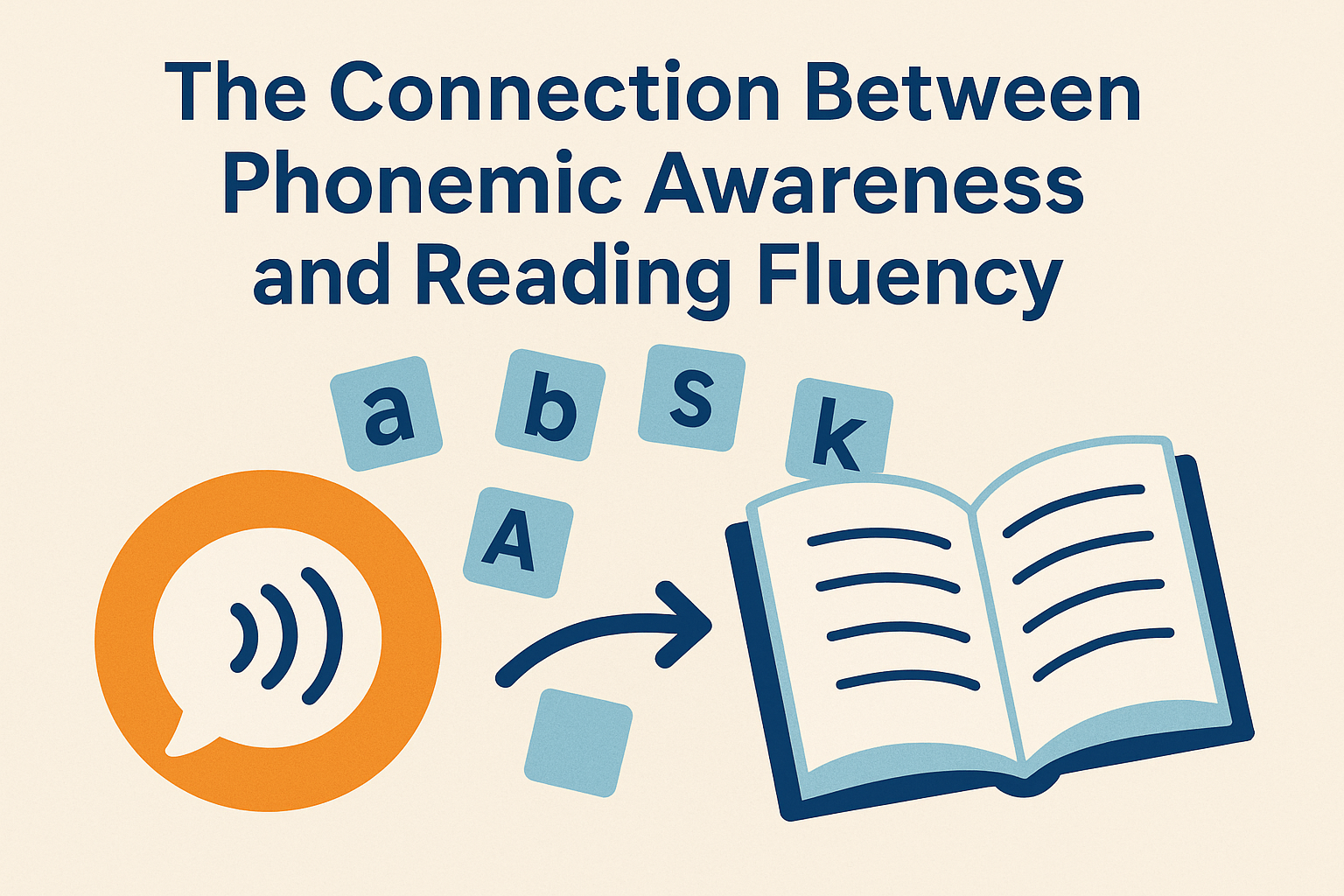
The connection between phonemic awareness and reading fluency is both profound and critical for effective literacy development. Research shows that phonemic awareness equips children with the foundational skills necessary for decoding words. This decoding process is essential for fluent reading. When students can easily break down words into their phonemic components, they can blend those sounds back together into coherent speech without hesitation.
Evidence from various studies suggests that strong phonemic awareness correlates with improved reading fluency. For instance, a report by the Institute of Education Sciences indicated that students who received phonemic awareness training were more likely to develop fluent reading skills compared to their peers who did not receive such instruction. Essentially, when children can hear and manipulate sounds, they become more adept at recognizing words quickly and accurately. (See: National Institute of Child Health and Human Development.)
Practical Strategies to Enhance Phonemic Awareness
Given the critical role phonemic awareness plays in fostering reading fluency, it’s essential to implement effective strategies that can help children develop these skills. Here are several practical approaches:
- Sound Games: Engage children in games that focus on sound manipulation, such as rhyming games or sound sorting. These activities can be both fun and educational.
- Segmenting and Blending Exercises: Practice breaking words down into their constituent sounds, followed by blending them back together. For instance, say the sounds /d/, /oʊ/, and /g/ separately and then blend them to form the word “dog.”
- Read Alouds: Reading aloud to children provides opportunities to model phonemic awareness. Emphasize sounds in words during the reading and encourage children to join in.
- Phoneme Manipulation Activities: Use manipulatives like blocks or counters to represent sounds in words. For example, for the word “cat,” have them manipulate three blocks, each representing one sound.
Supporting Reading Fluency Development
Once phonemic awareness is established, promoting reading fluency becomes the next crucial step. Here are several methods to support this development:
- Guided Repeated Reading: Encourage children to read the same text multiple times. This practice helps them build familiarity with the text, which can improve speed and accuracy.
- Use of High-Frequency Words: Provide practice with high-frequency sight words, which children will encounter often in texts. Familiarity with these words can enhance overall reading fluency.
- Incorporate Poetry and Rhymes: Reading poetry and rhymes can boost fluency through rhythm and repetition. This type of reading can make the learning process enjoyable while reinforcing fluency skills.
- Model Fluent Reading: Demonstrating fluent reading by reading aloud can help students understand what fluent reading sounds like. Encourage them to imitate the prosody and speed.
Current Relevance and Implications for Educators
With the rise of digital learning platforms and changing educational practices, the emphasis on phonemic awareness and reading fluency remains critical. Current research indicates that early intervention can significantly impact literacy outcomes. Educators are encouraged to integrate evidence-based practices that prioritize phonemic awareness and its connection to reading fluency.
Moreover, teacher training programs increasingly emphasize the importance of these foundational skills. Understanding how phonemic awareness influences reading fluency can empower educators to provide targeted instruction that meets the diverse needs of their students. Professional development can also focus on equipping teachers with the tools and strategies necessary to address reading difficulties effectively.
Common Misconceptions About Phonemic Awareness and Reading Fluency
Despite the well-documented importance of phonemic awareness and reading fluency, several misconceptions persist. Here are a few that educators and parents should be aware of:
- Phonemic awareness is the same as phonics: While phonemic awareness involves understanding sounds in spoken language, phonics connects those sounds to written letters. Both are important, but they serve different purposes in literacy development.
- Reading fluency is only about speed: Many think being a fluent reader means reading quickly. In reality, fluency also encompasses accuracy and expression. Fluent readers must read accurately to maintain comprehension.
- If a child can read words, they understand them: Just because a child can read a word fluently does not mean they comprehend it. Teachers must encourage comprehension strategies alongside fluency practice.
Statistics on Phonemic Awareness and Reading Fluency
Statistics can offer compelling insights into the importance of phonemic awareness and reading fluency. For instance:
- A study by the National Reading Panel found that explicit phonemic awareness instruction can improve reading skills in children by as much as 20%.
- According to research from the National Institute for Literacy, children who struggle with phonemic awareness are 12 times more likely to struggle with reading in later grades.
- Data from the National Assessment of Educational Progress (NAEP) indicated that only 35% of fourth graders read at or above the proficient level, which underscores the need for improved phonemic awareness and fluency teaching.
Expert Perspectives on Phonemic Awareness and Reading Fluency
Educators and researchers frequently discuss the importance of phonemic awareness and reading fluency. Dr. Timothy Shanahan, an authority on reading education, emphasizes that phonemic awareness is a crucial skill for early readers. He states, “Without a solid foundation in phonemic awareness, children may struggle to decode words efficiently, leading to difficulties in reading fluency.”
Dr. Nell Duke, a prominent literacy researcher, highlights the impact of fluency on comprehension. She notes, “Fluency is not just about speed; it’s about becoming a confident reader who understands the text. When children read fluently, they can devote their cognitive resources to making sense of what they read.” These perspectives reinforce the need for a balanced approach to literacy instruction that prioritizes both phonemic awareness and reading fluency. (See: CDC on literacy and education.)
FAQs About Phonemic Awareness and Reading Fluency
What age should children start developing phonemic awareness?
Most children begin developing phonemic awareness between ages 2 and 7. Early childhood education programs often focus on these skills to prepare children for reading.
Can phonemic awareness be taught effectively online?
Yes, phonemic awareness can be taught effectively through online platforms. Many programs offer interactive activities and games designed to engage children and teach them these critical skills.
What are some signs that a child may be struggling with phonemic awareness?
Signs include difficulty rhyming, trouble recognizing sounds in words, and frequent mispronunciation of words. If a child struggles to segment or blend sounds, it may indicate a need for additional support.
How can parents support phonemic awareness at home?
Parents can support phonemic awareness by engaging in sound games, reading together, and encouraging their child to play with sounds during everyday conversations. Simple activities like asking children to identify sounds at the beginning or end of words can be helpful.
Are there specific assessments for phonemic awareness?
Yes, various assessments can evaluate phonemic awareness, including informal assessments like phoneme segmentation tasks and standardized tests designed for early literacy screening.
The Role of Technology in Developing Phonemic Awareness and Reading Fluency
In today’s digital age, technology plays a significant role in enhancing phonemic awareness and reading fluency. Educational apps and online platforms provide interactive games and exercises tailored to different learning levels. These tools can engage children in unique ways, making learning fun and effective.
For example, programs like ABCmouse and Starfall offer phonics and phonemic awareness activities that adapt to a child’s progress. These platforms often include tracking features that allow parents and teachers to monitor growth and identify areas needing additional support.
Real-Life Applications of Phonemic Awareness and Reading Fluency
Understanding phonemic awareness and reading fluency has real-life implications beyond the classroom. Proficient readers tend to perform better academically across subjects, not just in language arts. Strong reading skills contribute to increased confidence in academic settings and better overall school performance.
In addition, adults with strong reading fluency often experience better job opportunities. Many professions require clear communication and comprehension skills, which are predicated on strong reading abilities. Encouraging phonemic awareness and reading fluency early on can set individuals on a path toward lifelong success.
Conclusion: Building a Foundation for Literacy Success
In summation, the relationship between phonemic awareness and reading fluency is a cornerstone of literacy education. Phonemic awareness serves as the building block, enabling children to decode and recognize words, while reading fluency allows for smooth, expressive reading that enhances comprehension.
As we navigate the complexities of teaching reading in today’s classrooms, recognizing this connection provides valuable insights for educators and parents alike. By fostering phonemic awareness, we can pave the way for improved reading fluency, ultimately leading to greater literacy success. Investing in these foundational skills will not only benefit individual learners but also contribute to a more literate society.
“`
Trending Now
- read the full story
- this guide on fine motor skills development in children with adhd
- our breakdown of the connection between fine motor skills and handwriting success
- our breakdown of fine motor skills activities for students with dyspraxia
- this guide on why fine motor skills matter for kindergarten readiness
Frequently Asked Questions
What is phonemic awareness and why is it important?
Phonemic awareness is the ability to recognize and manipulate individual sounds in spoken words. It is crucial for literacy success as it helps children understand that words are composed of discrete sounds, enabling them to blend, segment, and manipulate these sounds. Strong phonemic awareness is linked to better reading outcomes.
How does phonemic awareness affect reading fluency?
Phonemic awareness lays the groundwork for reading fluency by helping children recognize and manipulate sounds in words. This foundational skill allows them to decode words more efficiently, leading to improved speed and accuracy in reading, which are critical components of fluency.
What are the key components of reading fluency?
Reading fluency consists of three main components: speed, accuracy, and prosody. Speed refers to reading quickly, accuracy involves reading without errors, and prosody is the expression and rhythm of speech. Together, these elements enable readers to focus on comprehension rather than decoding individual words.
At what age does phonemic awareness typically develop?
Phonemic awareness typically develops between the ages of 2 and 7. During this critical period, children learn to recognize and manipulate sounds in words, which is essential for their literacy development and future reading success.
Why is reading fluency a predictor of reading comprehension?
Reading fluency is a strong predictor of reading comprehension because fluent readers can recognize words automatically, allowing them to focus on understanding the text rather than decoding words. This efficiency enhances their overall comprehension and retention of information.
Agree or disagree? Drop a comment and tell us what you think.



