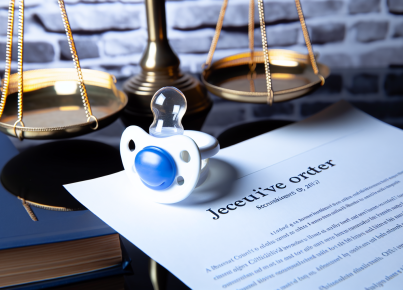
The United States is on the brink of a significant legal confrontation as the Supreme Court prepares to hear arguments in Trump v. Barbara on April 1, 2026. This pivotal case has the potential to reshape the long-standing principle of birthright citizenship, which is enshrined in the 14th Amendment of the U.S. Constitution. At the heart of the case is the question of whether children born in the U.S. to non-citizen parents should retain their automatic citizenship rights, a principle that has been applied broadly since the amendment’s ratification in 1868.
The 14th Amendment: A Historical Context
The 14th Amendment was initially designed to grant citizenship to former slaves following the Civil War, ensuring that all persons born or naturalized in the United States are citizens. Over the years, this principle has been interpreted to include anyone born on U.S. soil, with the notable exceptions of children born to foreign diplomats or occupying forces. This foundational tenet of American law has helped to promote inclusivity and has become a cornerstone of the nation’s immigration and citizenship policies.
The Case: Trump v. Barbara
The case arose from former President Donald Trump’s attempts to issue an executive order aimed at limiting birthright citizenship for the children of non-citizens. Trump’s administration argued that these children should not be considered full U.S. citizens because their parents lack legal residency. Lower courts quickly intervened, blocking the executive order and emphasizing that the Constitution does not support this interpretation.
Legal Debates and Constitutional Interpretation
The legal arguments surrounding Trump v. Barbara highlight a broader debate over constitutional interpretation and the application of the 14th Amendment in contemporary society. Proponents of birthright citizenship argue that it is a necessary reflection of American values and a critical component of the nation’s identity. They assert that citizenship should be determined by the principle of jus soli, or right of the soil, which affirms that anyone born on U.S. soil is entitled to citizenship.
Conversely, opponents of birthright citizenship claim that the amendment was not intended to apply to children of non-citizens or those in the country illegally. They argue that allowing such citizenship encourages illegal immigration and undermines the legal immigration process.
Implications of the Supreme Court’s Decision
The upcoming Supreme Court ruling could have far-reaching implications not just for birthright citizenship, but also for immigration policy and the rights of millions of children born in the U.S. to non-citizen parents. A decision to limit birthright citizenship could lead to a significant shift in the legal landscape, potentially creating a two-tier citizenship system and raising questions about the status of individuals who may have previously been guaranteed citizenship.
Public Sentiment and Political Climate
Public opinion on birthright citizenship remains deeply divided, often reflecting broader political and social divides within the country. Advocates for maintaining the current interpretation of the 14th Amendment argue that birthright citizenship fosters inclusivity and strengthens the fabric of American society. They emphasize that children born in the U.S. should not be penalized for the immigration status of their parents.
On the other hand, those advocating for changes to birthright citizenship often tap into fears surrounding immigration and national security. This sentiment has been amplified by political rhetoric that frames immigration as a threat to American jobs and security.
Potential Outcomes of the Case
As the Supreme Court prepares to hear arguments, several potential outcomes can be anticipated:
- Upholding Birthright Citizenship: The Court may decide to uphold the traditional interpretation of the 14th Amendment, affirming that all children born in the U.S. are citizens, regardless of their parents’ immigration status.
- Limiting Birthright Citizenship: The Court could rule in favor of Trump’s interpretation, potentially limiting citizenship to children of lawful residents, which could lead to significant changes in immigration policy.
- Creating a New Precedent: The ruling could set a legal precedent for future cases, influencing how birthright citizenship is viewed in the context of immigration reform.
The Broader Impact on Immigration Policy
The Supreme Court’s decision will not only impact those directly affected by birthright citizenship but could also reshape the broader discourse around immigration in the United States. A ruling in favor of limiting birthright citizenship may embolden further efforts to restrict immigration rights, while an affirmation of the current interpretation may reinforce the status quo.
Moreover, such a decision could lead to increased legal challenges and debates at both state and federal levels, as lawmakers and advocates respond to the ruling.
Conclusion
The upcoming Supreme Court case of Trump v. Barbara represents a critical juncture in the ongoing debate over birthright citizenship in the United States. As the nation grapples with complex issues of immigration, identity, and rights, the Court’s ruling will undoubtedly have lasting implications for millions of individuals and families across the country.
As the date approaches, all eyes will be on the Supreme Court, with advocates and opponents of birthright citizenship alike awaiting a decision that could redefine what it means to be a citizen in the United States.