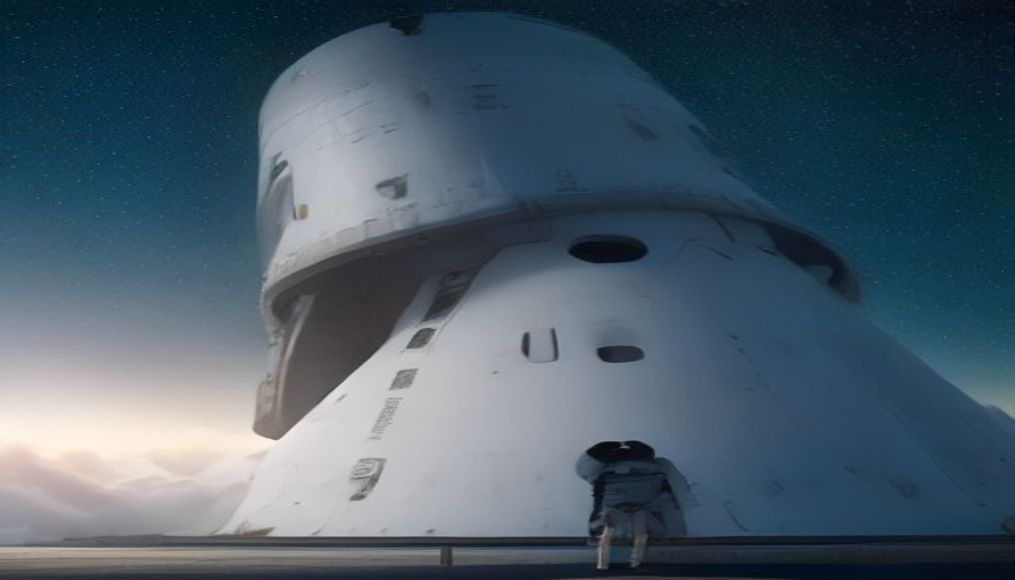

On June 23, 2026, the quiet hum of a Falcon 9 rocket slicing through the Cape Canaveral sky heralded far more than just another launch. It marked the maiden flight of the SpaceX Starfall Capsule, an uncrewed re-entry vehicle that successfully validated its autonomous flight controls before executing a precision splashdown in the Pacific Ocean. While many eyes might have been on the rocket’s ascent, the real story unfolded in the capabilities of that sleek capsule, a development that, I believe, is nothing short of revolutionary for the burgeoning in-space manufacturing sector.
This isn’t just about ferrying cargo; it’s about creating a dedicated, microgravity environment for some of the most advanced applications imaginable. Think pharmaceutical crystallization, which can yield purer, more effective drugs when grown without the interference of gravity. Imagine optical fiber processing that produces glass so flawless it could redefine data transmission speeds, or material science experiments that unlock new alloys and compounds with properties impossible to achieve on Earth. The SpaceX Starfall Capsule isn’t merely a delivery truck; it’s a mobile, high-tech laboratory, poised to accelerate our understanding and utilization of space in profound ways.
But the timing of this launch is equally crucial. It came hot on the heels of SpaceX’s initial public offering (IPO) in June 2026, a liquidity event that injected an unprecedented torrent of capital into the commercial space industry. This isn’t just a coincidence; it’s a strategic alignment. That influx of funds is now acting as a powerful accelerant, fueling a new generation of frontier-technology startups. These aren’t your grandfather’s aerospace companies; they’re nimble, innovative ventures focused on everything from in-space logistics and orbital manufacturing to autonomous re-entry systems. The Starfall Capsule, therefore, isn’t just a piece of hardware; it’s a lynchpin in a rapidly expanding ecosystem, a tangible manifestation of a future where space isn’t just explored, but industrialized.
The Microgravity Advantage: Why Starfall’s Environment Matters
Let’s get down to brass tacks: why is a microgravity environment so game-changing for manufacturing? On Earth, gravity is a constant, often unseen, antagonist in many high-precision processes. Take crystal growth, for example. Whether you’re growing silicon for semiconductors or protein crystals for pharmaceuticals, gravity causes sedimentation, convection currents, and imperfections that limit purity and size. In microgravity, these disruptive forces are virtually eliminated. Crystals can grow larger, more perfectly, and with fewer defects, leading to superior materials.
Consider the pharmaceutical industry. The ability to crystallize proteins and other complex molecules in microgravity could lead to the development of novel drugs and treatments. Imagine a drug where the active ingredient is crystallized with such precision that it interacts with target cells more effectively, or has fewer side effects. This isn’t science fiction; it’s a very real prospect that the SpaceX Starfall Capsule, with its dedicated payload capacity of up to 2,200 pounds, is designed to enable. This capacity isn’t just for tiny experiments; it’s enough to bring significant production capabilities to orbit, even if initially on a research scale.
Beyond pharmaceuticals, the impact on material science is immense. Imagine developing new alloys that are lighter yet stronger, or composites with unprecedented thermal or electrical properties. Optical fiber, for instance, can be manufactured in space with far fewer impurities, leading to fibers that transmit data with significantly less signal loss over longer distances. This has profound implications for global communication networks, potentially paving the way for internet speeds and capacities we can only dream of today. The Starfall Capsule isn’t just opening a door; it’s blowing it wide open for entirely new categories of materials and products. (See: NASA's space research experiments.)
SpaceX Starfall Capsule: A New Era for Point-to-Point Delivery
While the microgravity lab aspect of the SpaceX Starfall Capsule is undeniably exciting, let’s not overlook its more immediate, practical application: point-to-point cargo delivery. This capability, often overshadowed by the more glamorous manufacturing discussions, is a crucial piece of the puzzle for a truly industrialized space economy. Imagine a future where critical supplies, specialized equipment, or even urgently needed samples can be delivered from orbit back to a precise location on Earth, bypassing the complex logistics and significant time investment of traditional re-entry and recovery methods.
Currently, bringing anything substantial back from orbit is a logistical challenge. It often involves large, dedicated capsules, extensive recovery operations, and limited landing sites. The Starfall Capsule, with its autonomous re-entry and targeted splashdown capability, promises a more streamlined, efficient process. This isn’t just about returning manufactured goods; it could be about retrieving scientific samples from orbital labs, delivering time-sensitive components to remote locations, or even enabling rapid response for disaster relief scenarios from a very unique vantage point. The flexibility of its design suggests a future where space-to-Earth logistics are far more agile and responsive than they are today.
The fact that it’s uncrewed also simplifies operations, reducing the risks and complexities associated with human spaceflight. This allows for more frequent missions and a higher tolerance for experimental payloads. For companies looking to test new orbital manufacturing techniques or bring back small batches of novel materials, the SpaceX Starfall Capsule offers a dedicated, reliable, and relatively cost-effective return trip. This capability alone fundamentally alters the economics of in-space research and development, making it accessible to a wider array of organizations beyond just national space agencies.
The IPO Effect: Fueling the Space Industrial Revolution
The timing of the Starfall Capsule’s maiden flight, so close to SpaceX’s IPO in June 2026, is no mere coincidence; it’s a powerful statement about the company’s vision and the broader commercial space landscape. An IPO of this magnitude doesn’t just benefit one company; it sends ripples, or perhaps more accurately, tsunamis, of capital through the entire industry. This liquidity event has acted as a massive catalyst, injecting substantial funds into what was already a rapidly growing sector.
What does this mean in practical terms? It means more venture capital firms are now looking at space tech with renewed interest and deeper pockets. It means startups focused on in-space logistics, orbital manufacturing, and autonomous re-entry systems are finding it easier to secure funding, attract talent, and scale their operations. Before this, many of these ventures were often operating on shoestring budgets, reliant on niche government contracts or speculative private investment. Now, with a bellwether like SpaceX demonstrating its financial muscle and technological prowess, the floodgates have opened.
This isn’t just a speculative boom; it’s a fundamental shift in how the financial world views space. It’s moving from a domain of solely government-funded exploration to a legitimate, investable industrial frontier. The capital from the IPO is enabling the development of infrastructure, technologies, and services that are essential for a sustainable space economy. Without this financial injection, innovations like the SpaceX Starfall Capsule might remain intriguing prototypes; with it, they become foundational elements of a new industrial revolution unfolding above our heads. (See: CDC on nanotechnology and health.)
The Rise of Frontier-Technology Startups in Space
The post-IPO landscape is proving to be a fertile ground for a new breed of startups, often referred to as frontier-technology companies. These aren’t just rehashing old ideas; they’re pushing the boundaries of what’s possible in space. We’re seeing intense innovation in areas like modular satellite construction, where components are assembled in orbit, reducing launch mass and increasing mission flexibility. Imagine building a telescope or a communications array not in pieces on Earth, but directly in the vacuum of space, optimized for its operational environment.
Then there’s the incredibly complex field of in-space logistics. As more objects are launched and more activities take place in orbit, the need for efficient, reliable services to refuel, repair, and relocate satellites becomes paramount. These startups are developing autonomous robotic systems for servicing missions, creating orbital fuel depots, and designing next-generation propulsion systems that can operate with greater efficiency and precision. The SpaceX Starfall Capsule, with its ability to reliably return payloads, perfectly complements these efforts by closing the loop on the orbital supply chain.
Furthermore, the focus on autonomous re-entry systems is not just about bringing things back from space; it’s about doing so with unprecedented accuracy and safety. This involves advanced guidance, navigation, and control systems, materials capable of withstanding extreme re-entry temperatures, and sophisticated recovery mechanisms. The successful validation of the Starfall Capsule’s autonomous controls is a significant milestone here, demonstrating the maturity of these technologies and inspiring confidence in the broader ecosystem. These startups aren’t just building rockets; they’re building the infrastructure for a permanent human presence and industrial capability beyond Earth.
SpaceX Starfall Capsule and the Future of Space Industrialization
So, what does the SpaceX Starfall Capsule truly mean for space industrialization? It means we’re moving beyond mere curiosity and into an era of genuine utility. Space is no longer just a destination; it’s becoming a workshop, a laboratory, and eventually, a factory floor. The ability to reliably transport raw materials to orbit, process them in unique microgravity conditions, and then bring the finished, high-value products back to Earth in a controlled manner fundamentally changes the economic calculus of space ventures.
Think about the long-term implications. As the cost of access to space continues to decrease (thanks in large part to companies like SpaceX), and as re-entry capabilities like Starfall become more commonplace, the business case for orbital manufacturing only strengthens. We’re talking about a future where certain products, perhaps those requiring extreme purity or unique material properties, can only be economically or practically produced in space. This isn’t just about making existing products better; it’s about enabling entirely new categories of goods and services that are currently unimaginable. (See: Scientific advances in microgravity.)
Moreover, the ripple effect on Earth-based industries will be substantial. New space-derived materials could revolutionize everything from medical implants to consumer electronics. The insights gained from microgravity research could lead to breakthroughs in fundamental science, impacting fields far removed from aerospace. The SpaceX Starfall Capsule is a critical piece of this puzzle, a tangible bridge between the orbital frontier and terrestrial markets, accelerating a process that I believe will redefine human industry in the 21st century.
Navigating the Investment Landscape in Space Tech
For investors, the developments surrounding the SpaceX Starfall Capsule and the broader space industry present a fascinating, if complex, landscape. The post-IPO surge has undeniably highlighted the immense potential, but it also underscores the need for careful, informed analysis. We’re seeing a shift from speculative, long-shot bets to more mature investment opportunities, particularly in companies that provide essential infrastructure and services for the burgeoning space economy.
When considering investments in space tech, it’s crucial to look beyond the flashy headlines and focus on companies with strong technological foundations, clear business models, and viable paths to profitability. This includes firms specializing in in-space logistics, which will be vital for servicing the growing number of satellites and orbital platforms. It also encompasses companies developing advanced materials for space applications, those innovating in satellite manufacturing, and, of course, the providers of reliable launch and re-entry services like the SpaceX Starfall Capsule.
The financial impact of these space ventures is not just about the direct revenues generated by launches or manufacturing. It’s about the creation of entirely new supply chains, the development of intellectual property with global implications, and the sustained economic activity generated by a growing industry. While the space sector still carries inherent risks, the increasing maturity of technologies, the influx of private capital, and the clear utility demonstrated by innovations like Starfall suggest that this isn’t just a bubble; it’s a foundational shift. For those willing to do their homework, the opportunities in this expanding frontier are truly compelling, offering a chance to be part of an industrial transformation that’s just beginning to unfold.
Trending Now
Frequently Asked Questions
What is the SpaceX Starfall Capsule?
The SpaceX Starfall Capsule is an uncrewed re-entry vehicle designed for autonomous flight. Launched on June 23, 2026, it serves as a mobile high-tech laboratory, enabling advanced experiments in microgravity, particularly for in-space manufacturing applications.
How does the Starfall Capsule impact space manufacturing?
The Starfall Capsule revolutionizes space manufacturing by providing a dedicated microgravity environment for experiments like pharmaceutical crystallization and optical fiber processing, potentially yielding superior products and materials that are impossible to achieve on Earth.
What was significant about SpaceX's IPO in June 2026?
SpaceX's IPO in June 2026 injected substantial capital into the commercial space industry, enabling new startups to emerge and innovate in areas like in-space logistics and orbital manufacturing, coinciding with the launch of the Starfall Capsule.
Why is the Starfall Capsule considered revolutionary?
The Starfall Capsule is considered revolutionary because it transforms traditional cargo transport into a versatile platform for scientific research and manufacturing in space, potentially accelerating advancements in various high-tech fields.
What are the potential applications of the Starfall Capsule?
Potential applications of the Starfall Capsule include pharmaceutical drug development, advanced optical fiber production, and material science experiments, all benefiting from the unique microgravity conditions it provides for enhanced outcomes.
Agree or disagree? Drop a comment and tell us what you think.