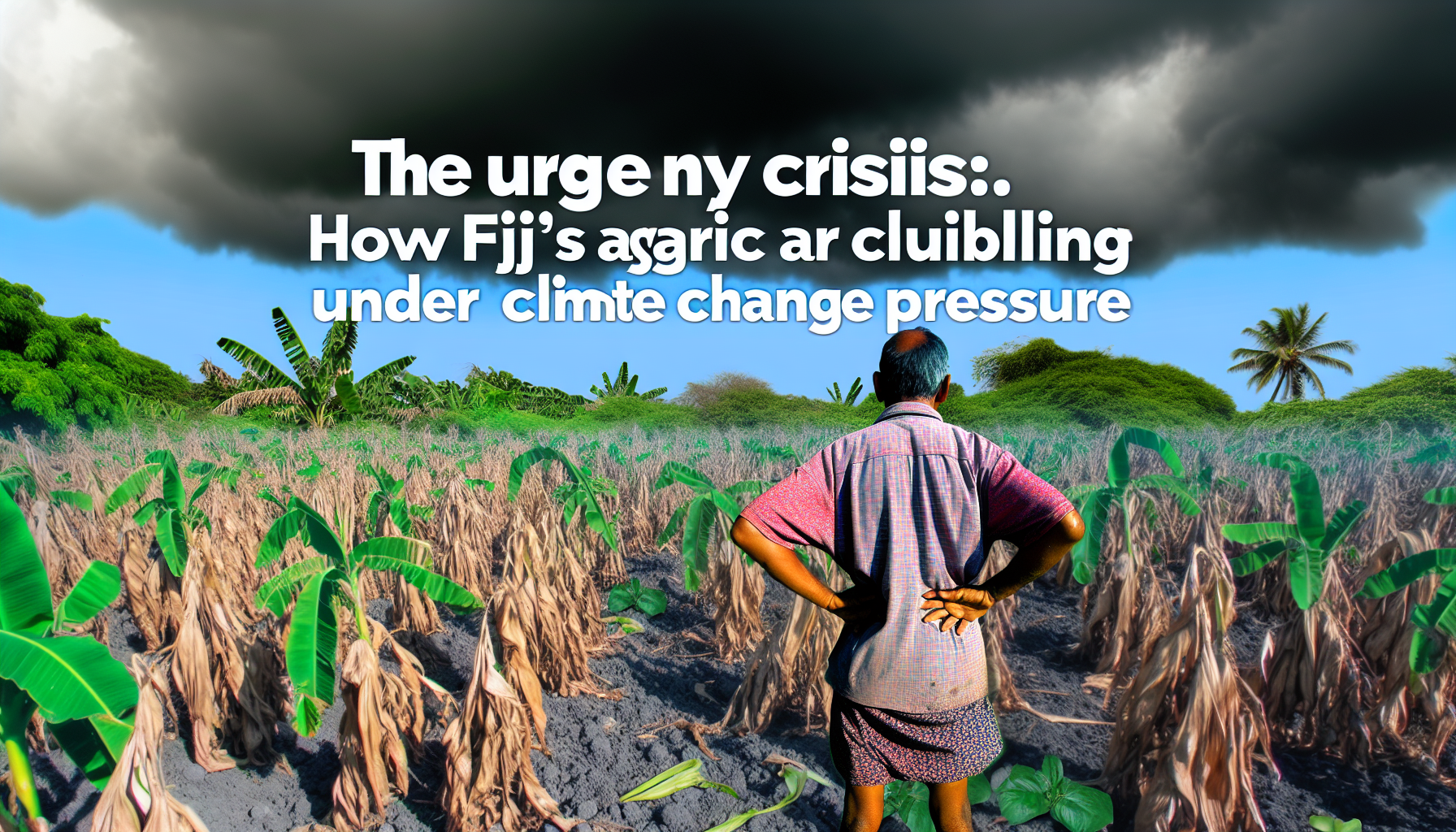

Fiji, a tropical paradise known for its stunning beaches and vibrant culture, is facing an unprecedented crisis as climate change wreaks havoc on its agricultural landscape. Recent reports highlight a dire situation where rising ocean levels and extreme weather events are crippling the island’s farming systems, which are vital for the sustenance of its population. The Fiji agriculture climate change dilemma is not just an environmental issue; it is a compelling narrative that affects the livelihoods of over 900,000 residents and threatens the food security of an entire nation.
Rising Ocean Levels: A Silent Enemy
One of the most alarming aspects of climate change impacting Fiji is the rising ocean levels that are encroaching upon arable land. Saltwater intrusion into freshwater resources and farmland has become a severe problem, rendering once-fertile areas barren. A recent news segment featuring sophomore Shreya Nabar shed light on the plight of local farmers like Viliame Koro, who have lost entire harvests due to the salinization of soil.
The Reality of Salinization
Salinization occurs when saltwater infiltrates freshwater ecosystems, particularly in coastal areas. This process can dramatically decrease soil fertility and yield, making it exceedingly difficult for farmers to grow crops. In Fiji, where agriculture accounts for a significant portion of food production, the impact is devastating.
- Over 70% of Fiji’s food production is affected by climate change.
- Farmers are being forced to abandon traditional farming practices.
- Increased salinity levels lead to lower crop yields and food shortages.
The farmers of Fiji, who rely heavily on the land for their livelihoods, face insurmountable challenges as they struggle against the forces of nature. With many crops failing and food becoming scarce, the situation is becoming increasingly dire.
Extreme Weather Events and Their Impact
In addition to rising sea levels, extreme weather phenomena have significantly altered the agricultural landscape in Fiji. From cyclones to heavy rainfall, unpredictable weather patterns have hampered farming efforts, leading to crop destruction and economic instability.
Due to the erratic nature of the weather, farmers are no longer able to predict the best times to plant and harvest. For instance, devastating cyclones have ripped through the islands, obliterating fields and livestock in their wake. The combination of flooding and drought has exacerbated the challenges faced by farmers, forcing them to adapt quickly to survive.
The Economic Toll on Fiji’s Farmers
The financial repercussions of this agricultural crisis are severe. Many farmers are finding it challenging to recoup their losses, leading to a cycle of debt and despair. The situation is exacerbated for small-scale farmers, who often lack the resources to implement adaptive measures or invest in more resilient agricultural practices.
With the looming threat of food shortages, many fear that Fiji’s agricultural sector could collapse entirely. The emotional toll on farmers is palpable, as their way of life is threatened by forces beyond their control.
The Global Response: A Call for Action
The urgency of the situation has caught the attention of the international community. As world leaders gather at the ongoing UN Climate Summit, discussions around climate aid and support for affected regions have intensified. The plight of Fiji’s farmers has resonated globally, leading to a spike in online searches for “Fiji climate disaster,” with inquiries increasing by a staggering 500% in just 24 hours.
Social media platforms have played a crucial role in spreading awareness about the struggles faced by farmers. Heartfelt stories, accompanied by shocking visuals of submerged fields and destroyed crops, have gone viral, creating a wave of empathy and urgency among viewers worldwide.
Engaging the Global Audience
Social media has become a powerful tool for advocacy. Emotional pleas from Pacific Islanders have been shared widely on platforms like TikTok and Twitter, drawing attention to the critical situation. The visual impact of flooded fields and abandoned farms has ignited conversations about climate change and its effects on vulnerable populations.
Farmers like Viliame Koro have taken to these platforms to share their stories, showing the world the realities of living in a climate-impacted region. The emotional connection forged through social media is vital in mobilizing support and action.
Traditional Practices in Peril
As climate change continues to disrupt agricultural practices, many farmers are abandoning traditional methods that have sustained their families for generations. The urgency of adapting to new practices is evident, but the loss of cultural heritage associated with traditional farming techniques is a heartbreaking consequence of climate change.
- Farmers are experimenting with new crops that may be more resilient to changing conditions.
- Some are turning to agroforestry, which involves integrating trees and shrubs into their farming systems.
- However, these adaptations require knowledge and resources that many lack.
The forced transition from traditional to modern methods can lead to a disconnection from cultural identity, making the issue of climate change not only an environmental challenge but also a cultural one.
Looking Forward: Resilience and Hope
Despite the overwhelming challenges, there is hope for Fiji’s agriculture sector. Scientists and agricultural experts are working tirelessly to develop solutions that can help farmers adapt to the changing climate. Initiatives focused on sustainable farming practices, water conservation, and soil health are emerging as critical strategies for resilience.
Organizations are beginning to recognize the importance of empowering local farmers with the tools and knowledge needed to adapt to climate change. By investing in education and innovative agricultural techniques, there is potential for revival in Fiji’s agricultural landscape.
Community-Based Approaches to Agriculture
Community engagement plays a crucial role in fostering resilience among farmers. By coming together, farmers can share experiences, resources, and strategies for coping with climate change. Community-based approaches can also lead to collective advocacy, pushing for policy changes that prioritize climate action and support for vulnerable populations.
Through these collaborative efforts, Fiji’s farmers can create a support system that not only addresses immediate challenges but also builds a foundation for long-term sustainability.
Local and Global Synergies: The Way Forward
As the world grapples with the challenges posed by climate change, the situation in Fiji serves as a poignant reminder of the interconnectedness of global issues. Local agricultural practices are affected by global climate patterns, and the struggle faced by farmers in Fiji is echoed in many regions worldwide.
International solidarity is essential in addressing the impacts of climate change. As discussions at summits like the UN Climate Summit unfold, the need for comprehensive strategies and support for nations like Fiji becomes increasingly clear. By pooling resources and sharing knowledge, global leaders can help mitigate the agricultural crisis in Fiji and beyond.
The Journey Ahead
The story of Fiji’s agriculture amid climate change is a complex tapestry of challenges, resilience, and hope. As farmers face the harsh realities of rising ocean levels and extreme weather, the world watches with bated breath. The urgent need for action resonates not only in Fiji but also serves as a clarion call for global cooperation in the fight against climate change.
In conclusion, the Fiji agriculture climate change saga remains a poignant reminder of the fragility of our ecosystems and the vital importance of sustainable practices. As farmers like Viliame Koro continue to fight for their livelihoods, the world must rally together to support those in peril, ensuring a brighter future for Fiji and all vulnerable communities affected by climate change.