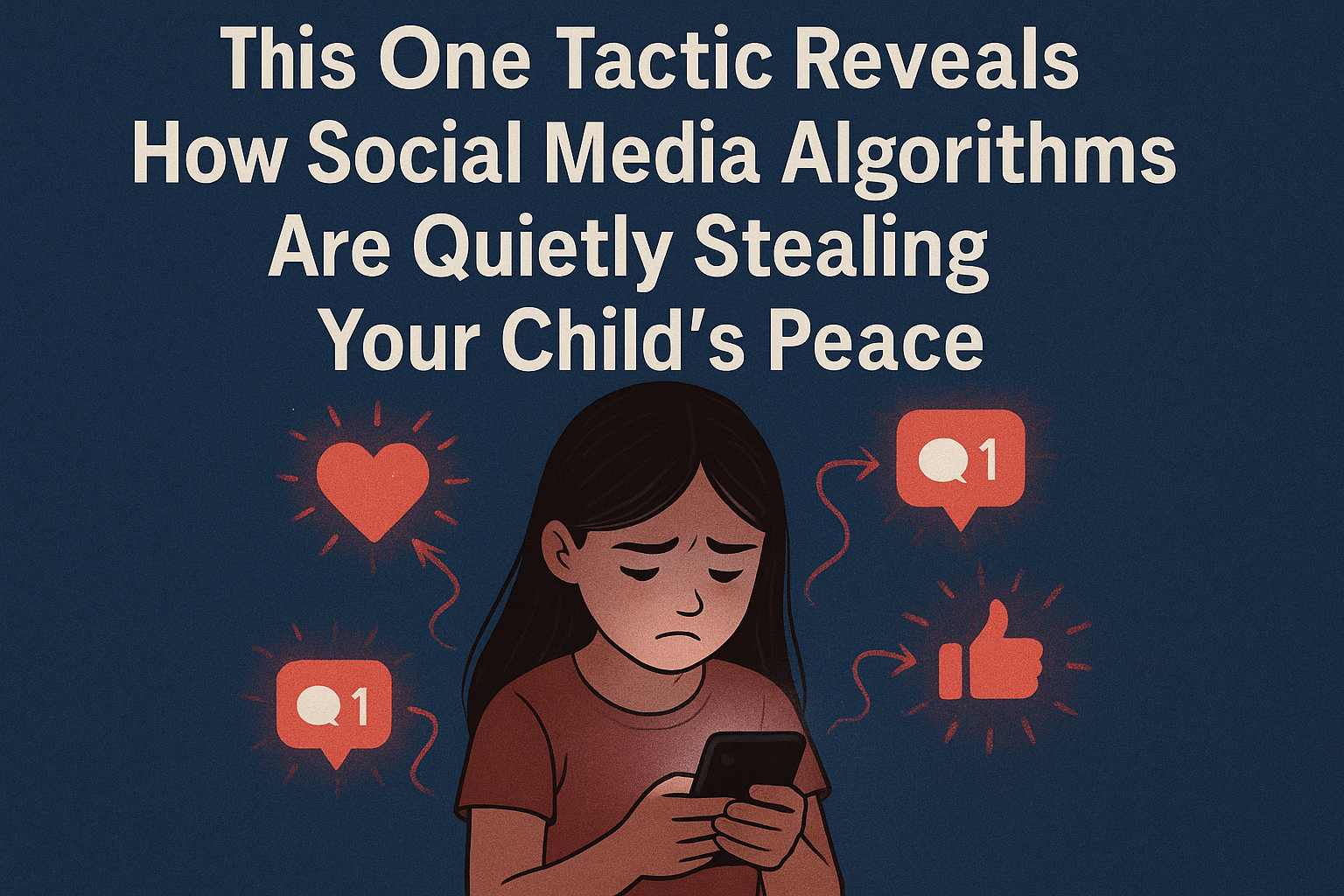

It’s a familiar scene: your child, glued to their phone, scrolling endlessly, their expression a mix of frustration and fascination. You might wonder what keeps them so captivated, so utterly absorbed. We often assume it’s just the latest trends or friends’ updates. But what if it’s something far more deliberate, even insidious? A recent article, published in October 2026, has cast a harsh spotlight on the true nature of social media algorithms, suggesting they’re not just about connecting people; they’re meticulously engineered to exploit our deepest emotions, particularly anger and anxiety, all to maximize engagement. This isn’t just about screen time anymore; it’s about the profound social media algorithm effects on our children’s mental health and overall well-being. And parents, understandably, are furious.
The core issue here is a fundamental conflict of interest. Social media platforms, at their heart, are businesses. Their currency is attention. The more time users spend scrolling, clicking, and reacting, the more data they gather, and the more advertising revenue they generate. It’s a powerful incentive to design systems that keep eyes glued to screens, even if it means sacrificing user well-being. This prioritization of ‘attention over everything’ is having tangible, negative consequences on children, leading to increased stress, poor sleep, and difficulty concentrating. It’s a troubling revelation that has sparked massive social media discussion and parental outrage, pushing governments worldwide to consider unprecedented interventions. Let’s delve into the specific ways these algorithms are impacting young minds and what’s being done about it.
1. The Anger-Anxiety Loop: Why Negative Content Dominates Your Feed
Have you ever noticed how quickly an argument can erupt in the comments section of a seemingly innocuous post? Or how a piece of news that makes your blood boil seems to pop up repeatedly? This isn’t accidental. Research suggests that emotionally charged content, particularly that which evokes anger, outrage, or anxiety, is incredibly effective at capturing and retaining attention. These powerful emotions trigger a primal response, making us stop, engage, and often, react. The algorithms are finely tuned to identify and amplify such content because it generates more clicks, shares, and comments than neutral or even positive interactions.
For children and teenagers, whose emotional regulation skills are still developing, this constant exposure to high-octane emotional content can be incredibly detrimental. It normalizes conflict, fosters a sense of perpetual crisis, and can make them feel constantly on edge. The constant influx of polarizing views or anxiety-inducing news, curated specifically to keep them hooked, contributes directly to heightened stress levels and a pervasive sense of unease. Understanding these social media algorithm effects is the first step toward protecting our kids.
2. The Dopamine Treadmill: Chasing the Next Digital Hit
Every time you get a like, a comment, or a share, your brain releases a tiny hit of dopamine – the ‘feel-good’ neurotransmitter. Social media platforms are expertly designed to create an intermittent reinforcement schedule, much like a slot machine. You never know when the next reward is coming, which keeps you checking, scrolling, and hoping for that next little buzz. This creates a powerful, almost addictive, loop.
For developing brains, this dopamine treadmill can be particularly problematic. Children learn to associate their self-worth with digital validation, leading to obsessive checking and a constant craving for external approval. When that approval doesn’t come, or when they compare themselves to the seemingly perfect lives of others online, it can lead to significant dips in mood, self-esteem issues, and even symptoms of depression and anxiety. The algorithms are the engineers of this treadmill, constantly refining what content to show to maximize these dopamine surges, irrespective of the long-term mental health cost. (See: Children's mental health data.)
3. Erosion of Focus and Concentration: The Attention Span Crisis
One of the most insidious social media algorithm effects is its impact on attention spans. The rapid-fire nature of content – short videos, quick posts, endless scrolling – trains our brains to expect constant novelty and instant gratification. This makes it incredibly difficult to focus on tasks that require sustained attention, like reading a book, completing homework, or even engaging in a lengthy conversation without the urge to check a device.
Children, in particular, are struggling. Teachers report a noticeable decline in students’ ability to concentrate in class, and parents often observe their kids struggling with tasks that require deep thought. The algorithms are designed to fragment attention, pulling users from one piece of content to the next, never allowing for a moment of true mental rest or deep engagement. This constant mental ‘task-switching’ is not only exhausting but actively rewires the brain, making sustained focus increasingly challenging.
4. Sleep Deprivation: When the Algorithm Stays Up With You
Poor sleep is a common complaint among parents of teenagers, and social media plays a significant role. The blue light emitted from screens suppresses melatonin production, making it harder to fall asleep. But beyond the physiological impact, the algorithms themselves are a major culprit. They don’t ‘turn off’ when it’s bedtime; in fact, they often present some of the most engaging content late at night, hoping to keep users scrolling just a little bit longer.
The fear of missing out (FOMO) also plays a part, as children worry about what they might miss if they put their phone down. The endless scroll, curated by an algorithm designed to be relentlessly engaging, can easily extend screen time deep into the night, leading to chronic sleep deprivation. This, in turn, impacts everything from academic performance and mood regulation to physical health, creating a vicious cycle where tired, stressed children are even more susceptible to the algorithm’s pull.
5. The Echo Chamber Effect: Reinforcing Pre-Existing Biases
Algorithms are designed to show you more of what you already like, or what they predict you’ll engage with. While this might seem harmless, it quickly creates ‘echo chambers’ or ‘filter bubbles’ where users are primarily exposed to information and viewpoints that confirm their existing beliefs. For children, this can be particularly dangerous.
If a child expresses interest in a particular niche, even an extreme one, the algorithm will feed them more and more content within that niche, potentially exposing them to harmful ideologies, misinformation, or content that promotes unhealthy behaviors. This lack of exposure to diverse perspectives stunts critical thinking skills and can lead to a more polarized, less empathetic worldview. The social media algorithm effects here are subtle but deeply impactful on how young people perceive the world and interact with those who hold different views. (See: Facebook's impact on mental health.)
6. Government Intervention: Pushing Back Against Unfettered Algorithms
The growing awareness of these profound social media algorithm effects has not gone unnoticed by policymakers. Governments around the world are starting to intervene, recognizing the significant public health implications. For instance, Australia is implementing a Social Media Minimum Age law, set to take effect in December 2025. This aims to create a stronger barrier for younger children accessing platforms designed for adults.
Similarly, Europe’s Digital Services Act (DSA) is a groundbreaking piece of legislation that places significant responsibility on tech companies. Among its provisions, the DSA requires platforms to offer users a ‘non-profiling feed.’ This means users should have the option to see content in a chronological order, for example, rather than an algorithmically curated feed based on their past engagement and personal data. Non-compliance with these regulations can lead to substantial fines, signaling a serious shift in how governments view tech company autonomy versus user protection. These developments, though controversial, highlight the severity of the problem and the global pushback against manipulative online environments.
7. The Outcry from Parents: A Fight for Mental Well-being
The parental outrage surrounding these revelations is palpable and completely justified. Parents are on the front lines, witnessing firsthand the mental health implications for their children. They see the stress, the anxiety, the disrupted sleep, and the difficulty concentrating. The idea that these platforms are deliberately designed to exploit their children’s emotional vulnerabilities for profit is, frankly, infuriating. This isn’t just about ‘kids being on screens too much’ anymore; it’s about perceived manipulation and a fundamental breach of trust.
The conversation has gone viral precisely because it hits so close to home for so many families. It’s an emotional charge that resonates deeply, touching on the core of child development and the ethical responsibilities of powerful tech companies. Parents are demanding transparency, accountability, and real changes that prioritize their children’s well-being over corporate profits. The push for non-profiling feeds and stricter age verification isn’t just bureaucratic red tape; it’s a plea for a healthier digital environment for the next generation.
9. Expert Perspectives: What Psychologists and Technologists Say
It’s not just parents and politicians speaking out; a growing chorus of experts from both psychology and technology fields are sounding the alarm. Child psychologists, like Dr. Anya Sharma, often point to the developmental vulnerability of adolescent brains. “Their prefrontal cortex, responsible for impulse control and decision-making, isn’t fully formed,” she explains. “Algorithms that exploit emotional triggers are particularly dangerous for this age group, essentially hijacking their emotional development.” Technologists, many of whom helped build these very systems, are also offering critical insights. Former Google design ethicist Tristan Harris, for example, has been vocal about how platforms are engineered to create “addiction by design.” He argues that the business model itself is predicated on maximizing screen time, often at the expense of user well-being. These perspectives provide a crucial scientific and ethical foundation for understanding the depth of the problem, moving beyond anecdotal evidence to a more systemic critique of the social media algorithm effects.
10. The Future of Digital Citizenship: Teaching Resilience and Critical Thinking
While legislative and platform changes are vital, equipping children with the skills to navigate the current digital landscape is equally important. This involves fostering what’s increasingly called “digital citizenship.” It’s about teaching kids not just how to use technology, but how to use it wisely, safely, and critically. Parents can encourage critical thinking by asking questions like, “Why do you think this post appeared in your feed?” or “Who benefits from this information?” Teaching media literacy helps children understand that content isn’t neutral; it’s curated and often designed with a specific intent. Building resilience means helping them understand that online validation isn’t the sole measure of their worth and that comparing themselves to others’ curated online personas is often an unfair comparison. These skills, while challenging to develop in a hyper-connected world, are essential for mitigating the negative social media algorithm effects and empowering the next generation to be more discerning digital users.
8. What Comes Next: Reclaiming Control in the Digital Age
The spotlight on social media algorithm effects is only going to intensify. The convergence of scientific research, government regulation, and widespread parental concern is creating a powerful momentum for change. While legislation like Australia’s minimum age law and Europe’s DSA are crucial first steps, the battle for a healthier digital environment is far from over. It will require ongoing vigilance from parents, continued pressure on policymakers, and a fundamental shift in how tech companies design and operate their platforms.
For us, as parents, it means staying informed, engaging in open conversations with our children about what they’re seeing online, and advocating for their well-being. It means exploring the options provided by new regulations, like opting for non-profiling feeds if they become available. Ultimately, it’s about reclaiming some control from algorithms that have, for too long, been allowed to operate in the shadows, quietly shaping our children’s minds and emotions for their own ends. The path forward is complex, but the growing awareness of this issue signals a critical turning point in how we approach the digital lives of our kids.
Trending Now
Frequently Asked Questions
How do social media algorithms affect children's mental health?
Social media algorithms are designed to maximize engagement by exploiting emotions like anger and anxiety. This can lead to increased stress, poor sleep, and difficulty concentrating in children, ultimately impacting their mental health and overall well-being.
What is the anger-anxiety loop in social media?
The anger-anxiety loop refers to how social media algorithms prioritize negative content to keep users engaged. This can create a cycle where users are repeatedly exposed to distressing material, heightening feelings of anger and anxiety, particularly among children.
Why are parents concerned about social media use among children?
Parents are increasingly concerned about social media because algorithms prioritize attention over user well-being, leading to adverse effects on children's mental health. This has sparked outrage and calls for government intervention to protect young users.
What can be done to mitigate the negative effects of social media on children?
To mitigate negative effects, parents can monitor social media use, encourage breaks from screens, and foster open discussions about online content. Additionally, advocating for regulatory measures aimed at social media platforms can also help protect children.
Are social media platforms designed to keep users addicted?
Yes, social media platforms are designed to maximize user engagement by keeping users glued to their screens. This is achieved through algorithms that exploit emotions, often prioritizing attention over the mental well-being of users, especially children.
What's your take on this? Share your thoughts in the comments below — we read every one.