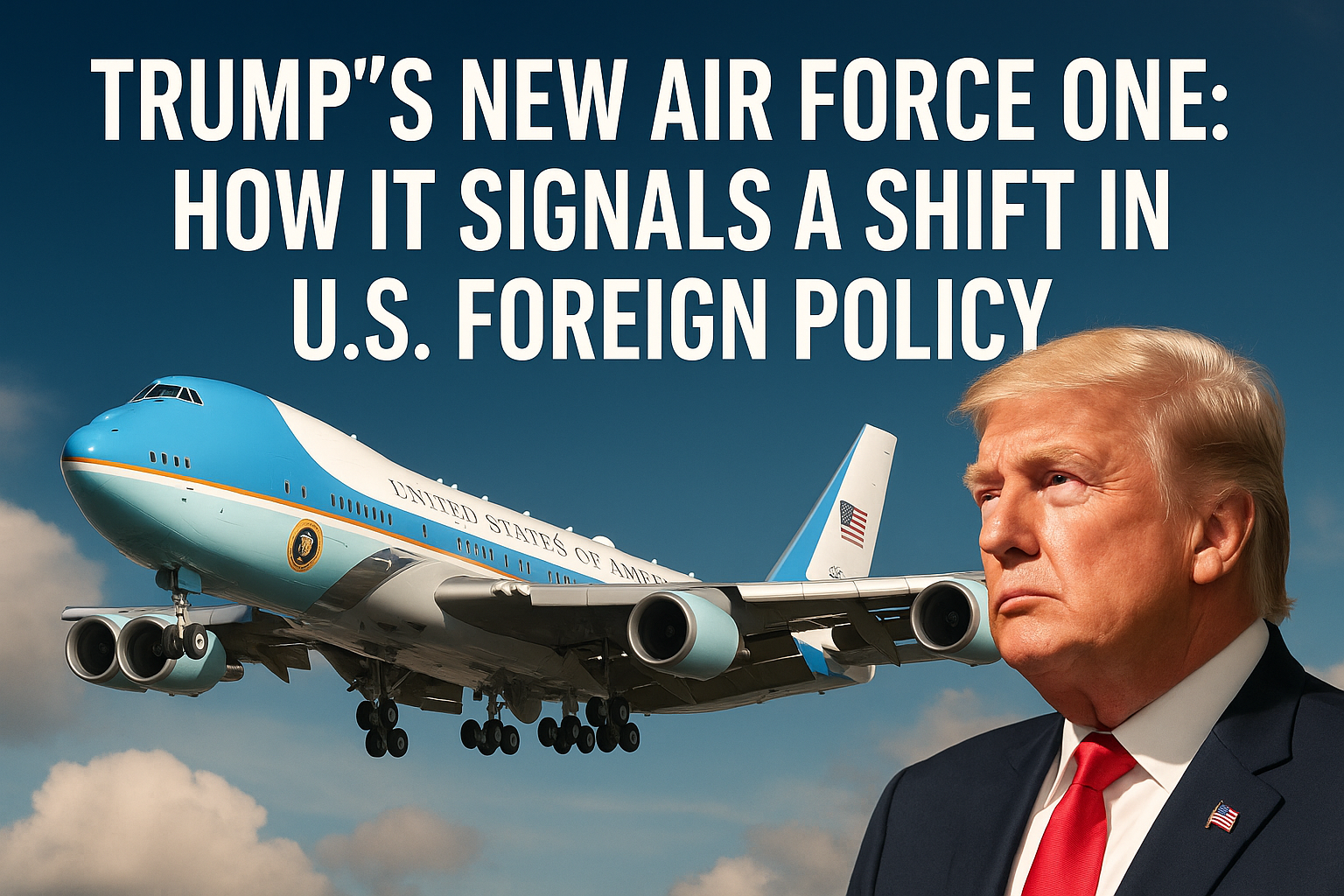

“`html
Introduction: A Jet with a Message
When Donald Trump unveiled the new Air Force One, a converted Qatari jet, the world took notice. This aircraft is more than just a luxurious mode of transport; it symbolizes a crucial shift in U.S. foreign policy. The Trump new Air Force One foreign policy implications are profound, affecting not only the way America interacts with its allies but also how domestic politics might unfold in the upcoming election cycle. The choice of a Qatari jet may raise eyebrows, but it also prompts a broader discussion about the nature of U.S. alliances, military assistance, and international diplomacy.
Luxury and Diplomacy: The Qatari Connection
Choosing a Qatari jet as the new Air Force One sends a powerful signal about the shifting landscape of international relations. Qatar, a nation known for its vast wealth and strategic partnerships, has been a key player in Middle Eastern politics. Under Trump, U.S. relations with Gulf states have strengthened, as he previously emphasized the importance of these alliances in countering Iranian influence. By opting for a jet rooted in Qatari luxury, Trump appears to be reinforcing this alliance.
The Qatari government has invested heavily in the United States, with billions flowing into real estate and various sectors. This relationship is not merely transactional; it’s built on mutual interests, especially regarding energy and security. Trump’s choice reflects a deeper commitment to bolstering ties with nations that share economic and strategic interests, even if these relationships sometimes raise ethical questions.
Shifts in U.S. Military Assistance
Another critical aspect of the Trump new Air Force One foreign policy implications is his evolving stance on military assistance to allies. During his presidency, Trump often questioned traditional defense commitments, indicating a departure from the long-standing U.S. practice of providing military support without stringent conditions. This approach resonated with his base, who viewed it as a pragmatic shift toward America-first policies.
Recently, Trump’s rhetoric has shifted again, hinting at a more aggressive posture when it comes to arming allies. This change could create a ripple effect in U.S. relations, particularly in regions where military support has historically been tied to diplomatic relations. For example, the Biden administration’s approach has leaned towards a more cautious and conditions-based model, which has sometimes frustrated partners seeking more immediate support. Trump’s new air travel symbol, then, may be a harbinger of a return to a more assertive stance on military aid.
The Domestic Political Landscape
As we draw closer to the 2024 elections, the implications of Trump’s new Air Force One extend beyond international relations and venture into the realm of domestic politics. The optics of a luxurious jet financed by foreign interests could evoke mixed reactions among voters. While some may see it as a savvy diplomatic maneuver, others may view it as emblematic of the problems associated with Trump’s presidency: a blurring of lines between domestic interests and foreign influences.
Trump’s supporters might rally around the idea that the new Air Force One represents luxury and power, while critics could focus on the potential ethical concerns surrounding the U.S. ties with Qatar. This dichotomy could lead to an intensified partisan debate, further polarizing an already divided electorate. Moreover, it could motivate opponents to scrutinize Trump’s foreign policy record more closely, especially in relation to military assistance and the implications of his foreign ties.
Reactions on Social Media and Beyond
The announcement about the new Air Force One has already started to circulate on social media, igniting discussions about its implications. The hashtags are flying, and opinions are polarized. Supporters of Trump are likely to view the new jet as a symbol of American strength and prestige, while detractors might frame it as a troubling emblem of foreign influence over U.S. policies. (See: Overview of Qatar's geopolitical role.)
Social media platforms serve as an echo chamber for both sides. On one hand, you have memes celebrating the luxury of the new jet; on the other, critical commentary questioning the appropriateness of a Qatari jet serving as the symbol of American power. This digital discourse could shape public perception, influencing how voters interpret Trump’s decision-making process in the context of foreign policy.
Expert Perspectives on the Shift
Experts in foreign policy and international relations are weighing in on the significance of Trump’s new Air Force One. Many believe that the choice reflects a broader trend of prioritizing strategic economic partnerships over traditional alliances. Dr. Sarah Thompson, a political analyst specializing in Middle Eastern affairs, emphasizes, “Trump’s embrace of Qatari connections may indicate his willingness to challenge long-held beliefs about U.S. partnerships in the region.”
Other analysts express concern that this shift could lead to a more transactional approach to foreign relations, potentially undermining long-term alliances. According to Prof. Mark Jensen of the Global Governance Institute, “When countries prioritize economic transactions over mutual defense commitments, it can create instability in international relations. The implications of this could be far-reaching, affecting not only U.S. alliances but also its global standing.”
The Future of U.S. Foreign Policy
The unveiling of Trump’s new Air Force One could be a touchstone for what lies ahead in U.S. foreign policy. If Trump finds himself re-elected, we may witness a continuation of his current approach—one that emphasizes a blend of luxury, economic partnerships, and military assertiveness. Conversely, if he fails to recapture the presidency, the narrative surrounding the new jet may serve as a cautionary tale of the dangers of foreign entanglements.
The ramifications extend beyond Trump’s political future; they could influence how future administrations approach foreign policy. The balance between engagement and military intervention, the importance of alliances, and the ethical dimensions of foreign relationships may all come under closer scrutiny in light of Trump’s choices.
The Economic Dimensions of the New Air Force One
The decision to utilize a Qatari jet highlights the complex interplay between economics and foreign policy. Qatar’s investments in American infrastructure and businesses could strengthen mutual ties, making the relationship more beneficial economically. The financial implications of this choice are significant, especially considering that these investments could lead to job creation in the U.S. However, critics might argue that dependence on foreign wealth could compromise U.S. sovereignty and decision-making on the global stage.
For instance, look at the billions spent by Qatar in areas such as technology, sports, and hospitality in the U.S. These investments often come with expectations of favorable treatment in diplomatic negotiations. This could lead to a perception that the U.S. is catering to foreign interests at the expense of domestic priorities.
The Role of Public Perception
How Americans perceive the new Air Force One will also play a crucial role in shaping its implications. Public opinion polls often reveal a divided stance on Trump’s foreign policy. According to a recent Gallup poll, around 48% of Americans view Trump’s foreign policy approach favorably, while 52% express dissatisfaction with his handling of international relations. This sentiment could shift dramatically based on how the new Air Force One is framed in the media and public dialogue.
Moreover, the narrative that emerges surrounding the jet may influence not just Trump’s base but also undecided voters. If the new Air Force One is seen as a luxury item that highlights foreign influence, it could backfire in a climate where many Americans are concerned about economic inequality and the integrity of their political system. (See: CDC's information on Qatar.)
Comparative Analysis of Presidential Jets
This isn’t the first time a presidential aircraft has stirred controversy. For instance, President Obama faced scrutiny for the costs associated with Air Force One, which were often highlighted by his opponents. However, the context of those criticisms was different, primarily focusing on budgetary concerns rather than foreign ties.
In contrast, the discussion surrounding Trump’s Air Force One will likely focus more on the implications of foreign investments and relationships. The Qatari connection sets a precedent that may alter how future presidents choose to engage with foreign nations – potentially prioritizing economic partnerships over traditional diplomatic alliances.
Frequently Asked Questions (FAQ)
What are the main implications of Trump’s new Air Force One?
The new Air Force One symbolizes a shift in U.S. foreign policy, emphasizing economic partnerships, military assertiveness, and potentially raising ethical questions about foreign influence in American politics.
How does the choice of a Qatari jet affect U.S. relations in the Middle East?
The decision to use a Qatari jet indicates a strengthening of U.S.-Qatar relations, which may encourage other Gulf states to deepen their ties with America, while also raising concerns about the implications of foreign investments in U.S. diplomacy.
Could this affect the 2024 elections?
Yes, the optics of the new Air Force One could influence voter sentiment. While some may see it as a symbol of strength, others could interpret it as a troubling sign of foreign influence, which could play a significant role in shaping public opinion in the run-up to the elections.
What are the potential long-term effects of this choice on U.S. foreign policy?
The long-term effects could include a shift towards more transactional foreign relations, which may undermine traditional alliances and create instability in international relations as countries prioritize economic benefits over mutual defense commitments.
How might future presidents respond to this precedent?
Future presidents may be more inclined to consider the economic implications of their diplomatic choices, potentially leading to a foreign policy that focuses more on economic partnerships rather than traditional alliances, reshaping the landscape of international relations.
New Challenges in International Perception
Another layer to the Trump new Air Force One foreign policy implications is how this choice might alter international perceptions of the United States. Countries that have typically relied on the U.S. for military and economic support might start to question the reliability of such partnerships when U.S. foreign policy seems heavily influenced by foreign investments. (See: BBC report on U.S.-Qatar relations.)
For example, nations in Eastern Europe or the Asia-Pacific region, which often look to the U.S. for leadership against rival powers, might sense a shift in U.S. priorities. If the narrative circulating globally positions the U.S. as an ally swayed by economic interests from specific nations, it could embolden adversaries like Russia and China, who would likely frame this as a weakness in American resolve.
Statistical analyses show that shifts in public perception about U.S. commitment to foreign alliances can have a direct impact on international politics. For instance, a 2021 study indicated that when U.S. public approval ratings drop, foreign nations are less likely to engage in bilateral talks with the U.S., fearing a lack of commitment from the American side. A luxurious jet tied to Qatari wealth could exacerbate such perceptions.
Potential Backlash and Future Implications
The choice of a Qatari jet, while strategic, opens up the U.S. to potential backlash both domestically and internationally. Critics could argue that this selection is a reflection of a broader trend of prioritizing wealth over values, which could alienate groups that feel left behind by globalization and economic disparities.
Internationally, foreign governments might interpret this as a signal that U.S. policy is for sale, leading to increased pressure from allies for more favorable trade agreements or military deals in exchange for support. This could further entrench a transactional approach to diplomacy that has long-term consequences for global stability.
Conclusion: A Jet with Lasting Implications
In many ways, Trump’s new Air Force One reflects not just a change in aircraft, but a transformation of U.S. foreign policy. The implications of this choice will resonate long after the jet takes its inaugural flights. With an increasingly interconnected world and complex geopolitical realities, the decisions made today about foreign alliances, military assistance, and diplomatic relationships will shape the U.S.’s role on the global stage for years to come. Understanding these Trump new Air Force One foreign policy implications is essential for anyone invested in the future of American diplomacy.
“`
Trending Now
- this guide on is transitional kindergarten right for your child? age and readiness factors
- Do Colleges See Your Middle School Transcript?
- this guide on what is a socratic seminar? a complete guide for teachers
- this guide on preparing middle school students for their first socratic seminar
- read the full story
Frequently Asked Questions
What does Trump's new Air Force One signify?
Trump's new Air Force One, a converted Qatari jet, symbolizes a significant shift in U.S. foreign policy, reflecting stronger ties with Gulf states and a focus on strategic partnerships, particularly in countering Iranian influence.
How does the choice of a Qatari jet affect U.S. foreign relations?
The selection of a Qatari jet for Air Force One highlights the importance of U.S.-Qatar relations, emphasizing mutual interests in energy and security, and showcasing a commitment to strengthen alliances with key players in the Middle East.
What are the implications of Trump's foreign policy on military assistance?
Trump's foreign policy signals a shift in military assistance, moving away from unconditional support for allies. He has raised questions about traditional defense commitments, suggesting a more transactional approach to military aid.
Why is the new Air Force One controversial?
The new Air Force One has sparked controversy due to its Qatari origins, raising ethical questions about U.S. alliances and the implications of relying on relationships with nations known for their wealth and strategic significance in the Middle East.
What role does Qatar play in U.S. foreign policy?
Qatar plays a crucial role in U.S. foreign policy as a strategic partner in the Middle East. The country has invested significantly in the U.S. economy and has been pivotal in countering regional threats, thus reinforcing its importance in Washington's diplomatic efforts.
Agree or disagree? Drop a comment and tell us what you think.