
“`html
Teaching pragmatics to children with autism is a crucial aspect of their educational experience. Pragmatics, the study of how context influences the use of language, encompasses the social rules of communication that many children intuitively grasp but may be challenging for those on the autism spectrum. This article explores the significance of teaching pragmatics to children with autism, effective strategies for educators, and practical insights to enhance communication skills in elementary school students.
Understanding Pragmatics in Communication
Pragmatics involves more than just the words we use; it includes the context, tone, and even non-verbal cues that accompany our speech. For most children, these nuances are absorbed naturally through social interactions and playful exchanges. However, children with autism often struggle with these elements, leading to potential misunderstandings in communication.
To teach pragmatics effectively to children with autism, it’s essential to first understand the typical development of pragmatic skills. According to the American Speech-Language-Hearing Association, children typically begin developing pragmatic skills in early childhood. They learn to take turns in conversations, understand the importance of eye contact, and interpret non-verbal cues like facial expressions. In contrast, children with autism may exhibit challenges in these areas, which can significantly impact their social interactions and relationships.
The Importance of Teaching Pragmatics
Teaching pragmatics to children with autism is vital for several reasons. First, effective communication fosters social connections. For elementary school students, the ability to converse with peers can enhance friendships, improve teamwork during group activities, and facilitate better relationships with teachers.
Second, strong pragmatic skills support academic success. Children who can communicate their thoughts and feelings are often more engaged in classroom discussions and group projects. This engagement not only helps improve their academic performance but also builds their confidence in expressing themselves.
Finally, mastering pragmatics can alleviate feelings of frustration and isolation that many children with autism experience. By learning effective communication strategies, these children can express their needs and desires more clearly, leading to improved emotional well-being.
Effective Strategies for Teaching Pragmatics
When it comes to teaching pragmatics to children with autism, educators can employ various strategies to create a supportive and effective learning environment. Here are some practical techniques:
1. Role-Playing
Role-playing is a dynamic way to teach children the nuances of communication. Through guided scenarios, children can practice conversational skills in a safe environment. For example, an educator might create a scenario where one student plays the role of a shopkeeper and another plays a customer. This exercise can help students understand turn-taking, appropriate questioning, and responding to social cues.
2. Visual Supports
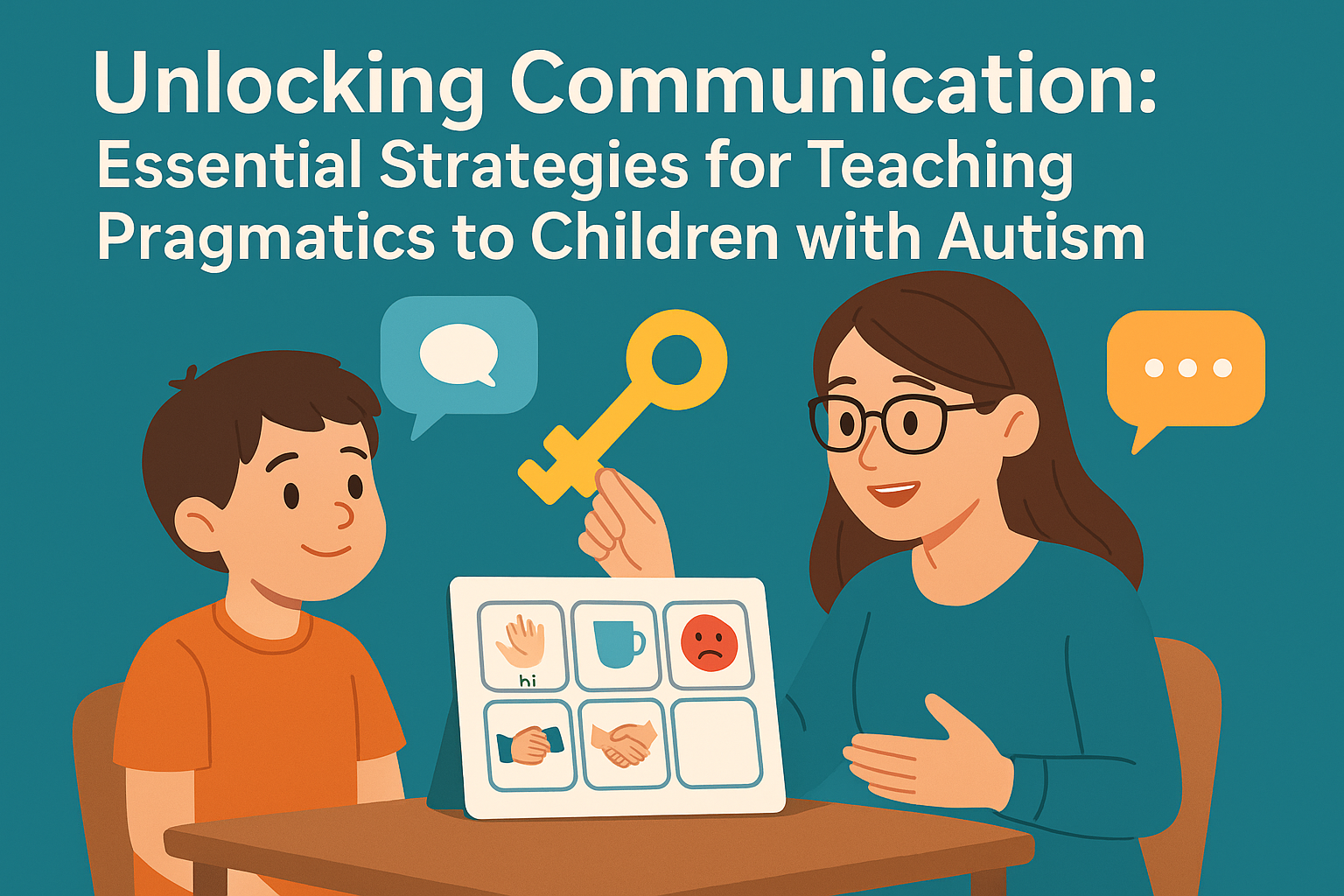
Visual aids like charts, pictures, and social stories can significantly benefit children with autism. For instance, a visual chart illustrating the steps of a conversation can serve as a reminder for students to greet, ask questions, and say goodbye. Social stories, which describe social situations and appropriate responses, can also provide children with a reference point for real-life interactions. (See: CDC resources on autism spectrum disorder.)
3. Explicit Teaching of Social Cues
Teaching children to recognize and interpret social cues is essential. Educators can introduce concepts like tone of voice, body language, and facial expressions through guided discussions and activities. For example, watching video clips of social interactions and discussing what the characters might be feeling can help students gain insights into non-verbal communication.
Creating a Supportive Classroom Environment
A supportive classroom environment is crucial for teaching pragmatics effectively. Educators should foster an atmosphere of acceptance and understanding. Here are some tips for creating such an environment:
1. Promote Peer Interaction
Encouraging peer interactions can help students practice their pragmatic skills in a natural setting. Group activities, collaborative projects, and buddy systems can facilitate opportunities for meaningful communication. Teachers can also pair students with autism with empathetic classmates who can model appropriate social behavior.
2. Implementing Structured Social Skills Groups
Establishing structured social skills groups can be particularly beneficial. These groups can focus specifically on pragmatic skills, allowing children to practice in a controlled setting. Activities might include games that require turn-taking, sharing, and cooperative problem-solving, all of which are essential for developing social communication skills.
3. Providing Feedback and Reinforcement
Positive reinforcement can significantly boost a child’s motivation to improve their pragmatic skills. When a child successfully uses a social skill or makes an effort to communicate, acknowledging this achievement can reinforce their learning. This feedback can be verbal or even through small rewards, ensuring that the child feels encouraged in their progress.
Challenges and Considerations
Teaching pragmatics to children with autism does come with its own set of challenges. Each child is unique, and their communication needs may vary widely. Some common challenges educators may face include:
1. Individual Variability
Every child with autism has different strengths and weaknesses. Some may excel in verbal communication but struggle with non-verbal cues, while others may find it challenging to express themselves verbally at all. It’s essential for educators to tailor their approaches to the individual needs of each student.
2. Anxiety and Social Situations
Many children with autism experience anxiety, particularly in social situations. This anxiety can hinder their ability to engage and practice pragmatic skills. Educators can help by providing a clear structure and gradual exposure to social situations, allowing students to build confidence over time.
3. Collaboration with Specialists
Collaboration with speech-language pathologists, occupational therapists, and special education professionals can enhance the teaching of pragmatics. These specialists can provide valuable insights and strategies tailored to the unique needs of children with autism. (See: NIH on autism treatment and communication.)
Current Relevance and Future Directions
As our understanding of autism evolves, so does the approach to teaching pragmatics to children with autism. Recent studies emphasize the importance of early intervention and the integration of technology to facilitate learning. Digital tools, such as apps designed for social skills training, are becoming increasingly popular and effective.
Furthermore, awareness and acceptance of autism in society are growing, creating more opportunities for children with autism to practice their pragmatic skills in real-world settings. Schools are increasingly adopting inclusive practices, which can further support the social development of children with autism.
Real-Life Success Stories
To fully appreciate the impact of teaching pragmatics to children with autism, it’s important to consider real-life success stories. For instance, a teacher in a supportive school environment implemented a buddy system that paired children with autism with peers who were understanding and patient. Over several months, these children not only improved their pragmatic skills but also developed meaningful friendships that enhanced their social experiences.
In another instance, a young boy with autism who struggled to make friends was introduced to role-playing exercises focused on everyday social interactions. His teacher noted that after several sessions, he began initiating conversations during recess, showing significant growth in his confidence and ability to connect with his peers.
Statistics on Teaching Pragmatics
Statistics show the profound impact of teaching pragmatics on children with autism. According to a study published in the Journal of Autism and Developmental Disorders, children who underwent social skills training that included pragmatic language components showed a 30% improvement in their ability to engage in conversations with peers. Additionally, the National Autism Center reports that 70% of children with autism who receive targeted social skills training experience improved interactions in school settings.
Expert Perspectives on Teaching Pragmatics
Experts in the field of speech-language pathology emphasize the importance of early and continued intervention for enhancing pragmatic skills in children with autism. Dr. Sarah Miller, a renowned speech therapist, states, “The earlier we can introduce children to social communication strategies, the more likely they are to develop the skills needed to interact effectively with their peers.” Her work underlines the importance of tailored interventions that cater to individual needs, which can make a significant difference in social outcomes.
Moreover, Dr. David Wood, a clinical psychologist specializing in autism, suggests that integrating parents into the teaching process can create a more consistent learning environment. “When parents understand the strategies being taught at school, they can reinforce those skills at home. This collaborative approach solidifies learning and helps children generalize their skills across different settings,” he explains.
FAQs about Teaching Pragmatics to Children with Autism
What are some common signs that a child with autism might struggle with pragmatics?
Common signs include difficulty initiating conversations, trouble taking turns in dialogue, challenges in understanding sarcasm or humor, and limited eye contact during interactions. These can manifest as misunderstandings or social awkwardness.
How can parents support the teaching of pragmatics at home?
Parents can support pragmatic skills by engaging in regular conversations, modeling appropriate social interactions, using visual supports, and practicing role-playing scenarios. Reading books together that depict social situations can also be helpful.
Are there specific resources or programs that focus on teaching pragmatics?
Yes, there are various resources available, including specialized apps, books, and workshops focused on social skills training. Programs like Social Thinking and The PEERS Program offer structured approaches designed for children with autism to develop their pragmatic skills.
How can educators assess the progress of children learning pragmatics?
Educators can assess progress through observational assessments, tracking participation in social situations, and using checklists to evaluate specific skills such as turn-taking and responding to cues. Regular feedback from peers and parents can also provide insights into improvements.
What role do extracurricular activities play in developing pragmatic skills?
Extracurricular activities can provide a rich context for children with autism to practice pragmatic skills in a less formal environment. Participating in team sports, drama clubs, or music groups allows for natural interactions that can reinforce what is taught in the classroom. These activities also promote teamwork and collaborative communication, which are essential for developing social skills.
How can technology assist in teaching pragmatics?
Technology plays a growing role in teaching pragmatic skills. Apps designed for social skills development can provide interactive scenarios and feedback. For instance, programs that simulate social situations through role-playing games can help children practice responses and evaluate their interactions. Virtual reality (VR) environments are also emerging as effective tools for providing immersive experiences where children can practice social skills in a controlled setting.
Conclusion: Fostering Communication Skills for a Brighter Future
Teaching pragmatics to children with autism is not just about enhancing communication; it’s about empowering them to connect with the world around them. Through targeted strategies, supportive environments, and a focus on individual needs, educators can make a significant difference in the lives of these children. As we continue to learn about autism and implement best practices, the potential for children with autism to successfully communicate and engage with others becomes increasingly attainable.
“`
Trending Now
- Mastering Learning: The Power of Scaffolding…
- 7 Essential Scaffolding Reading Strategies for…
- this guide on 7 scaffolding strategies every high school math teacher should know
- this guide on 9 essential strategies for scaffolding learning for students with ieps
- this guide on unlocking potential: effective scaffolding writing instruction for middle school students with learning disabilities
Frequently Asked Questions
What are pragmatics in communication?
Pragmatics refers to the study of how context influences language use, encompassing social rules of communication, such as tone, context, and non-verbal cues. It is essential for effective interaction, as it helps individuals understand the nuances of conversation that go beyond mere words.
Why is teaching pragmatics important for children with autism?
Teaching pragmatics is crucial for children with autism because it enhances their communication skills, fostering social connections and improving relationships with peers and teachers. Strong pragmatic skills can also support academic success by enabling children to express their thoughts and feelings more effectively.
How can educators teach pragmatics to children with autism?
Educators can teach pragmatics to children with autism through various strategies, such as role-playing, using visual supports, and engaging in structured social interactions. These methods help children practice taking turns, understanding eye contact, and interpreting non-verbal cues in a supportive environment.
What challenges do children with autism face in learning pragmatics?
Children with autism often struggle with understanding social cues, taking turns in conversations, and interpreting non-verbal communication like facial expressions. These challenges can lead to misunderstandings and hinder their ability to form friendships and engage effectively in social settings.
At what age do children typically develop pragmatic skills?
Children typically begin developing pragmatic skills in early childhood. They learn essential social communication skills, such as taking turns in conversations and recognizing the importance of eye contact, usually by the time they reach preschool age.
What did we miss? Let us know in the comments and join the conversation.