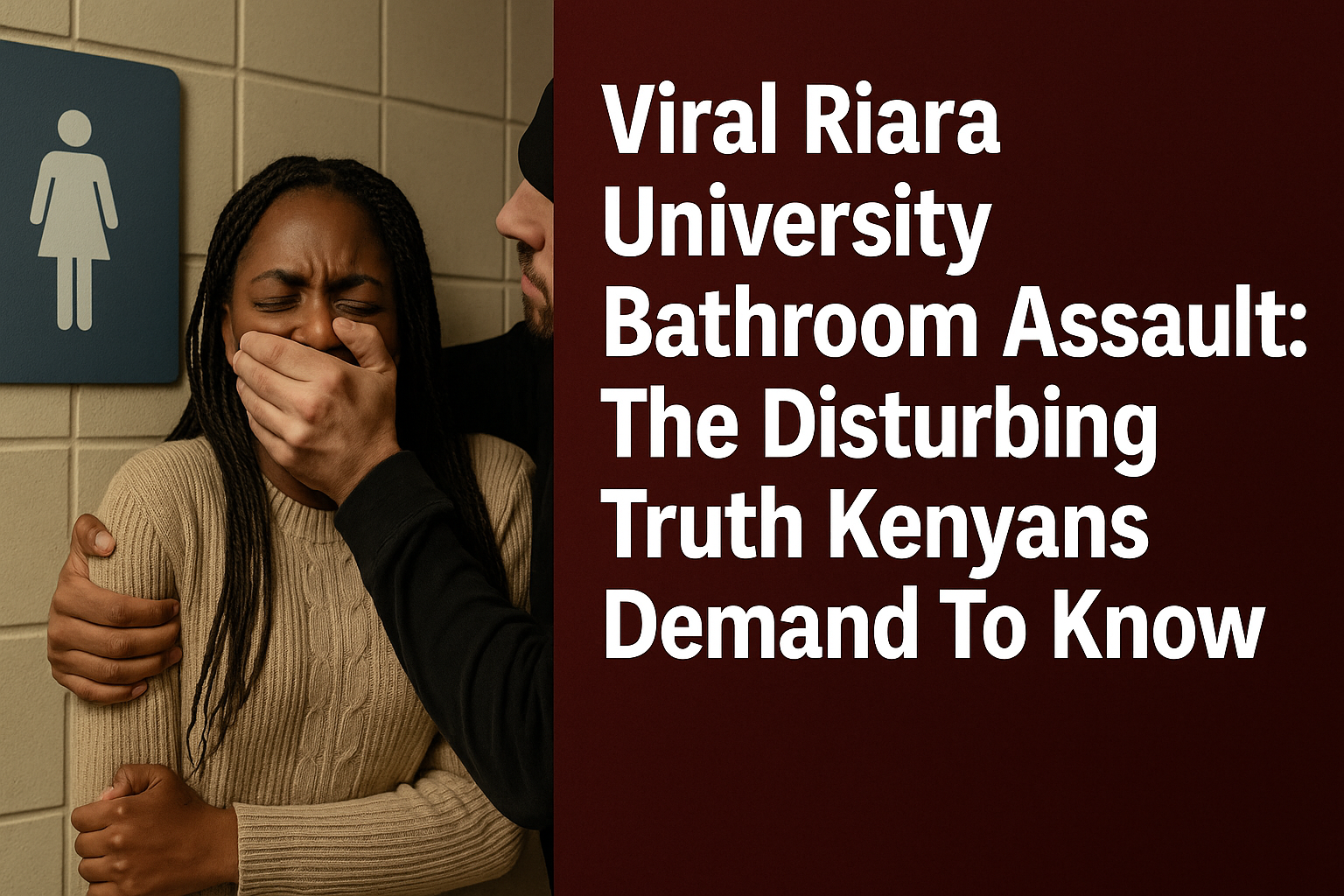

The digital age has a way of thrusting uncomfortable realities into the harsh glare of public scrutiny, and few incidents demonstrate this quite like the viral footage allegedly depicting a brutal bathroom assault involving Riara University students. What began as a private, horrifying encounter quickly spilled into the national conversation, leaving Kenyans outraged and demanding answers. The university itself, finding its reputation suddenly on the line, moved quickly to launch an internal investigation, acknowledging the gravity of the situation and the spotlight now firmly fixed upon its campus.
On October 2, 2026, Riara University released a statement that, while brief, carried significant weight. It confirmed the institution was aware of the widely circulated video and the intense public reaction it had provoked. More importantly, the statement unequivocally denounced violence, intimidation, bullying, and harassment – a crucial declaration given the nature of the allegations. The university emphasized that such conduct, even when occurring off-campus, goes against its core values and would be addressed under its stringent student disciplinary framework. This isn’t just a matter of a few individuals; it’s a critical moment for an institution to demonstrate its commitment to safety, respect, and accountability, particularly when the details of the alleged Riara University bathroom assault are so disturbing.
The video itself is a deeply unsettling watch. It shows social media personality Jahenda cornered in what appears to be a club restroom. A group of young women surrounds her, some seemingly recording the incident on their phones, their faces obscured but their laughter audible. The most shocking moment captures one woman physically assaulting Jahenda, shoving her and grabbing her by the throat, all while issuing chilling threats. This isn’t a mere scuffle; it’s a clear act of aggression, humiliation, and terror, unfolding in a space where one would expect a modicum of privacy and safety. The public outcry, therefore, isn’t just about a fight; it’s about the apparent premeditation, the group dynamic, and the sheer cruelty of the act.
The Anatomy of a Viral Outrage: What Sparked Public Fury?
When a video goes viral, it’s often because it taps into a raw nerve, a collective sense of injustice or disbelief. The Riara University bathroom assault video did precisely that, stirring a potent mix of anger and concern among Kenyans online. But why this particular incident? What elements coalesced to ignite such widespread condemnation?
Firstly, there’s the shocking nature of the alleged assault itself. Seeing someone physically attacked, especially in such a confined and vulnerable space as a restroom, is inherently disturbing. The physical act of shoving and grabbing by the throat isn’t just violent; it’s deeply personal and threatening. It speaks to a level of aggression that most people find abhorrent. The victim, Jahenda, a social media personality, also brings a certain visibility to the incident, amplifying its reach and impact. Her public profile means more eyes were on the footage, and more voices were raised in her defense.
Secondly, the public humiliation captured on video is a significant factor. It’s one thing to be assaulted; it’s another to have that moment of terror and vulnerability recorded and then broadcast for the world to see. The alleged assailants’ actions, including recording and laughing, suggest an intent to shame and degrade, not just physically harm. This performative aspect of the violence adds another layer of cruelty. In an age where digital footprints are indelible, the thought of such a traumatic event being immortalized and shared widely is profoundly unsettling. It raises questions about empathy, privacy, and the increasingly blurred lines between private acts and public spectacle. (See: CDC on violence prevention.)
Finally, the strong emotional response it elicited, prompting widespread calls for accountability, cannot be overstated. Social media platforms, for all their flaws, can be powerful tools for collective action. When people witness what they perceive as a clear injustice, they often unite to demand that something be done. The comments sections and trending hashtags quickly filled with condemnations, expressions of solidarity with Jahenda, and urgent pleas for Riara University and law enforcement to act swiftly. This isn’t just idle chatter; it’s a manifestation of a community’s desire for a just society, where violence is not tolerated and perpetrators are held responsible for their actions.
Riara University’s Immediate Response and Disciplinary Framework
In the wake of such a high-profile incident, an institution’s response is critical. Riara University understood the need for a swift and decisive reaction, not only to address the alleged Riara University bathroom assault but also to reassure its community and the wider public. Their statement on October 2, 2026, was a crucial first step, signaling that they were taking the allegations seriously.
The university’s leadership wasted no time, commencing a review under its established student disciplinary framework. This framework isn’t just a set of rules; it’s a comprehensive system designed to address a range of student misconduct, ensuring fairness, thoroughness, and due process. It typically involves several stages, beginning with an initial investigation to gather facts, followed by potential hearings where students can present their side of the story, and ultimately leading to sanctions if misconduct is proven. These sanctions can range from warnings and community service to suspension or even expulsion, depending on the severity of the offense.
A particularly important aspect of Riara University’s statement was its promise of full cooperation with any investigative authorities. This commitment is vital. While the university can conduct its internal probe, criminal matters fall under the purview of law enforcement. By pledging cooperation, Riara University signals that it is not attempting to shield its students or sweep the incident under the rug. Instead, it recognizes the broader legal implications and the need for justice to be served, both within the academic setting and through the judicial system. This dual approach – internal disciplinary action and external legal cooperation – is the most robust way to handle such a sensitive and serious allegation.
The Broader Implications: Off-Campus Conduct and University Responsibility
One of the more nuanced aspects of the Riara University bathroom assault case is the fact that the alleged incident occurred off-campus. This often raises questions about the extent of a university’s responsibility for its students’ actions when they are not physically on university grounds. Riara University’s statement, however, made its stance unequivocally clear: it rejects violence, intimidation, bullying, and harassment, even for off-campus conduct.
This position reflects a growing understanding among educational institutions that student behavior, regardless of location, can have significant repercussions for the university’s reputation, safety, and community values. A student’s actions, whether at a club, a private residence, or a public space, can still be perceived as representing the institution they attend. When those actions involve violence or egregious misconduct, the university often finds itself compelled to act, not just for moral reasons but also to maintain order, uphold its code of conduct, and protect its brand image.
Many universities have codes of conduct that explicitly extend to off-campus behavior, particularly if that behavior impacts other students, brings disrepute to the institution, or involves serious legal infractions. The rationale is simple: a university isn’t just a place of learning; it’s a community. And within any community, there’s an expectation that its members will adhere to certain standards of behavior, regardless of whether they are physically within the community’s geographical boundaries. This isn’t about policing every aspect of a student’s private life, but rather about addressing serious misconduct that undermines the safety, well-being, or reputation of the broader university environment. The Riara University case serves as a stark reminder of this expansive responsibility. (See: WHO on violence against women.)
The Role of Social Media in Unmasking and Demanding Justice
It’s impossible to discuss the Riara University bathroom assault without acknowledging the pivotal role social media played in bringing it to light and sustaining the demand for justice. In many ways, social media platforms have become the new public square, a place where injustices can be exposed, discussions can erupt, and collective pressure can be applied.
Without the viral video, it’s entirely plausible that this incident might have remained a private, unreported trauma. The immediate sharing and widespread circulation of the footage ensured that it couldn’t be ignored. It bypassed traditional gatekeepers of information and went directly to millions of screens, forcing a public reckoning. This democratized form of journalism, while not without its ethical challenges, has undeniably empowered individuals to expose wrongdoing and rally support in ways that were previously unimaginable.
The anger among Kenyans online translated into a powerful online movement. Hashtags trended, public figures weighed in, and countless individuals shared their own experiences or expressed their outrage. This sustained digital pressure often serves as a catalyst for official action. Universities and law enforcement agencies are increasingly aware that ignoring a viral incident can lead to further reputational damage and a loss of public trust. In this sense, social media acts as a crucial accountability mechanism, ensuring that certain incidents, particularly those involving public safety and morality, are not easily dismissed or forgotten. It forces institutions to respond, providing a platform for victims and advocates to demand justice directly.
Preventing Future Incidents: A Call for Cultural Change
While the immediate focus is rightly on investigating the alleged Riara University bathroom assault and holding those responsible accountable, this incident also prompts a deeper, more uncomfortable question: how do we prevent such occurrences from happening again? Justice in this specific case is paramount, but true progress lies in addressing the underlying issues that allow such violence to fester.
This isn’t just about individual acts of aggression; it often points to broader cultural issues within certain student populations or social circles. Universities have a significant role to play in fostering a culture of respect, empathy, and non-violence. This goes beyond simply having a code of conduct; it involves proactive educational initiatives, awareness campaigns, and accessible support systems for victims.
For example, universities could implement mandatory workshops on bystander intervention, teaching students how to safely and effectively intervene when they witness harassment or violence. Programs that promote healthy relationships, conflict resolution skills, and digital citizenship (responsible use of social media) are also vital. Furthermore, ensuring that reporting mechanisms are clear, confidential, and trustworthy is essential. If students fear retaliation or believe their concerns won’t be taken seriously, incidents will continue to go unreported. (See: Associated Press news coverage.)
Beyond the campus, there’s a societal conversation to be had about the normalization of aggression, particularly among young people, and the role of social media in both exposing and, at times, exacerbating such behaviors. The act of recording and laughing during an assault, as allegedly seen in the Riara University bathroom assault video, highlights a disturbing desensitization to suffering and a potential desire for performative cruelty. Addressing this requires a multi-faceted approach involving parents, educators, and community leaders working together to instill values of kindness, accountability, and respect for one another.
The Path Forward: Justice, Healing, and Institutional Learning
As Riara University proceeds with its internal investigation and cooperates with external authorities, several critical outcomes are at stake. First and foremost is justice for Jahenda. She deserves to have her experience acknowledged, those responsible held accountable, and to find a path toward healing from what must have been a deeply traumatic event. The public will be watching closely to see if the university’s disciplinary framework is applied rigorously and fairly, and if legal consequences follow for the alleged perpetrators.
Beyond individual justice, this incident presents a crucial learning opportunity for Riara University and, indeed, for all educational institutions. It’s a chance to critically examine existing policies, identify potential gaps, and strengthen their commitment to student safety and ethical conduct. Are their anti-bullying and anti-harassment policies robust enough? Are students adequately educated on responsible behavior, both on and off campus? Are there sufficient resources for mental health support and conflict resolution?
The incident also serves as a potent reminder of the power of collective action in the digital age. The swift and widespread public outcry demonstrated that communities are no longer willing to tolerate such brazen acts of violence and humiliation. This collective vigilance can, and should, continue to push for greater accountability from individuals and institutions alike. The alleged Riara University bathroom assault is a sobering reminder that while campuses are places of learning, they are not immune to the darker aspects of human behavior, and it is through transparency, accountability, and a genuine commitment to change that true progress can be made.
Frequently Asked Questions
What happened in the Riara University bathroom incident?
The Riara University bathroom incident involved a viral video showing a brutal assault on social media personality Jahenda by a group of young women in a restroom. The disturbing footage sparked public outrage and led to calls for accountability from the university.
How did Riara University respond to the bathroom assault?
Riara University released a statement acknowledging the incident and the public's reaction. The university condemned violence, intimidation, and harassment, emphasizing that such behavior contradicts its core values and would be addressed through its disciplinary framework.
What does the viral video of the Riara University assault show?
The viral video depicts a group of women surrounding Jahenda in a club restroom, where one woman physically assaults her, grabbing her by the throat and issuing threats. The incident is characterized by aggression and humiliation, drawing widespread condemnation.
Why is the Riara University bathroom assault significant?
The assault is significant as it highlights issues of safety, respect, and accountability within educational institutions. The incident has prompted intense scrutiny of Riara University's handling of such matters and its commitment to protecting students from violence and harassment.
What actions are being taken following the Riara University assault?
Following the assault, Riara University has initiated an internal investigation to address the incident. The university aims to uphold its standards of conduct and ensure that any violations are met with appropriate disciplinary measures, reflecting its commitment to student safety.
Have you experienced this yourself? We'd love to hear your story in the comments.