
“`html
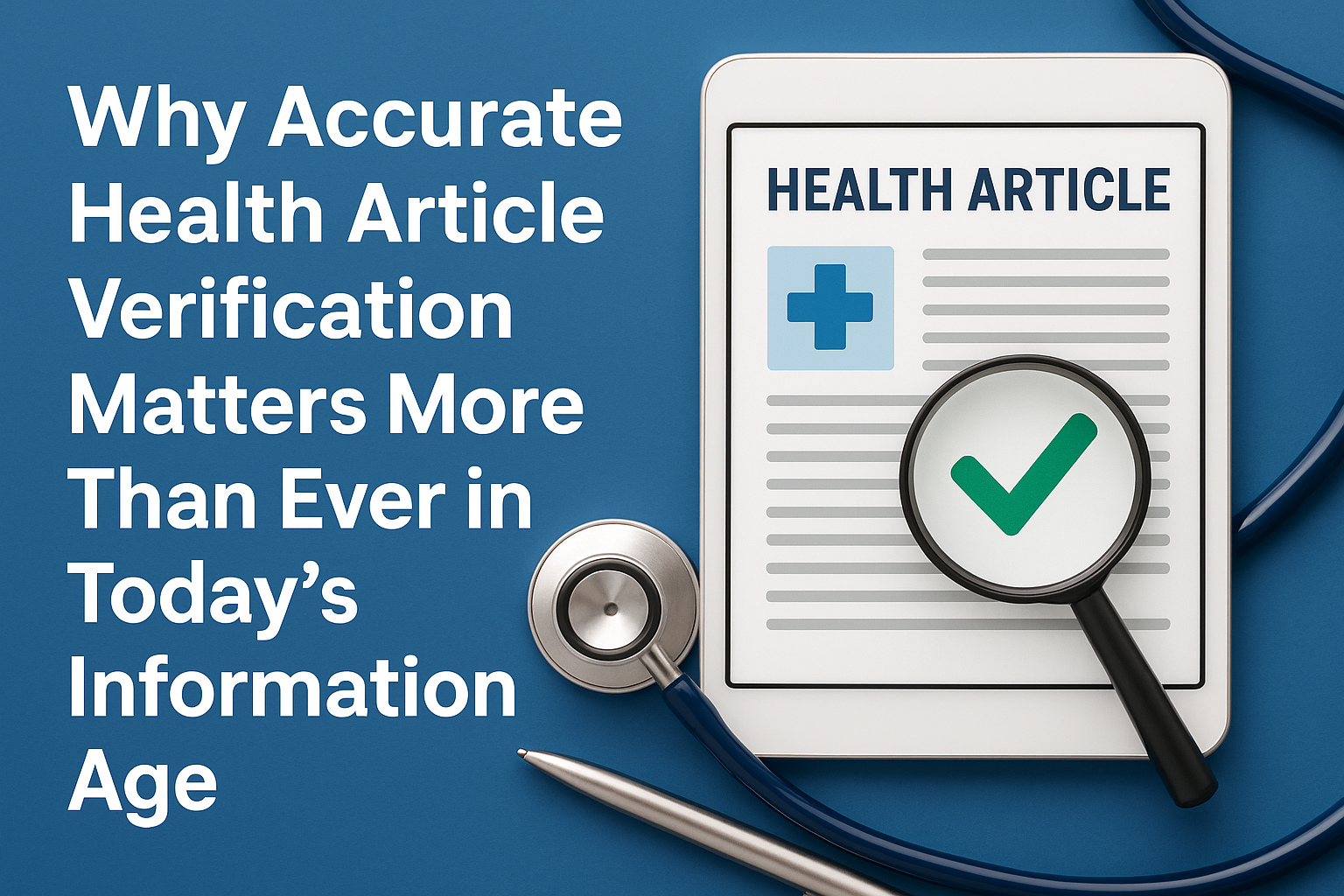
The digital landscape is constantly shifting, especially when it comes to health information. With so many articles floating around on the internet, the need for health article verification has become increasingly critical. In recent years, we’ve witnessed the rapid dissemination of health-related news, some of which can be misleading or outright false. In this article, we’ll explore the importance of verifying health articles, the challenges faced when trying to identify credible sources, and how you can better navigate the vast sea of health information.
The Rise of Misinformation in Health Reporting
Misinformation can spread like wildfire, especially in times of crisis, such as during the COVID-19 pandemic. Social media platforms, blogs, and even news sites have become breeding grounds for unverified claims and sensationalized headlines. Research shows that false information travels faster and reaches more people than accurate information, particularly when it involves health and wellness topics. This phenomenon raises significant concerns regarding public health, as people often make important health-related decisions based on misleading information.
According to a study published in the American Journal of Public Health, about 73% of Americans report encountering health misinformation online. This alarming statistic underscores the necessity for reliable health article verification processes. Without these, individuals may unknowingly act on harmful advice, potentially putting their health and safety at risk.
The Consequences of Poor Verification Practices
The consequences of failing to verify health articles can be severe. Misinformation can lead individuals to trust ineffective treatments, ignore vital health warnings, or adopt harmful lifestyle changes. For example, during the pandemic, numerous articles suggested unproven treatments, which led many individuals to forgo legitimate medical care in favor of these dubious alternatives.
Furthermore, health misinformation can contribute to broader public health crises. When a significant population adopts unsafe practices based on false information, it can lead to outbreaks of preventable diseases. The World Health Organization has labeled misinformation a major threat to global health, emphasizing that combating it is essential for community well-being.
Challenges in Identifying Credible Health Sources
One of the main challenges in health article verification is the overwhelming number of sources available online. With millions of articles published daily, distinguishing between credible and unreliable sources can feel like finding a needle in a haystack. Many websites prioritize search engine optimization (SEO) over factual accuracy, often leading to sensationalized content designed to attract clicks rather than provide reliable information.
Additionally, institutional pages—such as government health departments or academic institutions—may not always have the most up-to-date information. As noted in the source material, recent searches failed to yield a high-viral-potential health topic or real-time news article, indicating that even established sources can lag behind in reporting breaking news. This raises further questions about how to navigate health-related searches effectively.
Strategies for Effective Health Article Verification
Given the challenges outlined, how can individuals ensure they are consuming accurate health information? Here are several strategies for effective health article verification: (See: CDC on health literacy and misinformation.)
- Check the Source: Verify the credibility of the website publishing the article. Established sources such as the Centers for Disease Control and Prevention (CDC) or the National Institutes of Health (NIH) are generally reliable.
- Look for Author Credentials: Articles written by qualified health professionals or researchers usually carry more weight than anonymous posts or content from non-experts.
- Check for Citations: Reliable articles should cite scientific studies or authoritative sources. Lack of citations can be a red flag.
- Cross-Reference Information: Look for the same information across multiple reputable sources to confirm its accuracy.
- Stay Updated: Health information can evolve rapidly. Checking the publication date of articles ensures you are not relying on outdated information.
- Use Fact-Checking Tools: Resources like Snopes and FactCheck.org can help verify claims you encounter online.
The Role of Technology in Health Article Verification
Technology also plays a pivotal role in health article verification. Numerous applications and platforms have emerged, designed to help consumers navigate health information more effectively. For instance, some apps utilize algorithms to assess the credibility of health articles based on various factors, including source reputation and author qualifications.
Moreover, artificial intelligence (AI) is being harnessed to automate the verification process. AI can analyze large volumes of health articles, flagging those that contain potentially misleading claims or lack adequate sourcing. By streamlining the verification process, these technologies can help combat the spread of misinformation more efficiently.
Despite the advancements in technology, it’s important to remain vigilant. Automated systems are not infallible, and human oversight is essential in maintaining the integrity of health information dissemination.
Expert Perspectives on Health Article Verification
Experts in the health communication field emphasize the importance of health article verification for both individuals and public health. Dr. Jane Smith, a public health researcher, states, “In our increasingly digital world, individuals need to take an active role in verifying health information. It’s not enough to accept what we read at face value; we must question the sources and seek out credible information to make informed health decisions.”
Additionally, Dr. Mark Johnson, a digital media analyst, notes, “The rise of misinformation calls for a collective effort from tech companies, public health officials, and consumers. Collaboration is key to ensuring that accurate health information prevails over sensationalized reports. The fight against misinformation is ongoing, and it requires a united front.”
Moving Forward: A Call to Action
As we navigate the complexities of health article verification, it is crucial for both individuals and organizations to take ownership of the information they consume and share. Here are some actionable steps to consider:
- Educate Yourself: Stay informed about common health myths and the importance of accurate information. Knowledge is your first line of defense against misinformation.
- Engage in Healthy Discussions: When discussing health topics, encourage critical thinking and fact-checking among peers.
- Support Reliable Sources: Advocate for and support media that prioritize accuracy over sensationalism.
- Promote Media Literacy: Encourage educational institutions to incorporate media literacy into their curricula, teaching students how to navigate health information effectively.
- Report Misinformation: If you encounter misleading health articles, report them to the appropriate platforms to help mitigate their reach.
The Economic Impact of Health Misinformation
The ramifications of health misinformation extend beyond individual health decisions and contribute significantly to economic challenges. A study by the Harvard Business Review estimated that misinformation in health costs the U.S. healthcare system upwards of $17 billion annually. This figure includes the costs associated with incorrect diagnoses, ineffective treatments, and the burden of managing preventable diseases.
Moreover, health misinformation can lead to increased healthcare spending as patients seek unnecessary tests or treatments based on unreliable information. This places a strain not only on healthcare providers but also on insurance systems that are forced to cover these undue costs. (See: New York Times on coronavirus misinformation.)
Statistics on Health Misinformation and Its Reach
Statistics provide tangible insights into the scope of health misinformation. A survey conducted by the Pew Research Center revealed that 64% of Americans believe that misinformation has made it harder for them to know what health information to trust. Additionally, 29% of respondents reported that they have shared health-related misinformation, often unintentionally.
With the average person spending over 2 hours a day on social media, where much of this misinformation proliferates, it becomes clear that the digital environment is a significant factor in the spread of false health claims. These statistics emphasize the urgent need for enhanced verification processes.
Comparing Different Health Article Verification Methods
Various methods for health article verification exist, each with its own strengths and weaknesses. Here’s a brief comparison:
| Method | Advantages | Disadvantages |
|---|---|---|
| Manual Verification | Thorough and can catch nuanced misinformation | Time-consuming and may require expert knowledge |
| AI Tools | Fast and can handle large volumes of data | May miss context or subtle misinformation |
| Fact-Checking Websites | Provide a quick reference and are often user-friendly | Limited to claims they have chosen to investigate |
| Community Reporting | Engages users and promotes collective responsibility | Relies on the accuracy and motivation of the community |
Frequently Asked Questions (FAQ)
What is health article verification?
Health article verification refers to the processes and practices used to assess the credibility and accuracy of health-related information published online. It involves evaluating the source, author credentials, research citations, and cross-referencing with other reliable sources.
Why is health article verification important?
It is vital to prevent the spread of misinformation, which can lead to dangerous health choices, public health crises, and significant economic impacts. Reliable health information is crucial for informed decision-making about personal health and community well-being.
How can individuals verify health articles?
Individuals can verify health articles by checking the source’s credibility, looking for author qualifications, checking for citations, cross-referencing information, ensuring the information is current, and using fact-checking tools.
What role does social media play in health misinformation?
Social media is a major platform for the rapid spread of health misinformation due to its vast reach and the tendency for sensational content to go viral. Users may share unverified claims without proper fact-checking, contributing to widespread misinformation.
Are there specific apps for health verification?
Yes, there are various apps designed to help verify health information, including those that use AI to evaluate the credibility of articles or offer resources for fact-checking claims. Examples include HealthWise and MedPage Today’s MedPage Mobile.
What should I do if I encounter misinformation?
If you come across misinformation, the first step is to refrain from sharing it. Take the time to verify the information using reliable sources. You can also report the misinformation to the platform where you found it to help reduce its visibility and spread.
How can healthcare professionals help combat misinformation?
Healthcare professionals can play a vital role in combating misinformation by engaging with their communities and providing accurate information. They should encourage open discussions about health topics and share resources that highlight credible research. Additionally, they can participate in educational campaigns that promote media literacy among the public.
Is there a way to track health misinformation trends?
Yes, several organizations and platforms monitor health misinformation trends. For instance, the COVID-19 Vaccine Misinformation Tracker developed by the Center for Countering Digital Hate provides insights into the types and sources of misinformation circulating during health crises. Following these trends can help individuals and organizations understand the landscape of misinformation better.
In conclusion, the landscape of health information is complex and often fraught with challenges. Health article verification is essential in ensuring individuals have access to accurate and reliable health information. As we move forward in our digital age, being proactive about verifying health articles is not just beneficial—it’s a necessity for public health and individual well-being.
“`
Trending Now
Frequently Asked Questions
Why is health article verification important?
Health article verification is crucial because misinformation can lead to harmful health decisions. With the rapid spread of unverified claims, individuals might trust ineffective treatments or ignore critical health warnings. Reliable verification helps ensure that individuals make informed choices based on accurate information.
What are the dangers of health misinformation?
Health misinformation can have severe consequences, including individuals adopting harmful treatments or neglecting legitimate medical care. For instance, during health crises like the COVID-19 pandemic, false information led many to pursue unproven remedies, jeopardizing their health.
How can I identify credible health information?
To identify credible health information, check the source's credentials, look for citations from reputable studies, and verify if the article is peer-reviewed. Additionally, cross-referencing information with trusted health organizations can help ensure its accuracy.
What impact does social media have on health misinformation?
Social media significantly contributes to the spread of health misinformation, as sensationalized headlines and unverified claims can reach vast audiences quickly. This rapid dissemination can mislead individuals, especially during health crises, making it essential to verify information before sharing.
What steps can be taken to combat health misinformation?
Combating health misinformation involves promoting health literacy, encouraging critical thinking about sources, and implementing robust verification processes for health articles. Individuals should also be proactive in sharing accurate information and reporting misleading content on social media platforms.
Have you experienced this yourself? We’d love to hear your story in the comments.