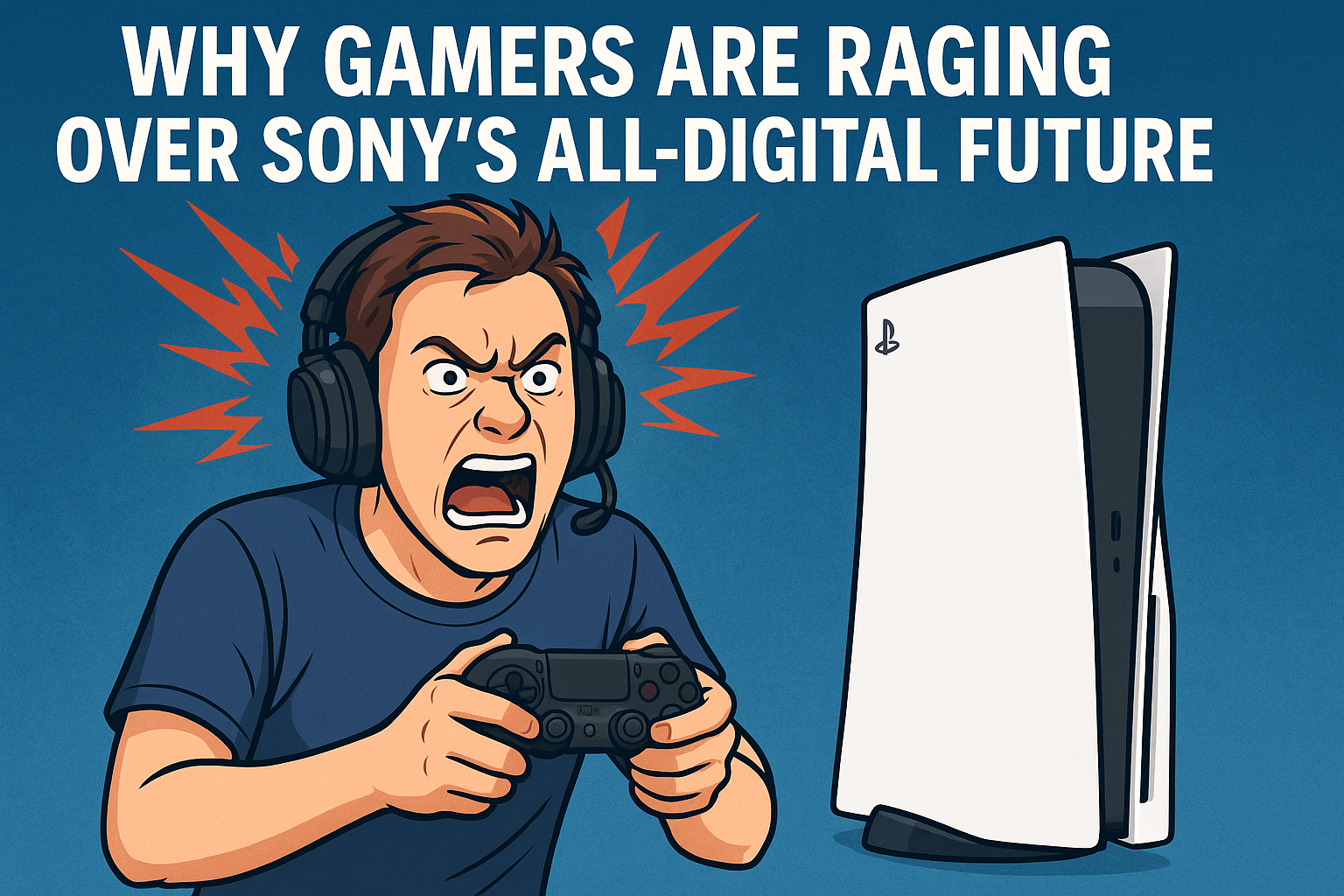

The gaming world is in an uproar, and for good reason. Sony’s bombshell announcement – the complete cessation of physical PlayStation game production by January 2028 – has sent shockwaves through the community. It’s a decision that has sparked heated debate, a significant backlash, and even led Sony to reportedly enforce its ‘strictest ever’ social media guidelines for first-party developers. This move fundamentally shifts the landscape of digital vs physical gaming media 2028, forcing us all to confront a future that many gamers feel is being thrust upon them.
Alanah Pearce, a former writer at Sony Santa Monica, known for her work on *God of War Laufey*, didn’t mince words in a recent YouTube video. She revealed that Sony anticipated the widespread negative reaction to this all-digital pivot. Think about that for a moment: they knew. They knew gamers would be ‘pissed off,’ as she put it. And in response? Not a reevaluation of the strategy, but a tightening of the leash. Employees within PlayStation studios were reportedly issued stringent rules on what they could publicly say, an undeniable attempt to control the narrative and prevent internal dissent from fueling the ongoing controversy. It’s a fascinating look behind the curtain, showing a company bracing for impact rather than seeking a compromise.
This isn’t just about convenience or storage; it’s about fundamental questions of ownership, preservation, and the very culture of gaming that many of us grew up with. The shift to purely digital distribution has profound implications for how we interact with our games, for better or worse. Let’s break down why this decision is so contentious and what it truly means for the future of gaming.
1. The Illusion of Ownership: When You Don’t Actually Own Your Games
One of the most vociferous arguments against an all-digital future revolves around the concept of ownership. When you buy a physical game disc, you own that disc. You can lend it to a friend, sell it used, display it on a shelf, or even play it years down the line without needing an internet connection or an active server. It’s a tangible asset, much like a book or a DVD. See also details on Project Q.
Digital games, however, operate under a different premise. When you ‘buy’ a digital game, you’re not actually purchasing the game itself in the traditional sense. Instead, you’re buying a license to play it, granted by the platform holder (Sony, in this case) or the publisher. This distinction is crucial. That license can be revoked. Servers can go offline. The game could be delisted from the digital storefront. While these scenarios might seem unlikely for major titles, they are very real possibilities, especially for older games, smaller titles, or those tied to specific online services. History is littered with examples of digital content disappearing.
2. Game Preservation: A Digital Graveyard Awaits?
This brings us directly to the thorny issue of game preservation. For decades, physical media has been the backbone of preserving gaming history. Libraries, collectors, and enthusiasts can still play games from the Atari era, the NES, or the PlayStation 1 because the physical cartridges and discs exist. Even if the original console breaks, emulators or compatible hardware can often breathe new life into these relics. (See: understanding digital distribution.)
In an all-digital world, preservation becomes a nightmare. If a game is only available digitally and its storefront is eventually shut down, or its servers are disconnected, that game could effectively vanish forever. Imagine future generations trying to experience the cultural touchstones of our era, only to find them inaccessible because the digital rights expired or the platform no longer exists. This isn’t just a hypothetical fear; it’s happened before. Sony itself previously announced the closure of the PS3, PSP, and PS Vita digital storefronts, only to walk back parts of the decision after massive outcry. This incident highlighted the fragility of digital-only libraries and served as a stark warning about the future of digital vs physical gaming media 2028.
3. The Used Game Market: A Vanishing Option
The used game market is a vibrant ecosystem that benefits consumers and provides a secondary revenue stream for retailers. It allows players to experience games at a lower cost, trade in titles they’ve finished, and access games that are no longer readily available new. For many, especially those on a budget, this market is essential for accessing a wider range of experiences.
With an all-digital future, the used game market simply ceases to exist. There’s no physical item to trade or sell. This shift eliminates a crucial avenue for affordability and accessibility, potentially driving up the effective cost of gaming for many. While publishers might argue it combats piracy or ensures full-price sales, consumers rightly feel they are losing a significant benefit that physical media provided. The ability to resell a game after you’re done with it is a core aspect of traditional media consumption, and its removal feels like a step backward for consumer rights.
4. Internet Dependency and Accessibility Barriers
Digital games inherently rely on a stable internet connection for download, updates, and in many cases, even initial authentication. For gamers in areas with poor or unreliable internet infrastructure, this presents a significant barrier to entry. Imagine waiting hours, or even days, to download a 100GB game on a slow connection. Or worse, being unable to play a game you ‘own’ because your internet is down. This builds on insights about Project Q.
Physical media bypasses many of these issues. You buy the disc, pop it in, and usually, you’re good to go, perhaps with a day-one patch. This accessibility is particularly important in a world where internet access isn’t universally fast or affordable. The move to all-digital exacerbates the digital divide, potentially alienating a segment of the gaming population that simply cannot reliably participate in a purely online ecosystem. This is a critical consideration when discussing the practical implications of digital vs physical gaming media 2028.
5. Pricing and Sales: Who Controls the Market?
In a physical market, competition between retailers often leads to sales and price drops. Stores compete for your business, offering discounts on new releases or older titles to clear stock. This competition benefits the consumer by driving prices down over time. Furthermore, publishers often have to consider the production and distribution costs of physical media, which can influence pricing strategies.
In a purely digital market, the platform holder (Sony, Microsoft, Nintendo) has significantly more control over pricing. There’s no physical disc to manufacture, no shipping costs for retailers, and no competition from different storefronts vying for your purchase of the same product. While digital sales do happen, the potential for sustained higher prices and less aggressive discounting is a very real concern. Without the physical alternative, consumers lose a powerful lever for influencing game prices, giving platform holders unprecedented power over the market. (See: Sony's digital strategy analysis.)
6. Storage and Bandwidth Concerns: The Ever-Growing Files
Modern games are massive. It’s not uncommon for a single AAA title to demand 80GB, 100GB, or even more of your console’s internal storage. While consoles ship with terabytes of space, that fills up surprisingly quickly, especially if you have a robust digital library. External hard drives offer a solution, but it’s another expense and another piece of hardware to manage.
For those with data caps on their internet plans, downloading these behemoth files becomes a recurring headache and a potential extra cost. Even with unlimited data, the sheer time it takes to download multiple large games can be frustrating. Physical discs, while often requiring large installations and patches, still provide the bulk of the game data directly, reducing the initial download burden. The shift to all-digital means constant large downloads, placing a greater strain on internet infrastructure and individual data plans, which is a practical drawback for many consumers.
7. The Collector’s Conundrum: Losing Tangible Treasures
For many gamers, collecting physical editions isn’t just about playing the game; it’s a hobby, an art form, and a way to display their passion. Special editions, steelbooks, intricate box art, and even just a neatly arranged shelf of games bring a sense of joy and accomplishment. There’s something undeniably satisfying about holding a game in your hands, admiring its packaging, and adding it to your curated collection. We covered top budget TVs for PS5 in more detail.
An all-digital future strips away this tangible aspect of the hobby. While digital libraries offer convenience, they lack the physical presence and aesthetic appeal that collectors cherish. The thrill of hunting for a rare physical copy, the pride of owning a complete series on disc, or the simple joy of browsing your physical collection are all diminished or eliminated. For these passionate individuals, the shift isn’t just an inconvenience; it’s a profound loss of a cherished aspect of their gaming identity, making the digital vs physical gaming media 2028 debate deeply personal.
8. Censorship and Content Control: Who Decides What You Play?
When content is purely digital, it becomes significantly easier for platform holders or governments to control what is available and what isn’t. If a game is deemed controversial, inappropriate, or simply no longer profitable, it can be delisted from a digital storefront with a few clicks. This control extends beyond availability; updates can alter content, and in extreme cases, games could even be patched out of existence or rendered unplayable. (See: impact of digital media on gaming culture.)
Physical media provides a degree of insulation from this. Once a game is pressed onto a disc, it exists in that form. While online features might cease, the core game remains playable. This isn’t to say physical media is immune to censorship or content control, but it certainly complicates the process compared to the instantaneous and far-reaching power of digital gatekeepers. The long-term implications for artistic freedom and consumer choice are certainly worth considering.
9. The Sony Perspective: A Business Decision, Not a Consumer One
It’s crucial to understand that Sony’s decision, despite the backlash, is fundamentally a business one. Eliminating physical media drastically reduces manufacturing costs (discs, cases, printing), shipping costs, and warehousing expenses. It also cuts out retailers’ share of revenue, allowing Sony to keep a larger slice of every digital sale. Furthermore, it gives them greater control over the game ecosystem, from pricing to distribution to content availability.
While consumers are rightly upset about the loss of choice and the perceived erosion of ownership, from Sony’s perspective, this move streamlines their operations and potentially boosts their profit margins. Alanah Pearce’s comments about Sony anticipating the anger and enforcing strict social media guidelines underscore this. They weighed the potential negative reaction against the perceived business benefits and, evidently, decided the latter was more compelling. This isn’t about gamers’ convenience or preferences; it’s about optimizing their business model in the evolving landscape of digital vs physical gaming media 2028.
So, where does this leave us? The path forward for gaming, at least for PlayStation, appears to be undeniably digital. While the convenience of digital libraries is undeniable for many, the trade-offs in terms of ownership, preservation, accessibility, and consumer rights are significant and far-reaching. The gaming community’s anger isn’t just noise; it’s a passionate plea for a future that respects choice and safeguards the rich history of the medium. Whether Sony, or other platform holders, will ever truly listen remains to be seen, but the debate over digital versus physical media is far from over.
Trending Now
Frequently Asked Questions
Why are gamers upset about Sony's all-digital future?
Gamers are upset due to Sony's decision to stop physical game production by January 2028, which raises concerns about ownership, preservation, and the future of gaming culture. This move has sparked significant backlash as many feel it imposes a digital-only future without considering player preferences.
What are the implications of Sony's decision to go all-digital?
The implications include a shift in ownership dynamics, where players no longer truly own their games, as well as concerns about game preservation and accessibility. This transition to digital distribution fundamentally alters how gamers interact with their games.
What did Alanah Pearce say about Sony's digital shift?
Alanah Pearce highlighted that Sony was aware of the potential backlash against their all-digital strategy. Instead of reconsidering their approach, they opted to tighten social media guidelines for employees to control the narrative surrounding the controversy.
How has Sony responded to the backlash from gamers?
In response to the backlash, Sony reportedly implemented strict social media guidelines for its first-party developers, aiming to manage the narrative and prevent internal dissent rather than reevaluating their digital strategy.
What does the shift to digital gaming mean for game ownership?
The shift to digital gaming raises critical questions about ownership. Unlike physical copies, digital games often come with restrictions on sharing and resale, leading to concerns that players may not truly own their games in the traditional sense.
What's your take on this? Share your thoughts in the comments below — we read every one.