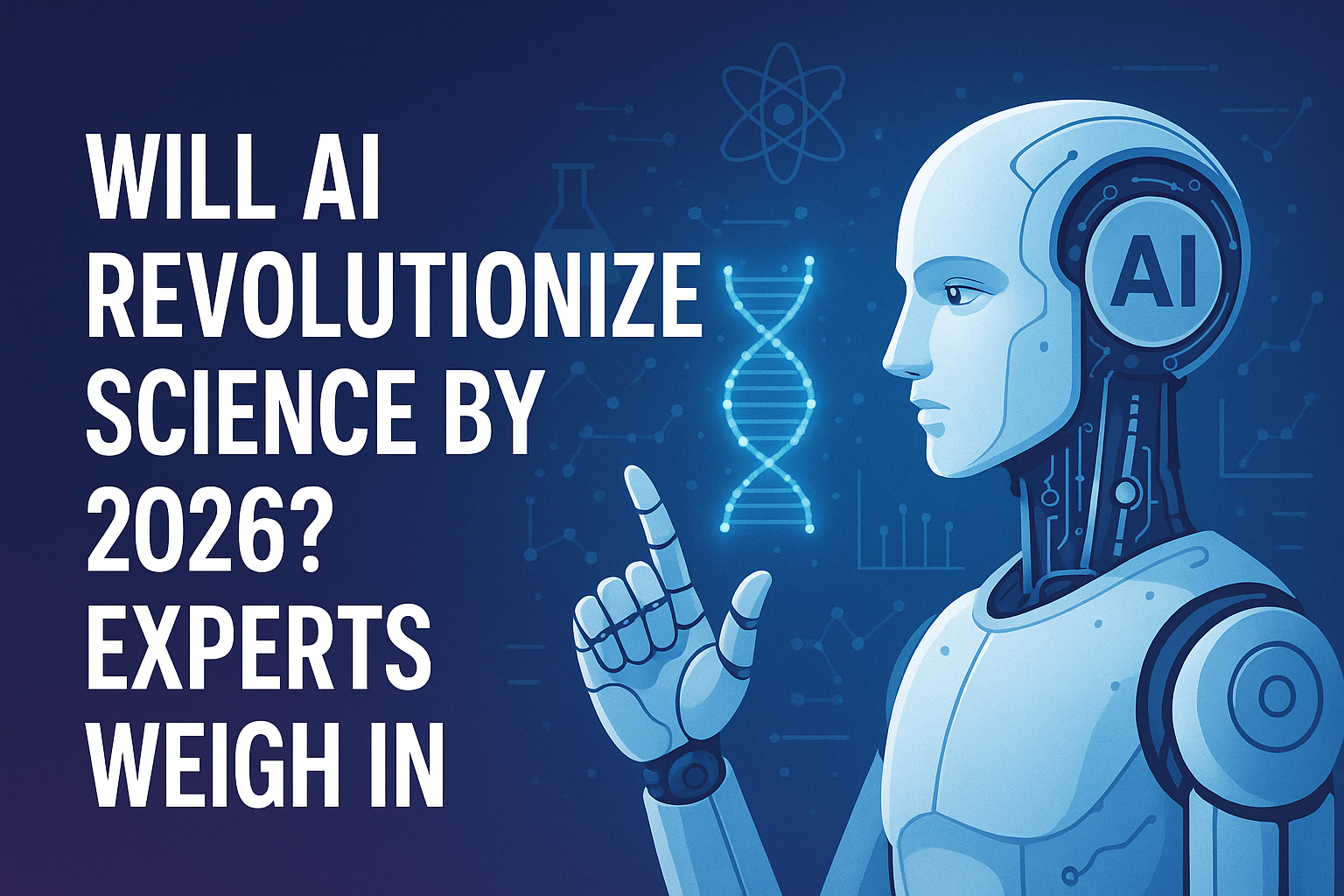

The landscape of scientific discovery is undergoing a profound transformation, driven largely by advancements in artificial intelligence. As we approach mid-2026, the latest future predictions 2026 reveal that AI is not just a supportive tool but is rapidly evolving into a substantive agent of change in various scientific fields. This article examines recent breakthroughs that underscore this shift and the implications they hold for our near future.
AI’s Dramatic Impact on Science
In recent weeks, a number of startling advancements have surfaced, generating significant interest across social media and scientific communities alike. One standout example involves OpenAI’s o1 model, which has demonstrated remarkable improvements in electricity grid optimization. According to a recent study, the model has enhanced feasible routing solutions from a mere 14% to an impressive 88%. Such a dramatic increase is not only eye-catching but fundamentally transformative in how we approach energy management.
Navigating Natural Disasters with AI
In addition to energy solutions, AI’s role in the earth sciences sphere is showing promise, particularly concerning natural disaster predictions. The o1 model has reportedly improved prediction accuracy across 20 categories by approximately 5%. This enhancement could be pivotal, especially as the frequency and intensity of natural disasters continue to escalate globally. As scientists strive to mitigate the impacts of these events, the integration of AI could provide invaluable insights, enabling better preparedness and more effective responses.
Quantum Physics and the Future of Circuit Design
Beyond these immediate applications, AI’s influence extends into the realm of quantum physics. A notable example is the model’s ability to assist in designing circuits with error rates that are ten times lower than those achieved through traditional human optimization methods. This leap not only showcases AI’s potential to enhance precision in complex systems but also opens new avenues for innovation in computing and technology.
AI as an Active Discovery Tool
The implications of these advancements are twofold, stirring both excitement and concern. As AI shifts from a mere assistant role to a more active participant in scientific discovery, it raises critical questions about the future of research itself. Will AI continue to augment human capabilities, or will it eventually eclipse them? The future predictions 2026 suggest that this transformative trajectory could unfold rapidly, with some experts predicting a significant reshaping of scientific paradigms by as early as 2027 or 2028.
The Emotional Charge Surrounding AI Progress
With such rapid developments, the emotional responses to AI’s role in science range from exhilarating anticipation to palpable anxiety. The notion that machines could drive scientific breakthroughs engenders a complex discourse on ethics, responsibility, and the very nature of human inquiry. As society grapples with these changes, the fear of missing out (FOMO) becomes a powerful motivator for engagement within scientific communities and the general public alike.
Combating the Fears of AI Advancement
- Education and Awareness: As AI technologies become more prevalent, initiatives aimed at educating the public about their benefits and limitations will be essential.
- Ethical Guidelines: Establishing robust frameworks to govern AI applications in research can alleviate fears surrounding misuse and unintended consequences.
- Collaboration: Promoting partnerships between AI developers and scientists can ensure that advancements are aligned with societal needs and ethical considerations.
Looking Ahead: What Does the Future Hold?
As we move closer to 2026, the conversation surrounding AI’s role in science is more urgent than ever. The recent breakthroughs in electricity management, earth sciences, and quantum physics exemplify AI’s potential to reshape our understanding of the natural world and enhance our capabilities. While the prospect of AI as a scientific driver is exhilarating, it also necessitates careful consideration of the implications.
The future predictions 2026 are not just about technological advances; they are about redefining the relationship between humans and machines in the pursuit of knowledge. As we stand on the brink of a new era in scientific inquiry, the choices we make today will have lasting ramifications. Therefore, it is imperative to engage with these developments thoughtfully, ensuring that AI serves to complement rather than replace human ingenuity.
In conclusion, as we look toward the future, the integration of AI into scientific discovery promises to be one of the most significant narratives of our time. Whether through improved energy solutions, enhanced disaster preparedness, or revolutionary advancements in quantum computing, the impact of AI is undeniable. The journey ahead will require collaboration, ethical considerations, and a commitment to harnessing technology for the greater good.