
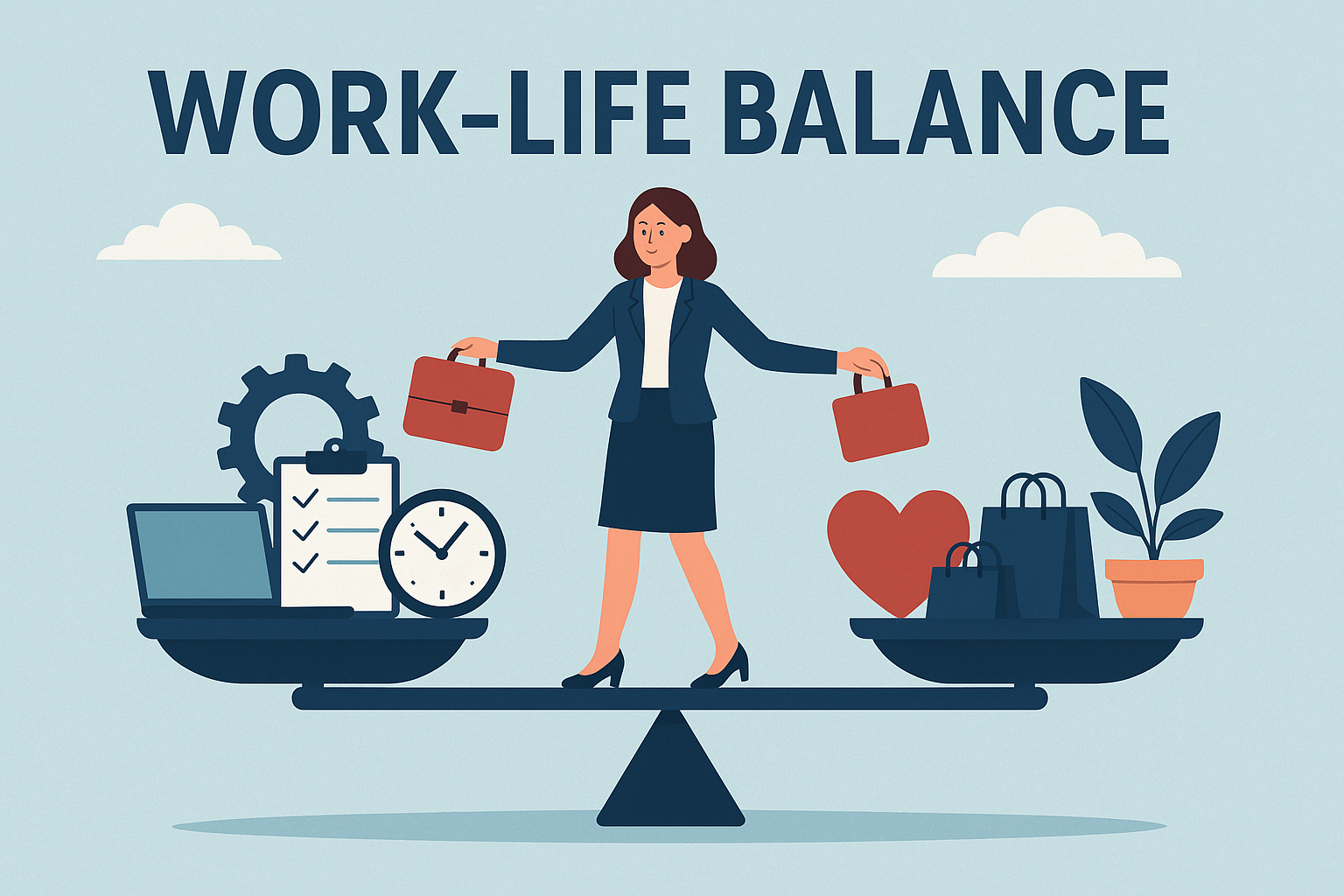

“`json
{
“title”: “The Silent Battle: How Work-Life Balance Technology Is Quietly Reshaping Our Lives”,
“content”: “
Remember that feeling of leaving the office, physically shutting down your computer, and genuinely disconnecting? For many of us, that’s become a quaint, almost mythical memory. The lines between our professional and personal lives, once relatively clear, have blurred into an indistinguishable smudge, largely thanks to the relentless march of technology. While the promise of innovation was often about making our lives easier, more efficient, and perhaps even granting us more free time, the reality for many has been a perpetual state of ‘always on.’ This isn’t just about answering a late-night email; it’s about the pervasive psychological toll of constant connectivity, the erosion of personal boundaries, and the urgent need to reclaim our sense of self outside of work. Understanding this shift, and critically, how we can harness work life balance technology to our advantage, rather than letting it dominate us, is perhaps one of the most pressing challenges of our modern era.
\n\n
The concept of work-life balance itself isn’t new. It’s been a topic of discussion for decades, evolving from concerns about industrial-era factory hours to the demands of the modern knowledge worker. However, the advent of ubiquitous mobile devices, high-speed internet, and sophisticated collaboration tools has introduced a new dimension to this age-old struggle. We carry our offices in our pockets, our laptops are always within reach, and the expectation to be responsive, even outside of traditional working hours, has become an unspoken norm in many industries. This isn’t just a matter of individual discipline; it’s a systemic issue, deeply embedded in corporate culture and facilitated by the very tools designed to boost productivity. So, how do we navigate this complex landscape, and can the very technology that created this problem also offer solutions?
\n\n
The Erosion of Boundaries: When Work Never Truly Ends
\n\n
The most significant impact of modern technology on work-life balance is arguably the erosion of clear boundaries. Before the digital age, leaving the workplace typically meant a genuine separation. Your work phone stayed at the office, and unless you were a doctor on call, your home life largely remained your own. Today, that physical separation is often non-existent. Our smartphones buzz with notifications from Slack, Teams, email, and project management apps at all hours. This constant digital tether means that for many, the workday doesn’t end when they log off; it simply transitions into a latent state, ready to be reactivated by the next ping. This ‘always-on’ culture fosters a sense of obligation, a subtle pressure to respond, even when it’s technically your personal time.
\n\n
Consider Sarah, a marketing manager who found herself checking emails every evening and weekend. What started as a proactive habit quickly spiraled into anxiety. If she didn’t respond immediately, she worried about appearing disengaged or falling behind. This fear is common and deeply rooted in the competitive nature of modern work environments. Employers, sometimes inadvertently, contribute to this by sending emails late at night or on weekends, setting an implicit expectation of availability. The result is a perpetual state of low-level stress, where the mind never truly disengages from professional responsibilities. This lack of mental downtime isn’t just about feeling tired; it has documented consequences for mental health, leading to burnout, increased anxiety, and even physical ailments.
\n\n
The Psychological Toll: Burnout and Mental Health Impacts
\n\n
The inability to switch off, fueled by constant digital connectivity, takes a significant psychological toll. Burnout, once a term primarily associated with high-stress professions like healthcare, has become increasingly prevalent across a wider range of industries. It’s characterized by emotional exhaustion, cynicism, and a reduced sense of personal accomplishment. When work bleeds into every aspect of life, there’s little room for rejuvenation, hobbies, or meaningful personal connections. The brain needs downtime to process information, consolidate memories, and simply rest. Without it, our cognitive functions decline, creativity wanes, and our capacity for empathy and patience diminishes. (See: Mental health in the workplace.)
\n\n
Beyond burnout, the constant demand for attention from work-related technology contributes to elevated stress levels and anxiety. The fear of missing out (FOMO) on important work communications, or the pressure to perform even when exhausted, creates a vicious cycle. Studies have shown a direct correlation between excessive use of work-related technology outside of hours and increased psychological distress. Furthermore, the blurring of lines can strain personal relationships, as partners, children, and friends often feel neglected when one’s attention is perpetually divided. It’s a silent epidemic, quietly eroding well-being in the pursuit of perceived productivity.
\n\n
Leveraging Work-Life Balance Technology for Good: Smart Tools and Strategies
\n\n
It’s easy to demonize technology, but the truth is, the tools themselves are neutral. It’s how we use them, and the cultural context in which we operate, that determines their impact. The good news is that work life balance technology can also be a powerful ally in reclaiming our personal lives. The key lies in intentionality and setting clear boundaries, both personally and organizationally. Think about it: if your smartphone is the conduit for endless work notifications, it can also be the gatekeeper, filtering out distractions and scheduling dedicated ‘off’ times.
\n\n
Many apps and operating systems now offer features specifically designed to help. ‘Do Not Disturb’ modes can be scheduled to activate automatically during non-work hours, silencing notifications from specific apps or contacts. Focus modes on devices allow you to create custom profiles that only permit essential notifications during designated periods of deep work or personal time. Furthermore, tools that automate tasks, streamline communication, and improve project management can, paradoxically, reduce the need for constant vigilance. For instance, using a robust project management system means fewer ad-hoc emails and clearer task assignments, reducing ambiguity and the need for constant check-ins.
\n\n
Practical Strategies for Digital Disconnection
\n
- Scheduled ‘Off’ Times: Treat your non-work hours like sacred appointments. Schedule specific times when you will not check work emails or messages, and stick to them. Communicate these boundaries to your colleagues if appropriate.
- Dedicated Workspaces: If working from home, try to create a physical separation between your workspace and your personal space. Close the office door, put away your laptop, or even change clothes to signal the end of the workday.
- Notification Management: Aggressively manage your notifications. Turn off all non-essential work notifications on your personal devices, especially outside of working hours. Consider separate work and personal phones if feasible.
- Mindful Technology Use: Before picking up your phone, ask yourself if it’s for work or personal use. If it’s for work, question if it can wait until designated work hours.
- Digital Detox Periods: Experiment with short digital detoxes – an hour before bed, a morning without checking your phone, or even a full weekend without work tech.
\n\n
The Role of Companies and Leadership in Fostering Balance
\n\n
Individual strategies, while crucial, are often not enough. For a genuine shift in work-life balance to occur, companies and leadership must play an active role. The culture of an organization profoundly influences how employees perceive and manage their boundaries. If leaders consistently send emails late at night or expect immediate responses outside of hours, they are inadvertently setting a precedent that makes it incredibly difficult for employees to disconnect without feeling guilt or fear of negative repercussions.
\n\n
Progressive companies are beginning to understand this and are implementing policies to support employee well-being. This can include explicit ‘right to disconnect’ policies, where employees are not expected to respond to work communications outside of designated hours. Some companies, like Volkswagen, have even configured their email servers to stop sending emails to employees’ phones after working hours, automatically redirecting them to the next morning. Other initiatives involve promoting flexible work arrangements, encouraging regular breaks, and investing in tools that genuinely optimize workflows rather than just increasing monitoring. Ultimately, it comes down to leadership modeling healthy behaviors and creating an environment where employees feel empowered, not punished, for prioritizing their well-being. (See: Work-life balance resources.)
\n\n
When leadership openly discusses the importance of disconnecting and demonstrates it through their own actions, it sends a powerful message. It normalizes the act of stepping away and reduces the anxiety associated with not being ‘always on.’ This isn’t just about being a good employer; it’s also smart business. Research consistently shows that employees with a healthy work-life balance are more productive, more engaged, less prone to burnout, and more likely to remain with their organization long-term. Investing in employee well-being, therefore, becomes a strategic advantage.
\n\n
The Future of Work: A Human-Centric Approach
\n\n
As we look to the future, the conversation around work-life balance technology will only intensify. The rise of remote and hybrid work models, while offering unprecedented flexibility, also deepens the challenge of maintaining boundaries. With no physical office to leave, the lines become even more nebulous. This necessitates a more human-centric approach to work design, one that acknowledges the inherent limitations and needs of human beings, rather than treating us as extensions of our devices.
\n\n
This future will likely involve even more sophisticated tools designed to enhance focus, manage time, and facilitate intentional disconnection. We might see AI-powered assistants that intelligently filter notifications, or platforms that encourage ‘digital sabbaticals’ as a standard benefit. But technology alone won’t solve the problem. The real change will come from a fundamental re-evaluation of our relationship with work, driven by both individuals and organizations. It means shifting from a culture of constant availability to one that values output and well-being over hours logged or instantaneous responses.
\n\n
Imagine a workplace where your productivity is measured by the quality of your contributions, not by how quickly you respond to an email at 10 PM. Where taking a walk in the middle of the day is encouraged, not frowned upon. Where the tools we use are genuinely designed to give us back time, not just fill it. This isn’t a utopian fantasy; it’s an achievable goal if we collectively commit to reshaping our digital habits and advocating for more humane work practices.
\n\n
Beyond the Hype: Measuring and Sustaining Balance
\n\n
The concept of work-life balance is often discussed in abstract terms, but how do we actually measure it and, more importantly, sustain it? It’s not a static destination but an ongoing process of adjustment and prioritization. What constitutes ‘balance’ for one person might be entirely different for another, depending on their life stage, personal responsibilities, and career aspirations. Therefore, a crucial first step is self-reflection: What does a balanced life look and feel like for you? What are your non-negotiables outside of work? Identifying these personal benchmarks is vital before you can even begin to implement strategies.
\n\n
Sustaining balance requires consistent effort and a willingness to adapt. It means regularly checking in with yourself: Am I feeling overwhelmed? Am I neglecting important relationships or personal needs? It also involves continuous communication with your employer and colleagues about your boundaries, and being prepared to reinforce them gently but firmly. This isn’t about being rigid; it’s about being intentional. The goal isn’t to eliminate work’s presence in your life entirely, which is often unrealistic, but to manage its intrusion so that it doesn’t eclipse your personal well-being. Work life balance technology, when used judiciously, can be a powerful enabler in this ongoing quest, helping you track your time, set reminders for breaks, and filter out distractions, thereby allowing you to be present and engaged in whatever moment you choose.
\n\n
Ultimately, achieving and maintaining a healthy work-life balance in our technologically saturated world is a shared responsibility. It requires individual discipline in managing our digital lives, a critical awareness of the psychological impact of constant connectivity, and a concerted effort from organizations to foster cultures that genuinely prioritize employee well-being. The tools are there, the understanding of the problem is growing, and the imperative for change is clearer than ever. It’s time we harnessed the power of work life balance technology not just for productivity, but for a more fulfilling, less stressed existence.
”
}
“`
Trending Now
Frequently Asked Questions
What is work-life balance technology?
Work-life balance technology refers to tools and applications designed to help individuals manage their professional and personal lives more effectively. This includes collaboration tools, time management apps, and communication platforms that aim to enhance productivity while also allowing for personal downtime and boundary-setting.
How has technology affected work-life balance?
Technology has blurred the lines between work and personal life, making it harder to disconnect. While it offers tools for efficiency and communication, the expectation to be 'always on' can lead to stress and burnout, highlighting the need for conscious boundary-setting and effective use of these technologies.
What are the challenges of maintaining work-life balance today?
Today's challenges include constant connectivity, the pressure to respond to work communications outside of hours, and the difficulty of separating work from personal time. These factors can contribute to a decline in mental health and overall well-being, necessitating strategies to reclaim personal time.
Can technology help improve work-life balance?
Yes, when used intentionally, technology can improve work-life balance by providing tools for organization and time management. Features like scheduling apps and productivity trackers can help individuals prioritize tasks and set boundaries, allowing for a healthier separation of work and personal life.
What strategies can help achieve better work-life balance?
Effective strategies for better work-life balance include setting clear boundaries for work hours, utilizing productivity tools to manage tasks, prioritizing downtime, and fostering a corporate culture that respects personal time. Mindfulness practices and regular self-reflection on personal priorities can also be beneficial.
Agree or disagree? Drop a comment and tell us what you think.






