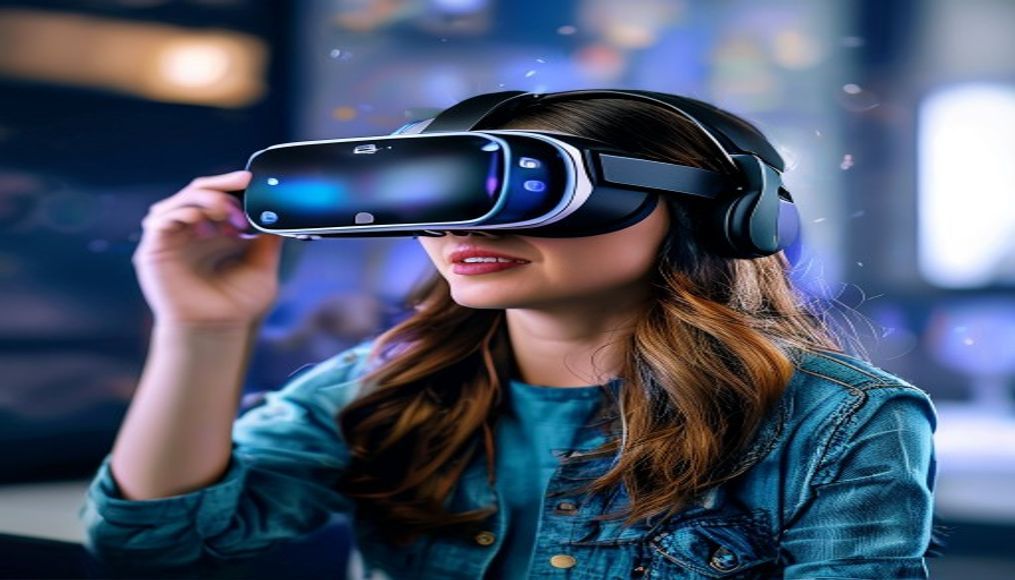

Virtual reality (VR) has burst onto the educational scene, offering immersive experiences that traditional learning methods can hardly match. By simulating real-world environments and challenges, these virtual reality games in education are revolutionizing how students engage with complex topics, enhancing both their understanding and retention. Below, we’ve compiled a list of 20 of the best VR games designed specifically for educational purposes, each contributing uniquely to learning across various subjects.
1. Google Earth VR: Exploring the Globe
Google Earth VR allows users to soar across the globe, from the peaks of the Himalayas to bustling cities like Tokyo and New York. This immersive experience gives students a powerful tool for geography and environmental studies. Instead of poring over maps, learners can engage with the planet in a way that makes geography feel tangible. They can explore ecosystems, study geographic formations, and even plan routes for travel or logistics projects.
Moreover, teachers can integrate lessons around cultural studies, as students can virtually visit iconic landmarks and understand the significance of various locations in a way that textbooks simply can’t convey. Whether it’s learning about the impact of climate change or understanding world cultures, Google Earth VR enriches the educational experience.
2. Tilt Brush: Art Meets Technology
Tilt Brush is a groundbreaking application that allows users to paint in a 3D space, making it an excellent tool for art education. Students can unleash their creativity by using a variety of brushes and effects to create immersive art pieces. This platform promotes artistic expression and can be used in lessons about perspective, color theory, and design.
Furthermore, teachers can encourage collaboration by having students create group projects in a shared virtual space, allowing them to build teamwork skills while exploring artistic concepts. The blend of technology and creativity offered by Tilt Brush serves as an inspiring platform for the next generation of artists.
3. Engage: The Ultimate Learning Platform
Engage is a versatile VR platform designed specifically for educators. It allows teachers to create immersive learning experiences tailored to their curriculum. Whether it’s hosting interactive lectures or facilitating collaborative projects, Engage provides a space where students can interact with educational materials dynamically. The platform supports VR headsets, making it accessible for schools aiming to integrate VR into their teaching methodologies.
With features such as customizable avatars and virtual environments, Engage captures students’ attention and keeps them motivated. By incorporating elements of gamification, educators can increase student engagement and make learning more enjoyable. This adaptability makes Engage one of the top virtual reality games in education available today.
4. Labster: Virtual Science Labs
Labster offers a range of virtual labs that cover various scientific disciplines, from biology to chemistry. Students can conduct experiments in a simulated environment, which is particularly beneficial for those who may not have access to physical lab facilities. The virtual labs allow for exploration of concepts in a hands-on manner, enabling learners to see their hypotheses tested and results analyzed.
This platform not only helps students grasp complex scientific concepts but also hones their problem-solving skills as they navigate challenges within the lab. Labster’s commitment to creating a realistic lab experience makes it an invaluable resource for science education, particularly in remote learning environments.
5. Historymaker VR: Stepping into History
Historymaker VR takes students on a journey through time, allowing them to experience significant historical events firsthand. Users can choose different historical figures and interact with critical moments in history, giving them a perspective that traditional textbooks cannot provide. This immersive approach to learning fosters a deeper understanding of historical contexts and the implications of events.
Moreover, educators can encourage discussions around the impact of decisions made during these historical moments, stimulating critical thinking and analytical skills. By stepping into the shoes of historical figures, students develop empathy and context, making history come alive in a way that’s engaging and educational. (See: Virtual reality in education.)
6. Unimersiv: Learning Through Experiences
Unimersiv is a platform that hosts various educational VR experiences, covering subjects like history, science, and geography. With its library of immersive environments, students can explore the human body, walk through ancient Rome, or even learn about space in a way that feels real. This experiential learning promotes retention and understanding by engaging multiple senses.
Teachers can use Unimersiv to supplement their lessons, providing students with a unique opportunity to explore topics in a way that enhances comprehension. This platform is particularly beneficial for visual learners who thrive on seeing concepts in action rather than merely reading about them.
7. Oculus for Business: Empowering Education
Oculus for Business offers schools and institutions a robust VR solution designed to enhance learning experiences. With a focus on training and education, this platform provides tools for creating custom VR content tailored to specific educational needs. Whether it’s for simulations, training scenarios, or creating virtual field trips, Oculus for Business makes VR technology accessible and adaptable.
This platform is particularly beneficial for vocational training, allowing students to practice skills in a controlled, virtual environment. The immersive nature of Oculus for Business enhances engagement and facilitates skill acquisition in a way that traditional methods often can’t achieve.
8. Wander: Virtual Travel and Exploration
Wander allows users to travel the world without ever leaving the classroom. By utilizing Google Maps and Street View, students can virtually visit any location globally, making it an excellent tool for geography, sociology, and cultural studies lessons. This VR experience is especially valuable during times when travel is restricted, providing students with opportunities to expand their horizons.
Educators can design assignments that require students to explore different cultures, geographical features, or historical sites, deepening their understanding of global diversity. By experiencing locations firsthand, students can develop a broader view of the world that encourages curiosity and appreciation for different cultures.
9. VRChat: Social Learning Environments
VRChat provides a social platform where students can interact and learn in a virtual space. Users can create avatars, socialize, and participate in various educational activities together. This platform can be harnessed to foster collaboration and communication skills among students, making learning a more interactive and engaging experience.
Teachers can create specific zones in VRChat for educational purposes, encouraging discussions, debates, and group projects. This social aspect of learning is crucial for building teamwork skills, and the virtual environment adds an exciting layer to traditional group activities.
10. Alchemie: Science Simulations
Alchemie focuses on STEM education, offering interactive simulations that help students grasp complex scientific concepts. By using VR technology, students can visualize abstract ideas such as molecular structure and chemical reactions in a way that makes them easier to understand. This hands-on approach to science education fosters engagement and retention.
Additionally, Alchemie caters to different learning styles, allowing students to experiment and learn at their own pace. This flexibility is particularly beneficial in diverse classrooms where students have varying levels of familiarity with scientific concepts.
11. Ocean Rift: Underwater Exploration
Ocean Rift is an educational VR game that immerses students in the underwater world. By exploring different marine environments, learners can discover various marine species and ecosystems, making it an excellent tool for biology and environmental science. By experiencing these ecosystems firsthand, students can better appreciate the importance of marine conservation and biodiversity.
This game encourages curiosity about the natural world and can serve as a springboard for discussions about environmental issues and conservation efforts. By fostering a love for science and nature, Ocean Rift enhances students’ understanding of critical ecological concepts.
12. Echo VR: Team Building and Strategy
While primarily known as a multiplayer game, Echo VR also offers valuable lessons in teamwork and strategy. Students can engage in gameplay that requires collaboration, communication, and critical thinking. This experience helps develop soft skills that are essential in any educational setting. (See: Benefits of virtual reality in learning.)
By participating in team-based challenges, students learn the importance of working together towards a common goal. Educators can use these scenarios to emphasize the value of cooperation and strategy, making lessons more engaging and applicable to real-life situations.
13. Rift Apart: Engineering and Physics
Rift Apart is a unique VR experience that combines gaming with engineering principles and physics. As students manipulate objects and solve puzzles within the game, they learn core concepts related to physics and engineering design. This interactive approach to learning fosters engagement and critical thinking.
Moreover, educators can tailor challenges and assignments related to physics concepts, encouraging students to apply what they’ve learned in a fun, engaging way. This blend of learning and play creates an environment where students feel motivated to explore and experiment.
14. Mission: ISS: Space Exploration and STEM
Mission: ISS allows students to experience life aboard the International Space Station. Users can interact with various elements of the station and learn about space science, engineering, and the challenges of living in space. This immersive experience captures students’ imaginations, making STEM subjects more relatable and exciting.
By engaging with real-world applications of science and technology, students can better understand the importance of space exploration and what it entails. This platform can inspire future generations of scientists and engineers, encouraging them to pursue careers in STEM fields.
15. Job Simulator: Vocational Skills Development
Job Simulator provides a fun and interactive way for students to learn about various professions. By immersing themselves in different job roles, students can explore career paths in a safe, virtual environment. This experience allows them to understand the skills required for various occupations and the soft skills involved in the workplace.
Furthermore, educators can use this game to discuss career planning and the importance of various vocational skills. By experiencing different roles, students can make informed choices about their future paths, making Job Simulator a valuable educational tool.
16. Space Explorers: Astronomy Made Fun
Space Explorers introduces students to the wonders of the universe. Through interactive experiences, learners can explore celestial bodies, understand the solar system, and gain insights into astronomy concepts. This immersive exploration fosters an appreciation for science and the universe.
Teachers can utilize this platform to enhance their astronomy curriculum, allowing students to visualize and interact with concepts that can otherwise be abstract and challenging. By making astronomy accessible, Space Explorers ignites curiosity and interest in the cosmos.
17. MathVR: Engaging with Numbers
MathVR offers a unique approach to teaching mathematics through interactive VR experiences. Students can engage in various mathematical concepts in a fun and immersive way, making it easier for them to grasp complex ideas. The platform provides different scenarios where learners can apply their math skills in real-world situations. (See: How VR is changing education.)
By incorporating gamification into math lessons, educators can help students develop a positive attitude towards math while improving their problem-solving abilities. This innovative approach to teaching math helps bridge the gap between abstract concepts and practical application.
18. Chemistry VR: Experimenting with Safety
Chemistry VR allows students to conduct experiments in a safe, virtual environment. By simulating chemical reactions and processes, learners can explore chemistry concepts without the risks associated with real-life experimentation. This game is particularly beneficial for high school students looking to deepen their understanding of chemistry.
Educators can assign virtual experiments that align with their curriculum, ensuring students have a comprehensive understanding of chemical principles. This platform enhances the laboratory experience while promoting safety and engagement.
19. Google Tilt Brush: Creativity Meets Science
Google Tilt Brush allows students to create 3D art, which can be integrated into science and engineering lessons. By visualizing concepts in 3D, students can better understand structures, proportions, and designs. This innovative approach encourages creativity and critical thinking in STEM fields.
Incorporating art into science education can help students see the connections between different disciplines, fostering a holistic understanding of concepts. Tilt Brush serves as a bridge between creativity and scientific inquiry, encouraging students to explore the artistic side of STEM.
20. VR Anatomy: Learning Human Biology
VR Anatomy provides a detailed, interactive view of human anatomy, allowing students to explore the body in a virtual setting. This immersive experience enhances their understanding of biological systems, organs, and their functions. It’s especially valuable for students in health sciences or medicine, providing a realistic view of human anatomy without the need for cadavers.
This tool not only aids comprehension but also fosters a deeper interest in the medical field. By engaging with human anatomy in such an interactive way, students can develop a stronger foundation that will benefit them in their future studies.
Incorporating virtual reality games in education is no longer just a trend; it’s a transformative approach that enhances learning outcomes. As technology continues to advance, the potential for VR in education grows, promising even more innovative tools that can make learning more engaging and effective. The above-mentioned games exemplify how VR can enrich the educational landscape, making complex concepts accessible and enjoyable for learners of all ages.
Trending Now
Frequently Asked Questions
What are the benefits of using virtual reality in education?
Virtual reality in education enhances student engagement by providing immersive experiences that traditional methods lack. It allows learners to explore complex topics in a tangible way, improving understanding and retention. VR also facilitates experiential learning, making subjects like geography and art more interactive and collaborative.
How does Google Earth VR enhance geography learning?
Google Earth VR allows students to explore the globe in a virtual environment, making geography lessons more engaging. Learners can study ecosystems, plan travel routes, and visit iconic landmarks, providing a deeper understanding of cultural and environmental contexts that textbooks often miss.
What is Tilt Brush and how is it used in art education?
Tilt Brush is a virtual reality application that enables users to paint in a 3D space. In art education, it allows students to express their creativity using various brushes and effects, while also teaching concepts like perspective and color theory, fostering collaboration through group projects.
Can virtual reality games be used for subjects other than art and geography?
Yes, virtual reality games can be applied across various subjects, including science, history, and mathematics. They provide interactive simulations and experiences that enhance learning in diverse fields, making complex concepts more accessible and engaging for students.
What types of educational VR games are available?
There are numerous educational VR games available, including simulations for science experiments, historical reenactments, and creative tools for art. Each game is designed to enhance learning by providing immersive experiences that encourage exploration and understanding of different subjects.
Agree or disagree? Drop a comment and tell us what you think.