
“`html
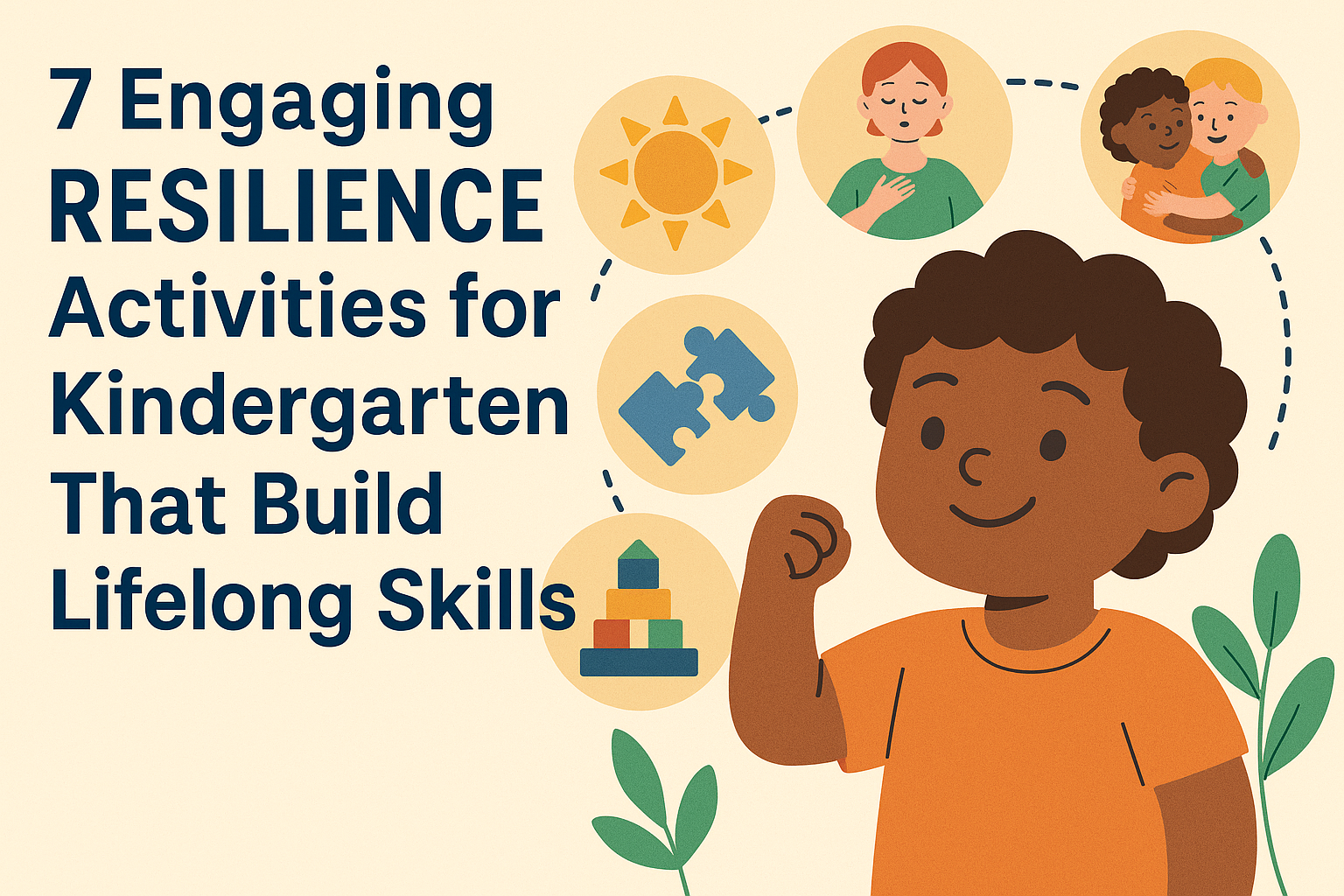
In today’s fast-paced world, resilience is a skill that every child needs to foster. For kindergarteners, learning to bounce back from setbacks and manage emotions effectively is crucial. The concept of resilience encompasses the ability to adapt to challenges and recover from difficulties. By engaging in resilience activities for kindergarten, educators and parents can help children develop these essential skills in a fun and interactive way.
Understanding Resilience in Young Children
Resilience isn’t merely about surviving tough times; it’s about thriving despite them. Young children face numerous challenges, be it social interactions, emotional upheavals, or academic hurdles. At such a formative age, developing resilience can play a significant role in shaping their future coping mechanisms and emotional intelligence.
Research has shown that children with high resilience tend to perform better academically and socially. According to a study published in the Journal of Child Development, resilience is linked to problem-solving skills, an increased ability to build relationships, and improved mental health outcomes. Learning resilience early can foster confidence and self-efficacy, laying the groundwork for lifelong success.
Key Characteristics of Resilient Children
Before diving into specific activities, it’s essential to understand what makes a child resilient. These characteristics include:
- Emotional Regulation: The ability to manage emotions appropriately, helping children cope with frustration and disappointment.
- Problem-Solving Skills: Developing the ability to think critically and creatively when faced with challenges.
- Social Skills: Building positive relationships and effective communication skills to foster support systems.
- Optimism: Cultivating a positive outlook on life, which can help children view challenges as opportunities.
- Self-Efficacy: Fostering a belief in their ability to achieve goals and overcome obstacles.
By focusing on these traits, resilience activities for kindergarten can be tailored to enhance these vital characteristics.
Creative Resilience Activities for Kindergarten
Now that we understand the importance of resilience, let’s explore some practical activities that can be seamlessly integrated into the kindergarten curriculum.
1. Emotion Charades
Emotion Charades is a fun game where children act out different emotions without using words. This activity promotes emotional recognition and understanding among peers. Here’s how it works:
- Prepare a set of emotion cards with illustrations representing various feelings such as happy, sad, angry, surprised, and scared.
- Divide the children into small groups and have them take turns picking a card and acting out the emotion, while others guess what it is.
- After the guessing, engage in a discussion about times they’ve felt those emotions and how they managed them.
This activity not only enhances emotional literacy but also encourages children to express their feelings and understand the emotions of others.
2. The Resilience Tree
The Resilience Tree is a visual representation of personal strengths and coping strategies. It helps children identify their strengths and the support systems available to them. Here’s how to set it up: (See: Study on resilience in children.)
- Draw a large tree on a whiteboard or poster board.
- Have each child decorate a leaf with their name and write down one strength or coping strategy on it.
- As a group, discuss the importance of recognizing personal strengths in overcoming challenges.
- Attach the leaves to the tree and encourage children to add more leaves as they discover new strengths throughout the year.
This activity fosters a sense of community and belonging while helping children recognize their unique qualities.
3. Problem-Solving Scenarios
To develop critical thinking and problem-solving skills, present children with age-appropriate scenarios that may arise in their daily lives. For example:
- “You’re playing with a toy, and someone else wants to use it. What can you do?”
- “You and a friend disagree on which game to play. How can you resolve this?”
Encourage open discussion, allowing children to share their ideas and solutions. This not only builds problem-solving skills but also fosters collaboration and communication among peers.
4. Mindfulness and Breathing Exercises
Teaching mindfulness can significantly enhance emotional regulation in young children. Simple breathing exercises and mindfulness activities can help children calm down and manage stress. Here’s a basic exercise:
- Have the children sit comfortably in a circle and close their eyes.
- Guide them to take deep breaths—inhale through the nose and exhale through the mouth—counting to three on each inhale and exhale.
- Introduce a visualization technique where they imagine their favorite place or something that makes them happy.
Regular practice can help children recognize their emotions and develop coping strategies during stressful situations.
5. Story Time with a Twist
Stories can be powerful tools for teaching resilience. Choose children’s books that depict characters overcoming challenges. After reading a story, engage children by asking:
- “What challenge did the character face?”
- “How did they overcome it?”
- “What would you have done in their situation?”
This not only promotes comprehension skills but also allows children to reflect on their own experiences and apply lessons learned from the characters’ journeys.
6. Gratitude Journals
Gratitude practices have been shown to improve mental health and emotional well-being. Introduce a simple gratitude journal where children can draw or write down things they are thankful for each day. Steps include:
- Provide a small notebook or a few sheets of paper folded and stapled together.
- Encourage children to illustrate or write one thing each day that makes them happy.
- Set aside time each week for children to share their entries with the class.
This ongoing activity not only boosts positivity but encourages children to focus on the good in their lives, reinforcing an optimistic mindset.
Integrating Resilience Activities into Daily Routines
Incorporating resilience activities into kindergarten classrooms doesn’t require a complete overhaul of lesson plans. These activities can be embedded into existing routines. For instance: (See: Building resilience in children.)
- Morning Meetings: Start the day with a brief discussion on emotions, allowing children to share how they feel and why.
- Transition Times: Use role-play scenarios during transitions between activities to reinforce problem-solving skills.
- Physical Activities: Incorporate movement breaks with breathing exercises or mindfulness activities to help children refocus.
The key is consistency. Regularly engaging in these practices helps children internalize the lessons of resilience, making them second nature as they encounter life’s ups and downs.
Current Relevance of Teaching Resilience
The importance of resilience has never been more apparent than in today’s challenging environment. The Covid-19 pandemic has disrupted lives, and children have felt the impact through changes in routines, social isolation, and uncertainty. A study by the American Psychological Association highlights that resilience skills can help mitigate the effects of trauma, providing children with the tools they need to cope with life’s challenges.
The shift toward online learning and social distancing has also emphasized the need for emotional intelligence and adaptability. By focusing on resilience activities for kindergarten, educators can prepare children not just for academic success, but for navigating a future that may hold various uncertainties.
Common Challenges in Building Resilience
Building resilience isn’t always a straightforward process. Young children may encounter obstacles that hinder their development of this crucial skill. Some common challenges include:
- Parental Support: Children who lack stable emotional support from caregivers may struggle to develop resilience. Consistent encouragement and affection are vital.
- Peer Relationships: Difficulty in forming friendships can affect a child’s self-esteem and their ability to face challenges. Programs that promote teamwork can alleviate these issues.
- Academic Pressure: Overemphasis on academic achievement can lead to anxiety. Balancing learning with play is essential for emotional well-being.
- Exposure to Stress: Environments filled with stress, whether at home or school, can impede resilience. Creating safe spaces for children to express themselves is crucial.
Addressing these challenges requires a collective effort from teachers, parents, and the community to foster an environment that promotes emotional growth.
Expert Perspectives on Resilience
Experts agree that the early years are critical for developing resilience. Dr. Kenneth Ginsburg, a pediatrician and author, emphasizes that parents should encourage independence and decision-making in their children. He states, “Allowing children to make choices and face consequences fosters resilience.” Educational psychologist Dr. Linda Graham also highlights the importance of emotional safety, noting, “Children need to feel secure in their relationships to explore and take risks.” These insights underline the significance of nurturing environments where children feel empowered to grow.
Statistics on Resilience and Academic Performance
Research supporting the need for resilience activities is abundant. According to the National Institutes of Health, children with higher resilience scores tend to have better academic performance, with approximately 30% of resilient children achieving higher grades than their less resilient peers. Moreover, studies indicate that resilient children are more likely to engage in extracurricular activities, which further enhances social skills and confidence.
FAQs About Resilience Activities for Kindergarten
What age is appropriate to start teaching resilience?
It’s beneficial to start teaching resilience as early as preschool. Young children are naturally curious and adaptable, making it an ideal time to instill these skills.
How can parents support resilience at home?
Parents can support resilience by encouraging open communication, validating emotions, and allowing children to solve problems independently. Engaging in family activities that promote teamwork can also strengthen resilience.
Are there specific books that promote resilience?
Yes! Titles like “The Little Engine That Could” by Watty Piper and “Giraffes Can’t Dance” by Giles Andreae are excellent for teaching themes of perseverance and resilience in a relatable way.
How can teachers measure a child’s resilience?
While resilience can be challenging to measure quantitatively, teachers can observe children’s reactions to challenges and their ability to bounce back from setbacks. Informal assessments through activities and discussions can provide insights into a child’s resilience level.
What role does play have in developing resilience?
Play is a fundamental aspect of childhood that allows children to explore, experiment, and learn from their experiences. Through play, children encounter challenges and learn how to navigate them, fostering resilience naturally. Activities like role-playing or building with blocks can be especially effective in teaching problem-solving and emotional regulation skills.
How can educators incorporate resilience activities in remote learning?
Remote learning can still include resilience activities by utilizing virtual tools. Teachers can use video calls to conduct mindfulness sessions, share stories, and discuss emotions. Group activities can be adapted to online platforms, allowing children to participate in emotional charades or problem-solving scenarios through breakout rooms and collaborative tools.
Conclusion: The Path Forward
Building resilience in kindergarten is about more than just helping children overcome obstacles; it’s about equipping them with the tools they need for life. By integrating engaging resilience activities into their daily routines, educators and parents can create an environment that fosters emotional growth, problem-solving, and strong social connections. As children learn to navigate challenges with confidence and optimism, they are better prepared to face the future, no matter what it may bring.
“`
Trending Now
- this guide on why teaching conflict resolution in middle school builds unbreakable resilience
- 7 Reasons Children with ADHD Struggle…
- The Hidden Struggles: Understanding ADHD in Girls and Why It’s Often Missed
- this guide on how adhd affects gpa: strategies for academic success
- 7 Effective Strategies to Build Resilience…
Frequently Asked Questions
What are some resilience activities for kindergarten?
Engaging resilience activities for kindergarten include role-playing scenarios, storytelling, team-building games, mindfulness exercises, and arts and crafts that encourage problem-solving. These activities help children learn to manage emotions, develop social skills, and foster a positive outlook while having fun.
Why is resilience important for young children?
Resilience is crucial for young children as it helps them adapt to challenges, manage emotions, and recover from setbacks. Developing resilience early on fosters confidence, improves social interactions, and lays a foundation for academic success and lifelong coping mechanisms.
How can parents help build resilience in their children?
Parents can build resilience in their children by encouraging open communication, modeling problem-solving skills, providing a supportive environment, and allowing them to face age-appropriate challenges. Engaging in resilience activities together can also strengthen their coping abilities.
What are the key characteristics of resilient children?
Key characteristics of resilient children include emotional regulation, problem-solving skills, strong social skills, optimism, and self-efficacy. These traits enable children to cope with challenges effectively and develop a positive mindset.
How does resilience impact a child's future?
Resilience significantly impacts a child's future by enhancing their academic performance, social relationships, and mental health. Resilient children are better equipped to handle life's challenges, leading to higher self-esteem and improved life outcomes.
Have you experienced this yourself? We’d love to hear your story in the comments.