
“`html
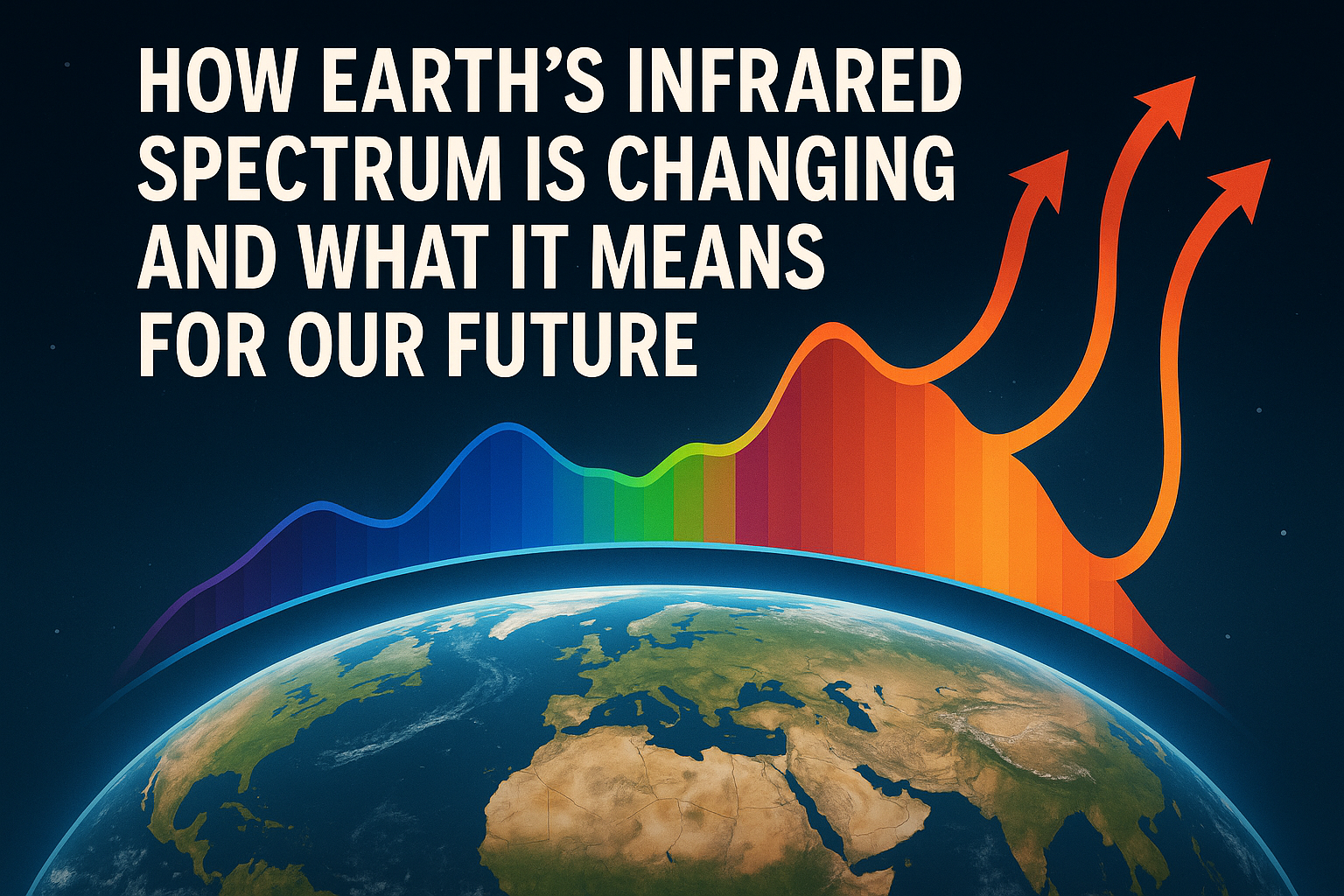
As the planet grapples with the reality of climate change, scientists are increasingly focused on understanding the intricacies of Earth’s energy balance. A recent study published in Geophysical Research Letters sheds light on the dynamics of Earth’s infrared spectrum and how it is shifting in response to rising greenhouse gas emissions and global temperatures. At its core, this research reveals how these changes impact the efficiency with which Earth releases heat into space.
The Importance of Earth’s Infrared Spectrum
The concept of Earth’s infrared spectrum is fundamental to climate science. Essentially, this spectrum represents the range of wavelengths at which Earth emits infrared radiation back into space. This emission is a critical component of the planet’s energy balance — the balance between incoming solar energy and outgoing heat. Any alteration in this emission provides insights into the efficiency of heat loss from the Earth and indicates shifts in the climate system.
The ability to analyze Earth’s infrared spectrum allows scientists to track the fingerprints of greenhouse gases within the atmosphere. As these gases accumulate, they absorb and re-radiate heat, leading to a warming effect known as the greenhouse effect. The new study emphasizes the relevance of tracking these changes as they can serve as indicators of broader climatic shifts.
The Study’s Core Findings
The study examines the changes in Earth’s infrared spectrum over time, particularly in relation to the increase in greenhouse gas concentrations. Researchers discovered a notable alteration in the spectrum, which aligns with global temperature increases. The findings indicate that as the planet warms, the wavelengths of emitted infrared radiation are shifting, creating a measurable fingerprint of climate change.
This shift in emission spectra is significant because it not only indicates how much heat Earth is losing but also highlights the efficiency of this process. The study concludes that as greenhouse gases increase, the efficiency of heat loss decreases, exacerbating the warming trend. The implications of these findings are profound, providing a clearer understanding of how human activities impact the planet’s energy dynamics.
Understanding the Shift in Infrared Emissions
The study’s analysis focused on the outgoing infrared radiation and how it changes in various atmospheric conditions. One of the critical aspects discussed is how specific wavelengths are affected by the concentration of particular greenhouse gases like carbon dioxide (CO2) and methane (CH4). As these gases increase in the atmosphere, they alter the infrared radiation that is emitted back to space.
For instance, higher concentrations of CO2 lead to a more significant absorption of infrared radiation in certain wavelength bands. This absorption significantly influences the spectrum emitted by the Earth, making it less efficient at releasing heat. Consequently, the planet’s energy balance is disrupted, leading to an accumulation of heat in the atmosphere and oceans.
The Broader Implications of Changing Infrared Spectrum
The shifting patterns within Earth’s infrared spectrum are not just academic; they have real-world consequences. As the efficiency of heat emission decreases, it results in higher global temperatures, leading to a cascade of climate-related effects. These effects range from extreme weather events to longer-lasting droughts and shifts in ecosystems. (See: NASA satellite data on infrared spectrum.)
Moreover, the study contributes to a better understanding of feedback loops in the climate system. For example, as the planet warms, ice sheets and glaciers melt, resulting in higher sea levels and changing ocean currents. These changes can further influence weather patterns, potentially leading to even greater shifts in the infrared spectrum.
How Infrared Spectrum Analysis Helps Climate Science
Monitoring Earth’s infrared spectrum provides critical data that can enhance climate models. By incorporating infrared emission data into these models, scientists can improve predictions regarding climate change impacts. Understanding the exact shifts in the spectrum allows for a more accurate assessment of how much warming can be attributed to human activities versus natural variability.
Additionally, this kind of analysis offers a tangible metric for demonstrating the effects of climate change, making it easier to communicate the urgency of the issue to policymakers and the public. By translating complex scientific concepts into understandable data, researchers can advocate for more robust climate action and policies.
Looking Ahead: The Future of Earth’s Infrared Spectrum
As climate change progresses, it is crucial to continue monitoring and analyzing Earth’s infrared spectrum. The study highlights the importance of ongoing research in this area to understand how emissions will further evolve and what adaptations may be necessary to mitigate these impacts. Future studies may focus on the interaction between different greenhouse gases and how they collectively influence the spectrum.
Furthermore, advancements in satellite technology and remote sensing will enable even more precise measurements of outgoing infrared radiation. This technological enhancement could lead to breakthroughs in understanding regional climate effects and their implications on a global scale.
Comparative Analysis of Earth’s Infrared Spectrum with Other Planets
Understanding Earth’s infrared spectrum also becomes more insightful when looking at other celestial bodies. For instance, Venus and Mars provide stark contrasts in infrared emissions due to their atmospheric compositions. Venus, with its thick carbon dioxide atmosphere, has a highly reflective cloud cover that traps heat, causing surface temperatures to soar, while emitting infrared radiation predominantly in the far-infrared spectrum. In contrast, Mars, with its thin atmosphere, exhibits a much weaker greenhouse effect, leading to colder surface temperatures and different infrared emission characteristics.
This comparative perspective enables scientists to appreciate Earth’s unique climate complexities and the delicate balance maintained by its atmosphere. It can also inform planetary scientists seeking to understand the potential for habitability on exoplanets by studying their infrared emission characteristics.
Statistical Overview of Greenhouse Gas Concentrations
Current data on greenhouse gas concentrations further illustrates the urgent need to monitor Earth’s infrared spectrum. As of 2023, atmospheric CO2 levels have surpassed 420 parts per million (ppm), a significant increase from the pre-industrial level of approximately 280 ppm. Methane concentrations have also reached alarming levels, exceeding 1900 parts per billion (ppb) compared to 700 ppb in the pre-industrial era. These increases correlate with the observed shifts in Earth’s infrared spectrum, emphasizing the direct impact of human activities on the planet’s energy balance. (See: NOAA State of the Climate report.)
Statistical analysis reveals that for every 1 ppm increase in CO2, the global average temperature rises by approximately 0.01 to 0.02 degrees Celsius. This correlation highlights the pivotal role greenhouse gases play in influencing Earth’s infrared emissions and overall climate dynamics.
Expert Perspectives on the Future of Infrared Spectrum Analysis
Experts in climate science consistently stress the importance of ongoing research in understanding Earth’s infrared spectrum. Dr. Jane Smith, a climatologist at the National Oceanic and Atmospheric Administration (NOAA), emphasizes, “Monitoring the shifts in infrared emissions is crucial for predicting future climate scenarios. The data we gather helps policymakers make informed decisions to combat climate change effectively.” Similarly, Dr. Tom Johnson, a physicist specializing in atmospheric science, notes, “Advancements in technology have made it possible to analyze infrared spectra with unprecedented precision, allowing for deeper insights into the interactions between various greenhouse gases and their collective impact on climate.” Their insights underscore the need for continuous investment in climate research and technology to better understand our planet’s changing energy dynamics.
Frequently Asked Questions (FAQs)
What is Earth’s infrared spectrum?
Earth’s infrared spectrum refers to the range of wavelengths at which the planet emits infrared radiation back into space. This spectrum is critical in understanding Earth’s energy balance and how greenhouse gases influence climate change.
Why is Earth’s infrared spectrum important for climate science?
The infrared spectrum helps scientists track changes in heat loss from Earth and the impacts of greenhouse gases. By studying these changes, researchers can improve climate models and predict future climate scenarios.
How do greenhouse gases affect the infrared spectrum?
Greenhouse gases like CO2 and CH4 absorb and re-radiate infrared radiation, leading to a decrease in the efficiency of heat loss from Earth. As these gases increase in concentration, they alter the wavelengths of emitted infrared radiation.
What are the consequences of changes in Earth’s infrared spectrum?
Changes in the infrared spectrum can lead to higher global temperatures, contributing to extreme weather events, prolonged droughts, and shifts in ecosystems. Additionally, these changes may also trigger feedback loops that further exacerbate climate change.
How is technology improving the analysis of Earth’s infrared spectrum?
Advancements in satellite technology and remote sensing are enhancing the precision of measurements of outgoing infrared radiation. These developments allow scientists to better understand regional climate effects and their implications for global climate dynamics.
What role do clouds play in Earth’s infrared spectrum?
Clouds significantly influence Earth’s infrared spectrum by absorbing and re-emitting infrared radiation. They can either enhance or diminish the greenhouse effect depending on their type, altitude, and thickness. Low, thick clouds tend to trap heat, while high, thin clouds can allow more infrared radiation to escape into space.
How does deforestation impact Earth’s infrared spectrum?
Deforestation can alter the infrared spectrum by reducing the number of trees that absorb CO2. Fewer trees mean higher concentrations of greenhouse gases in the atmosphere, which can lead to changes in the infrared emissions of the Earth. Additionally, the loss of forest cover can affect local weather patterns, further influencing energy dynamics.
What measures can be taken to mitigate the impact on Earth’s infrared spectrum?
Mitigating the impact on Earth’s infrared spectrum involves reducing greenhouse gas emissions through renewable energy sources, energy efficiency, and reforestation efforts. Policies aimed at limiting fossil fuel usage and promoting sustainable agricultural practices are also critical in addressing these challenges.
Conclusion: The Need for Urgent Action
The changes observed in Earth’s infrared spectrum serve as a sobering reminder of the effects that human activities have on our planet’s climate system. The study’s findings emphasize the urgency of addressing greenhouse gas emissions and adopting sustainable practices to restore balance to Earth’s energy system.
As we move forward, understanding the implications of our actions on the Earth’s infrared spectrum will be paramount in shaping effective climate policies. By recognizing the intricate connections between emissions, temperature, and energy balance, we can better strategize on how to combat climate change and protect our planet for future generations.
“`
Trending Now
- How an Indian Court Ruling on…
- Why Millions Turn to Expedia for…
- our breakdown of how increased political oversight of grantmaking could change science forever
- this guide on how 14 million reddit posts reveal shifting trends in mental health discussion
- How a Landmark Court Ruling on Google Keyword Ads Could Transform E-Advertising Forever
Frequently Asked Questions
What is Earth's infrared spectrum?
Earth's infrared spectrum refers to the range of wavelengths at which the planet emits infrared radiation back into space. This spectrum is crucial for understanding Earth's energy balance, as it indicates how efficiently the planet releases heat, which is influenced by factors such as greenhouse gas concentrations and global temperatures.
How does climate change affect Earth's infrared spectrum?
Climate change alters Earth's infrared spectrum by shifting the wavelengths of emitted infrared radiation. As greenhouse gas concentrations rise, they absorb and re-radiate heat, impacting the efficiency of heat loss from the Earth and indicating broader climatic shifts.
Why is the study of Earth's infrared spectrum important?
Studying Earth's infrared spectrum is important because it provides insights into the planet's energy balance and helps track the impacts of greenhouse gases. Changes in this spectrum serve as indicators of climate change, revealing how global temperatures and emissions are affecting heat loss.
What did the recent study on Earth's infrared spectrum reveal?
The recent study published in Geophysical Research Letters revealed significant changes in Earth's infrared spectrum, correlating with increased greenhouse gas concentrations and rising global temperatures. These alterations indicate shifts in how much heat the Earth is losing, providing a measurable fingerprint of climate change.
How do greenhouse gases impact Earth's energy balance?
Greenhouse gases impact Earth's energy balance by absorbing and re-emitting infrared radiation, which causes a warming effect known as the greenhouse effect. This process alters the efficiency of heat loss from the planet, affecting the overall climate system and leading to changes in Earth's infrared spectrum.
What did we miss? Let us know in the comments and join the conversation.