
“`html
When it comes to exploring the cosmos, NASA has always been at the forefront of innovation. With the upcoming launch of the Nancy Grace Roman Space Telescope, the space agency is poised to revolutionize the way we map the universe. This state-of-the-art telescope, equipped with advanced features like a highly specialized ‘spy mirror,’ promises to enhance our understanding of dark energy, galaxy formation, and the overall structure of the universe. In this article, we’ll explore how NASA’s Roman Space Telescope will improve mapping the universe and what exciting discoveries we can anticipate.
The Need for Better Cosmic Mapping
Mapping the universe has always been a daunting challenge for astronomers. Traditional telescopes, while incredibly powerful, often have limitations when it comes to surveying large areas of the sky. With the expansion of the universe and the mysterious nature of dark energy, there’s an urgent need for better tools to understand cosmic phenomena.
The Roman Space Telescope aims to fill this gap. By providing a wide-field view of the cosmos, it will allow researchers to capture a comprehensive picture of galaxies, dark matter, and other cosmic structures. The advancements in technology that the Roman Space Telescope incorporates will lead to more detailed and accurate cosmic maps than ever before, paving the way for groundbreaking discoveries.
What Sets the Roman Space Telescope Apart?
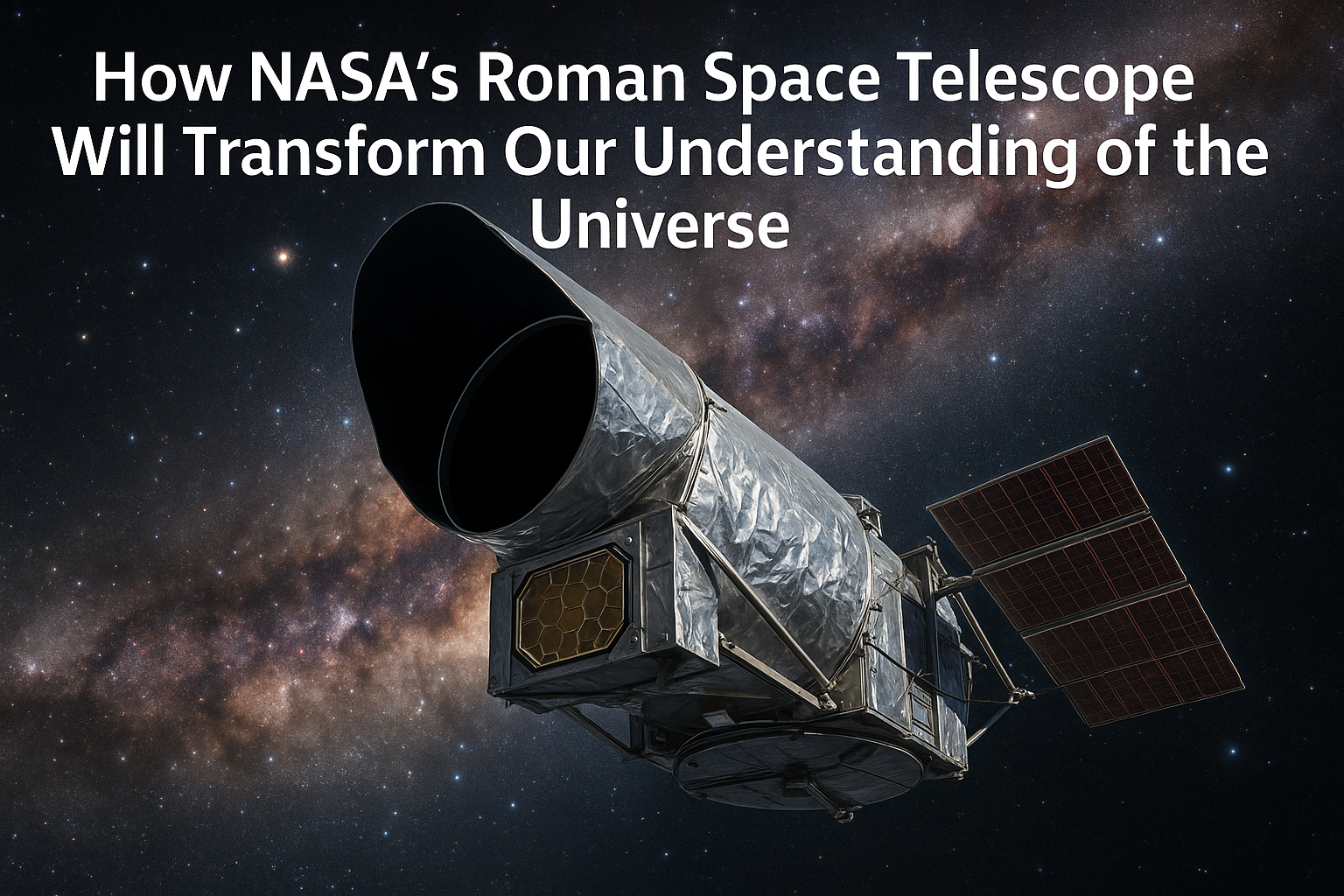
The Nancy Grace Roman Space Telescope is not just another piece of high-tech equipment; it represents a significant leap in astronomical capabilities. Its most notable feature is the ‘spy mirror,’ a sophisticated design that enhances its observational prowess. This mirror allows for a wider field of view, meaning astronomers can survey larger sections of the sky in less time, capturing more data and details than previous telescopes could manage.
This innovative design serves two primary purposes: it significantly reduces the time spent on cosmic surveys and increases the amount of information gathered in each observation. With the ability to scan vast portions of the sky, the Roman Space Telescope will generate expansive datasets that will aid in the study of the universe’s structure and evolution.
Unlocking the Secrets of Dark Energy
One of the most tantalizing mysteries in modern astrophysics is dark energy. It is believed to make up about 68% of the universe, driving its accelerated expansion, yet its nature remains elusive. The Roman Space Telescope will play a pivotal role in advancing our understanding of this enigmatic phenomenon.
Through wide-field surveys, the telescope can investigate the distribution of galaxies and their light, providing insights into how dark energy affects cosmic growth. By analyzing the way galaxies cluster, researchers can infer the influence of dark energy on the expansion rate of the universe. This could lead to new theoretical frameworks that either support or challenge existing models.
Enhancing Galaxy Formation Studies
In addition to its contributions to the understanding of dark energy, the Roman Space Telescope will revolutionize how we study galaxy formation. The telescope’s advanced imaging capabilities will allow scientists to observe galaxies at various stages of their evolution, from their early formation to their current states.
This detailed observation will enable researchers to trace the history of galaxies, examining how they interact with one another and evolve over time. By gathering data on the size, shape, and brightness of these galaxies, the telescope will help answer fundamental questions about how galaxies form and how they influence one another as they coexist in the vast universe. (See: NASA's Roman Space Telescope overview.)
The Role of Artificial Intelligence
The sheer volume of data collected by the Roman Space Telescope presents both a challenge and an opportunity. To make sense of the wealth of information, scientists are increasingly turning to artificial intelligence (AI) for assistance. AI algorithms can sift through massive datasets, identifying patterns and anomalies that might take astronomers years to uncover manually.
This integration of technology can enhance the speed and efficiency of data analysis, significantly reducing the time required to make new discoveries. As the telescope begins its operations, we can expect an influx of astronomical findings, many of which will be facilitated by AI’s analytical capabilities.
Public Engagement and Citizen Science
The Roman Space Telescope isn’t just changing the landscape for professional astronomers; it also opens doors for public engagement and citizen science. NASA has a history of involving the public in scientific endeavors, and this mission is no exception. With the large datasets generated by the Roman Space Telescope, opportunities for citizen scientists to contribute to real research will abound.
Imagine being a part of a team that analyzes images of distant galaxies or works on categorizing cosmic phenomena. This hands-on involvement can inspire a new generation of scientists and space enthusiasts, democratizing access to the wonders of the universe. NASA’s commitment to making this data accessible to the public means that anyone with an internet connection could potentially play a role in advancements in our understanding of the cosmos.
Anticipated Discoveries and Future Implications
So, what can we expect to find with the help of NASA’s Roman Space Telescope? The possibilities are nearly limitless. From uncovering new exoplanets and understanding their atmospheres to mapping the distribution of dark matter, this telescope is set to change the way we perceive the universe.
One exciting potential outcome is the discovery of gravitational waves from merging galaxies, which could provide further insight into the universe’s expansion. Additionally, the telescope’s capabilities may lead to the identification of new types of celestial objects, such as rogue planets or dark galaxies that do not emit light, but influence the gravitational fabric of the universe.
The implications of these discoveries are profound. Each finding will not only fill in gaps in our existing knowledge but will likely lead to new questions and avenues of exploration. As we learn more about the universe, we may challenge our current understanding of physics, cosmology, and the very nature of existence.
How NASA’s Roman Space Telescope Will Change Cosmic Surveys
The Roman Space Telescope will significantly enhance the efficiency and scope of cosmic surveys. Traditional surveys often rely on telescopes that take months or even years to compile data. With its wide-field capabilities, the Roman Space Telescope can cover ten times the area of the sky compared to Hubble in the same period. This means we can expect to gather information about billions of galaxies in a fraction of the time.
Consider, for instance, the ongoing efforts to map the dark matter distribution across the universe. Dark matter doesn’t emit light, making it challenging to study. However, by observing how galaxies move and cluster, scientists can infer the presence of dark matter. The Roman Space Telescope’s ability to monitor numerous galaxies and their interactions will provide a clearer picture of dark matter’s role in shaping the universe. (See: New York Times article on Roman Telescope.)
Statistics and Research Goals
The Roman Space Telescope’s primary mission will span five years, during which it aims to complete several key surveys that will enhance our cosmic mapping capabilities. The goals include:
- Mapping 1.5 billion galaxies, documenting their positions, brightness, and shapes.
- Conducting a detailed census of exoplanets, particularly those in the habitable zone.
- Measuring the expansion rate of the universe with unprecedented precision.
- Investigating the nature of dark energy through galaxy distribution patterns.
The sheer scale of these objectives highlights the significance of the Roman Space Telescope in shaping our understanding of the universe.
Expert Perspectives on the Roman Space Telescope
Experts in the field have expressed enthusiasm about the capabilities of the Roman Space Telescope. Dr. Jennifer A. Wiseman, an astrophysicist and senior project scientist for the mission, emphasizes the telescope’s unprecedented ability to study the universe’s structure and evolution. She states, “The Roman Space Telescope will allow us to peer deeper into the universe than ever before and potentially answer some of the biggest questions in astrophysics.”
Another leading figure, Dr. Robert Williams, former director of the Hubble Space Telescope, notes, “The Roman Space Telescope is set to be a game-changer. Its wide field of view and advanced technology will enable astronomers to tackle questions that we’ve only begun to explore.”
FAQ: Understanding the Roman Space Telescope
What is the Nancy Grace Roman Space Telescope?
The Nancy Grace Roman Space Telescope is a NASA space observatory designed to survey the universe with a focus on dark energy, galaxy formation, and exoplanet discoveries.
When will the Roman Space Telescope launch?
The telescope is scheduled to launch in the mid-2020s, although specific dates may vary as preparations progress.
How will the Roman Space Telescope differ from Hubble?
While Hubble has contributed immensely to our understanding of the universe, the Roman Space Telescope will have a much larger field of view, allowing it to survey more of the sky in less time. This efficiency will lead to quicker and more comprehensive cosmic mapping.
Can the public contribute to research conducted by the Roman Space Telescope?
Yes! NASA encourages citizen science and public engagement, allowing individuals to participate in data analysis and interpretation, fostering a closer connection to the discoveries made by the telescope. (See: Scientific insights on cosmic mapping.)
Enhanced Scientific Collaborations
The Roman Space Telescope is not just a tool for discovery; it also serves as a catalyst for collaboration among scientists worldwide. Its open data policy means that researchers from various institutions can access and utilize the data for their studies, leading to a diverse range of projects. This will encourage interdisciplinary research, marrying fields like physics, cosmology, and computer science.
For instance, beyond traditional astronomy, the mounting data from the telescope can benefit fields such as gravitational physics and even machine learning. These collaborations can foster innovative approaches to solving longstanding questions in science. By creating a global research community united by the shared goal of understanding the universe, the Roman Space Telescope may usher in a new era of scientific partnership.
Potential Challenges Ahead
Even with its groundbreaking promise, the Roman Space Telescope will face challenges that need to be addressed to maximize its impact. One of the primary concerns is ensuring the integrity of the data collected. The telescope will generate vast amounts of information, and managing this data effectively is critical. Researchers will need to develop robust systems for data storage, retrieval, and analysis to prevent bottlenecks that could delay discoveries.
Additionally, there are technical challenges related to the telescope’s operations in space. For example, ensuring the precise functioning of the ‘spy mirror’ and maintaining its alignment over long periods will be crucial for obtaining high-quality images. Ongoing testing and calibration will be necessary to ensure that the telescope performs optimally throughout its mission.
Conclusion: A New Era in Astronomy
In summary, the Nancy Grace Roman Space Telescope represents a new frontier in astronomy. Its advanced technologies, particularly the innovative ‘spy mirror,’ will enhance our ability to map the universe in unprecedented detail. By delivering deeper insights into dark energy and galaxy formation, the telescope has the potential to transform our understanding of the cosmos.
As we stand on the verge of this exciting mission, one thing is clear: the Roman Space Telescope will not just be another tool in our astronomical arsenal. It will be a beacon, illuminating the dark corners of the universe and inspiring generations of scientists and explorers. The future of cosmic mapping looks brighter than ever, and the discoveries awaiting us could redefine our position in the vast expanse of the cosmos.
“`
Trending Now
- Join Nooro as an iOS Developer:…
- our breakdown of 12 engaging emotional intelligence activities for kids to foster growth
- 7 Essential Emotional Intelligence Skills Every High School Student Needs Before College
- 7 Essential Strategies for Boosting Emotional Intelligence in Preschoolers
Frequently Asked Questions
What is the Nancy Grace Roman Space Telescope?
The Nancy Grace Roman Space Telescope is an advanced astronomical observatory being developed by NASA. It is designed to enhance our understanding of the universe by providing a wide-field view, allowing researchers to study dark energy, galaxy formation, and cosmic structures in unprecedented detail.
How will the Roman Space Telescope improve cosmic mapping?
The Roman Space Telescope will improve cosmic mapping by using its advanced 'spy mirror' to capture a wider field of view. This allows astronomers to survey larger sections of the sky more efficiently, resulting in more detailed and accurate maps of galaxies and dark matter.
What are the key features of the Roman Space Telescope?
Key features of the Roman Space Telescope include its specialized 'spy mirror' that enhances observational capabilities, a wide-field view for comprehensive sky surveys, and advanced technology aimed at improving the mapping of dark energy and cosmic structures.
Why is better cosmic mapping important?
Better cosmic mapping is crucial for understanding the expansion of the universe and the nature of dark energy. Improved mapping tools, like the Roman Space Telescope, enable astronomers to explore cosmic phenomena more effectively, leading to groundbreaking discoveries about the universe's structure and evolution.
What discoveries can we expect from the Roman Space Telescope?
The Roman Space Telescope is expected to lead to exciting discoveries related to dark energy, the formation of galaxies, and the overall structure of the universe. Its advanced mapping capabilities will allow researchers to uncover new insights into the cosmos that were previously difficult to achieve.
What’s your take on this? Share your thoughts in the comments below — we read every one.